Horsetail Tea: How to Brew It and What to Know First
Horsetail tea is one of the oldest herbal brews in the European tradition. It comes from a plant that looks like a tiny pine tree with jointed, hollow stems. The flavor is mild, green and slightly mineral. This guide explains what the herb is, how to brew it well and what to keep in mind before you start.
In addition, you will find blend ideas, a simple iced recipe, tips for buying good quality stems and answers to the questions people ask most. So whether you are curious about shavegrass for the first time or you already keep a jar in your pantry, you will find something useful here.
What Is Horsetail Tea?
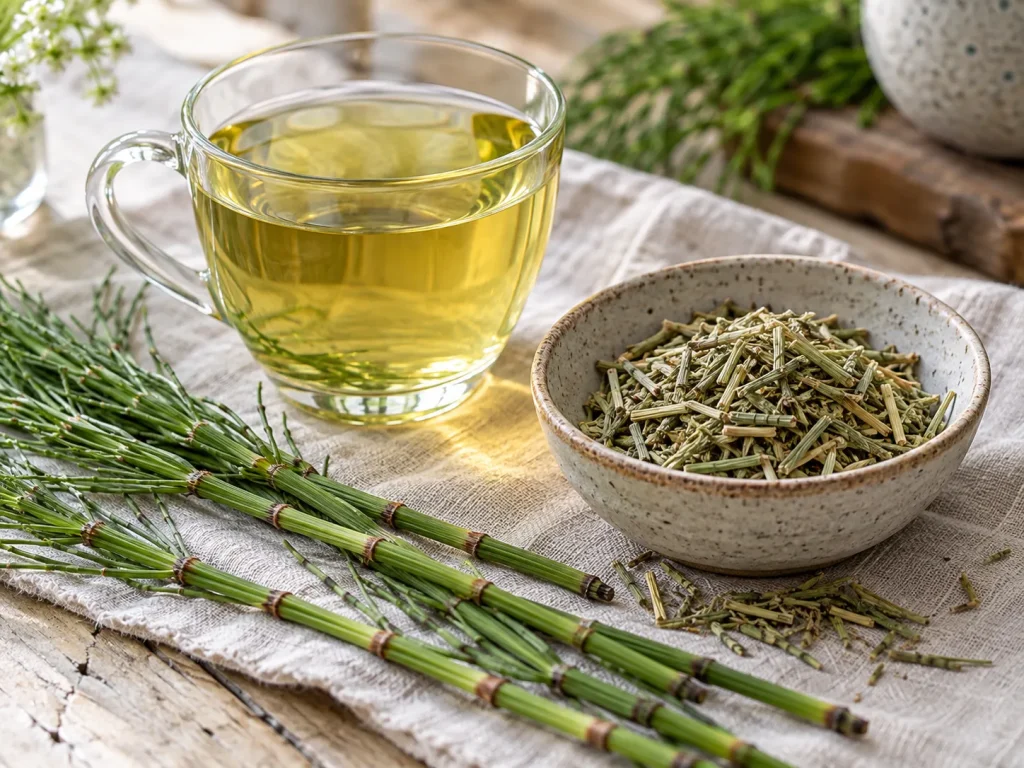
Horsetail (Equisetum arvense) is an ancient plant. In fact, its relatives grew alongside the dinosaurs. The dried stems are often sold as shavegrass, because people once used the rough stalks to scour pots and polish wood. That rough texture comes from silica, a mineral the plant stores in its stems.
To make the tea, you steep the dried, cut stems in hot water. Our organic shavegrass (horsetail), cut and sifted is ready to use for loose leaf brewing and blending.
The plant has two kinds of stems. First, brownish fertile shoots appear in early spring and carry spores. Then green, sterile stems follow, with whorls of thin branches. Growers harvest these green summer stems for tea, because they hold the familiar grassy flavor.
A Short History of Horsetail and Shavegrass
Horsetail has a long practical history. Roman writers mentioned the plant, and medieval households kept bundles near the hearth. Cooks scrubbed pewter plates with them. Meanwhile, woodworkers and fletchers used the stems as a natural fine sandpaper to smooth arrows and furniture.
Over time, the same plant found its way into the herbal kitchen. Country herbalists in Germany, France and Eastern Europe dried the stems each summer. Then they brewed them through the colder months. As a result, horsetail became a familiar part of the European herbal cupboard, next to nettle and oat straw.
How Herbalists Traditionally Use Horsetail
Folk herbalists in Europe have used horsetail for centuries. It often appeared in spring tonics and in blends meant to accompany a nourishing diet. Many people are also drawn to it because of its natural silica content. For this reason, it shows up in hair and nail routines, as well as in herbal rinses.
For example, some people cool a strong cup of horsetail tea and use it as a final hair rinse after washing. Others add it to a foot soak or a homemade facial steam. Not sure which herb fits your routine? Take our quick natural hair care herb quiz.
Keep in mind that these are traditional uses. Horsetail is not a replacement for medical care, so talk with your healthcare provider if you have a specific concern.
How to Brew Horsetail Tea
Horsetail stems are tough, so they need a little more time than delicate leaves. A longer steep or a short simmer helps release more of the plant’s minerals.
- Measure 1 to 2 teaspoons of dried horsetail for each 8 ounce cup.
- Bring fresh filtered water to a full boil.
- Pour the water over the herb in a teapot or a heatproof jar.
- Cover and steep for 10 to 15 minutes.
- For a stronger cup, simmer the herb gently for 5 minutes before steeping.
- Strain well and enjoy the tea warm.
A fine mesh strainer works best, because the cut stems can leave small gritty pieces. Also, keep the lid on while the tea steeps. That way, the gentle aroma stays in the cup instead of escaping with the steam.
Simple Brewing Chart
The table below gives simple starting points. Then you can adjust the strength to your own taste.
| Method | Herb per 8 oz | Water | Time | Result |
|---|---|---|---|---|
| Classic steep | 1 to 2 tsp | Just boiled | 10 to 15 min | Light, grassy cup |
| Simmer and steep | 1 to 2 tsp | Gentle simmer | 5 min simmer, 10 min steep | Fuller, more mineral |
| Cold infusion | 2 tsp | Cold water | 6 to 8 hours in the fridge | Soft and smooth |
| Hair rinse | 2 tbsp per 2 cups | Just boiled | 20 min, then cool | Strong, for external use |
What Does It Taste Like?
On its own, the flavor is grassy and earthy, with a faint hint of minerals. It is not bitter, but some people find it a bit plain. That is why many blenders pair it with brighter herbs.
For example, organic peppermint leaf adds a cool lift. Meanwhile, organic lemongrass gives the cup a citrus note. If you like green, leafy blends, try mixing horsetail with organic nettle leaf and organic oat straw. Our guide to stinging nettle tea has more ideas for that style of cup.
Three Easy Blends to Try
- Green garden blend: 1 part horsetail, 2 parts nettle leaf and 1 part oat straw. This is a classic, mellow cup.
- Bright mint blend: 1 part horsetail and 1 part peppermint. It tastes fresh and works well hot or iced.
- Citrus blend: 1 part horsetail, 1 part lemongrass and a strip of lemon peel. As a result, the mineral note turns light and lively.
Mix a small batch first. Then brew one cup and adjust the ratio before you blend a larger jar.
Recipe: Iced Horsetail Mint Tea
This recipe makes about one quart. It is a good way to enjoy horsetail tea on a warm afternoon.
- Add 2 tablespoons of dried horsetail and 1 tablespoon of peppermint to a heatproof jar.
- Pour in 2 cups of just boiled water.
- Cover and steep for 15 minutes.
- Strain the tea into a pitcher.
- Stir in 1 to 2 teaspoons of honey while the tea is still warm, if you like it sweet.
- Add 2 cups of cold water and chill for at least one hour.
- Serve over ice with a slice of lemon.
Drink it within two days. After that, the flavor starts to fade.
Horsetail Compared With Nettle and Oat Straw
Horsetail, nettle and oat straw often share a jar. However, each herb brings something different to the cup. Knowing the differences helps you build a blend you actually enjoy.
- Horsetail: Mild, grassy and slightly mineral. The stems are tough, so they need a long steep or a short simmer.
- Nettle leaf: Deeper and more savory, almost like cooked greens. It steeps well in 5 to 10 minutes.
- Oat straw: Soft, sweet and hay like. In fact, it rounds out sharper herbs and makes the cup feel smooth.
Because horsetail takes longer to release flavor, some blenders simmer it first. Then they turn off the heat and add the leafy herbs for the final steep. As a result, each herb gives its best without any of them turning stewed or flat.
Also, think about strength. Horsetail is the quietest of the three, so it rarely overpowers a blend. For this reason, you can use it as a gentle base and let nettle or mint carry the flavor.
Safety Points Before You Drink It
Horsetail tea is best enjoyed in moderation. First, choose Equisetum arvense from a trusted supplier, since some related species are not meant for tea. Second, most herbalists suggest short periods of use rather than daily cups for months on end. Horsetail contains an enzyme that breaks down vitamin B1, so long term use is usually discouraged.
In addition, avoid horsetail if you are pregnant or nursing. People with kidney concerns, or those who take diuretics or other medications, should check with a doctor first. Children should not drink it.
Many herbalists follow a simple pattern. For example, they enjoy a cup a day for a few weeks, then take a break. That approach keeps the tea a seasonal ritual rather than a constant habit.
Common Mistakes to Avoid
- Steeping too briefly: Three minutes is fine for green tea, but horsetail needs at least 10.
- Skipping the strainer: Small stem pieces can make the cup gritty.
- Foraging blindly: Wild horsetail species look alike, so buy from a source that names the species.
- Drinking it nonstop: Short periods with breaks match traditional practice.
How to Choose and Store Dried Horsetail
Good horsetail looks green to grayish green. The cut pieces should feel dry and crisp, not soft or dusty. Also, the herb should smell faintly of fresh grass. Avoid stems that look brown all over or smell musty.
Next, check the label. It should list Equisetum arvense by its botanical name. In addition, look for organic certification and a lot number.
Store the dried herb in an airtight container away from heat, light and moisture. A cool pantry shelf works well. Stored this way, horsetail keeps good quality for one to two years. Our guide to dried herbs shelf life explains how to check freshness.
Frequently Asked Questions About Horsetail Tea
Is horsetail the same as shavegrass?
Yes. Shavegrass is a common name for dried horsetail stems. The name comes from the old practice of using the rough stalks to scrub and polish surfaces.
How long should I steep horsetail tea?
Steep it for 10 to 15 minutes in water that has just boiled. Because the stems are tough, a gentle 5 minute simmer can give you a fuller cup.
Can I drink horsetail tea every day?
Most herbalists recommend short periods of use instead of daily cups over many months. If you plan to drink it regularly, talk with your healthcare provider first.
Does horsetail tea have caffeine?
No. Horsetail is not related to the tea plant, so it is naturally caffeine free. As a result, you can enjoy it in the evening.
Can I reuse horsetail for a second cup?
Yes, although the second cup will be lighter. Simmer the used stems for a few minutes to draw out more flavor.
Start Brewing Your First Pot
Horsetail tea is simple, gentle and full of history. It just needs a longer steep, a good strainer and a little moderation. Then you can enjoy it plain, blended with mint or nettle, or chilled over ice.
Ready to try it? Order our organic shavegrass, pick a partner herb or two, and brew your first pot this week.