Herbal Tea for Anxiety: Calming Brews
Herbal tea for anxiety has deep roots in traditional herbalism across cultures worldwide. Long before modern pharmacology, herbalists prepared calming brews from plants like chamomile, lemon balm, lavender, and passionflower to help people find peace during stressful times. Furthermore, these herbs remain among the most researched in the field of phytotherapy and are widely used by contemporary herbalists and integrative health practitioners.
In folk traditions from Europe to Asia to the Americas, calm-promoting herbs were woven into daily rituals of tea preparation. Additionally, the act of brewing and drinking a warm cup of herbal tea is itself a mindful, soothing practice. As a result, the ritual can be as calming as the herbs themselves.
Why People Turn to Herbal Tea for Anxiety
Many people prefer to start with gentle, natural approaches before exploring other options for managing everyday stress and anxiety. Herbal teas offer a low-barrier entry point that is deeply familiar across cultures. Moreover, they can be incorporated into daily routines as part of a broader wellness practice alongside exercise, sleep hygiene, and professional mental health support.
It is important to be clear: herbal teas for anxiety are not a treatment for anxiety disorders. For this reason, anyone experiencing significant anxiety symptoms should work with a qualified healthcare provider. However, in folk herbalism, calming herbal teas have a long tradition of supporting mild, everyday tension and stress.
The Best Herbs for Calming Herbal Tea
Chamomile (Matricaria chamomilla)
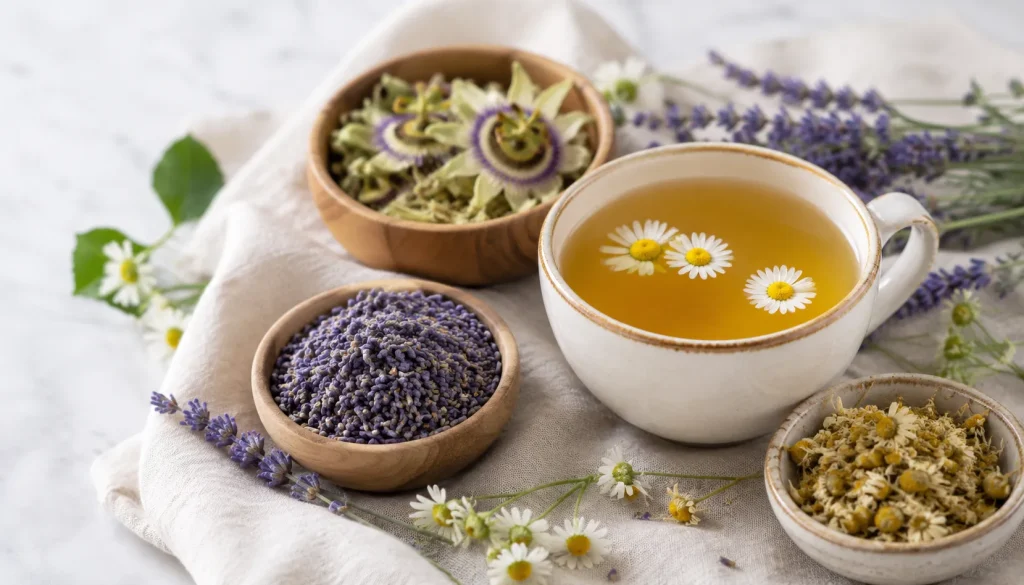
Chamomile is arguably the most well-known calming herb in Western folk tradition. Herbalists have traditionally recommended chamomile tea for relaxation, mild anxiety, and sleep support. Furthermore, it is one of the most extensively studied calming herbs in modern phytotherapy research. Chamomile flowers whole produce a gentle, apple-scented tea with a light golden color.
Lemon Balm (Melissa officinalis)
Lemon balm is a member of the mint family with a fresh, citrusy scent and mild flavor. In folk herbalism, it has been traditionally used as a nerve-calming herb since at least the Middle Ages. Additionally, lemon balm has been studied for its effects on mild anxiety and mood. Lemon balm leaf cut and sifted brews a bright, lemony tea that is pleasant on its own or as a blend base.
Lavender (Lavandula angustifolia)
Lavender’s calming properties are among the most recognized in aromatherapy and folk medicine. Herbalists in European traditions have valued lavender flowers for centuries as a remedy for nervous tension, restlessness, and sleep difficulties. Furthermore, lavender aromatherapy has been widely studied. Lavender flower whole brews a delicate, floral tea. Use it in small amounts, as lavender can become soapy-tasting if over-steeped.
Passionflower (Passiflora incarnata)
Passionflower is a climbing vine native to the southeastern United States. In Native American and later European folk medicine, it was traditionally used as a calming herb for nervous tension and sleep difficulties. Moreover, passionflower has been the subject of clinical research for its calming effects. Passion flower wild harvested can be brewed as a single herb tea or combined with chamomile and lemon balm in a calming blend.
How to Brew Calming Herbal Tea
A general method for most calming herbal teas:
- Heat water to 195–200°F (90–93°C) — just below boiling.
- Use one to two teaspoons of dried herb per eight ounces of water.
- Place herbs in an infuser or teapot.
- Pour water over herbs and cover immediately to preserve aromatic compounds.
- Steep for seven to ten minutes. Most calming herbs benefit from a longer steep than lighter herbal teas.
- Strain and enjoy. Add honey if desired.
In fact, covering the cup during steeping is especially important for calming herbs, as many of their key aromatic compounds are highly volatile and will escape in uncovered steam.
Calming Herbal Tea Blend Recipes
Blending herbs can enhance the calming effect and improve the overall flavor. Try these combinations:
Classic Calm Blend:
- 2 teaspoons chamomile flowers
- 1 teaspoon lemon balm leaf
- Half teaspoon lavender flowers
Deep Rest Blend:
- 2 teaspoons chamomile flowers
- 1 teaspoon passionflower
- 1 teaspoon lemon balm leaf
Gentle Lift Blend:
- 2 teaspoons lemon balm leaf
- 1 teaspoon chamomile flowers
- Half teaspoon lavender flowers
Furthermore, all of these blends work well with a small amount of honey and a slice of fresh lemon. Moreover, they can be brewed as iced teas and stored in the refrigerator for convenient use throughout the day.
Herbal Tea for Anxiety and Sleep
Many of the herbs used in herbal tea for anxiety also support healthy sleep. Consequently, an evening cup of chamomile, passionflower, or lemon balm tea can serve double duty as a relaxing bedtime ritual. In folk herbalism, it was common to prepare a stronger, multi-herb infusion before bed. Additionally, the warmth of the tea itself supports relaxation by gently raising the body temperature and then allowing it to fall, which signals the body that it is time to rest.
Supporting a Calming Routine with Herbal Tea
Herbal tea for anxiety works best as part of a consistent routine. Herbalists and integrative health practitioners often recommend creating a dedicated tea time — morning, mid-afternoon, or evening — as a mindful pause. Additionally, pairing your herbal tea practice with breathing exercises or a short meditation can amplify the calming effect of the herbs. Therefore, the tea becomes a trigger for your relaxation routine rather than just a drink.
Safety and Precautions
The herbs discussed in this article are generally considered safe for most healthy adults when consumed as teas in typical amounts. However, some important cautions apply. Chamomile belongs to the daisy family and may cause reactions in people with ragweed allergies. Lavender in large quantities can cause headaches in sensitive individuals. Passionflower may interact with sedative medications and central nervous system drugs. For this reason, if you take any medications — particularly sedatives, anxiolytics, or antidepressants — consult a healthcare provider before regularly drinking herbal teas for anxiety. This content is for educational purposes only and is not a substitute for professional medical advice or treatment for anxiety disorders.
Frequently Asked Questions
Which herbal tea is best for anxiety?
Chamomile is the most widely used and studied calming herbal tea. Lemon balm and passionflower are also highly regarded in folk herbalism for their calming properties. Many herbalists recommend blending two or three calming herbs for a more complete effect than any single herb alone.
When should I drink for anxiety?
This depends on your goal. For daytime stress, a lemon balm or chamomile blend in the mid-morning or mid-afternoon works well. For evening wind-down or sleep support, chamomile and passionflower before bed are traditional choices. Furthermore, many people find that a consistent daily tea time helps them maintain a calmer baseline throughout the week.
Can herbal tea replace anxiety medication?
No. Herbal teas are not medical treatments and should not replace prescribed medications or professional mental health care. They are supportive folk wellness practices with long traditions. Anyone managing an anxiety disorder should work with a qualified healthcare provider.
How long does calming herbal tea take to work?
The calming effects of herbal tea can be felt within twenty to thirty minutes of consumption for most people. However, the full benefit of regular use builds over time. In other words, consistent daily use of a calming herbal tea tends to provide more noticeable effects than occasional drinking.
Explore our full selection of calming herbs — including chamomile flowers, lavender flowers, and passionflower — at the Hatton Naturals shop.