Herbal Bath Soak: Relaxing DIY Recipes
An herbal bath soak is one of the simplest ways to elevate your self-care routine using dried botanicals you can prepare at home. Soaking in herb-infused water has been practiced across cultures for centuries. Furthermore, it requires no special equipment — just a bathtub, some dried herbs, and a few minutes of preparation.
This guide introduces you to the best herbs for bath soaks, explains how to prepare them safely, and provides three ready-to-use recipes. Additionally, you will learn how to customize blends for different moods and seasons.
Why Use Dried Herbs in a Bath
Dried herbs release aromatic compounds, minerals, and plant pigments into warm bathwater. Herbalists have long valued botanical bath preparations for their sensory and relaxing qualities. In folk traditions around the world, herbal baths were used to mark seasonal transitions, support recovery from fatigue, and simply encourage relaxation.
The warm water opens pores and enhances the skin’s contact with infused botanical compounds. Moreover, the aromatic steam from a hot herbal bath creates an inhalation experience that adds an additional sensory dimension beyond simple bathing.
Using whole or cut dried herbs rather than synthetic bath products gives you a cleaner, more natural experience. Additionally, you avoid artificial fragrances, dyes, and chemical surfactants that appear in many commercial bath products.
Best Herbs for an Herbal Bath Soak
Several dried herbs are particularly well-suited for bath use. Lavender is the most classic choice. Its sweet, calming aroma makes it a go-to for evening baths. Dried lavender flowers add fragrance and a gentle visual beauty to the water.
Chamomile is another beloved bath herb. In folk herbalism, chamomile baths were traditionally offered to children and adults alike for their gentle, calming quality. Whole chamomile flowers turn bathwater a soft golden hue and fill the steam with a warm, apple-like scent.
Rose petals add luxury and a floral note to any soak blend. Peppermint and eucalyptus, meanwhile, create a more invigorating, stimulating experience. Peppermint leaf in particular creates a cooling effect on the skin due to its menthol content.
How to Prepare a Herbal Bath Soak
There are two main approaches. The first is a direct soak, where you place herbs loosely in a muslin bag or tied cloth square and drop it into the running bath. The bag acts like a giant tea bag, steeping as the tub fills. You can squeeze the bag periodically to release more of the aromatic compounds.
The second approach is a pre-brewed herbal infusion. Boil four cups of water, add a generous handful of dried herbs, steep for fifteen minutes, then strain the liquid into the bath. This method is more thorough and works better for tougher plant materials like bark or roots.
For most flower and leaf herbs used in bath soaks, the muslin bag method is faster and just as effective. Furthermore, cleanup is easier since you simply remove the bag rather than cleaning loose plant material from the drain.
Recipe 1: Calming Lavender and Chamomile Soak
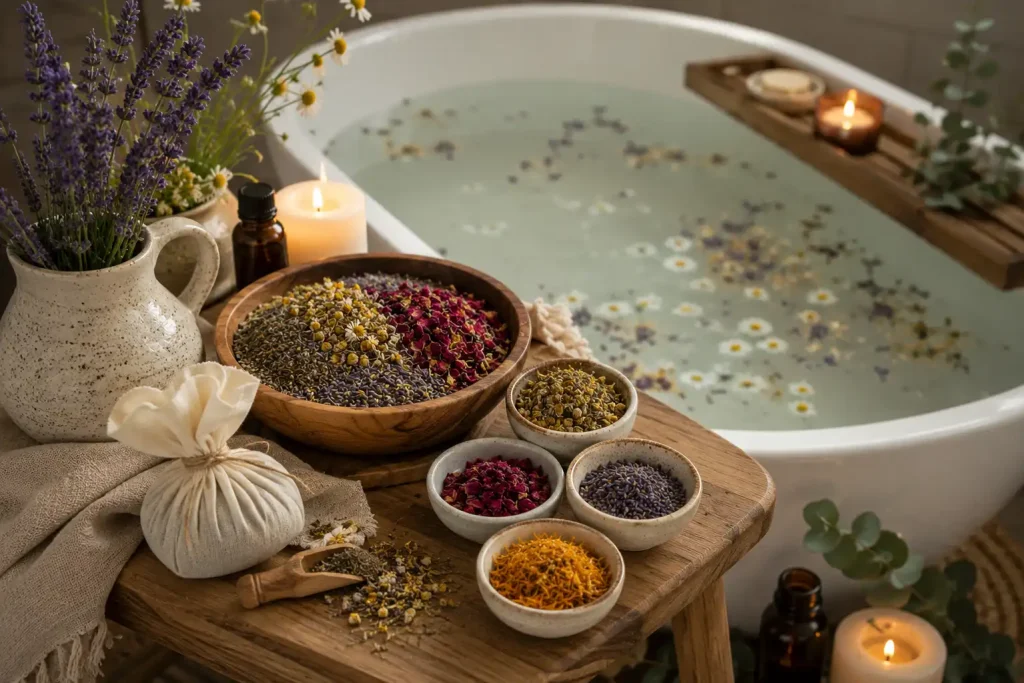
This is the gentlest and most widely loved herbal bath soak blend. Combine two tablespoons of dried lavender flowers, two tablespoons of dried chamomile flowers, and one tablespoon of dried rose petals. Place the blend in a muslin bag and drop it into a warm bath.
The lavender and chamomile together create a calming aromatic environment. Rose petals add a soft floral sweetness. Additionally, adding half a cup of Epsom salt to the bath alongside the herb bag introduces magnesium, which many people find contributes to a relaxing soak experience.
This blend is appropriate for evening use before bed. In fact, many herbalists traditionally recommend flower-based bath soaks in the hour before sleep for their calming sensory effect.
Recipe 2: Invigorating Peppermint and Eucalyptus Soak
For a morning or post-exercise soak that feels energizing, try this stimulating blend. Combine two tablespoons of dried peppermint leaf, one tablespoon of eucalyptus leaf, and one tablespoon of dried rosemary. Steep in hot water for ten minutes, then add the strained infusion to the bath.
Peppermint creates a cool, tingling sensation on skin that feels refreshing after physical activity. Eucalyptus fills the steam with a clean, camphoraceous aroma that many people associate with clarity and invigoration. However, use this blend in the morning rather than the evening, as the stimulating herbs may interfere with winding down.
Note: eucalyptus is potent — use it in small amounts, especially in baths for sensitive skin. As a result, this blend is better suited for adults with normal skin than for children or those with respiratory sensitivities.
Recipe 3: Floral Rose and Lavender Luxury Soak
This blend leans into indulgence. Combine three tablespoons of dried rose petals, two tablespoons of lavender flowers, and one tablespoon of dried calendula petals. Place in a muslin bag and steep in the bath. Add a quarter cup of whole milk or coconut milk powder for an extra silky feel.
Milk contains lactic acid and fats that soften bathwater and leave skin feeling smooth. Combined with the floral herb blend, this creates an experience that rivals many commercial spa treatments. Moreover, the visual effect of rose petals floating in the water is genuinely beautiful.
This recipe makes an excellent self-care ritual for evenings when you want something more special than a regular bath. Similarly, it works as a luxurious gift idea when the herbs and milk powder are pre-blended and packaged in a glass jar.
Tips for Getting the Most from Your Herbal Bath Soak
Water temperature matters. Very hot water can feel harsh, particularly if your skin is dry or sensitive. Aim for a comfortably warm temperature — around 100 to 104°F — for a twenty to thirty minute soak. This is warm enough to open pores without stressing your skin.
Stay hydrated. Soaking in warm water causes mild sweating. Drink a glass of water before and after your bath to compensate. Additionally, have a glass of water nearby during longer soaks.
Pat your skin dry gently after the bath and apply a moisturizer while your skin is still slightly damp. Consequently, you seal in the hydration your skin absorbed during the soak rather than letting it evaporate in the air.
Important note: Herbal bath soaks are intended for wellness and relaxation purposes. They are not a medical treatment. If you have skin conditions, allergies, cardiovascular issues, or are pregnant, consult a healthcare provider before using herbal baths. Avoid baths with stimulating herbs close to bedtime.
Frequently Asked Questions
How much dried herb do I need for one herbal bath soak?
A general guideline is three to six tablespoons of dried herbs total per bath, depending on the potency of the herbs used. Stronger aromatics like eucalyptus need less. Milder flowers like chamomile can be used more generously. When in doubt, start with a smaller amount and increase gradually.
Can I add essential oils to an herbal bath soak?
Yes, but with caution. Essential oils do not dissolve in water and can concentrate on the skin surface, causing irritation. Always dilute them in a carrier such as whole milk, a tablespoon of carrier oil, or unscented bath salts before adding them to the bath. Use no more than five to ten drops total per bath.
Is an herbal bath soak safe for children?
Mild herb blends like chamomile and oat baths have been used traditionally for children. However, avoid strong aromatics like eucalyptus, peppermint, and rosemary in baths for young children. Always consult a pediatrician before adding any herbal preparation to a child’s bath routine.
How long should I soak in an herbal bath?
Twenty to thirty minutes is the typical recommendation for herbal baths. Longer soaks in very hot water can dry out the skin. Furthermore, soaking for a reasonable time gives the body a chance to absorb the aromatics without overexposure. Follow up with moisturizer and hydration.
Explore our full range of bath-ready botanicals at Hatton Naturals, including whole chamomile flowers and premium dried lavender, and create your perfect soak at home.