Star Anise Recipes: Whole and Ground
Star anise recipes reveal one of the most visually striking and aromatically distinctive spices in the world. Star anise (Illicium verum) is the dried fruit of a small evergreen tree native to southern China and northern Vietnam. Its eight-pointed star shape makes it immediately recognizable, and its intensely sweet, licorice-like aroma fills a kitchen the moment it meets heat. Furthermore, star anise plays key roles in some of the most celebrated dishes in Asian, European, and Middle Eastern culinary traditions.
This guide explores star anise recipes in their full range, from slow-cooked broths and braises to spiced teas and baked goods. Additionally, you will learn how to work with whole, cracked, and ground star anise for different culinary purposes.
The Flavor of Star Anise: What to Expect
Star anise contains a high concentration of anethole, the same compound responsible for the characteristic flavor of anise seed, licorice, and fennel. However, star anise is not botanically related to any of these plants — it simply shares the same dominant aromatic compound.
The flavor is intensely sweet and warm, with a spiced quality that goes well beyond simple licorice. When used in savory cooking, star anise fades into the background, contributing depth and complexity rather than an overt licorice taste. Moreover, its warming quality pairs remarkably well with soy sauce, ginger, and cinnamon in long-cooked dishes.
Whole organic star anise has the longest shelf life and highest aromatic intensity. Whole pieces release their flavor slowly during long cooking and are removed before serving. For dishes requiring faster infusion or even distribution, cracked or ground forms work better.
Star Anise in Chinese Five-Spice and Braised Dishes
Star anise is one of the five essential components of Chinese five-spice powder, alongside cloves, Sichuan pepper, fennel seed, and cinnamon. This blend is foundational in Chinese red-braised pork belly (hong shao rou), Cantonese roasted duck, and many regional meat preparations.
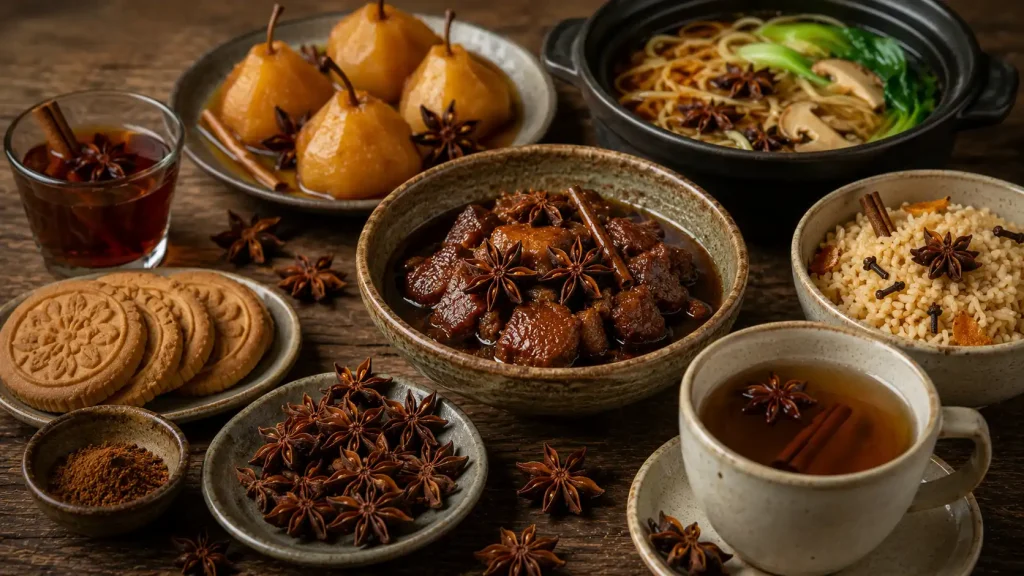
Red braising, or hong shao, is perhaps the signature use of whole star anise in Chinese cooking. The spice goes directly into a braise of soy sauce, rice wine, sugar, and aromatics. During the long, slow cooking process — typically one to two hours — the star anise infuses the braising liquid with its characteristic deep warmth. It is then removed before serving.
Star anise recipes like hong shao rou demonstrate how this spice transforms simple ingredients. The anise flavor merges with soy and sugar into something entirely its own — not identifiably licorice, but deeply complex and savory-sweet. Furthermore, a single whole star anise provides enough flavor for a braise serving four to six people.
Pho: The Iconic Star Anise Broth
Vietnamese pho broth is perhaps the most celebrated example of star anise in a broth application. A traditional pho bo (beef pho) broth requires charred onion and ginger, oxtail or beef bones, and a bouquet of whole spices including star anise, cinnamon, cloves, cardamom, and coriander seeds.
The whole spices are toasted in a dry pan before adding them to the simmering broth. This toasting step is critical — it develops the aromatic compounds in each spice and prevents the broth from tasting raw. Cracked or broken star anise pieces work particularly well in pho because they release flavor slightly faster into the long-simmering broth than perfectly whole stars.
The result is a broth of extraordinary complexity — clear, clean, deeply aromatic, and warming. Additionally, the star anise and Ceylon cinnamon together create the characteristic sweet-warm note that makes pho instantly recognizable.
Star Anise in Spiced Teas and Warm Drinks
Star anise makes an excellent addition to spiced teas and warm beverages. In Indian masala chai, star anise is an optional but welcome addition that deepens the spice profile beyond the standard ginger-cardamom-clove base. Add one whole star anise to a pot of chai alongside the other spices and allow it to steep for five minutes.
A simple star anise tea is made by steeping two whole stars in eight ounces of boiling water for five minutes. The result is a warming, naturally sweet beverage that needs little or no added sweetener. In folk herbalism, spiced teas made with warming spices like star anise were traditionally consumed after meals.
Star anise also appears in mulled wine and spiced cider recipes. Its aromatic intensity complements the fruity warmth of heated red wine beautifully. Moreover, cut and sifted star anise distributes more evenly through a spice sachet used for mulled drinks, releasing flavor more quickly than large whole pieces.
Star Anise Recipes in Baking and Desserts
Star anise appears in sweet preparations across many cultures. In Scandinavian baking, ground star anise flavors cookies, spiced breads, and holiday pastries. In Chinese baking, it appears in mooncake filling spice blends. French cuisine uses star anise in anise-flavored spirits and poaching liquids for fruit.
A classic French preparation is pears poached in red wine with star anise and cinnamon. The star anise perfumes the wine syrup with its sweet warmth, which then infuses the pears during gentle poaching. This simple dessert showcases how powerfully star anise elevates a small number of ingredients.
For baking, ground star anise provides the most reliable results. Grind whole pieces in a spice grinder immediately before use for the freshest flavor. In spice cookies, gingerbread, or fruit cakes, substitute a small amount of ground star anise for a portion of the cinnamon or allspice to introduce a subtle anise dimension.
How to Work With Whole, Cracked, and Ground Star Anise
Whole star anise is best for long-cooked preparations where you want gentle, slow flavor release: braises, soups, broths, and mulled drinks. The whole piece is easy to remove before serving and looks beautiful in the pot during cooking.
Cracked or broken pieces work for medium-length cooking applications like spiced teas, shorter braises, and poaching liquids. The increased surface area accelerates flavor extraction. Consequently, cracked star anise is a practical choice when you want more pronounced flavor in less time.
Ground star anise is for baking and for spice blends where even distribution matters. It cannot be removed after use, so its flavor must be calibrated carefully. Start with a quarter teaspoon in a recipe and adjust from there, as ground star anise is potent — a little goes a long way.
Storing Star Anise Properly
Whole star anise stores very well. Its dense, resinous structure protects the anethole content for two to three years in proper storage conditions — an airtight container in a cool, dark pantry. Ground star anise loses potency much faster, typically within six to twelve months.
Star anise absorbs surrounding odors due to its porous structure, so store it away from strong-smelling spices in its own sealed container. Additionally, avoid storing near the stove, where heat exposure degrades the aromatic oils prematurely.
Buy whole pieces and grind as needed for the best results in both savory and sweet applications. This single habit ensures you always cook with star anise at its freshest and most aromatic.
Important note: This article is for culinary education. Star anise (Illicium verum) is safe for culinary use. However, Japanese star anise (Illicium anisatum) is a toxic species that is visually similar. Always purchase star anise from reputable culinary suppliers. This article does not constitute medical advice.
Frequently Asked Questions
How many whole star anise should I use per dish?
One to three whole stars is typical for most recipes. One star anise flavors a pot of tea or a simple braise. Two to three work for a large broth like pho or a substantial red braise. Because the flavor is potent, it is better to start conservatively and add a second piece if needed rather than over-spicing from the start.
Can I eat the whole star anise, or should it be removed?
The whole star anise is generally removed before eating. The dried pods are extremely hard and have a concentrated, overwhelming flavor when bitten directly. In dishes where it is served in the bowl (like some pho preparations), it is decorative and signals the flavor but is not typically consumed.
What can I substitute for star anise in a recipe?
Anise seed provides the closest flavor substitute, as both contain anethole as the dominant compound. Use half a teaspoon of anise seeds for each whole star anise. Fennel seed also works in a pinch but provides a milder, more vegetal anise note. Chinese five-spice powder, which contains star anise, can substitute in savory recipes where the other spices in the blend are appropriate.
Are star anise recipes only for Asian cooking?
Not at all. Star anise has a long history in French liqueur production, Scandinavian baking, mulled wine recipes, and various European spice blends. Its sweet warmth translates across culinary traditions with ease. Additionally, combining it with cinnamon, cloves, and citrus creates a spice profile that feels at home in holiday baking from many cultural backgrounds.
Explore our full range of star anise products, including whole organic star anise and cracked star anise pieces, at Hatton Naturals — and start building your most aromatic recipes today.