
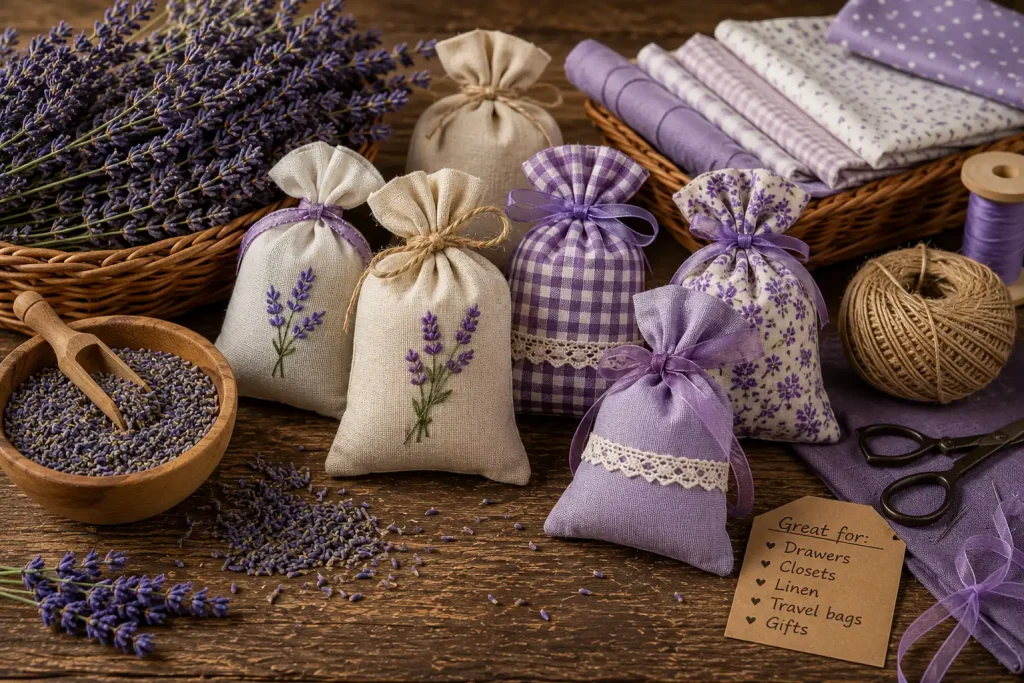
Lavender Sachets DIY: Fragrant Herb Bags
Lavender sachets DIY projects are among the easiest and most satisfying herbal crafts you can make at home. A small fabric bag filled with dried lavender flowers costs almost nothing to produce, lasts for months, and has dozens of practical uses around the house. Furthermore, making your own sachets means you choose the quality of lavender that goes inside.
Whether you want to freshen a drawer, scent your closet, or create a simple handmade gift, this guide gives you everything you need. Additionally, you will find tips on choosing the right lavender variety, sewing versus no-sew methods, and how to refresh your sachets when the scent fades.
Why Lavender Is the Classic Choice for Sachets
Lavender has been used in linen storage for centuries. Historically, dried lavender bundles were tucked into wardrobes and stored with woolens across Europe. Herbalists value lavender for its clean, sweet, floral fragrance, which is both calming and pleasant.
In folk tradition, lavender was placed among stored clothing partly for fragrance and partly because the scent was believed to discourage moths. Moreover, lavender flowers dry beautifully and retain their scent remarkably well when stored in fabric bags rather than open containers.
The aromatic compounds in lavender are concentrated in the small buds and flowers. Therefore, using high-quality dried lavender directly from the flower — rather than powders or extracts — gives you the best and longest-lasting scent in a sachet.
Choosing Your Lavender: Types and Quality
Not all dried lavender smells the same. Lavandula angustifolia, often called English lavender or true lavender, is widely considered the finest for fragrance. Its scent is sweet, balanced, and complex. Lavandin (a hybrid variety) has a sharper, more medicinal note due to higher camphor content.
For sachets, you want whole or ultra-whole dried buds rather than cut and sifted material. Whole buds release their scent more slowly and last longer. Hatton Naturals offers organic ultra-whole lavender flowers, which are ideal for sachets where visual appeal and longevity both matter.
Additionally, organic super lavender is another premium-grade option worth considering for sachets where maximum fragrance intensity is the goal.
What You Need for Lavender Sachets DIY
The supply list is short. You need dried lavender flowers, a breathable fabric, a needle and thread or fabric glue, scissors, and optionally a ribbon for decoration. Cotton muslin, linen, and organza are all excellent fabric choices.
Muslin allows the scent to pass through while keeping the flower buds contained. Organza is sheer and pretty, making it a good choice for gift sachets. Linen adds a rustic, natural look that suits a herbal craft aesthetic well. Avoid tightly woven fabrics like canvas, which trap too much scent inside.
For filling quantity, plan on roughly two to three tablespoons of dried lavender per small sachet (about four inches square). A larger drawer sachet might use four to five tablespoons. Similarly, you can add a few drops of lavender essential oil to the dried flowers to boost intensity if desired.
Sewing Method: Step by Step
Cut two equal squares of fabric, typically four by four inches for a standard sachet. Place them together with the decorative side facing inward. Sew three sides together using a simple running stitch or a sewing machine. Turn the bag right-side out through the open end.
Fill the sachet with dried lavender flowers, leaving about half an inch of space at the top so the bag can close without bursting. Fold the open edge inward and sew it shut. Add a ribbon loop at the top corner if you plan to hang the sachet.
Consequently, you end up with a neat, tidy sachet that holds its shape and keeps flower buds contained. The sewing process takes about ten to fifteen minutes per sachet once you are comfortable with the steps.
No-Sew Method for Quick Sachets
If sewing is not your thing, the no-sew method is just as effective. Cut a circle of muslin or cheesecloth about eight to ten inches in diameter. Place a generous spoonful of dried lavender in the center. Gather the edges upward and tie them securely with twine or a rubber band, then conceal it with a ribbon bow.
Another no-sew option uses small organza drawstring bags, available at craft stores in bulk. Simply fill them with lavender, pull the drawstring tight, and they are ready to use. In fact, this is the fastest method and produces a polished result without any stitching required.
For gifts, bundle three or four finished sachets together with a length of twine. They look beautiful presented in a small basket or wrapped in tissue paper.
Where to Use Your Lavender Sachets
The applications are nearly endless. Tuck a sachet into your sock drawer, sweater shelf, or linen closet to keep fabrics smelling fresh. Hang one from a coat hanger to scent winter wool coats. Place one under a pillow for a light floral note while you sleep.
Lavender sachets also work well in shoe storage areas, gym bags, and car glove boxes. Moreover, placing one in a suitcase while traveling keeps clothing fresh on long trips. Some people set a small sachet on a bedside table as a decorative and aromatic accent.
For pet owners, sachets placed in areas where pets sleep can help neutralize odors naturally. However, keep sachets out of reach of pets that might chew them open, as ingesting large quantities of any dried herb is not recommended for animals.
Refreshing and Recharging Faded Sachets
Over time, the scent in a lavender sachet fades. This is normal and does not mean the sachet has worn out. There are two ways to refresh it. First, gently massage or squeeze the sachet to release aromatic compounds from within the dried buds. This often restores a noticeable burst of fragrance.
Second, add a few drops of lavender essential oil directly onto the outside of the fabric. The oil absorbs into the fabric and recharges the scent within minutes. Additionally, you can open the sachet and add a small handful of fresh dried lavender to supplement the older fill.
Most well-made sachets last six to twelve months before they need replenishing or replacing. Therefore, keeping a supply of dried lavender on hand means you are never without a fresh sachet when you need one.
Important note: Lavender sachets are intended for fragrance and storage use only. They are not intended for medicinal purposes. If you have respiratory sensitivities or fragrance allergies, test your reaction to lavender before placing sachets in sleeping areas.
Frequently Asked Questions
How much dried lavender do I need for a basic sachet?
A standard small sachet (four inches square) holds approximately two to three tablespoons of dried lavender flowers. For a larger sachet intended for a dresser drawer, three to five tablespoons provides better coverage. Whole dried buds fill more evenly than powdered or crushed material.
Can I mix lavender with other dried herbs in a sachet?
Yes. Lavender blends well with dried rosemary, mint, or chamomile. Rosemary adds a crisp green note that contrasts nicely with lavender’s sweetness. Additionally, a few dried rose petals add color and a soft floral dimension to the blend.
How long do lavender sachets DIY projects last?
A well-filled sachet using high-quality whole lavender buds typically retains meaningful fragrance for six to twelve months. Refresh with essential oil drops or replace the filling annually. Proper storage in a cool, dark area between uses extends the lifespan significantly.
What fabric is best for lavender sachets?
Cotton muslin and linen are the most practical choices for fragrance diffusion and durability. Organza is excellent for decorative or gift sachets where visual appeal matters. Avoid non-breathable synthetics, as they trap the scent and reduce diffusion.
Start your lavender sachet project with organic ultra-whole lavender flowers from Hatton Naturals — crafted for projects that deserve the finest botanicals.


