Henna and Indigo for Black Hair: Complete Step-by-Step Process
Achieving naturally black hair with the henna indigo black hair method is one of the most requested topics among people who want to move away from chemical hair dyes. Both henna and indigo are plant-based powders with centuries of use in South Asian and Middle Eastern hair care traditions, and their combination can produce rich, dark, true-black color that is entirely free of ammonia, peroxide, and synthetic developers. The process does require two separate steps and some patience, but the result is a permanent-style color that deposits onto the hair shaft rather than stripping it, leaving hair noticeably thicker, shinier, and stronger over time.
This guide covers every aspect of the henna indigo black hair process: exact mixing ratios, application timing, color science, the two-step method explained clearly, troubleshooting for common problems, and everything you need to know about maintenance and aftercare.
Why Two Steps Are Necessary for True Black
Henna alone produces red to auburn tones. Indigo alone does not fix to the hair without a henna base. When you mix henna and indigo together and apply them in a single step, the result is usually a dark brown or blue-black that depends heavily on your natural hair color and processing time. For most people, especially those with darker brown or black hair, a single-step mix can produce very dark results. However, for true jet black results on lighter hair, or for reliable, long-lasting black on any hair type, the two-step method is the standard approach used by experienced practitioners.
The first step deposits a layer of henna’s dye molecule, lawsone, onto the hair shaft. Lawsone binds tightly to the keratin proteins in the hair. The second step applies indigo, whose blue dye molecules bind to the lawsone-saturated hair far more readily and thoroughly than they would to untreated hair. The combination of the orange-red lawsone base and the blue indigo molecules creates a dark black-brown or near-black color through subtractive color mixing.
What You Will Need
Before you begin the henna indigo black hair process, gather the following materials.
- Henna powder (100 grams to 200 grams depending on hair length)
- Indigo powder (100 grams to 200 grams depending on hair length)
- Lemon juice or apple cider vinegar (for henna mix)
- Warm water (for indigo mix)
- A pinch of salt (helps indigo adhere)
- A non-metallic bowl and spoon for each powder
- Latex or nitrile gloves
- A tinting brush or your gloved hands
- Plastic wrap or a shower cap
- Old towels and an old shirt you do not mind staining
Hair length and thickness determine how much powder you need. For short hair (chin length or above), 100 grams of each is typically enough. For shoulder-length hair, plan on 150 grams each, and for long or thick hair, use 200 grams or more of each.
Step One: The Henna Application
The henna step is the foundation of the henna indigo black hair process. Skipping it or rushing it compromises the final color.
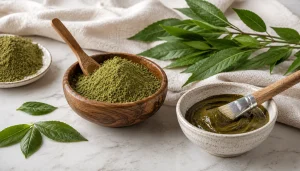
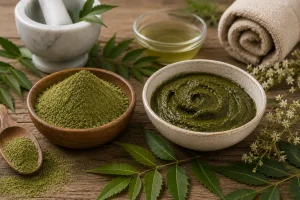
Mixing the henna paste: Combine your henna powder with enough lemon juice or apple cider vinegar to form a thick, smooth paste about the consistency of mashed potatoes. Stir well to eliminate lumps. The acidic liquid activates the lawsone dye and helps it release fully. Cover the bowl with plastic wrap and let it sit at room temperature for eight to 12 hours. This waiting period, called dye release, is essential. Do not skip it. When the henna is ready, a small amount smeared on your palm will leave a visible orange-red stain within a few minutes.
Applying the henna: Put on your gloves and old clothes. Apply the henna paste to dry, unwashed hair in sections, working from roots to ends and making sure every strand is saturated. Do not wash your hair immediately before application as the natural oils help protect your scalp. Once all hair is coated, pile it on top of your head, cover with plastic wrap or a shower cap, and leave for one to three hours. The longer you leave it, the more firmly the lawsone binds. For the henna indigo black hair method, two to three hours is ideal.
Rinsing henna: Rinse the henna thoroughly with plain water only. Do not shampoo yet. Some henna residue is normal and will continue to oxidize and darken over the next 24 to 48 hours. Gently squeeze out excess water and proceed to step two the same day. Your hair will look orange or auburn at this point. That is correct and expected.
Step Two: The Indigo Application
The indigo step should follow the henna rinse within one to two hours for best results. The still-damp, henna-saturated hair absorbs indigo most readily during this window.
Mixing the indigo paste: Combine your indigo powder with warm water (not hot, not cold) until you reach a thick paste consistency. Add a small pinch of salt to help the indigo dye fix to the hair. Mix quickly and thoroughly. Unlike henna, indigo does not need a dye release period and should be used immediately after mixing. Indigo oxidizes and loses potency within 15 to 20 minutes of being mixed, so have your application setup ready before you mix.
Applying the indigo: Work the indigo paste through your hair in the same sectioned manner as the henna. Make sure the paste reaches every part of the hair that you covered with henna. Cover with plastic wrap or a shower cap.
Processing time: Leave the indigo on for 45 minutes to two hours. Forty-five minutes to one hour produces a dark brown to blue-black result. Closer to two hours produces a deeper, truer black. Do not leave indigo on for more than two hours, as extended processing past this point does not deepen the color meaningfully and can make the hair feel stiff temporarily.
Final rinse: Rinse with plain water only. Do not shampoo for at least 48 to 72 hours after the indigo step. The indigo color continues to oxidize and deepen during this period, and shampooing too soon can strip some of the color before it has fully set.
Color Results by Natural Hair Color
Results from the henna indigo black hair two-step method vary depending on your starting hair color.
- Black or very dark brown hair: Excellent coverage of gray and a deep, rich black result. Gray strands will pick up color most intensely and may appear slightly blue-black compared to the rest.
- Medium brown hair: Very dark brown to near-black result. May not achieve pure jet black without multiple applications over time.
- Light brown or dirty blonde hair: Dark brown to chocolate brown result. True black on lighter hair requires building up multiple sessions over several weeks.
- Blonde or light-colored hair: Dark auburn to dark brown. The henna orange base shows through the indigo more strongly on very light hair. True black is achievable but requires patience and multiple sessions.
- Chemically processed hair: Results are less predictable. Bleached or permed hair may absorb henna and indigo unevenly. Do a strand test before a full application.
Aftercare and Maintenance
The henna indigo black hair method changes how you need to care for your hair going forward. Chemical dyes and henna-indigo are not fully compatible. Applying chemical dye over henna-treated hair can produce unpredictable results, including green or unusual tones, due to the metallic salts sometimes found in henna products and the chemical interaction between dye molecules. Always use pure, body-quality henna and indigo powders with no additives.
Shampoo less frequently if possible. Three to four times per week is gentler on henna-indigo color than daily washing. Use a sulfate-free shampoo and a moisturizing conditioner. Avoid clarifying shampoos, which strip the color more aggressively. Deep conditioning treatments with coconut oil, argan oil, or a hair mask once a week help maintain the shine and condition that the henna indigo black hair method naturally imparts.
Reapplication depends on how fast your hair grows and how visible the root line becomes. Most people do a full refresh every four to six weeks. Some opt for just a henna touch-up on the roots between full sessions.
Troubleshooting Common Problems
Hair came out brown instead of black: The indigo did not fully take. This happens most often when the indigo was mixed and left sitting too long before application, when the henna was not left on long enough in step one, or when the hair was not damp enough during the indigo step. Next time, apply indigo immediately after mixing and within two hours of rinsing out the henna.
Color is uneven or patchy: Application was not thorough. Sectioning the hair carefully and using a brush to work paste all the way to the roots and through the mid-lengths and ends usually solves this. Thicker hair especially benefits from thinner sections.
Hair feels dry or stiff after the process: This is a temporary effect of the tannic compounds in both powders. It typically resolves within two to three washes. A coconut oil treatment applied after the final rinse (before shampooing) helps considerably. Apply a small amount of oil to the lengths and ends, leave overnight, and wash out the next morning.
Gray hairs are not fully covered: Gray hair is more resistant to henna and indigo than pigmented hair. Extend the henna processing time to three hours and the indigo processing time to two hours. You may also need two or three full sessions before gray strands are fully saturated.
Scalp staining: Both henna and indigo stain the skin temporarily. The stain fades within one to three days. Applying a thin layer of coconut oil or petroleum jelly around the hairline before application significantly reduces staining.
Storage and Quality
The quality of your henna and indigo powders directly determines the quality of your results. Use only pure plant powders with no added metallic salts, PPD, or other synthetic compounds. Reputable suppliers list the ingredients as simply “henna (Lawsonia inermis)” and “indigo (Indigofera tinctoria)” with nothing else added. Store both powders in airtight containers in a cool, dry location away from light and humidity. Properly stored, henna retains potency for one to two years and indigo for one year. Old or poorly stored powders produce weaker color. If your henna paste does not leave a visible stain on your palm within a few minutes after mixing, the henna is likely past its prime. For indigo, vibrant blue-gray color when dry is a good sign of freshness; a dull or faded appearance can indicate age or moisture damage.
Safety
Pure henna and pure indigo are generally considered safe for topical use on the scalp and hair. Both have long histories of traditional use without widespread adverse effects. However, some important precautions apply. Always perform a patch test 24 to 48 hours before a full application, particularly if you have sensitive skin or have not used these products before. Apply a small amount of the mixed paste to the inside of your wrist or behind your ear and check for redness, itching, or swelling. Never use “black henna,” which is not pure henna at all but rather a preparation containing PPD (para-phenylenediamine), a synthetic compound that can cause severe allergic reactions, chemical burns, and long-term sensitization.
Pure henna is always red-orange in color when mixed and has a characteristic earthy, botanical smell. Products that claim to produce immediate black color from henna alone are likely adulterated. Pure indigo paste is blue-gray and earthy smelling. Pregnant or breastfeeding individuals should consult a healthcare provider before using botanical hair color treatments. People with a known sensitivity to plants in the Lawsonia or Indigofera genera should avoid these products. Keep pastes away from eyes.
Frequently Asked Questions
Can I mix henna and indigo together for a one-step black?
Yes, and many people do. A 50/50 mix by weight applied for two to three hours can produce dark brown to near-black results on dark hair. However, the two-step method consistently produces deeper, more reliable black, particularly on gray hair or lighter natural hair colors. The one-step mix is a reasonable shortcut for touch-ups or for those with very dark natural hair.
How long does henna indigo black hair color last?
Henna and indigo are considered permanent in the sense that they do not wash out the way temporary dyes do. The color fades gradually over time due to UV exposure and washing, but does not disappear entirely. Most people find the color remains vibrant for four to six weeks before the roots become the primary visible concern.
Can I use henna and indigo over chemically colored hair?
Yes, with caution. If your hair has been colored with standard permanent or semi-permanent chemical dye, henna and indigo can typically be applied over it. However, if your hair has been bleached or heavily highlighted, results are less predictable. Always do a strand test first.
Does the henna indigo black hair method work on all hair types?
It works on most hair types. Coarser, porous hair tends to absorb color more readily and may achieve darker results faster. Fine or low-porosity hair may take multiple sessions to build to a true black. Results are generally positive across hair types, though the exact shade varies.
Will indigo turn my hair blue if I use too much?
Indigo is a blue dye, and on very light hair or when used without a henna base, it can produce a blue or blue-gray tone rather than black. On henna-prepared dark hair, this is not a realistic concern. On gray or white hair, the combination may produce a blue-black that some people find beautiful and others find unexpected. A strand test answers this question before you commit.
How soon can I reapply henna and indigo after the first session?
There is no strict waiting period required between sessions. Most practitioners recommend waiting at least two to four weeks between full applications to allow the color to fully oxidize and settle, and to assess how dark the result has become before adding another layer.
Can I condition my hair between the henna and indigo steps?
No. Applying conditioner between steps coats the hair shaft and prevents indigo from penetrating and binding properly. Rinse only with plain water between the two steps.
Your Path to Natural Black Hair
The henna indigo black hair method is one of the most effective, time-tested approaches to natural hair coloring available. With the right powders, the correct two-step process, and a bit of patience on application day, you can achieve a rich, beautiful black that conditions your hair at the same time. Start with a strand test, invest in high-quality henna and indigo, and give yourself enough time to complete both steps properly. The results are worth it.