Psyllium Husk vs Psyllium Powder: Which to Use and When
The debate between psyllium husk vs powder comes up constantly for anyone who uses psyllium regularly, whether for gut support, baking, or thickening drinks. Both forms come from the same plant, Plantago ovata, and both consist primarily of soluble fiber. But the physical differences between whole husk flakes and finely milled powder affect how each one behaves in water, how it integrates into recipes, how quickly it gels, and how much of it you actually need to use. Getting this wrong does not just mean a subpar recipe. It can mean a baked good that collapses, a drink that turns into a gel block, or fiber supplementation that does not work as expected.
This guide breaks down every practical difference between psyllium husk vs powder so you can make the right choice for your specific application and get consistent results every time.
Where Psyllium Husk and Powder Come From
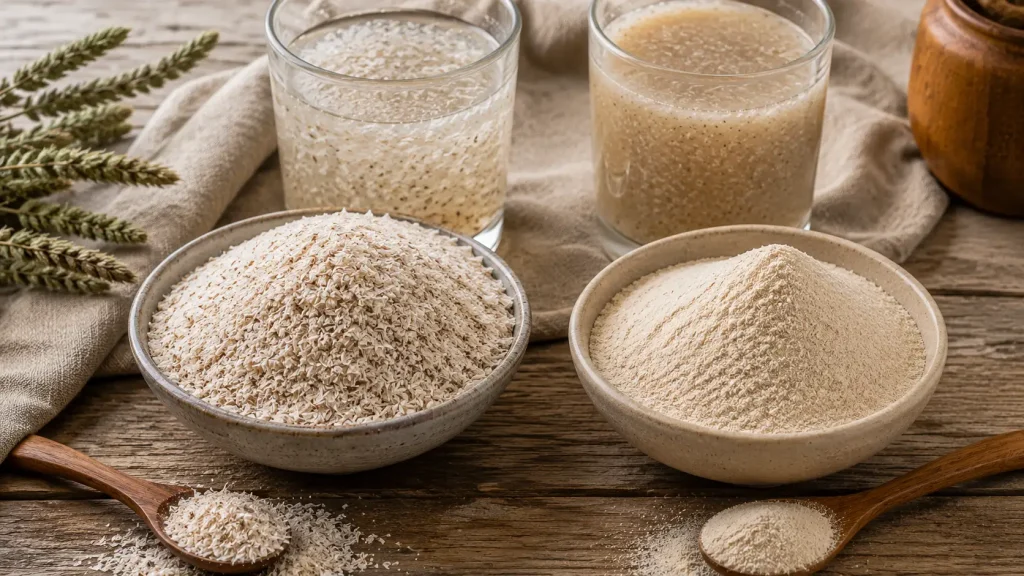
Psyllium comes from the seeds of Plantago ovata, a plant cultivated primarily in India and Pakistan. The outer coating of the seed, called the husk, is the part that contains the high concentration of soluble fiber. When you buy whole psyllium husk, you are getting these outer coatings in their natural, flaky form. Psyllium powder is simply the same husk that has been milled into a finer texture. The fiber content of both is very similar on a gram-for-gram basis, but because powder is denser than flakes, one teaspoon of powder contains more psyllium than one teaspoon of whole husk.
This density difference is the root cause of most dosage confusion when people switch between forms.
Physical Differences and How They Affect Behavior
Whole psyllium husk flakes are light, fibrous, and slightly fluffy. When added to water, they absorb liquid slowly and form a gel that retains some texture, almost like a loose, slightly chewy consistency. This makes whole husk easier to drink in a glass of water because it does not gel as rapidly or as completely as the powdered form.
Psyllium powder, being finely milled, has a much larger combined surface area. It gels faster and more completely when it contacts liquid. A tablespoon of powder stirred into a glass of water can turn the liquid into a thick, almost viscous gel within a minute or two. That speed is useful in baking, where you want the fiber to bind ingredients quickly, but it means you need to drink powdered psyllium preparations fast or they become hard to get down.
In baking, the powder’s ability to gel thoroughly is what makes it a more effective egg substitute and binding agent. Whole husk can work in baking too, but you typically need more of it and the result can sometimes be chewier or more textured.
Psyllium Husk vs Powder for Gut Health and Fiber Supplementation
For the purpose of daily fiber supplementation, both forms are effective. The key is adjusting the dose correctly. A standard dose of whole psyllium husk is around one tablespoon (approximately five grams of fiber). An equivalent dose of psyllium powder is closer to one teaspoon, because the powder is denser and more concentrated by volume.
People who are new to psyllium often prefer the whole husk form for supplementation because it is gentler in texture when mixed into water and gives them slightly more time to drink it before gelling becomes an issue. Powder can be effective for those who prefer to mix their fiber into a smoothie or yogurt, where the gel texture is less noticeable.
Both forms are traditionally used to support healthy bowel regularity and to help maintain a sense of fullness. The soluble fiber in psyllium absorbs water in the digestive tract and may support the growth of beneficial gut bacteria. As with any fiber supplement, increasing intake gradually and drinking plenty of water is essential to avoid digestive discomfort.
Which Form Works Better for Baking
Psyllium is widely used in gluten-free baking because its gel-forming properties mimic some of the binding and structural roles that gluten plays in conventional baked goods. This is where the difference between husk and powder becomes most practically significant.
Psyllium powder is generally the better choice for gluten-free baking. It gels more quickly and more uniformly, which means it binds ingredients together more effectively. In a gluten-free bread recipe, psyllium powder creates a dough that holds its shape, retains moisture during baking, and produces a chewier, less crumbly final product. Most gluten-free baking recipes that call for psyllium are written with the powder form in mind. Organic psyllium husk powder is ideal for this purpose.
Whole psyllium husk can be used in baking, but you need to use roughly one and a half to two times the amount called for if the recipe specifies powder. It works well in recipes where a slightly heartier texture is acceptable, such as rustic sandwich bread, flatbreads, or dense muffins. In recipes that depend on a finer crumb structure, whole husk may leave a slightly fibrous or stringy texture that is noticeable on the palate.
Using Psyllium as an Egg Substitute
One of the most common non-supplementation uses of psyllium is as a vegan egg substitute in baking. The gel it forms when mixed with water replicates some of the binding and moisture-retaining properties of an egg white.
The standard ratio for a psyllium egg is one tablespoon of whole husk or one teaspoon of psyllium powder mixed with three tablespoons of water. Let the mixture sit for two minutes until a gel forms, then use it in place of one egg. For binding purposes in cookies, muffins, and quick breads, this substitution works reliably. It works less well in recipes where eggs provide lift and lightening, such as cakes that rely on beaten eggs for their rise.
Powder gels faster, which can be convenient. Whole husk gel has a slightly less uniform consistency, but it usually works just as well in the finished product.
Mixing Psyllium into Drinks
For people who add psyllium to water, juice, smoothies, or other beverages for daily fiber intake, the choice between husk and powder affects both the experience and the timing.
Whole husk mixed into a tall glass of water can be sipped over two to three minutes before it becomes too thick. Powder gels more aggressively and should ideally be stirred and consumed within about 60 seconds of mixing. If you are adding psyllium to a smoothie, either form works, as the other ingredients dilute the gel effect and make it less noticeable. Yogurt and oatmeal are also friendly vehicles for both forms.
Never mix psyllium into a very small amount of liquid. The minimum recommended volume is eight ounces (one full cup) of liquid per serving, both to achieve the proper gel consistency and to support safe transit through the digestive tract.
Dosage Comparison at a Glance
Because the density difference between the two forms confuses so many people, here is a straightforward comparison for common applications.
- Daily fiber supplement: One tablespoon of whole husk equals approximately one teaspoon of powder. Start with half this amount if you are new to psyllium.
- Gluten-free bread (per loaf): Two tablespoons of powder is a common recipe amount. If substituting whole husk, use three to four tablespoons.
- Psyllium egg (per egg): One teaspoon of powder or one tablespoon of whole husk, each mixed with three tablespoons of water.
- Thickening a smoothie or drink: One teaspoon of powder or one tablespoon of whole husk per 12-ounce drink.
Troubleshooting Common Psyllium Problems
Bread collapses in the middle: This is almost always caused by too much moisture in the dough or too little psyllium. Powder is more reliable for bread baking. Try increasing the psyllium amount by half a teaspoon per loaf and reducing the liquid by two tablespoons.
Drink gelled into a solid before I finished it: You used powder and waited too long. Either switch to whole husk for drinking or mix a smaller amount of powder into a larger volume of liquid. Drinking immediately after mixing also helps.
Digestive bloating after starting psyllium: This is common when the dose is increased too quickly. Start with half a teaspoon of powder or half a tablespoon of whole husk per day for the first week, then increase gradually. Drink at least eight ounces of water with every serving.
Baked goods have a purple or grayish color: This is a normal reaction between psyllium and certain leavening agents, particularly baking powder. It is harmless. Using cream of tartar in place of baking powder often reduces or eliminates the discoloration.
Psyllium powder clumps when added to liquid: Add the powder to the liquid gradually while whisking, rather than dumping it all in at once. A blender also works well for a lump-free result.
Storage and Quality
Both forms of psyllium should be stored in an airtight container in a cool, dry place. Psyllium is highly hygroscopic and absorbs ambient moisture readily. Once it has absorbed moisture, it begins to gel prematurely in the package, and the resulting clumped, partially gelled material is less effective and harder to measure accurately. A sealed glass jar or a tightly closed resealable bag kept away from heat sources like the stove or dishwasher is ideal. Properly stored psyllium remains effective for 18 to 24 months. If you notice that your psyllium has a stale smell, has clumped into hard masses, or has changed color, it is time to replace it. Buying in quantities you can use within six months is a practical approach for most households.
Safety
Psyllium is one of the most extensively studied dietary fiber supplements. It is generally considered safe for most adults when used as directed. A few important precautions apply. Always consume psyllium with adequate water. Taking psyllium with insufficient liquid can cause it to expand in the throat or esophagus, creating a choking hazard or causing blockage. Eight ounces of water per serving is the minimum. People with narrowing of the esophagus or any swallowing difficulties should not use psyllium without medical guidance. Because psyllium can slow the absorption of some medications, it is advisable to take any oral medication at least one to two hours before or after consuming psyllium.
People with inflammatory bowel disease, bowel obstruction, or any acute gastrointestinal condition should consult a doctor before beginning use. Allergic reactions to psyllium are rare but have been reported, particularly in healthcare workers with occupational exposure. Start with a low dose and increase gradually to allow your digestive system to adjust.
Frequently Asked Questions
Is psyllium husk the same as psyllium powder?
They come from the same plant and provide the same type of fiber, but they are physically different. Whole husk is the outer seed coating in its natural flaky form. Powder is that same material finely milled. Powder is denser, gels faster, and is generally more effective in baking. Whole husk is often preferred for drinks and supplementation because it gels more slowly.
Can I substitute psyllium husk for psyllium powder in a recipe?
Yes, but you need to adjust the quantity. Use one and a half to two times as much whole husk as the recipe calls for in powder. The result may also have a slightly coarser texture in baked goods.
Which form of psyllium is better for constipation relief?
Both forms are effective for supporting healthy bowel function. The key is adequate hydration and consistent use. Neither form works well if consumed without enough water. For people who find powder too aggressive in texture, whole husk is a gentler starting point.
How long does psyllium take to work?
Most people notice changes in bowel habits within 12 to 72 hours of starting regular psyllium use. Consistent daily use over one to two weeks produces the most reliable results.
Does psyllium powder taste different from whole husk?
Both are nearly flavorless and very mildly earthy. The powder has no significant flavor advantage over whole husk. In smoothies and baked goods, neither form has a detectable taste when used at standard amounts.
Can I use psyllium powder to make keto bread?
Yes. Psyllium powder is one of the most widely used binders in keto and low-carb baking. It is low in net carbohydrates (the fiber does not count toward net carbs on a standard keto calculation). Its gelling properties are essential for creating structure in almond flour and coconut flour-based breads.
What happens if I take too much psyllium?
Consuming too much psyllium, especially without adequate water, can cause bloating, gas, cramping, and in some cases constipation rather than relief from it. Start at the lower end of the dosage range and increase gradually. More is not always better with fiber supplements.
The Practical Answer on Psyllium Husk vs Powder
For most people, the answer to the psyllium husk vs powder question depends on what you are making. If you bake gluten-free bread or need a reliable egg substitute, psyllium powder is the more effective and consistent choice. If you are adding psyllium to drinks or starting out with fiber supplementation, whole husk gives you more time and a gentler gel. Keeping both forms on hand is a practical approach if you use psyllium for multiple purposes. Whatever form you choose, consistent hydration and gradual dosage increases are the factors that matter most for getting results.