Manjistha Face Pack for Glowing Skin: 3 Easy Recipes
A manjistha face pack is one of the most time-honored ways to give your skin a natural radiance boost. Manjistha, the root of Rubia cordifolia, has been a staple of Ayurvedic beauty traditions for thousands of years, prized for its deep reddish pigment and its reputation as a skin-clarifying herb. If you have been searching for a plant-based alternative to synthetic brightening products, manjistha deserves a top spot on your shelf. The recipes below combine manjistha powder with other well-known botanicals, including turmeric and neem, to create face packs that are easy to mix at home with ingredients you likely already have.
Whether your skin tends to be oily, dry, or somewhere in between, there is a recipe here for you. Read on to learn how to prepare each blend, how often to use them, what to watch out for, and how to store your powders so they stay fresh and effective.
What Is Manjistha and Why Use It on Skin?
Manjistha is a climbing plant native to Asia whose dried root has been ground into a powder and used in Ayurvedic and traditional Chinese herbal practices for centuries. The deep madder-red color of the powder comes from anthraquinone compounds, which are also found in other well-known dye plants. In traditional use, manjistha is described as a blood-purifying herb that may support clear, even-toned skin by working from the inside out when taken internally and from the outside in when applied topically.
When used in a face pack, manjistha powder is traditionally applied to help address uneven skin tone, dullness, and hyperpigmentation. Contemporary herbal enthusiasts often pair it with other botanicals to amplify its effects. The three recipes in this post use Hatton Naturals Manjistha Powder as the base, alongside complementary herbs for a well-rounded skin treatment.
Key Ingredients and Their Traditional Roles
Before mixing your first batch, it helps to understand what each ingredient brings to the blend.
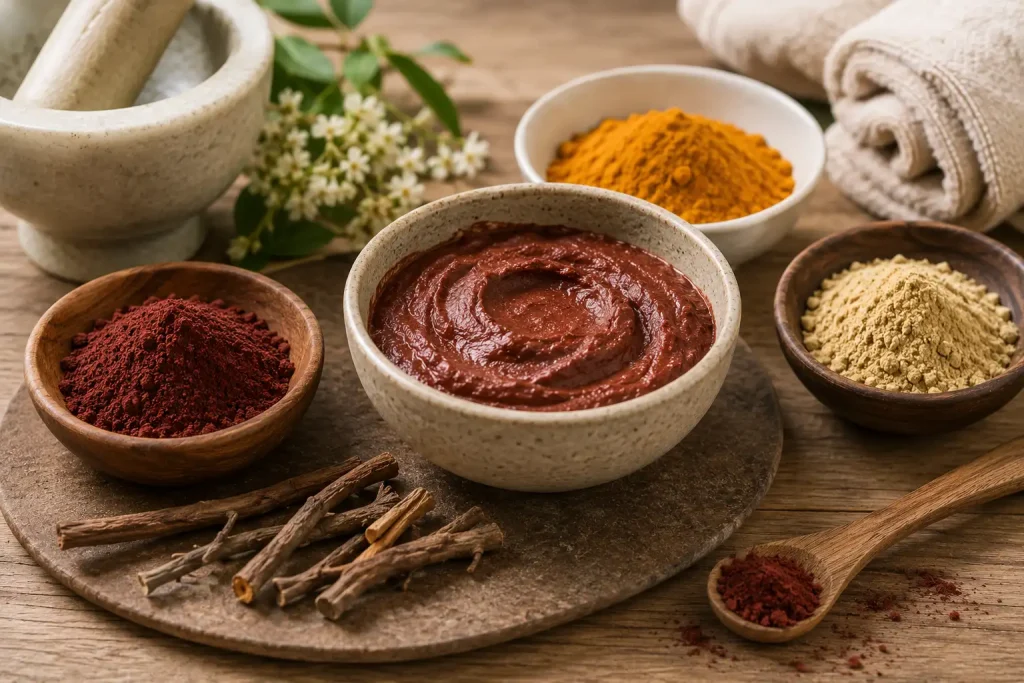
Manjistha Powder: Traditionally used for skin brightening, evening tone, and supporting a healthy complexion. It may support the skin’s natural detox processes when applied topically.
Turmeric Powder: One of the most widely recognized herbs in natural skincare, turmeric contains curcumin, which is traditionally used for its ability to lend a golden glow and may support an even skin tone. Hatton Naturals Turmeric Powder is organically sourced for purity.
Neem Leaf Powder: Neem has long been used in traditional Indian skincare for oily and blemish-prone skin. It may support a clear complexion and is often included in face packs targeting excess sebum. Hatton Naturals Neem Leaf Powder is finely milled and easy to blend.
Liquid bases: Raw honey, plain yogurt, rose water, and aloe vera gel are popular choices. Each brings its own properties: honey is humectant, yogurt contains lactic acid, rose water is soothing, and aloe vera is cooling and hydrating.
Recipe 1: Classic Brightening Manjistha Face Pack
This is the simplest introduction to a manjistha face pack and works well for all skin types.
Ingredients:
- One teaspoon manjistha powder
- Half teaspoon turmeric powder
- One tablespoon raw honey
- One to two teaspoons rose water (to achieve desired consistency)
Instructions:
- Combine the dry powders in a small ceramic or glass bowl. Avoid metal bowls, as they may react with some herbal compounds.
- Add the honey and mix well until a smooth paste forms.
- Add rose water a little at a time, stirring until you reach a consistency that spreads easily without dripping.
- Apply to a clean, dry face using clean fingertips or a silicone mask brush. Avoid the eye area.
- Leave on for 15 to 20 minutes.
- Rinse with lukewarm water using gentle circular motions, then follow with your usual moisturizer.
Use one to two times per week for best results.
Recipe 2: Manjistha and Neem Pack for Oily or Blemish-Prone Skin
If your skin tends to be oily or you deal with occasional breakouts, this combination is a traditional go-to. Neem is renowned in Ayurvedic practice for its role in supporting clear skin, and it pairs naturally with manjistha.
Ingredients:
- One teaspoon manjistha powder
- One teaspoon neem leaf powder
- Quarter teaspoon turmeric powder
- One to two tablespoons plain yogurt (or rose water for a vegan option)
Instructions:
- Mix all three powders together thoroughly.
- Stir in yogurt (or rose water) gradually until a smooth, spreadable paste forms.
- Apply an even layer to the face and neck, avoiding the eye area.
- Allow the pack to sit for 15 minutes. You may feel a slight tingling sensation, which is normal.
- Rinse thoroughly with cool or lukewarm water. Pat dry gently.
This pack is best used once or twice a week. If you find neem to be too strong on its own, halve the amount and increase gradually as your skin adjusts.
Recipe 3: Deep Radiance Pack for Dull or Mature Skin
For skin that looks tired or lacks luminosity, this richer version of the manjistha face pack incorporates aloe vera for added hydration and sandalwood powder for its cooling, soothing properties.
Ingredients:
- One and a half teaspoons manjistha powder
- Half teaspoon turmeric powder
- Half teaspoon sandalwood powder (optional but traditional)
- Two teaspoons pure aloe vera gel
- One teaspoon raw honey
Instructions:
- Whisk the dry ingredients together until fully blended.
- Add aloe vera gel and honey, mixing until you have a creamy, uniform paste.
- Apply a generous layer to cleansed skin.
- Leave on for 20 minutes. The pack will tighten slightly as it dries, which is expected.
- Rinse with lukewarm water and follow with a nourishing moisturizer or facial oil.
This pack is suitable for weekly use. Its extra moisture makes it especially welcome during dry winter months or in low-humidity climates.
Troubleshooting Your Manjistha Face Pack
Pack is too thick: Add rose water or aloe vera gel, one teaspoon at a time, until it reaches a spreadable consistency.
Pack is too runny: Add a small pinch of additional powder. Let the mixture sit for two minutes before reassessing.
Staining on skin: Manjistha and turmeric can temporarily tint fair skin a warm orange or pink hue. This typically fades within 30 to 60 minutes after rinsing. Washing with a gentle cleanser helps speed this up.
Staining on fabric: These powders stain fabric. Use an old towel and wear clothing you do not mind staining during application and removal.
Dryness after use: If your skin feels tight after rinsing, your liquid-to-powder ratio may be off, or your skin is especially dry. Add more honey or aloe to your next batch and apply a moisturizer immediately after rinsing.
Storage and Quality
Keep your herbal powders in airtight glass jars away from direct sunlight, heat, and moisture. A cool, dark pantry or cabinet works well. Properly stored, high-quality powders remain potent for 12 to 24 months. Always use a dry spoon when measuring to prevent moisture from entering the jar, which can cause clumping or spoilage. Do not pre-mix large batches of face pack paste, as fresh preparations are always more effective. Mix only what you plan to use in a single session.
Safety
Always perform a patch test before applying any herbal face pack to your full face. Apply a small amount of the mixed paste to the inside of your wrist or elbow and wait 24 hours. If you notice redness, swelling, or significant irritation, discontinue use. Avoid applying any face pack to broken, sunburned, or inflamed skin. Keep all preparations away from the eyes and mucous membranes. These recipes are intended for topical use only and are not a substitute for professional dermatological care. If you have sensitive skin or a known allergy to any of the listed ingredients, consult a qualified healthcare provider before use.
Frequently Asked Questions
How often should I use a manjistha face pack?
Most people do well using it one to two times per week. If you have sensitive skin, start with once a week and observe how your skin responds before increasing frequency.
Will manjistha stain my skin permanently?
No. Any temporary tinting from manjistha or turmeric fades within an hour or so after rinsing. Using a mild cleanser after rinsing the pack helps remove any residual color more quickly.
Can I use a manjistha face pack on my body?
Yes. Many people apply it to the neck, shoulders, or back for the same skin-evening benefits. The same patch-test precautions apply.
Is this pack suitable for all skin types?
The recipes above can be adapted for different skin types by adjusting the liquid base. Honey and aloe vera suit dry skin; yogurt or rose water suits oily skin. Neem adds extra clarifying action for oily or acne-prone skin.
Can I use these packs if I am pregnant or breastfeeding?
Topical use of these herbs in the amounts used in face packs is generally considered low risk, but you should consult your healthcare provider before introducing any new herbal product during pregnancy or breastfeeding.
How long does a fresh-mixed pack last?
Freshly mixed paste is best used within one session. If you have leftover paste, cover it and refrigerate it, then use it within 24 hours. Paste containing honey or dairy will not keep long at room temperature.
Where can I buy quality manjistha powder?
Look for organically sourced, finely ground powder from a reputable supplier. Hatton Naturals Manjistha Powder is a reliable option that pairs well with the other botanicals in these recipes.
What if I do not have all three herbs on hand?
A simple manjistha-and-honey pack still delivers benefits. You can build toward the full recipes as you gather more ingredients over time.
Conclusion
A well-crafted manjistha face pack is one of the simplest ways to bring Ayurvedic beauty wisdom into your daily routine. With just a few high-quality botanicals and a liquid base you likely already have in your kitchen, you can create a personalized skin treatment that honors centuries of traditional use. Start with one recipe, observe how your skin responds, and adjust from there.