Some botanicals hold their color beautifully after cure. Others turn brown, gray, or completely colorless within days. Some add a pleasant visual texture to the finished bar. Others go rancid or create skin safety concerns. Knowing the difference before you invest time and materials is essential. This guide covers the six most popular organic herbs used in soap making today, explains how each performs in both cold process and melt-and-pour bases, and gives you the practical knowledge to use them confidently. All featured herbs are available as certified organic bulk botanicals from Hatton Naturals.
Understanding the Soap Making Environment
Before choosing your herbs for soap making, you need to understand what happens to plant material during saponification. When you combine oils with sodium hydroxide (lye) and water in cold process soap, the mixture reaches temperatures between 90 and 160 degrees Fahrenheit during trace and pour. After pour, saponification continues inside the mold for 24 to 48 hours, generating even more heat through a process called gel phase.
This alkaline, high-heat environment is harsh on many plant pigments. Chlorophyll (green color) almost always turns brown. Most red and pink anthocyanin pigments turn brown or purple-gray. Yellow and orange carotenoid pigments from flowers like calendula are among the most stable in cold process soap. Melt-and-pour bases are gentler because the lye reaction is already complete, meaning you are simply melting an existing soap base and adding ingredients. Botanical colors survive far better in melt-and-pour applications.
Calendula: The Gold Standard for Floral Soap Botanicals
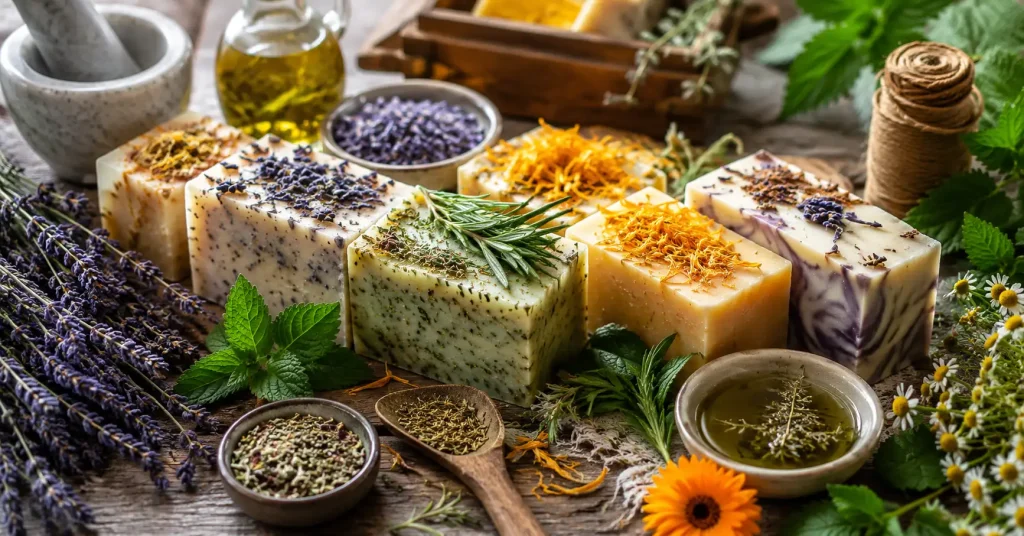
Calendula is consistently ranked as one of the top herbs for soap making for good reason. The bright orange and yellow petals contain carotenoid pigments that are relatively stable in cold process soap. While you will not get a vivid orange bar, calendula petals hold their golden color reasonably well and add a cheerful, artisan appearance to the finished bar.
In melt-and-pour soap, calendula petals are stunning. They retain much more of their original color and create a beautiful visual effect when embedded in a clear glycerin base. Calendula infused in oil (a calendula-infused carrier oil) is another popular technique. When you infuse calendula petals in olive oil or sweet almond oil for four to six weeks before soap making, some of the fat-soluble carotenoids transfer to the oil, which can give your soap a gentle golden hue.
Hatton Naturals carries organic calendula flowers whole. Choose whole flowers over finely ground material for embedded decoration, as whole petals retain their shape in a finished bar.
Lavender: Aroma, Texture, and Reliable Performance
Lavender is one of the most popular herbs for soap making worldwide, and for good reason. Dried lavender buds add a pleasant coarse texture to the bar and provide a very mild natural fragrance (though most of the scent fades during saponification and must be supplemented with lavender essential oil for a strong finished aroma).
In terms of color, lavender buds turn brown in cold process soap due to the alkaline environment. This is normal and expected. The brown flecks still add visual texture and a natural, earthy aesthetic that many customers associate with artisan handmade soap. In melt-and-pour applications, lavender buds retain their purple-gray color much longer, especially when embedded on the top of the bar rather than mixed throughout the base.
For swirled designs, finely milled lavender powder can be used as a natural colorant, though it produces tan-to-beige tones rather than purple. This is a key distinction that surprises many beginners who expect lavender to produce a purple bar. Hatton Naturals carries organic lavender super grade, which is a particularly high-quality bud variety.
Chamomile: Gentle Color and Delicate Texture
Chamomile flowers are a lovely addition to botanical soap, and they behave somewhat better than lavender in terms of color retention. The yellow center discs (the chamazulene-rich part of the flower) have some stability in cold process soap and can produce soft golden-yellow flecks in the finished bar. The white petals tend to go creamy or tan.
Chamomile is an excellent choice for soap bars marketed toward sensitive skin types because of its gentle reputation in traditional herbalism. Chamomile-infused oils are another popular technique: infusing chamomile in sunflower or jojoba oil and using that oil in your recipe adds the botanical benefit without the texture of plant material in the bar.
Ground chamomile powder can also be used as a mild natural exfoliant. The particle size is fine enough to provide very gentle mechanical exfoliation without being abrasive on most skin types. Hatton Naturals carries chamomile flowers whole in organic bulk quantities.
Rose Buds and Petals: Beautiful in Appearance, Complex in Practice
Rose buds and petals are among the most requested herbs for soap making, and they are also among the most misunderstood. The pink and red anthocyanin pigments in rose petals do not survive cold process saponification. After cure, rose petals embedded in cold process soap turn brown or dark. This is not a sign of low quality. It is simply the chemistry of the alkaline environment at work on these particular pigments.
The good news is that brown rose petals in a cold process bar still look beautiful and natural. Many artisan soap makers embrace the transformation and position it as part of the charm of botanical soap. In melt-and-pour bases, dried rose buds retain more of their original pink tone, especially when the bars are stored away from light.
For true pink soap color, rose clay or pink cosmetic micas are more reliable than botanical sources. Rose petals and buds are best used for their decorative texture, romantic visual appeal, and marketing story rather than as primary colorants. Hatton Naturals carries organic rose buds and petals in whole form, which are ideal for embedded bar-top decoration.
Cornflower Petals: Vivid Blue That Fades Gracefully
Cornflower blue petals are one of the most striking-looking herbs for soap making. Fresh and dried, they have an intense, vivid blue color that is quite unusual in the botanical world. Unfortunately, like most blue and purple pigments, cornflower anthocyanins do not survive cold process saponification. The blue color fades to gray or brown during the alkaline gel phase.
In melt-and-pour soap, cornflower petals fare significantly better. When embedded on the surface of a clear glycerin base and stored away from UV light, they can retain blue tones for several weeks. This makes them a fantastic choice for melt-and-pour gift bars, seasonal collections, and display pieces that will be used relatively quickly.
Cornflower petals are also used in herbal facial steam blends and bath salts, both of which are related product categories that pair naturally with botanical soap lines. Hatton Naturals carries cornflower blue petals in bulk organic form.
Peppermint Leaf: Texture, Exfoliation, and Fragrance Retention
Peppermint leaf is one of the most functional herbs for soap making. Unlike some botanicals that are purely decorative, peppermint leaf contributes in multiple ways. When finely ground, it creates a visually appealing green-speckled bar with mild exfoliating texture. When left in larger cut pieces, it adds visible leaf flecks for a natural, rustic aesthetic.
The color behavior of peppermint in cold process soap is predictable: green turns to brown or olive, driven by chlorophyll degradation in the alkaline environment. The transformation happens during gel phase and is complete within 24 to 48 hours of pour. Embrace it as part of the botanical aesthetic. In melt-and-pour applications, peppermint leaf holds its green color somewhat better, particularly in bases with lower processing temperatures.
One significant advantage of peppermint leaf over many other botanicals is that some of the menthol content survives saponification, contributing a faint, pleasant cooling sensation in the finished bar. This makes peppermint leaf uniquely functional rather than purely decorative. Hatton Naturals carries peppermint leaf whole in organic bulk quantities.
How to Add Herbs to Soap: Techniques That Work
The method of incorporation matters as much as which herbs you choose. Here are four reliable techniques for using herbs for soap making.
Bar-top decoration: Press dried botanicals onto the top of the poured soap bar before it sets. This is the simplest method and works in both cold process and melt-and-pour. It requires no special preparation and gives a beautiful artisan look. Be aware that bar-top botanicals are exposed to water during use and will eventually soften and fall away.
Embedded in melt-and-pour: Add botanicals to a melted clear glycerin base, stir gently, and pour into molds. This suspends herbs throughout the bar and gives maximum visual impact. Best suited to smaller, denser botanicals like whole lavender buds and rose petals.
Infused oil incorporation: Infuse dried herbs in a carrier oil for four to six weeks, strain, and use that oil in your cold process recipe. This transfers fat-soluble compounds into the oil without adding plant material that could go rancid. Calendula and chamomile infused oils are popular examples.
Powdered colorant: Grind dried herbs into a fine powder using a coffee or spice grinder and blend into your soap at trace. This works best with clays and some botanical powders. Results vary dramatically by herb, so always test in a small batch before scaling up.
What Does Not Work (and Why)
Just as important as knowing what works is understanding what to avoid when using herbs for soap making.
Fresh herbs should never be added directly to soap. The high moisture content introduces contamination risks and accelerates rancidity. Always use thoroughly dried material. Fruits and vegetable purees also carry contamination risk and are difficult to incorporate safely without specialized knowledge.
Oils from herbs that are high in unsaturated fatty acids (like hemp or flax) can shorten shelf life dramatically if used in large proportions. Citrus peel is another commonly misjudged ingredient. While it looks beautiful in soap initially, it often goes rancid and moldy over a short shelf life due to its natural oil content. If using lemon or orange peel, keep amounts minimal and include antioxidants like vitamin E oil to extend shelf life.
Safety in Botanical Soap Making
Safety is paramount when working with herbs for soap making, both during production and in the finished product.
Always use properly dried, food-grade or cosmetic-grade botanicals from a reputable supplier. Herbs intended for soap or cosmetic use should be free from pesticide residues, heavy metal contamination, and mold. Certified organic bulk herbs from a trusted source like Hatton Naturals are the safest choice.
When working with cold process soap, the lye (sodium hydroxide) is the primary safety concern. Always wear protective eyewear and gloves. Work in a well-ventilated area. Never leave lye water unattended around children or pets. Once saponification is complete and the soap has cured for four to six weeks, the lye is fully consumed and the finished bar is safe for use.
For customers with known plant allergies, botanically decorated soaps should be clearly labeled with all botanical ingredients. Chamomile, in particular, may cause reactions in people allergic to ragweed or related Asteraceae family plants. Lavender essential oil can cause reactions in people with fragrance sensitivities. Always label your botanical soaps with complete ingredient lists to comply with cosmetic labeling regulations in your jurisdiction. None of the herbs discussed in this guide are intended for medical claims in soap applications.
Frequently Asked Questions
Why do my lavender buds turn brown in cold process soap?
Lavender’s purple color comes from anthocyanin and chlorophyll pigments that are unstable in alkaline environments. Cold process soap has a high pH during saponification, which degrades these pigments. This browning is completely normal and expected. If you want purple color in your bar, use cosmetic-grade purple mica instead.
Which herbs for soap making actually keep their color?
Calendula petals have the best color retention in cold process soap among common botanicals due to their stable carotenoid pigments. In melt-and-pour applications, cornflower petals, rose buds, and lavender all retain more color because the harsh lye reaction has already occurred.
Can I use fresh herbs instead of dried?
No. Fresh herbs contain significant moisture that introduces contamination risk and dramatically increases the chance of mold and rancidity in the finished bar. Always use thoroughly dried, properly stored herbs for soap making.
How much botanical material should I use per batch?
For embedded or mixed-in botanicals, a commonly used starting point is one to two tablespoons of dried herb per pound of oils. For bar-top decoration, use as much or as little as looks appealing visually. In the case of powdered botanicals used as colorants, start with one teaspoon per pound and adjust based on test results.
Do herbs in soap provide any skin benefits?
The extent to which botanicals in soap confer benefits to skin is debated, since most active compounds are rinsed off rather than left on skin. However, the experience of using botanically enriched soap, the sensory texture, mild fragrance, and visual beauty, has real value. Soap is a rinse-off product, and any specific skin benefit claims require careful regulatory consideration.
How long does botanically decorated soap last before the herbs go bad?
Bar-top botanical decoration typically stays looking good for one to three months under normal bathroom conditions. Soap bars should be stored in a cool, dry location on a draining soap dish between uses. High-humidity bathrooms accelerate botanical degradation. If selling botanical soap, advise customers to use within six to 12 months of purchase.
Where is the best place to buy bulk organic herbs for soap making?
Quality and purity are critical for botanicals used in cosmetic products. Hatton Naturals offers certified organic bulk herbs with clear sourcing, no unnecessary additives, and the variety needed to supply a soap making operation at any scale.
Conclusion
Choosing the right herbs for soap making is a skill built through research, testing, and experience. With quality certified organic botanicals from Hatton Naturals and the guidance in this guide, you have the foundation to create beautiful, botanically rich bars that stand out. Start with calendula and lavender, test small batches, and let the results guide your next creative decision.