Echinacea Tea Recipe: Brew This Herb
Echinacea tea recipe guides are some of the most searched herbal brewing topics online, and for good reason. Echinacea purpurea is one of the most widely studied and traditionally valued herbs in North American folk medicine. Furthermore, it has been used by Indigenous peoples of the Great Plains for centuries before becoming a global herbal staple.
Today, herbalists and home brewers prepare echinacea as a tea using either the root or the above-ground herb parts. In fact, both forms offer distinct flavor profiles and traditional uses. This guide walks you through a complete echinacea tea recipe, covering both the root and herb cuts.
Echinacea Root vs. Herb: Which to Use in Your Echinacea Tea Recipe?
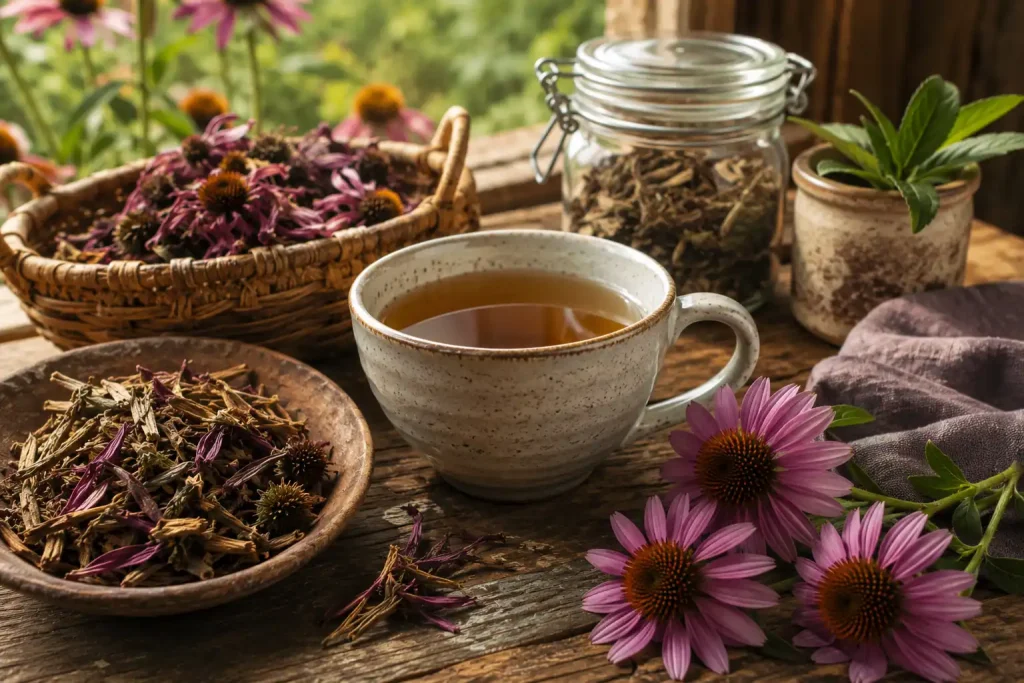
Both parts of the echinacea plant are used for tea, but they differ in flavor and preparation. Echinacea purpurea root has an earthy, slightly bitter, and woodsy flavor. Additionally, the root contains higher concentrations of certain compounds and requires a longer steep or a decoction (simmering) to fully extract them.
The herb cut — made from dried aerial parts such as the leaves and stems — is lighter in flavor and easier to brew as a simple infusion. Consequently, many beginners start with the herb cut before exploring the root. On the other hand, experienced herbal tea drinkers often prefer the more robust character of root tea.
You can also combine both in one cup. Moreover, blending root and herb gives you a layered flavor that draws from the full plant profile.
What You Need for This Echinacea Tea Recipe
For a basic echinacea root tea:
- 1 teaspoon of organic echinacea purpurea root C/S
- 8 ounces of cold filtered water (for decoction)
- Optional: honey or lemon to balance bitterness
For a basic echinacea herb infusion:
- 1–2 teaspoons of organic echinacea purpurea herb C/S
- 8 ounces of hot water, just below boiling
- Optional: a pinch of dried ginger for warmth and to offset bitterness
Step-by-Step: Echinacea Root Decoction
Root material is denser than leaf material. Therefore, it benefits from a decoction rather than a simple steep:
- Combine one teaspoon of echinacea root cut and sifted with eight ounces of cold water in a small saucepan.
- Bring to a gentle simmer over medium heat.
- Reduce heat and simmer, covered, for fifteen to twenty minutes.
- Remove from heat and allow to cool for five minutes.
- Strain through a fine-mesh sieve and pour into a mug.
- Add honey or ginger to taste.
Consequently, the decoction method extracts more of the root’s compounds than steeping alone. Furthermore, the resulting tea is richer and more concentrated than an herb infusion.
Step-by-Step: Echinacea Herb Infusion
The herb cut brews quickly as a standard hot infusion:
- Heat water to just below boiling, around 200°F (93°C).
- Add one to two teaspoons of echinacea herb cut and sifted to your infuser or teapot.
- Pour the hot water over the herb and cover immediately.
- Steep for ten to fifteen minutes for a full-bodied cup.
- Strain and serve with honey or lemon.
In other words, echinacea herb requires a longer steep than most herbal teas to fully develop its flavor and character. Similarly, covering the cup during steeping preserves aromatic compounds that might otherwise escape as steam.
Flavor Profile of Echinacea Tea
Echinacea tea has a distinctive earthy, slightly bitter, and mildly spicy flavor. The root is more pungent and woodsy. The herb cut is lighter and slightly floral. Additionally, one of echinacea’s most noted sensory characteristics is a mild tingling or numbing sensation on the tongue — a sign of the alkylamide compounds present in the plant. In fact, this tingly quality is often used by herbalists as a marker of potency.
The bitterness can be softened with honey. Furthermore, pairing echinacea with ginger adds warmth and rounds out the flavor considerably.
Echinacea Tea Recipe Variations
Try these flavor combinations to make your echinacea tea recipe more interesting:
- Echinacea and Ginger: Add a quarter teaspoon of dried ginger to your brew. This warming pairing is a popular folk remedy combination.
- Echinacea and Lemon: A squeeze of fresh lemon after straining brightens the earthy flavor.
- Echinacea Root and Herb Blend: Combine equal parts root and herb cut for a balanced, full-plant experience.
- Echinacea and Elderflower: A light, floral contrast to echinacea’s earthiness, popular in European folk traditions.
Traditional Use of Echinacea in Folk Herbalism
Echinacea has a rich history in traditional North American herbalism. Indigenous communities of the Great Plains traditionally used the plant for a wide range of purposes, including as a wound wash and oral remedy. Moreover, the Eclectic physicians of the nineteenth century popularized echinacea as a key herbal medicine in the United States. Herbalists today continue to value it as one of the most important herbs in the Western folk tradition.
Traditionally, echinacea was used at the first sign of seasonal illness and consumed in short courses rather than continuously. As a result, many modern herbalists follow this same approach.
Buying and Storing Echinacea
When buying echinacea for tea, look for certified organic material with good color and aroma. Root should be tan to light brown, and herb should be a consistent grayish-green. Additionally, the tongue-tingling quality is a reliable indicator of freshness and potency. Store in an airtight container away from heat and light.
Safety and Precautions
Echinacea tea is generally well-tolerated by most healthy adults. However, people with autoimmune conditions, allergies to plants in the daisy family (Asteraceae), or those taking immunosuppressant medications should consult a healthcare provider before use. Additionally, echinacea is traditionally recommended in short courses of one to two weeks rather than continuous long-term use. Pregnant and breastfeeding individuals should seek medical advice before using echinacea tea regularly. This content is educational only and does not constitute medical advice.
Frequently Asked Questions
What part of echinacea is best for tea?
Both the root and the aerial herb are traditionally used. The root has a stronger, more bitter flavor and is typically decocted. The herb cut brews as a standard infusion. Many herbalists value both forms and often blend them together in a single echinacea tea recipe.
How long should I steep echinacea tea?
For the herb cut, steep ten to fifteen minutes. For the root, use a decoction method and simmer for fifteen to twenty minutes. Therefore, echinacea requires more time than most herbal teas to fully develop its character.
Does echinacea tea taste bitter?
Yes, echinacea tea has a noticeable earthy bitterness, especially from the root. However, adding honey or ginger significantly softens this quality. Similarly, the herb cut is milder than the root and may be more approachable for new drinkers.
Can I drink echinacea tea every day?
In folk herbalism, echinacea is traditionally recommended in short courses rather than daily long-term use. Most herbal practitioners suggest using it for one to two weeks at a time, then taking a break. Consult a healthcare provider for personalized guidance.
Start your echinacea tea recipe at home with premium echinacea root and echinacea herb from the Hatton Naturals shop.