Thyme Tea Recipe: Steps for a Savory Brew
Thyme tea recipe enthusiasts have long relied on this simple, savory brew for its bold herbal flavor and deep folk tradition. Made from dried Thymus vulgaris leaves, thyme tea is one of the most straightforward herbal infusions you can prepare at home. Furthermore, it is a staple in Mediterranean folk herbalism with a history stretching back thousands of years.
In fact, ancient Greeks burned thyme as incense, and Roman soldiers bathed in thyme-infused water before battle. Today, herbalists and home brewers alike continue to value this small but potent herb. Additionally, its availability in both whole and cut forms makes it easy to incorporate into your tea routine.
Why Make a Thyme Tea Recipe at Home?
Brewing your own thyme tea gives you complete control over quality and strength. Commercial herbal tea bags often contain blends with minimal amounts of the featured herb. On the other hand, using whole or cut dried thyme leaves ensures you are getting the full aromatic and flavor benefit of the plant.
Moreover, dried thyme is an affordable herb that stores well. As a result, keeping a supply on hand for tea is both practical and economical. You can brew it plain or blend it with other herbs to create complex flavor profiles.
What You Need for This Thyme Tea Recipe
The ingredient list is simple:
- 1–2 teaspoons of organic thyme leaves whole
- 8 ounces of filtered water
- Optional: honey, lemon juice, or fresh ginger
- Optional: a pinch of dried ginger for extra warmth
For equipment, you will need a small saucepan or kettle, a teapot or mug, and a fine-mesh strainer or tea infuser. Consequently, no special tools are required beyond what most kitchens already have.
Step-by-Step Thyme Tea Recipe
Follow these steps to brew a clean, flavorful cup:
- Heat the water. Bring filtered water to just below a full boil, around 200°F (93°C). Boiling water can make thyme tea more bitter, so slightly cooler is better.
- Measure the thyme. Add one to two teaspoons of dried thyme leaves to your infuser or teapot. Use two teaspoons for a stronger, more aromatic brew.
- Pour and cover. Pour the hot water over the thyme. Cover the mug or teapot to trap the volatile oils, which carry much of the flavor and aroma.
- Steep. Let the tea steep for five to seven minutes. Shorter steeps produce a lighter, more delicate flavor. Longer steeps yield a bolder, more medicinal-tasting cup.
- Strain and serve. Remove the leaves and pour into your mug. Add honey or lemon if desired.
Furthermore, if you prefer a milder flavor, start with one teaspoon and adjust from there. Similarly, you can add a small stick of cinnamon during steeping for a more complex profile.
Thyme Tea Recipe Variations
Once you have mastered the basic thyme tea recipe, consider these variations:
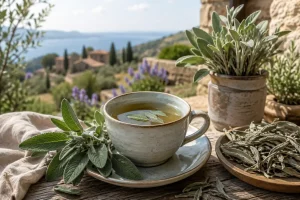
Thyme and Sage Tea: Combine one teaspoon each of thyme and sage leaf for a deeply savory Mediterranean blend. This pairing is traditionally used in European folk herbalism as a warming winter tea.
Thyme and Ginger Tea: Add a quarter teaspoon of dried ginger to your thyme leaves before steeping. As a result, you get a warming, slightly spicy tea that is excellent on cool mornings.
Thyme and Lemon Tea: Add a squeeze of fresh lemon juice after straining. The citrus brightens the earthy thyme flavor considerably.
Thyme Honey Tea: Stir in a full teaspoon of raw honey. This is a classic folk remedy pairing that has been used for generations to soothe the throat.
Hot Brew vs. Cold Brew
The hot brew method described above is the most common. However, thyme also lends itself to cold brewing. To cold brew, combine two tablespoons of dried thyme with two cups of cold filtered water. Refrigerate for eight to twelve hours, then strain and serve over ice. In fact, cold-brewed thyme tea has a softer, less astringent flavor than hot-brewed versions. Additionally, it makes an excellent base for herbal iced tea blends.
Flavor Profile of Thyme Tea
Thyme tea is earthy, slightly minty, and savory with faint floral undertones. Its flavor is more assertive than chamomile or mint but less pungent than sage. Moreover, the aromatic compounds in thyme — including thymol — give it a distinctive warming quality that is often described as herby and clean.
The flavor can vary depending on the variety of thyme used. Common thyme (Thymus vulgaris) is the most widely available and is the standard choice for tea.
Buying Quality Thyme for Tea
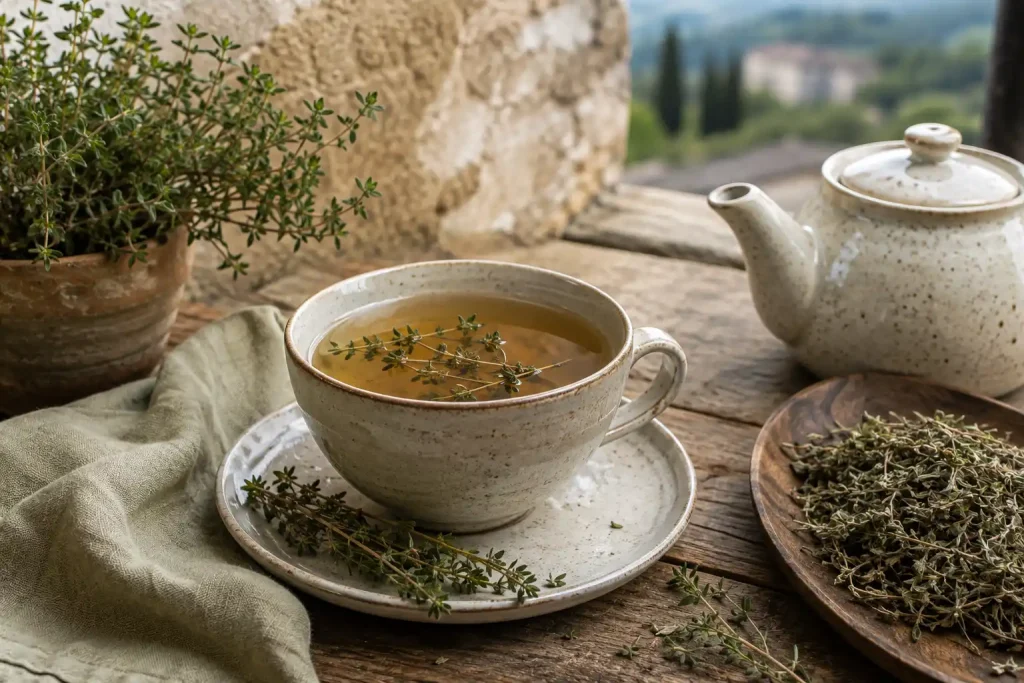
For the best thyme tea recipe results, quality of the dried herb matters. Look for thyme that is a consistent grayish-green, aromatic, and free from stems and debris. Additionally, organic certification ensures the leaves are free from synthetic pesticides. Store dried thyme in an airtight container in a cool, dark place. Properly stored, it retains its potency for up to two years.
Safety and Precautions
Thyme tea is widely regarded as safe for most adults when consumed in typical culinary amounts. However, large doses of thyme or thyme oil can be irritating to the digestive system. Therefore, one to two cups per day is a reasonable amount for most people. Pregnant individuals should consult a healthcare provider before consuming thyme tea regularly, as thyme has traditionally been noted in folk herbalism for its strong properties. This information is for educational purposes only and does not constitute medical advice.
Frequently Asked Questions
Can I use fresh thyme instead of dried in this thyme tea recipe?
Yes, fresh thyme works well. Use about five to six sprigs of fresh thyme per cup, as fresh thyme has a milder concentration than dried. Additionally, bruise the leaves slightly before steeping to release more flavor.
How long should I steep thyme tea?
Five to seven minutes is the standard range. Steeping for less time gives a lighter, more delicate tea. In other words, adjust steep time based on your flavor preference.
Is thyme safe to drink daily?
For most adults, one to two cups of thyme tea per day is considered moderate and generally well-tolerated. However, if you are pregnant, nursing, or taking medications, consult a healthcare provider before making it a daily habit.
What does thyme tea pair well with?
Thyme tea pairs beautifully with honey, lemon, sage, ginger, and rosemary. It complements savory herbal flavors and can be enjoyed alongside light meals or as a stand-alone warming drink.
Ready to try this thyme tea recipe at home? Shop organic thyme leaves whole and explore our full selection of premium dried herbs at Hatton Naturals.