Vanilla Powder for Baking: A Complete Guide
Vanilla powder for baking is one of the most useful pantry upgrades a baker can make. Unlike extract, it adds pure vanilla flavor without introducing additional liquid. It keeps almost indefinitely when stored properly, and it delivers an intense, complex vanilla character that makes a noticeable difference in finished baked goods.
What Is Vanilla Powder?
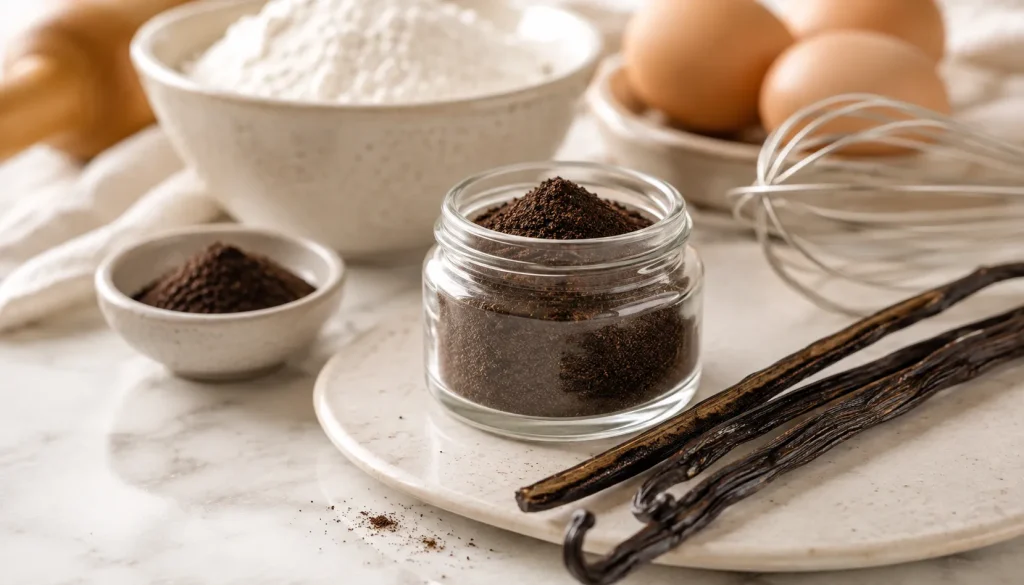
Vanilla powder is made by grinding dried vanilla beans into a fine powder. The result is a dark, fragrant ingredient that concentrates all the aromatic compounds of the bean in a dry format. Some vanilla powders are made from whole beans; others are a blend of ground beans and a filler like dextrose or starch. Pure vanilla bean powder contains only one ingredient: vanilla beans.
When evaluating vanilla powder for baking, ingredient transparency matters. Pure vanilla bean powder delivers richer, more complex flavor than blended products. The characteristic brown-black specks visible in the powder are the same as the specks bakers scrape from fresh vanilla pods — a sign of authentic, quality product.
Vanilla Powder vs. Vanilla Extract
Vanilla extract is the most familiar form — it is alcohol-based and liquid. It incorporates easily into batters and doughs, but it adds a small amount of liquid to the recipe. In most baked goods, this is negligible. However, in specific applications it matters.
Vanilla powder for baking has a clear advantage in dry applications. White chocolate coatings, powdered sugar glazes, whipped cream, meringues, and dry spice rubs all benefit from vanilla flavor without the liquid. Moreover, in recipes where alcohol must be avoided — infant foods, some religious dietary contexts, or simply personal preference — vanilla powder is the obvious choice.
Additionally, vanilla powder does not evaporate in the oven the way alcohol-based extract does. As a result, the vanilla flavor is often more pronounced in finished baked goods, particularly in recipes with high baking temperatures or long bake times.
How to Use Vanilla Powder in Baking
Substituting vanilla powder for extract is straightforward. Use approximately ½ teaspoon of pure vanilla bean powder in place of 1 teaspoon of vanilla extract. Because the powder is more concentrated, start conservatively and adjust to taste in your recipe.
In cakes and muffins, whisk the vanilla powder into the dry ingredients before combining with wet ingredients. This ensures even distribution throughout the batter. In cookie doughs, it can be added at the same time as flour. For custards, puddings, or ice cream bases, whisk it into the milk or cream while heating.
Our vanilla bean powder is made from whole ground vanilla beans. It carries intense, true vanilla flavor and disperses smoothly into both wet and dry applications.
Best Baked Goods for Vanilla Powder
Shortbread cookies showcase vanilla powder beautifully. The simple dough — butter, flour, sugar, vanilla — has nowhere to hide poor-quality ingredients. Vanilla powder adds visible specks and a deep, aromatic flavor that extract cannot quite match.
Yellow cakes, pound cakes, and butter cakes benefit enormously. These are vanilla-forward recipes where the flavor is central, not background. Furthermore, sugar cookies, snickerdoodles, and any butter-based cookie improve with vanilla powder.
Pastry cream, crème brûlée, and panna cotta all shine with vanilla bean powder. The powder infuses into the dairy base during heating and produces a custard studded with real vanilla flecks. Additionally, vanilla powder works well in homemade granola, oatmeal, and smoothie bowls — applications that do not involve heat but still benefit from intense vanilla flavor.
Vanilla Beans vs. Vanilla Powder
Whole vanilla beans are the gold standard for recipes that require scraped vanilla paste — crème anglaise, high-end pastry creams, and ice cream bases. The pod itself can also be simmered in cream or milk to infuse flavor, then removed.
Our whole vanilla beans are available for recipes that call for the pod or scraped seeds directly. They produce a moist, intense paste that mixes directly into batters, sauces, and dairy. Meanwhile, vanilla bean powder is more practical for everyday baking — no splitting, scraping, or sourcing individual pods required.
Many professional bakers keep both on hand. Whole beans for special preparations; vanilla powder for daily production baking where consistency and convenience matter.
Storing Vanilla Powder for Maximum Freshness
Vanilla bean powder is shelf-stable but sensitive to moisture, light, and heat. Store it in an airtight container in a cool, dark cabinet. Avoid humid environments — a cabinet near the dishwasher or stove is not ideal. When stored properly, pure vanilla bean powder retains its potency for 2–3 years.
Unlike extract, vanilla powder will not evaporate from a loosely closed jar. However, humidity can cause clumping. If clumps form, break them up with a spoon or sift the powder before use. The flavor is not affected by mild clumping — only moisture penetration damages the product.
Safety Note
Vanilla bean powder is safe for general culinary use. Individuals with known allergies to vanilla (rare but documented) should exercise caution. Pure vanilla bean powder contains no added alcohol, gluten, or dairy. However, always check sourcing and processing information if you have cross-contamination concerns related to other allergens.
Frequently Asked Questions
How much vanilla powder equals one vanilla bean?
One vanilla bean typically yields about 1 teaspoon of scraped vanilla paste. Approximately ½ to 1 teaspoon of pure vanilla bean powder is a reasonable equivalent, depending on the richness of the powder. Since vanilla powder includes the entire ground bean, the flavor is often slightly more concentrated than scraped paste alone.
Can it be used in no-bake recipes?
Absolutely. Vanilla powder works excellently in no-bake applications — energy balls, raw desserts, chia puddings, protein shakes, and overnight oats. Mix it directly into the base. There is no need for heat to activate the flavor, unlike some other powdered ingredients.
Does vanilla powder dissolve in liquid?
Pure vanilla bean powder disperses in liquid rather than fully dissolving, since it contains ground plant material. Stir or whisk it vigorously, especially in thinner liquids. In warm dairy or batters, it incorporates smoothly. In clear liquids, expect visible flecks — this is authentic and desirable in recipes like vanilla latte or vanilla milk.
Is vanilla powder the same as vanilla sugar?
No. Vanilla sugar is a blend of granulated sugar and vanilla flavoring or ground vanilla. Vanilla powder is pure ground vanilla bean with no added sugar. If your recipe calls for vanilla sugar, you will need to account for the added sweetness. Vanilla powder delivers only vanilla flavor, giving you full control over sweetness separately.
Elevate your baking with real vanilla. Shop vanilla bean powder and whole vanilla beans — pure, organic ingredients for bakers who want authentic flavor in every batch.