Lemon Balm Tea: A Calming Herbal Infusion
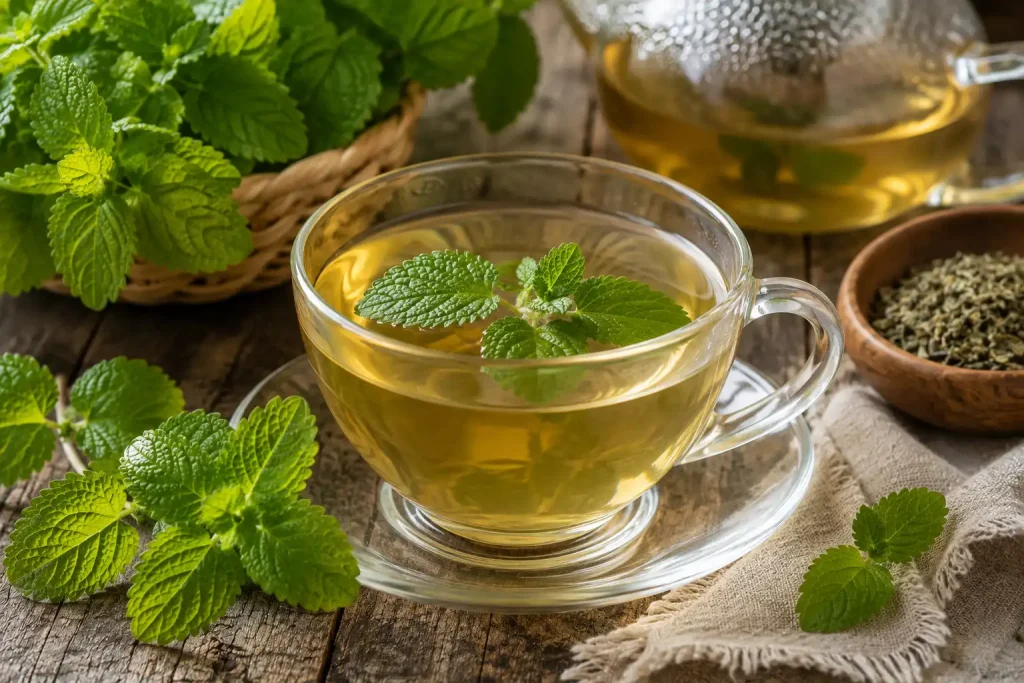
Lemon balm tea is one of the most pleasant and approachable herbal infusions you can add to your daily routine. Made from the leaves of Melissa officinalis, a member of the mint family, this herb offers a gently sweet, lemon-scented flavor that is lighter and softer than actual lemon. In fact, the name Melissa comes from the Greek word for honeybee — a nod to the plant’s long history of attracting bees and being cultivated near apiaries in Mediterranean Europe.
Furthermore, lemon balm has been valued in European herbal traditions for well over two thousand years. It appears in the writings of Dioscorides and was a key ingredient in Carmelite water, a famous Renaissance-era herbal tonic. Today, it remains one of the most popular calming herbs in Western folk herbalism.
What Does Lemon Balm Tea Taste Like?
The flavor is bright, citrusy, and gently herbal. It is often described as lemon with a slightly minty edge — softer and less acidic than lemon verbena or lemongrass. There is no bitterness when brewed correctly, and the natural sweetness of the leaf comes through clearly. Consequently, lemon balm tea rarely needs sweetening, though a drizzle of honey does enhance its honeyed undertones beautifully.
The aroma is equally appealing — fresh, clean, and unmistakably lemony. It is the kind of tea that feels calming simply from the moment you pour the hot water and the steam rises.
Brewing Lemon Balm Tea: Step-by-Step Instructions
Lemon balm is a delicate herb. As a member of the mint family, it contains volatile aromatic compounds that are sensitive to excessive heat. For this reason, a moderate water temperature and a covered cup during steeping are both important.
- Measure the herb. Use 1–2 teaspoons of dried lemon balm leaf per 8 oz of water. Fresh lemon balm leaves, if available, can be used at a ratio of about 4–6 fresh leaves per cup — a larger amount is needed because fresh leaves have a higher water content.
- Heat the water. Bring water to around 200°F (93°C), just below boiling. Avoid using fully boiling water, as it can diminish the delicate lemon aroma of the essential oils in the leaf.
- Steep covered. Place lemon balm in your infuser and pour hot water over it. Cover the cup immediately — the volatile compounds that give lemon balm its signature scent can escape with the steam if left uncovered. Steep for 5–7 minutes.
- Remove and serve. Lift the infuser and taste. The tea should be fragrant, gently sweet, and clearly lemony. Add honey or a thin slice of lemon if desired.
Both whole lemon balm leaf and cut and sifted lemon balm make excellent tea. Whole leaf tends to have a slightly more aromatic quality, while cut and sifted brews more quickly and extracts well in shorter steep times.
Lemon Balm Tea Flavor Pairings
Lemon balm pairs beautifully with a wide range of other herbs. Its citrusy, slightly sweet character makes it one of the most versatile herbal blending bases:
- Lemon balm and chamomile: A classic calming blend. Chamomile flowers add a soft, apple-like sweetness that pairs perfectly with lemon balm’s citrus notes. This is one of the most popular bedtime herbal combinations in European folk herbalism.
- Lemon balm and lavender: A floral, citrusy pairing. Use a small amount of lavender (about one part lavender to three parts lemon balm) to avoid the lavender dominating.
- Lemon balm and peppermint: A refreshing daytime blend with a cool, bright finish.
- Lemon balm and passionflower: A traditional combination in folk herbalism, often used as an evening tea.
- Lemon balm and rose petals: Delicate, floral, and very pretty — excellent served as an iced tea in summer.
Cold Brew and Iced Lemon Balm Tea
Lemon balm makes a superb cold brew. Add 3–4 teaspoons of dried lemon balm per 16 oz of cold water. Cover and refrigerate for 8–12 hours. The result is a very fragrant, lightly sweet infusion with a clean lemon flavor and no bitterness whatsoever. Serve over ice with a sprig of fresh mint or a thin slice of cucumber for a refreshing summer drink.
Additionally, iced lemon balm tea works beautifully as a base for herbal spritzers. Simply add a splash of sparkling water and a squeeze of fresh lemon to a glass of strong cold-brewed lemon balm tea over ice.
Growing and Drying Your Own Lemon Balm
Lemon balm is one of the easiest herbs to grow at home. It thrives in most temperate climates, tolerates partial shade, and spreads enthusiastically — sometimes aggressively. If you grow it yourself, harvest leaves in the morning just before the plant flowers for maximum aromatic intensity.
To dry lemon balm, tie small bundles and hang them upside down in a dry, warm, well-ventilated space away from direct sunlight. Alternatively, spread leaves in a single layer on a drying screen. Properly dried lemon balm should retain its bright green color and lemon scent. Brown or faded leaves indicate too much heat or too-slow drying.
Lemon Balm in Traditional Herbalism
Lemon balm has been traditionally valued across European herbal traditions for its calming, uplifting qualities. Herbalists have traditionally recommended it as a nervine herb — one that is thought to support a calm, balanced mood. It has been used in folk herbalism for nervous tension, mild sleep disruption, and digestive discomfort associated with stress. These are traditional uses and do not represent medical claims.
In traditional aromatherapy, the essential oil of lemon balm — sometimes called melissa oil — is among the most expensive in the world due to the large volume of fresh plant material required to produce even a small amount. The dried leaf for tea, however, is very affordable and widely available.
Safety and Usage Notes
Lemon balm is considered safe for most healthy adults when consumed as a tea in normal amounts. However, it may interact with thyroid medications and with sedative drugs. If you have a thyroid condition or take any medications that affect the central nervous system, consult your healthcare provider before adding lemon balm tea to your regular routine. This information is educational only and does not constitute medical advice.
Frequently Asked Questions
Does lemon balm tea help with sleep?
Lemon balm is traditionally recommended in folk herbalism as a calming evening herb. It is often blended with chamomile, valerian, or passionflower in traditional sleep-support formulas. Whether it helps any specific individual is a personal matter, and we encourage you to consult a qualified practitioner with specific questions about sleep health.
What is the difference between lemon balm and lemon verbena?
Both plants have a lemon scent, but they are from different plant families and taste quite different. Lemon verbena (Aloysia citrodora) has a sharper, more intensely lemony flavor, while lemon balm is softer, sweeter, and more herbal. Lemon balm is also milder in aroma, making it gentler on the palate for those who find lemon verbena too intense.
Can I use lemon balm tea topically?
In folk herbalism, cooled lemon balm tea has traditionally been applied to the skin. However, this guide focuses on the tea as a beverage. For topical uses, we recommend researching qualified herbalism resources and consulting a healthcare professional.
How many cups of lemon balm tea can I drink per day?
Most herbal tea guides suggest 2–3 cups per day is a typical intake for dried lemon balm leaf tea. As with any herb, moderation and variety are sensible approaches. Very large amounts consumed over a long period have not been extensively studied.
Browse our organic lemon balm whole leaf and cut and sifted lemon balm — your next favorite calming cup is just a brew away.