Neem Powder for Skincare: An Ayurvedic Guide
Neem powder for skincare carries one of the longest track records of any botanical ingredient in the world. Derived from the leaves of Azadirachta indica — the neem tree — this deep green powder has been a cornerstone of Ayurvedic beauty and wellness traditions for thousands of years. Its complex chemistry and distinctive aroma make it a powerful, if pungent, ingredient worth understanding.
What Is Neem Leaf Powder?
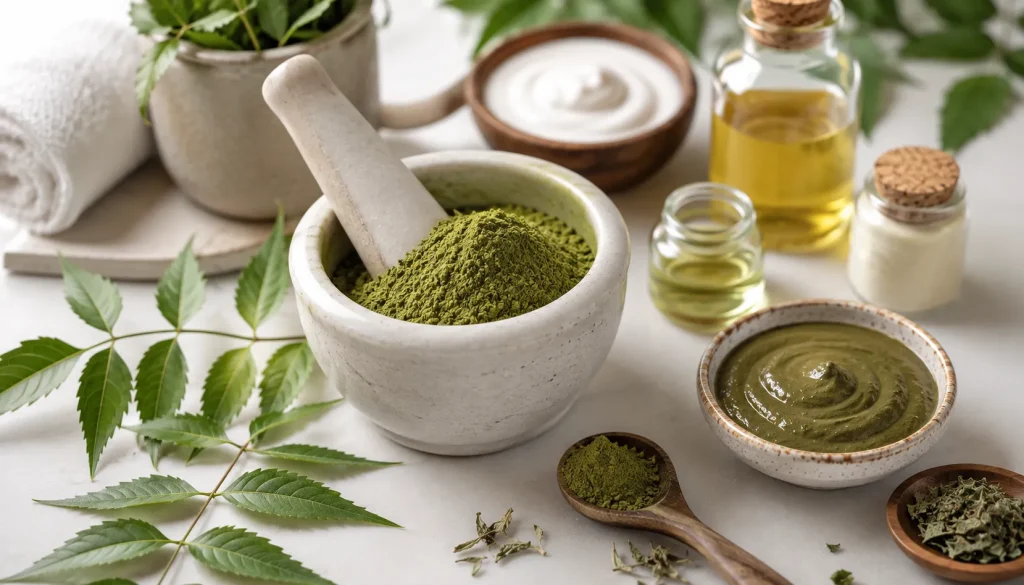
Neem leaf powder is made by drying the leaves of the neem tree and grinding them into a fine, dark green powder. The neem tree is native to the Indian subcontinent and has been cultivated and wild-harvested across South and Southeast Asia for millennia. Every part of the tree has been used in traditional preparations — leaves, bark, seeds, and oil.
The powder concentrates the naturally occurring compounds found in fresh neem leaves. These include nimbin, nimbidin, and quercetin — compounds that Ayurvedic practitioners have valued for centuries. The powder has a distinctive bitter, earthy aroma that is immediately recognizable and quite potent. This is a sign of a high-quality, authentic product.
Our neem leaf powder is organically sourced and finely milled for smooth incorporation into face masks, creams, and other topical preparations.
Neem Powder in Ayurvedic Tradition
In Ayurveda — the traditional Indian system of holistic wellness — neem is classified as a bitter herb associated with cleansing and purifying. It appears in traditional texts dating back over 3,000 years. The Charaka Samhita, one of Ayurveda’s foundational texts, references neem extensively in formulations for both internal and external use.
Traditionally, neem was incorporated into skin preparations, hair rinses, and dental care routines. Neem twigs were used as traditional toothbrushes in parts of South Asia and Africa long before commercial dental products existed. Furthermore, Ayurvedic practitioners formulated neem into oils, pastes, and powders for topical application on a wide range of skin concerns.
Modern skincare and natural beauty communities have rediscovered neem as consumers increasingly seek plant-based alternatives to synthetic cosmetic ingredients. It appears in commercial formulations for face washes, masks, spot treatments, and scalp care products worldwide.
Neem Powder Skincare: Face Mask Recipes
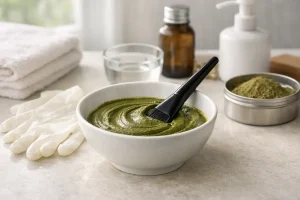
The simplest neem face mask combines neem powder with water or rose water to form a paste. Apply to cleansed skin, leave for 10–15 minutes, and rinse thoroughly with lukewarm water. The smell is strong — this is normal and fades quickly after rinsing.
A more balanced mask combines neem powder with kaolin clay in a 1:3 ratio. Add rose water or plain water to form a thick paste. The clay moderates the intensity of the neem and provides additional drawing properties. This combination is suitable for oily or combination skin.
For a richer mask, combine neem powder with sandalwood powder, honey, and a few drops of jojoba oil. The honey and oil soften the experience for drier skin types. Additionally, a blend of neem powder and manjistha powder is a classic Ayurvedic combination. Manjistha — Rubia cordifolia — has been used in Ayurvedic skincare traditions for centuries and pairs well with neem in purifying formulations.
Neem Powder for Hair and Scalp Care
Beyond the face, neem powder has a long history of use in hair and scalp care preparations. Herbalists traditionally used neem in hair rinses and scalp masks to address oiliness and maintain scalp health. The powder can be mixed into hair masks or added to conditioners for a scalp treatment.
A simple scalp mask combines neem powder with coconut oil and a small amount of turmeric powder. Apply to the scalp, leave for 20–30 minutes, then shampoo thoroughly. The combination has deep roots in South Asian hair care traditions. Moreover, the pungent smell of neem dissipates after rinsing and does not linger in hair.
Consequently, many Ayurvedic hair care product lines incorporate neem as a key ingredient in scalp-focused shampoos, hair oils, and pre-wash treatments. Its traditional reputation and botanical complexity make it a compelling inclusion in premium natural hair products.
Choosing Quality Neem Powder
Color is the primary indicator of neem powder quality. High-quality neem leaf powder is a deep, vibrant green. Olive or brown-green powder indicates age or poor processing. The aroma should be intensely bitter and earthy — mild or neutral-smelling neem powder has likely lost much of its active chemistry.
Organic certification matters significantly for neem. While the neem tree is naturally pest-resistant (it is itself a natural pesticide source), conventionally grown neem used in commercial cosmetics may be processed with chemical solvents. USDA Organic or equivalent certification provides assurance of responsible sourcing.
For cosmetic-use neem powder, fine grind is preferred. Coarser material can be gritty in masks and may not incorporate smoothly into formulations. Look for a consistent fine powder with no obvious large particles or discoloration.
Combining Neem with Other Ayurvedic Botanicals
Neem powder works best in combination with other botanical ingredients that balance or complement its properties. Sandalwood powder adds a cooling, aromatic element. Turmeric adds a warming, brightening note from a traditional perspective. Manjistha brings purifying tradition and a rich, earthy character of its own.
Amla (Indian gooseberry) powder is another classic Ayurvedic combination partner, particularly for hair care. In skincare, rose powder or rose hip powder can soften neem-heavy formulations and add a pleasant fragrance note. The key with neem is always moderation — it is a potent botanical, and a little goes a long way in any formulation.
Safety Note
Neem powder is intended for external use only in the context of skincare. Do not ingest neem powder without guidance from a qualified healthcare provider — it is a potent botanical with a complex chemistry that can cause adverse effects in large internal doses. For topical use, always patch-test before applying to the face. Some individuals experience skin irritation or sensitivity, particularly with prolonged or concentrated application. Avoid contact with eyes. Keep out of reach of children. Pregnant or nursing individuals should avoid neem products.
Frequently Asked Questions
How often should I use a neem powder face mask?
Once or twice per week is appropriate for most skin types. More frequent use may over-dry or irritate the skin, especially if you have sensitive or dry skin. Oily or combination skin may tolerate twice-weekly use more comfortably. Always observe how your skin responds after the first few applications before establishing a routine.
Why does neem powder smell so strong?
The intense, bitter smell comes from the naturally occurring sulphurous and terpenoid compounds in neem leaves. These are the same compounds that give neem its traditional reputation as a powerful botanical. Strong smell is an indicator of a fresh, potent batch. Neem powder that smells faint or mild has likely lost much of its chemistry through age or improper processing.
Can neem powder be used on sensitive skin?
Neem powder can be irritating for sensitive skin, particularly in high concentrations. If you have sensitive skin, dilute neem powder heavily with a soothing base like kaolin clay or oat flour, and keep applications brief — 5 minutes rather than 15. Always patch-test first. If you experience redness, burning, or irritation, discontinue use.
Is neem powder safe for all hair types?
Neem is generally suitable for all hair types when used in scalp treatments. However, very dry or damaged hair may find neem drying if applied to the hair shaft rather than the scalp. Focus neem applications on the scalp and roots, and use a conditioning treatment after. Oily scalp types generally respond most favorably to neem-based scalp treatments.
Ready to explore Ayurvedic botanicals? Shop neem leaf powder, turmeric powder, and manjistha powder — available in bulk for Ayurvedic practitioners, skincare formulators, and wellness-focused home users.