Herbal Iced Tea Recipes for Any Season
Herbal iced tea recipes are a wonderful way to enjoy dried herbs year-round, not just in the cooler months when hot tea feels most natural. In fact, some of the most flavorful iced teas in the world are made from dried herbs rather than black or green tea. Furthermore, herbal iced teas are naturally caffeine-free, making them an excellent hydration choice throughout the day.
Additionally, brewing iced tea from dried herbs gives you control over flavor intensity, sweetness, and blending in a way that commercial bottled teas simply cannot match. The four featured herbs in this guide — hibiscus, peppermint, lemongrass, and rose hips — are among the most versatile and flavorful herbs for cold brewing.
Two Methods for Herbal Iced Tea Recipes
Before diving into the specific herbal iced tea recipes, it helps to understand the two primary preparation methods:
Hot-brew-then-chill: Brew a double-strength hot infusion, then pour it over ice or refrigerate until cold. This method is faster and tends to produce a brighter, more vivid flavor. However, it requires some advance planning to allow for cooling time.
Cold brew: Combine dried herbs with cold water and refrigerate for eight to twelve hours. This method produces a smoother, less acidic, and often more nuanced flavor. Moreover, it requires no active cooking time — just patience.
Furthermore, both methods work well for the herbal iced tea recipes below. The cold brew method is particularly good for delicate herbs like peppermint, while the hot-brew method suits more robust herbs like hibiscus and rose hips.
Hibiscus Iced Tea
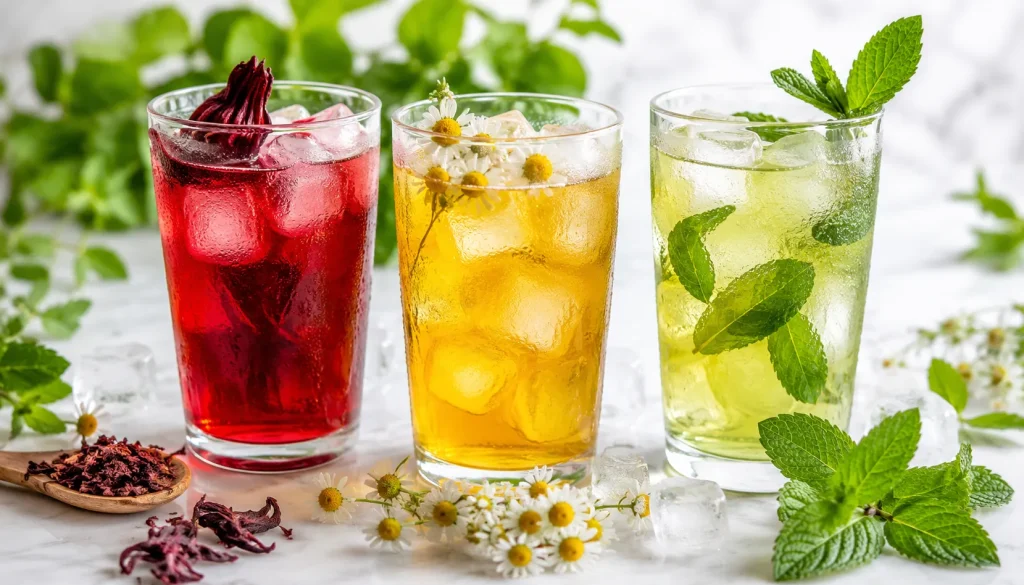
Hibiscus makes one of the most visually stunning herbal iced teas available. The dried flowers of Hibiscus sabdariffa brew a deep ruby-red liquid with a tart, cranberry-like flavor. Additionally, hibiscus is rich in anthocyanins, which are the pigments responsible for its striking color and its status as a powerful antioxidant-containing herb.
Recipe:
- 3 tablespoons hibiscus cut and sifted
- 4 cups of water
- 2–3 tablespoons of honey or simple syrup (optional)
- Juice of one lime or lemon (optional)
Hot-brew method: Bring water to a boil, pour over hibiscus, steep for ten minutes covered. Strain and sweeten while hot (sweetener dissolves more easily in warm liquid). Chill and serve over ice.
Cold brew method: Combine hibiscus and cold water in a pitcher. Refrigerate overnight. Strain and serve over ice with citrus if desired.
In folk traditions across Mexico, the Caribbean, and West Africa, hibiscus iced tea — known as agua de jamaica or bissap — has been a staple refreshing drink for generations. Moreover, it pairs beautifully with sparkling water for a festive drink.
Peppermint Iced Tea
Peppermint iced tea is one of the most refreshing herbal iced tea recipes available. The menthol in peppermint creates a cooling sensation that makes it feel even colder than it is. Consequently, it is an ideal tea for hot weather.
Recipe:
- 3 tablespoons peppermint cut and sifted
- 4 cups of water
- Honey or stevia to taste (optional)
- Fresh mint sprigs or lemon for garnish (optional)
Cold brew method (recommended): Combine peppermint and cold water in a pitcher. Refrigerate for six to eight hours. Strain and serve over ice. Cold-brewed peppermint tea has a softer, less sharp menthol quality that is very pleasant on a warm day.
Hot-brew method: Brew double-strength peppermint tea (3 tablespoons per 2 cups of water), steep five to seven minutes covered, strain, and pour over ice.
Furthermore, peppermint iced tea blends beautifully with lemongrass for a bright, cooling minty-citrus combination that works well as a summer refresher.
Lemongrass Iced Tea
Lemongrass iced tea is bright, citrusy, and refreshing without any acidity. It has a cleaner, lighter flavor than lemon-based drinks, making it very easy to drink in quantity. Additionally, lemongrass cold-brews exceptionally well, developing a smooth, rounded flavor over eight to twelve hours of cold steeping.
Recipe:
- 3 tablespoons organic lemongrass cut and sifted
- 4 cups of cold filtered water
- Honey, agave, or stevia to taste (optional)
- Fresh ginger slices or mint for pairing (optional)
Cold brew method: Combine lemongrass with cold water in a pitcher. Cover and refrigerate for eight to twelve hours. Strain and serve over ice.
This lemongrass iced tea can also be combined with hibiscus for a vibrant two-herb blend that is both citrusy and tart. Moreover, adding a small amount of fresh ginger during the cold brew period gives the tea a warming depth that contrasts beautifully with the cool serving temperature.
Rose Hips Iced Tea
Rose hips, the fruit of the rose plant, produce a tangy, berry-like tea with a beautiful rosy-orange color. Furthermore, rose hips are well known for their exceptionally high vitamin C content, making this one of the most nutritionally interesting herbal iced tea recipes in this guide.
Recipe:
- 3 tablespoons rose hips fruit cut and sifted
- 4 cups of water
- 2 tablespoons honey (rose hips can be quite tart)
- Optional: hibiscus flowers for deeper color and added tartness
Hot-brew method (recommended for rose hips): Bring water to a boil, add rose hips, and simmer for ten to fifteen minutes — a decoction method works better than a simple infusion for the dense fruit pieces. Strain, sweeten while warm, chill, and serve over ice.
Rose hips iced tea has a flavor profile similar to hibiscus but with a slightly sweeter, less acidic character. Additionally, it pairs beautifully with apple juice or sparkling water for a festive, fruity punch.
A Signature Four-Herb Blend
For a complex, layered herbal iced tea, try combining all four featured herbs:
- 2 tablespoons hibiscus
- 1 tablespoon rose hips
- 1 tablespoon lemongrass
- 1 tablespoon peppermint
- 4 cups water
Brew using the hot method: bring water to a boil, add hibiscus and rose hips, simmer five minutes, turn off heat, add lemongrass and peppermint, steep covered for seven minutes. Strain, sweeten, chill, and serve over ice. The result is a vibrant, complex tea with tart, citrus, and cooling notes in every sip.
Sweetening Herbal Iced Tea Recipes
Many herbal iced teas — particularly those based on hibiscus and rose hips — are naturally tart and benefit from some sweetening. However, adding granulated sugar to cold tea is problematic because it does not dissolve well. Therefore, the best approach is to make a simple syrup or add sweetener while the tea is still warm. Alternatively, liquid honey, agave nectar, or liquid stevia dissolve easily in cold beverages.
Storing Herbal Iced Teas
Most herbal iced teas keep well in a sealed pitcher in the refrigerator for two to three days. However, teas with mint or delicate floral herbs are best consumed within one to two days, as their volatile compounds degrade more quickly. Additionally, avoid storing iced teas in direct light in the refrigerator, as light can affect both color and flavor over time.
Safety and Precautions
The herbs in these herbal iced tea recipes are widely consumed and generally recognized as safe for most healthy adults. However, hibiscus can lower blood pressure in some individuals, so people taking blood pressure medications should consult a healthcare provider before drinking hibiscus iced tea regularly. Additionally, pregnant individuals should consult a healthcare provider before consuming hibiscus, as it has traditionally been noted for its ability to stimulate menstruation in folk herbalism. This content is educational only and does not constitute medical advice.
Frequently Asked Questions
What herbs are best for herbal iced tea?
Hibiscus, peppermint, lemongrass, rose hips, chamomile, and lemon balm are among the best herbs for iced tea. They all produce well-colored, flavorful brews that hold up over ice without becoming flat or overly bitter. Furthermore, these herbs are widely available as dried herbs and are easy to source in quality form.
Can I cold brew any herbal tea?
Most dried herbs work for cold brewing, but dense material like roots or bark pieces benefits more from the hot-brew-then-chill method. Leafy herbs and flowers like peppermint, chamomile, lavender, and lemongrass cold brew beautifully. On the other hand, harder materials like rose hips or echinacea root need heat to extract fully.
How long does herbal iced tea last in the fridge?
Most herbal iced teas stay fresh for two to three days in a sealed container in the refrigerator. Mint-based teas are best consumed within one to two days. Additionally, always check for off smells or cloudiness before drinking tea that has been stored for more than two days.
Do herbal iced tea recipes need sweetener?
It depends on the herbs. Chamomile and lemongrass have mild natural sweetness and may not need any sweetener. However, hibiscus and rose hips are tart and typically benefit from honey or simple syrup. Therefore, taste your tea before adding sweetener and adjust accordingly.
Shop premium dried herbs for all your herbal iced tea recipes — including hibiscus, rose hips, and more — at the Hatton Naturals shop.