Immune Support Tea Blend for Winter: Build Your Own
A well-crafted immune tea blend is one of the most practical tools you can keep in your kitchen when temperatures drop and everyone around you seems to be sniffling. Building your own immune tea blend from high-quality dried herbs lets you control exactly what goes into every cup, adjust flavors to your preference, and avoid fillers or artificial additives found in many commercial products. The herbs most traditionally relied upon for winter wellness, including elderberries, echinacea root, rose hips, and warming spices like ginger and cinnamon, have been used for centuries across cultures that understood the value of plants during cold and flu season.
In this guide you will find exact ratios, step-by-step brewing instructions, tips for scaling your batch, storage advice, and a troubleshooting section so your blend performs perfectly every time. Whether you are making tea for one or preparing a large jar to share with your household, the approach here is approachable, affordable, and grounded in herbal tradition.
Why Build Your Own Immune Tea Blend Instead of Buying One
Pre-packaged immune teas are widely available, but most contain a few grams of herb spread thin across 20 bags, resulting in a weak cup that delivers minimal benefit. When you source your own dried herbs in bulk and blend them yourself, you get full-strength herb material at a fraction of the cost per serving. You also get transparency: you know exactly which herbs are in the jar, where they came from, and whether they are organic. Building your own blend gives you the flexibility to adjust ratios based on taste or seasonal needs. If you want a stronger elderberry forward blend for peak winter, you add more elderberries. If you prefer a spicier, warming cup, you increase cinnamon or ginger. No commercially blended tea gives you that level of control.
The Core Herbs and Their Traditional Roles
Every ingredient in a well-designed immune tea blend serves a purpose. Here is an overview of the herbs used in the recipe below and why herbalists traditionally include them in winter wellness formulas.
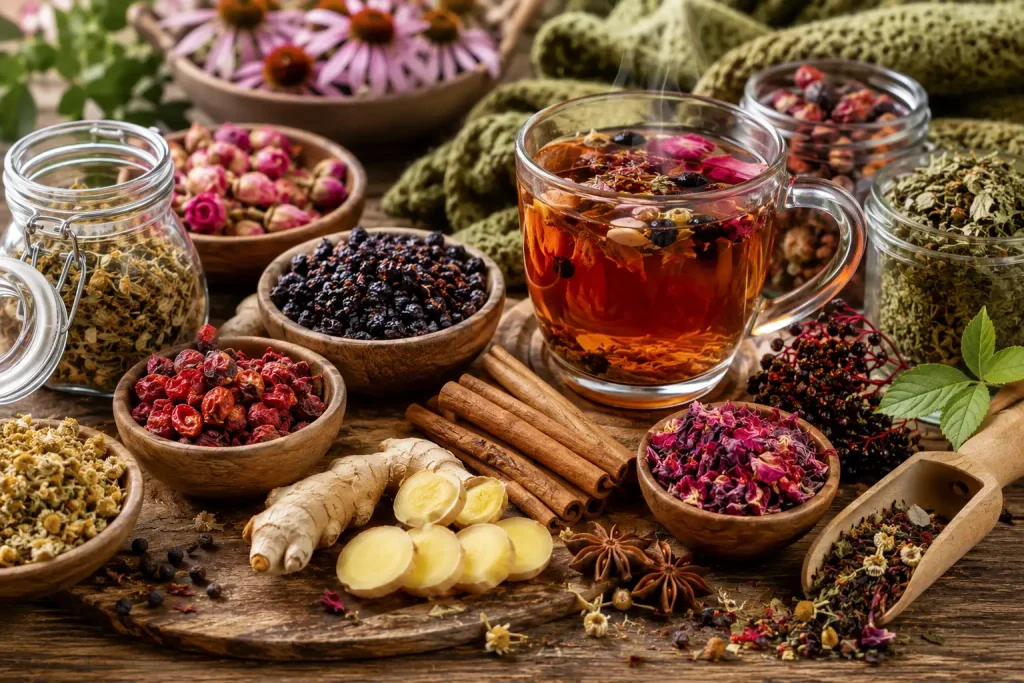
- Elderberries: The foundation of most immune blends. Elderberries have been traditionally used for generations as a winter tonic. They lend a deep, berry-forward flavor and a rich dark color that makes the tea visually appealing.
- Echinacea Root: One of the most widely studied herbs in Western herbalism. Herbalists often recommend echinacea at the first sign of seasonal exposure. The root form is more robust than the aerial parts and stands up well to longer simmering.
- Rose Hips: The fruit of the rose plant, traditionally recognized for its vitamin C content. Rose hips bring a pleasant tartness that balances the earthiness of echinacea root and makes the blend more drinkable without sweeteners.
- Ginger: A warming spice that herbalists have traditionally used to support circulation and add a pleasant heat to herbal blends. Find it in the Hatton Naturals shop.
- Cinnamon: Adds warmth, sweetness, and depth. Cassia cinnamon sticks release slowly during simmering, imparting a rich, spicy note that makes winter tea feel comforting.
- Tulsi (Holy Basil): An adaptogenic herb traditionally used in Ayurvedic practice to support stress resilience and overall vitality. It adds a clove-like aroma that rounds out the blend beautifully.
- Astragalus Root: Deeply respected in Traditional Chinese Medicine as a tonic herb traditionally used to support vitality during winter months. It has a mildly sweet, earthy flavor.
- Elderflower: The blossom of the same elder plant. Elderflowers are lighter and more floral than the berries and have traditionally been used to support comfort during seasonal transitions.
The Base Recipe: Ratios and Measurements
The recipe below makes approximately 16 to 20 servings and fits comfortably in a 1-quart mason jar. All measurements are by volume.
- 4 tablespoons dried elderberries
- 3 tablespoons echinacea root, cut and sifted
- 3 tablespoons rose hips, whole or cut
- 2 tablespoons dried ginger, cut or powdered
- 2 tablespoons astragalus root, cut and sifted
- 2 tablespoons tulsi, cut and sifted
- 1 tablespoon elderflowers, whole
- One cinnamon stick, broken into pieces (or 1 tablespoon cassia chips)
Combine all herbs in a clean mixing bowl, stir gently to distribute evenly, and transfer to a sealed glass jar. Label the jar with the blend name and date.
How to Brew the Perfect Cup
Because this immune tea blend contains woody roots like echinacea and astragalus, a standard steep in near-boiling water for five minutes will not fully extract their active constituents. Use one of the two methods below depending on your available time.
Decoction method (recommended): Measure 2 tablespoons of the blend into a small saucepan with 2.5 cups of cold filtered water. Bring to a gentle boil, then reduce to a low simmer for 15 to 20 minutes with the lid on. Remove from heat, let steep an additional five minutes, then strain through a fine mesh strainer. One batch yields about two generous cups.
Extended steep method: Place 2 tablespoons of blend in a large heat-safe jar or French press. Pour 2 cups of just-boiled water (around 200 degrees Fahrenheit) over the herbs. Cover tightly and steep for at least 20 minutes, or up to four hours for a stronger infusion. Strain and reheat gently if desired.
Sweeten with raw honey if desired. Avoid adding honey while the tea is boiling to preserve its beneficial compounds.
Scaling Up: Making a Weekly or Monthly Batch
If you brew this immune tea blend daily throughout winter, preparing a large batch in advance saves significant time. To scale the recipe to fill a 2-quart jar (roughly 40 servings), simply double all measurements. Store the dry blend in the sealed jar away from light and heat. When making the tea, always measure from the jar rather than eyeballing to maintain consistent cup strength. If you want to prepare a ready-to-drink concentrate, brew a large decoction, cool it, and refrigerate in a sealed glass jar for up to five days. Reheat individual portions as needed.
Safety
Echinacea is generally well tolerated but is traditionally recommended for short-term use, typically two to three weeks, rather than continuous daily use for months at a time. If you have an allergy to plants in the Asteraceae family (ragweed, chrysanthemums, daisies), use echinacea cautiously and consult a qualified herbalist or healthcare provider. Astragalus root is considered a tonic herb suitable for longer-term use in most traditional frameworks, but again, individual responses vary. Rose hips are high in vitamin C and may cause digestive sensitivity in some individuals when consumed in large quantities. Elderberries must always be used in dried or properly cooked form; raw elderberries can cause nausea. Pregnant or breastfeeding individuals should consult a healthcare provider before using any herbal blend regularly. This product is not intended to diagnose, treat, cure, or prevent any disease.
Troubleshooting
The tea tastes too bitter: Bitterness usually comes from echinacea root or astragalus being extracted too aggressively. Try reducing your simmer time from 20 minutes to 12 minutes, or reduce the echinacea root to 2 tablespoons in your blend. Adding a cinnamon stick during brewing also helps balance bitterness.
The color is pale and the flavor is weak: Elderberries need adequate time and heat to release their pigments and flavor. Make sure you are simmering, not just steeping, and that you are using the recommended 2 tablespoons of blend per batch. If using whole rose hips, lightly crush them before adding to improve extraction.
The tea is too spicy: Ginger and cinnamon intensity varies by source. Reduce ginger to 1 tablespoon and substitute one whole cinnamon stick for chips, as sticks release more slowly and produce a gentler heat.
The blend clumps in the jar: This is usually a moisture issue. Make sure all herbs are fully dry before blending, and avoid storing your jar near a stove or kettle where steam can enter. Add a food-safe silica desiccant packet inside the lid to absorb ambient moisture.
Storage and Quality
Dried herbs hold their potency best when stored in airtight glass jars, away from direct sunlight and heat sources. A cool, dark pantry or cabinet is ideal. Avoid transparent jars on open shelves where sunlight can degrade volatile compounds. Under proper conditions, whole dried berries and roots retain acceptable quality for 12 to 24 months, while leafy botanicals like tulsi and elderflower are best used within 12 months. Always check your blend before brewing. Fresh, properly stored herbs have a distinctive aroma; if the blend smells flat, dusty, or off, it is time to replace it. Purchase from sources that provide lot numbers or harvest dates so you can track freshness.
FAQ
Can I drink this immune tea blend every day all winter?
Many people do drink warming herbal blends daily throughout the season, but because this recipe contains echinacea root, most traditional use guidelines suggest cycling it: drink for two to three weeks, take a one-week break, then resume. For daily continuous use, consider removing the echinacea and relying on the elderberry, rose hip, tulsi, and astragalus base, which are considered more suitable for long-term tonic use.
Can children drink this blend?
Herbal teas are not universally appropriate for all children and dosage considerations differ significantly by age. Elderberries and rose hips are generally considered gentle, but echinacea and astragalus are typically reserved for older children or used in smaller amounts. Always consult your child’s healthcare provider before introducing any herbal formula.
Can I add this blend to a cold brew overnight?
Cold brewing works well for floral and leafy herbs but is less effective for hard roots like echinacea and astragalus. If you cold brew, steep overnight in the refrigerator for eight to 12 hours and use three tablespoons of blend per two cups of water. Expect a lighter, less robust extraction compared to the decoction method.
How does this immune tea blend compare to elderberry syrup?
Elderberry syrup is typically a concentrated preparation made by cooking elderberries with sweetener and sometimes honey. The tea blend gives you a lower-concentration, daily-sipping format that incorporates a wider range of herbs. Many people use both: syrup as a daily supplement and the tea as a warming ritual. They are complementary, not redundant.
Can I use elderberry powder instead of whole elderberries?
Powder will extract faster but can make the tea difficult to strain and may produce a gritty texture. Whole or coarsely cut elderberries are strongly preferred for loose-leaf blending. If you only have powder, use one tablespoon instead of four, mix it in hot water separately, and strain through a cloth or fine mesh before adding to your brewed base.
Does brewing in a slow cooker work?
Yes. Combine your herbs and water in a slow cooker, set to low, and cook for two to four hours. This gentle, extended extraction works especially well for the woody roots in this blend. Strain and store in the refrigerator for up to five days.
Should I use fresh ginger or dried ginger?
Both work. Fresh ginger (a 1-inch piece, sliced thin) gives a brighter, more pungent flavor. Dried and cut ginger from Hatton Naturals is more convenient for batch blending and has a warmer, slightly more mellow profile. For a shelf-stable dry blend, dried is the practical choice.
Can I combine this with a commercial green or black tea base?
Absolutely. Adding one teaspoon of green or black tea per cup introduces caffeine and antioxidants from tea polyphenols. Brew the herb base first using the decoction method, then steep a tea bag or loose leaf tea in the finished liquid for three to five minutes. Avoid over-steeping the tea to prevent bitterness.
Building your own immune tea blend for winter is simpler than it sounds and far more rewarding than reaching for a box of pre-made tea bags. With quality dried herbs from Hatton Naturals, a mason jar, and 20 minutes on the stove, you will have a deeply nourishing, flavorful blend ready to carry you through the coldest months of the year.