Whether you experience occasional bloating, general digestive discomfort, or simply want to build a calming after-dinner ritual, this blend offers something for everyone. The herbs chosen here are gentle, widely available, and pleasant to drink. We have also included detailed brewing instructions, storage guidance, troubleshooting tips, and a comprehensive FAQ section so you have everything you need to make this a lasting habit. All ingredients are available as certified organic bulk herbs from Hatton Naturals, so quality and purity are built right into the recipe.
Why Herbs for Digestive Wellness Have Endured
Digestive herbal teas appear in nearly every traditional medicine system on Earth. From Ayurvedic fennel and ginger preparations in India to chamomile infusions in European folk medicine, people have long relied on specific plants to promote digestive ease. The herbs in this gut health tea blend were selected because they are backed by centuries of traditional use, are gentle enough for regular consumption, and taste pleasant together.
Modern interest in gut wellness has accelerated dramatically in recent years, bringing renewed attention to herbal teas as a practical, food-based approach to daily digestive care. Drinking a warm cup of herbal tea after meals encourages mindful slowing down, hydration, and consistency, all of which support overall digestive health.
Meet the Six Key Herbs
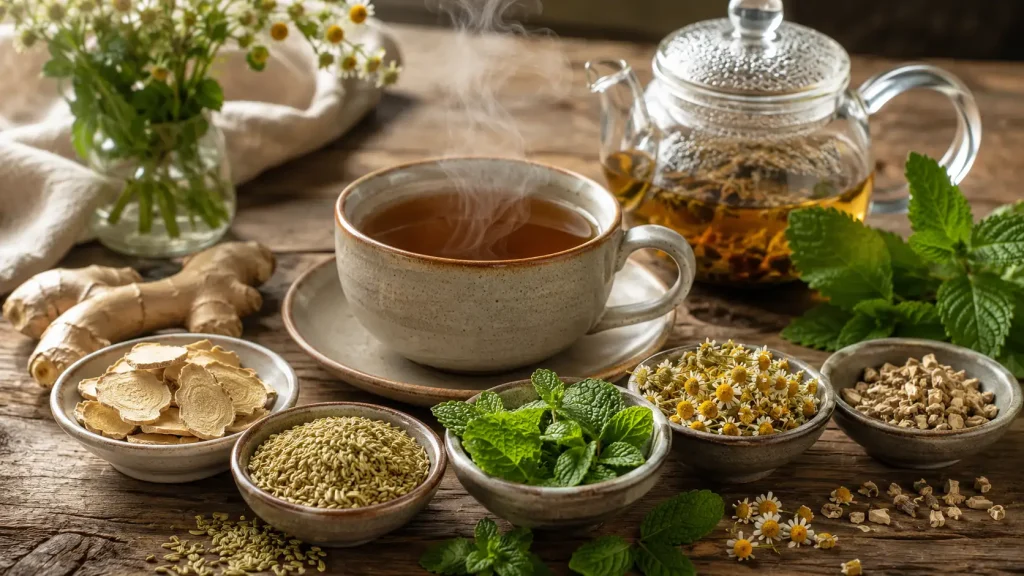
Marshmallow Root: Marshmallow root is prized in traditional herbalism for its mucilaginous quality, meaning it forms a slippery, coating consistency when steeped in water. This makes it a classic herb for soothing the lining of the digestive tract. Hatton Naturals carries organic marshmallow root cut and sifted.
Peppermint: Peppermint is one of the most studied herbs in relation to digestive comfort. Its menthol content gives the blend a refreshing, cooling quality and a familiar minty aroma. Hatton Naturals offers peppermint cut and sifted in bulk.
Chamomile: Chamomile flowers are gentle, mildly sweet, and have been used in European tradition as a digestive herb for centuries. They add a soft, apple-like flavor to the blend. Find chamomile flowers whole at Hatton Naturals.
Ginger Root: Ginger is a warming root herb with a long history in both Ayurvedic and Traditional Chinese Medicine for digestive support. It adds spice and depth to the blend. Ginger is available at the Hatton Naturals shop.
Fennel Seed: Fennel has a mild licorice-like flavor and has been used traditionally after meals to ease bloating and support digestion. It pairs perfectly with peppermint and chamomile. Fennel is also available at the Hatton Naturals shop.
Lemon Peel: Lemon peel adds a bright citrus note that lifts the blend and makes it more refreshing. The dried peel also contains aromatic oils traditionally associated with digestive comfort. Hatton Naturals offers lemon peel cut and sifted in their citrus products section.
Ingredients and Ratios for the Base Blend
This recipe makes approximately 100 grams of dry blend, which yields around 40 to 50 cups of tea depending on how generously you measure. Use two teaspoons per eight-ounce cup of hot water.
- Peppermint, cut and sifted: 30 grams
- Chamomile flowers, whole: 25 grams
- Marshmallow root, cut and sifted: 20 grams
- Fennel seed: 10 grams
- Ginger root, cut and sifted or granulated: 10 grams
- Lemon peel, cut and sifted: five grams
These ratios produce a balanced, mildly sweet, and gently minty cup. Lemon peel is used sparingly because it can turn bitter in larger amounts, especially with longer steep times.
Step-by-Step Brewing Instructions
Brewing a gut health tea blend correctly matters. Unlike simple green teas, this blend contains both leafy herbs and denser root or seed materials. A two-phase brewing approach gives you the best results.
Step 1 – Prepare your water. Bring eight to ten ounces of filtered water to a full boil (212 degrees Fahrenheit). Good water quality matters because mineral-heavy tap water can interact with the delicate flavor compounds in chamomile and peppermint.
Step 2 – Pre-steep the denser ingredients. Place two teaspoons of the dry blend into a fine-mesh infuser or directly into a small saucepan. If you are using a saucepan, bring the water with the herbs to a gentle simmer for three to five minutes. This helps extract the mucilaginous compounds from marshmallow root and the volatile oils from fennel and ginger.
Step 3 – Remove from heat and steep. After simmering, remove from heat. If you started with a kettle and an infuser, simply pour boiling water over your infuser in a covered mug. Cover and steep for seven to ten minutes. Covering the cup is important because peppermint and chamomile contain aromatic oils that escape in steam.
Step 4 – Strain and taste. Remove the infuser or strain the tea through a fine-mesh sieve. Taste before adding anything. This blend is naturally sweet from chamomile and lightly bright from lemon peel.
Step 5 – Sweeten if desired. A small drizzle of raw honey complements this blend well. Avoid sugar if you are looking for a clean, simple cup. Oat milk or coconut milk also work for a creamier version.
Step 6 – Drink slowly. This gut health tea blend is best enjoyed slowly and warm, ideally 20 to 30 minutes after a meal or before bed as an evening ritual.
Timing and Frequency
The timing of your gut health tea blend matters as much as what is in it. Here are the most effective windows for different goals:
- After meals: Fennel and peppermint are particularly suited to post-meal consumption when digestive processes are active.
- Before bed: Chamomile and marshmallow root are calming and well suited for a quiet evening cup.
- Morning on an empty stomach: Some people find ginger and lemon peel stimulating in a pleasant way first thing in the morning.
One to two cups per day is a reasonable starting frequency. Consistency over weeks is more valuable than drinking several cups on a single day.
Customization Options
Once you are comfortable with the base gut health tea blend, try these variations:
- For a more calming blend: Increase chamomile to 35 grams and reduce ginger to five grams.
- For a more warming, spiced blend: Increase ginger to 15 grams and add a small pinch of turmeric or licorice root.
- For a purely minty cup: Double the peppermint and omit lemon peel.
- For children (with parental guidance): Reduce or omit ginger and double chamomile for a gentler, sweeter cup.
Troubleshooting Common Issues
The tea is too bitter. Bitterness usually comes from over-steeping lemon peel or ginger. Reduce steep time to five minutes, or lower the lemon peel in your batch to two grams.
The blend feels slimy or thick. This is the marshmallow root working as intended. The mucilaginous texture is a sign of quality, not a problem. If you prefer a thinner cup, reduce marshmallow root to 10 grams.
The fennel flavor is too strong. Fennel seeds are potent. If the licorice note is overpowering, reduce fennel to five grams or lightly crush only half the seeds before blending, leaving some whole so they release flavor more slowly.
The tea is not minty enough. Peppermint loses potency quickly if stored improperly or if the batch is old. Check that your peppermint was stored in a sealed, dark jar. If it lacks aroma, it is time to replace it with fresh stock.
The tea is too weak overall. Use a full two teaspoons per eight ounces and make sure you are covering the cup while steeping. Uncovered steeping loses volatile aromatics quickly, especially from peppermint and chamomile.
Storage
Store your gut health tea blend in an airtight glass jar in a cool, dark location such as a pantry shelf or spice cabinet. Keep it away from direct sunlight, steam, and heat sources. Chamomile flowers and peppermint are particularly sensitive to light and moisture and can fade quickly in poor storage conditions.
Label your jar with the blend date. The dry blend keeps well for up to six months under good storage conditions. After six months, the flavor and aroma begin to fade, though the herbs do not become unsafe. Replace individual ingredients as needed rather than discarding the entire batch if only one herb has faded.
Safety
This gut health tea blend uses gentle, culinary-grade herbs that are widely consumed safely by most adults. However, a few notes are important.
Peppermint is not recommended for infants or very young children, and should be avoided by people with gastroesophageal reflux disease (GERD) in large amounts, as it may relax the lower esophageal sphincter. Fennel seed should be used cautiously during pregnancy. Chamomile belongs to the Asteraceae (daisy) family, and people with allergies to ragweed, chrysanthemums, or related plants should proceed cautiously. Marshmallow root may slow the absorption of orally taken medications due to its mucilaginous nature; if you take prescription medications, allow at least one to two hours between drinking this tea and taking your medication.
None of the herbs in this recipe are intended to diagnose, treat, cure, or prevent any disease. Consult your healthcare provider before beginning any new herbal routine, particularly if you are pregnant, nursing, or taking medications.
Frequently Asked Questions
What is the best time of day to drink a gut health tea blend?
After meals is the most popular time because digestive processes are already active. However, an evening cup of chamomile and marshmallow root can also be very soothing. Choose a time you can maintain consistently every day.
Can I drink this tea on an empty stomach?
Yes, with some caution. Ginger and peppermint are stimulating and some people find them slightly irritating on a completely empty stomach. If that is the case, have a small snack first or reduce the ginger proportion.
How long before I notice a difference in my digestion?
Herbal teas work best over time. Most people report a noticeable improvement in digestive comfort after two to four weeks of daily use. Individual results vary depending on diet, lifestyle, and overall health.
Can I make a large batch of this tea and refrigerate it?
Yes. Brew a larger batch (four to six cups), let it cool completely, then store it in a sealed glass jar in the refrigerator for up to three days. Reheat gently on the stovetop rather than microwaving to preserve flavor.
Is this gut health tea blend safe for children?
Chamomile is generally considered gentle for children in small amounts, but avoid peppermint in infants and young children. Consult a pediatrician or qualified herbalist before giving herbal teas to children under 12.
Can I combine this tea with probiotics or other digestive supplements?
Most digestive herbal teas are compatible with probiotic supplements. However, because marshmallow root may affect absorption timing, consider spacing them apart by at least an hour. Always consult your healthcare provider when combining supplements.
How do I know if my herbs are fresh enough to use?
Fresh herbs have a strong, distinct aroma when the jar is opened. If your chamomile smells like paper or your peppermint has no menthol kick, the herbs have lost their volatile oils and should be replaced. Buying from a reputable bulk supplier with fast turnover, like Hatton Naturals, helps ensure freshness.
Can I use tea bags instead of loose herbs?
Commercially available tea bags often contain lower-grade herb dust or fannings. For maximum quality and flavor, loose bulk herbs are strongly preferred for this kind of gut health tea blend. An inexpensive reusable stainless steel infuser makes preparation just as convenient as a bag.
Conclusion
Making your own gut health tea blend is a simple, sustainable, and genuinely enjoyable practice that fits seamlessly into any daily routine. With quality organic herbs from Hatton Naturals and the guidance above, you have everything you need to brew a cup that truly supports your digestive wellness goals. Start simple, stay consistent, and let the ritual become its own reward.