This guide breaks down everything you need to know: how it was historically used, what compounds it contains, how to brew it properly, how to pair it with other herbs for better flavor, and where to source high-quality cuts for your pantry or product line.
What Is Oat Straw?
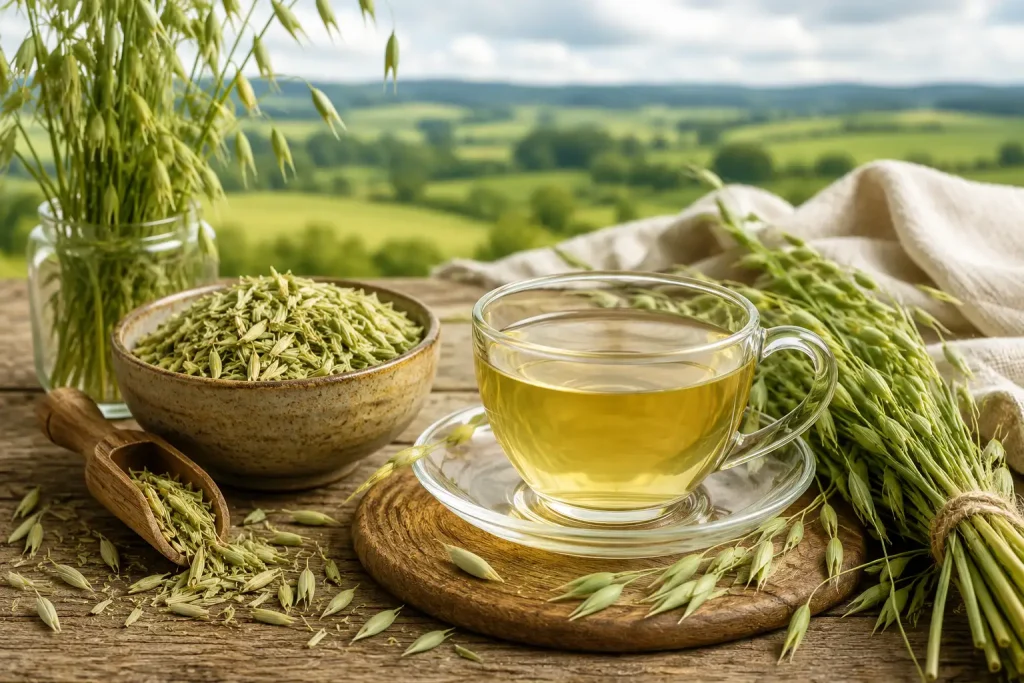
Oat straw is the green stem and leaf portion of the Avena sativa plant, harvested during the milky oat stage, which occurs before the grain is fully formed. At this stage, the plant is at its most nutrient-rich, containing significant amounts of magnesium, calcium, silica, B vitamins, and flavonoids. The cut-and-sifted herb is then dried and used for teas, tinctures, or infusions.
Unlike oatmeal or oat bran, oat straw is not a food grain. It is specifically the aerial part of the plant, and it has a distinct profile that herbalists have long valued separate from the grain. The flavor of oat straw tea is mild, slightly sweet, and grassy with a hint of vanilla, making it one of the more palatable herbs available for everyday use.
Most buyers today look for organic, cut-and-sifted oat straw that brews cleanly and consistently. Hatton Naturals carries Organic Oat Straw C/S in bulk quantities suited for personal use or commercial blending.
The Nutritional and Herbal Profile of Oat Straw
What makes oat straw tea appealing to herbalists is its naturally occurring mineral content. The plant is particularly rich in silica, a trace mineral associated with connective tissue health. It also contains notable amounts of magnesium and calcium, which play roles in nerve and muscle function. These minerals are present in the whole plant rather than isolated, meaning they come packaged alongside other plant compounds that may influence how the body uses them.
Oat straw also contains alkaloids such as gramine, which early researchers studied for potential effects on mood and relaxation. Additionally, the herb provides saponins and flavonoids including tricin and vitexin, compounds that have been studied in various plant contexts for their antioxidant activity.
It is worth noting that while oat straw has a long history of traditional use, most studies on its specific compounds are preliminary. Always approach any herb as a complement to, not a replacement for, your overall wellness routine.
Oat Straw Tea Benefits That Herbalists Highlight
The most frequently cited oat straw tea benefits in traditional herbalism center around the nervous system. Oat straw is classified as a nervine tonic, meaning it is said to gently nourish and support nerve health over time rather than producing an immediate sedative effect. This makes it distinct from stronger relaxing herbs like valerian, which acts more quickly and intensely.
Because of this mild, tonic profile, oat straw is often recommended during periods of sustained stress, overwork, or burnout. It pairs well with adaptogenic and calming herb blends precisely because it does not overpower the blend or cause drowsiness.
Traditional herbalists have also noted oat straw’s use to support cognitive focus and mental clarity, particularly in older adults. While modern clinical trials are limited, the longstanding use of oat straw in European folk medicine lends it a credibility that more obscure herbs lack. The herb appears in many traditional formularies alongside other nervines, adaptogens, and mineral-rich plants.
Beyond the nervous system, some herbalists have historically used oat straw to support skin and hair through its silica content, and to support urinary tract comfort through its mild diuretic properties. These uses are traditional and should not be interpreted as medical claims.
How to Brew Oat Straw Tea the Right Way
Brewing oat straw tea differs slightly from brewing most herbal teas because it benefits from a longer steep time. The minerals and plant compounds in oat straw are extracted more fully with extended contact with hot water. Here is a straightforward approach:
- Use one to two tablespoons of dried, cut oat straw per eight ounces of water.
- Bring the water to a full boil, then pour it over the herb.
- Cover the vessel and allow the tea to steep for 20 to 40 minutes, or even longer for a deeper infusion.
- Strain well using a fine mesh strainer or cheesecloth, as small particles can pass through coarser strainers.
- Drink warm, or refrigerate and serve cold.
Some herbalists prefer to make an overnight cold infusion by combining oat straw with cold water and allowing it to sit in the refrigerator for eight hours. This method can extract different compounds and produce a slightly sweeter result. Both approaches are valid depending on your preference and schedule.
Pairing Oat Straw With Other Herbs for Better Blends
Oat straw’s mild, grassy flavor makes it an ideal base or background note in herbal tea blends. It rarely competes with other herbs and instead provides a smooth, slightly sweet canvas that other flavors can build on.
Oat Straw and Chamomile
Chamomile is one of the most natural pairings for oat straw. Both herbs have traditional associations with relaxation and gentle calm, and their flavors complement each other beautifully. Chamomile’s floral sweetness rounds out oat straw’s grassy base. Hatton Naturals offers Chamomile Flowers (Whole) in bulk, perfect for blending. Combine three parts oat straw with two parts chamomile for a pre-evening blend that is flavorful without being medicinal-tasting.
Oat Straw and Nettle
Nettle leaf adds a mineral-rich, slightly earthy counterpoint to oat straw. Both herbs are traditionally valued for their naturally occurring mineral content, making this an excellent choice for a nutritive tea blend. Hatton Naturals carries Nettle Leaf Cut and Sifted as a standalone option. A simple equal-parts blend of oat straw and nettle creates a savory, grounding tea.
Oat Straw and Linden
Linden flower is another classic nervine herb with a delicately sweet, honey-like fragrance. Adding linden to an oat straw base elevates the floral quality of the blend and creates something genuinely elegant. Hatton Naturals stocks Linden for exactly this kind of artisan blending. A ratio of two parts oat straw to one part linden works beautifully as a late-afternoon relaxation tea.
Oat Straw Tea for Product Developers and Bulk Buyers
For herbal tea businesses, wellness brands, and bulk buyers, oat straw is a compelling ingredient. It offers a familiar name with strong historical credibility, a mild flavor that is accessible to mainstream consumers, and a story rooted in traditional European herbalism that resonates with modern wellness audiences.
Oat straw blends particularly well in products positioned around stress support, sleep, or nervous system health, without requiring the brand to make strong therapeutic claims that might trigger regulatory scrutiny. Its gentle, tonic nature makes it suitable for everyday-use positioning rather than acute-symptom targeting.
From a formulation standpoint, cut-and-sifted oat straw is practical. It infuses reliably, does not cloud significantly, and blends evenly with other cut herbs of similar particle size. Bulk purchasing from a reliable supplier like Hatton Naturals ensures consistent quality, organic certification, and appropriate documentation for product development.
Safety Information
Oat straw tea is considered very safe for most adults when used as an herbal beverage. However, there are a few considerations worth noting:
- Individuals with celiac disease or a severe gluten sensitivity should exercise caution. While oat straw is the pre-grain portion of the plant and is technically distinct from gluten-containing grain, cross-contamination in processing is possible. Consult a physician if you have a diagnosed gluten disorder.
- People who are allergic to oats or grasses in general may want to start with a small amount and observe any reaction before consuming oat straw regularly.
- Pregnant or nursing individuals should consult a healthcare provider before adding any new herbal tea to their routine.
- Oat straw does not carry significant known drug interactions, but if you take medications that affect the nervous system, discuss all herbal use with your prescribing physician.
- This product is intended as a food-grade herbal beverage and is not a substitute for medical treatment.
Frequently Asked Questions About Oat Straw Tea
What does oat straw tea taste like?
Oat straw tea has a light, grassy flavor with mild sweetness and a subtle hint of vanilla. It is far milder than many herbal teas, which makes it easy to drink plain or use as a base in blends.
How often can I drink oat straw tea?
Most herbalists suggest one to three cups per day for adults. Because oat straw is a tonic herb, it is generally used regularly over time rather than as a single-dose remedy.
Is oat straw gluten-free?
Oat straw is the pre-grain portion of the oat plant and does not inherently contain gluten. However, processing environments may introduce cross-contact. If you have celiac disease, consult your doctor and look for tested, certified gluten-free sources before using any oat-derived product.
Can I cold brew oat straw tea?
Yes. Cold brewing works well with oat straw. Combine one to two tablespoons of herb per cup of cold water and steep in the refrigerator overnight. The result is smoother and slightly sweeter than hot-brewed oat straw tea.
Does oat straw tea contain caffeine?
No. Oat straw is naturally caffeine-free, which is one reason it is often blended into evening or relaxation teas. It makes a good option for those reducing caffeine intake.
Where can I buy bulk oat straw for tea blending?
Hatton Naturals offers Organic Oat Straw C/S in quantities suitable for both home herbalists and commercial product developers. All herbs are sourced with quality and traceability in mind.
Can oat straw be combined with chamomile and nettle in the same blend?
Absolutely. Oat straw, chamomile, and nettle are a classic nutritive and calming trio in traditional herbalism. They share compatible flavors and brewing requirements, making them easy to blend into a single tea formula.
How long should I steep oat straw?
Unlike delicate green or white teas, oat straw benefits from longer steeping, typically 20 to 40 minutes. Some herbalists steep it for an hour or more when making a mineral-rich infusion. The longer steep does not cause bitterness the way it might with tea leaves.
Conclusion
Oat straw tea benefits are subtle, cumulative, and well worth exploring for anyone interested in traditional herbal wellness. Whether you brew it solo, blend it with chamomile or linden for a relaxation tea, or combine it with nettle for a mineral-rich daily infusion, oat straw earns its place in any serious herbal pantry. Source quality organic cuts from Hatton Naturals and experience this overlooked herb for yourself.