Why Cold Brew Works Differently Than Hot Infusion
Before diving into specific herbs, it is worth understanding what makes an herb perform well in cold brew versus hot infusion. When you brew tea with boiling water, heat rapidly extracts a broad range of compounds. It includes volatile aromatic molecules, tannins, and heat-sensitive antioxidants. Cold brewing uses time instead of temperature, producing a slower, gentler extraction that typically yields fewer bitter tannins and a smoother, softer flavor profile.
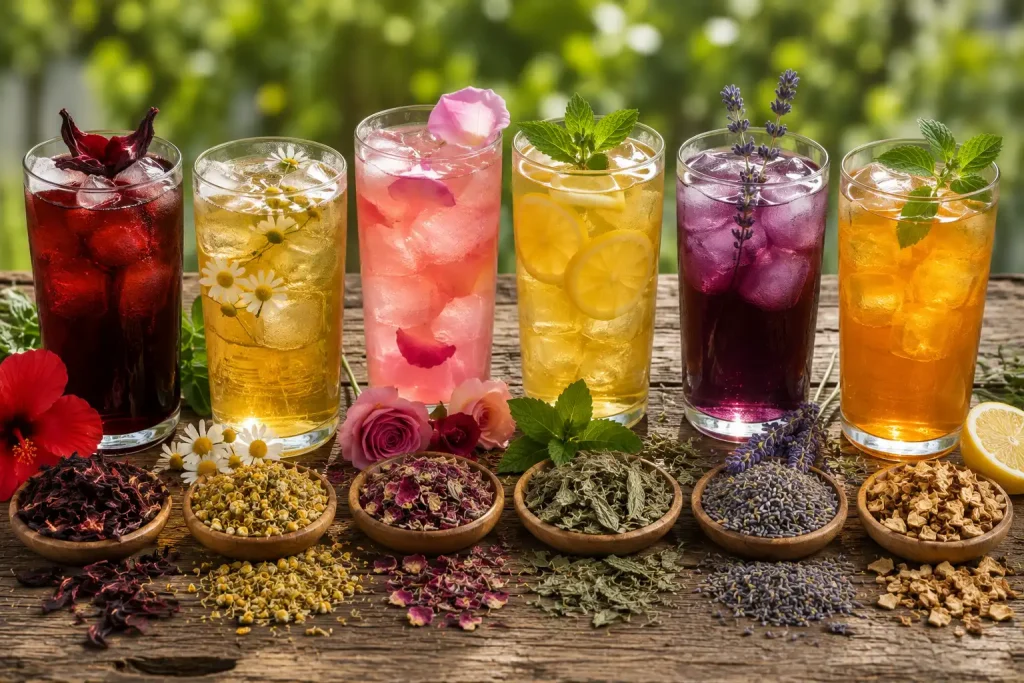
For iced tea applications, this means herbs that contain significant tannins, like black tea or green tea, can actually improve with cold brewing because the gentler extraction limits bitterness. Herbs that rely on volatile aromatics, like peppermint, can lose some intensity in cold water but compensate with extended contact time. Herbs with abundant water-soluble pigments, like hibiscus and butterfly pea flower, infuse beautifully in cold water and produce their full color range at refrigerator temperatures.
Most herbal cold brews are made by combining one to two tablespoons of herb per eight ounces of cold water, then refrigerating for four to twelve hours before straining. The longer steep, the more extraction. This passive method also means large batches can be prepared overnight with minimal labor. This is attractive for food service and retail bottled tea production.
Hibiscus: The Reigning Queen of Herbal Iced Tea
If there is one herb that defines herbal iced tea in the modern market, it is hibiscus. The dried calyces of Hibiscus sabdariffa produce one of the most vivid, jewel-toned red infusions available from any plant. Cold-brewed hibiscus tea is a deep ruby-crimson with extraordinary visual appeal that performs exceptionally well in clear bottles, mason jars, and tall glasses where the color is part of the experience.
The flavor is tart, fruity, and cranberry-like, with a refreshing acidic bite. That makes it one of the most naturally appealing cold beverages without any added flavoring. It is naturally caffeine-free, which broadens its appeal to consumers avoiding stimulants. The tartness of hibiscus pairs beautifully with sweeteners, fresh fruit, and sparkling water for elevated beverage applications.
Hibiscus is rich in anthocyanins, the same class of pigment compounds found in blueberries and red wine. Actually it has been widely studied for its antioxidant properties. This gives hibiscus iced tea a functional story that resonates with health-conscious consumers. Hatton Naturals carries Hibiscus Cut and Sifted in bulk. It is among the most requested botanicals for summer beverage development.
Peppermint: Cooling, Classic, and Universally Loved
Peppermint is one of the best herbs for iced tea precisely because of its cooling menthol sensation, which is physiologically distinct from actual temperature. Drinking cold peppermint tea creates a layered cooling effect. First from the cold liquid and then from the menthol interacting with cold-sensing receptors in the mouth. This double-cooling effect makes peppermint iced tea a genuinely refreshing hot-weather beverage in a way that few other herbs can match.
Peppermint’s flavor is intensely familiar and broadly appealing, which reduces the consumer education burden for brands. It requires no explanation: people know what peppermint tastes like and largely enjoy it. This makes peppermint iced tea a strong entry-level product for brands introducing their line to new consumers.
For cold brewing, use slightly more peppermint than you would for hot infusion, as some volatile aromatic content is lost at lower temperatures. Two tablespoons per eight ounces of cold water, steeped for six to eight hours, produces a strong, clear, pale-green infusion with full mint character. Hatton Naturals offers Peppermint Leaf (Whole) as a clean, high-quality bulk ingredient for summer beverages.
Peppermint blends naturally with hibiscus for a tart-and-cool combination, or with lemon myrtle for a citrus-mint profile that has wide appeal.
Lemon Myrtle: The Citrus Herb That Outperforms Lemon
Lemon myrtle (Backhousia citriodora) is one of the best herbs for iced tea that most North American consumers have not yet encountered. And that is precisely what makes it exciting for brands willing to tell a story. Native to subtropical Australia, lemon myrtle leaves contain exceptionally high concentrations of citral, the aldehyde responsible for lemon fragrance. In fact, lemon myrtle contains more citral than actual lemon peel, giving it an intensely citrusy aroma and flavor. That is cleaner and more persistent than lemon juice.
In cold brew applications, lemon myrtle produces a pale, lightly amber infusion with a bright, clean citrus character that does not fade the way lemon juice does over time. This makes it particularly valuable for shelf-stable or refrigerated bottled tea products where real lemon would cloud or degrade.
The flavor profile works beautifully as a standalone iced tea or as a brightening component in blends. It pairs exceptionally well with hibiscus, where its citrus character lifts and sharpens the fruity tartness of the hibiscus calyces. It also works well with rooibos, providing contrast to rooibos’s earthy sweetness. Hatton Naturals offers Organic Lemon Myrtle C/S as a premium ingredient for beverage developers looking to differentiate their products.
Butterfly Pea Flower: The Color-Changing Showpiece
Butterfly pea flower (Clitoria ternatea) has become one of the most talked-about beverage ingredients in the world. The dried blue flowers infuse into a deep, indigo-blue liquid that undergoes a dramatic color change when exposed to acidic ingredients like lemon juice or hibiscus. This pH-sensitive color shift, from vivid blue to purple to pink-magenta, creates a visual experience. That is unlike anything else in the beverage world.
For iced tea brands and food service operations, butterfly pea flower offers an interactive, Instagram-worthy product that drives word-of-mouth and social sharing without any marketing spend beyond a good recipe. The visual transformation is genuinely stunning and never gets old for customers experiencing it for the first time.
The flavor of butterfly pea flower tea is mild and slightly earthy, which means it works best as a base or visual component in a blend rather than as a standalone drink. Pair it with lemon myrtle or hibiscus and create a self-mixing layered iced tea that changes color as the customer stirs it. Hatton Naturals carries Butterfly Pea Flower (Blue, Wild Harvested) for buyers ready to develop visually distinctive products.
Rooibos: The Crowd-Pleasing Caffeine-Free Base
Red rooibos (Aspalathus linearis) from South Africa is one of the best herbs for iced tea when your goal is broad consumer appeal. Its flavor is naturally sweet, slightly nutty, and smooth, with no bitterness even at extended steep times. This means it is extremely forgiving as a cold brew ingredient, whether steeped for four hours or twelve, it delivers a consistent, pleasant result without the risk of over-extraction that plagues standard tea.
Rooibos is naturally caffeine-free and low in tannins. It makes it suitable for all-day consumption and appropriate for a wide consumer demographic including children, pregnant individuals (in normal amounts), and those avoiding stimulants. It is rich in polyphenols including aspalathin, a compound unique to the rooibos plant. That has attracted scientific interest for its antioxidant properties.
As a base in blended iced teas, rooibos provides body and natural sweetness without dominating other flavors. It pairs naturally with hibiscus, lemon myrtle, and rose hips to create full-bodied, fruity summer blends. Hatton Naturals stocks Red Rooibos in bulk for commercial blenders who need a reliable, consistent base ingredient.
Rose Hips: Tart Sweetness and Vitamin C Appeal
Rose hips, the fruit of the rose plant, are one of the richest plant sources of vitamin C available in the herbal market. This functional attribute is a meaningful selling point for summer iced tea brands. Consumers associate vitamin C with immune support and antioxidant protection. And the association is well-founded: rose hips contain ascorbic acid at levels that far exceed citrus fruits on a dry-weight basis.
Beyond nutrition, rose hips deliver a tart, fruity flavor with a slightly floral character that blends seamlessly with hibiscus, rooibos, and lemon myrtle. The color contribution is a warm amber-to-pink, which adds visual warmth to blends without the intense red-crimson of hibiscus.
For cold brew applications, whole or broken rose hips benefit from a slightly longer steep time to fully extract their soluble compounds. Twelve hours in cold water delivers a well-developed, full-flavored infusion. Pairing rose hips with hibiscus produces one of the most commercially successful flavor profiles in the herbal iced tea market. Tart, fruity, red, and visually striking. Hatton Naturals offers Rose Hips (Fruit, Whole) as a premium bulk option for summer blend development.
Signature Blends to Build Your Summer Line
Here are three ready-to-develop blend concepts using the best herbs for iced tea from the Hatton Naturals catalog:
The Crimson Refresh
Combine two parts hibiscus, one part rose hips, and one part lemon myrtle. Cold brew for eight hours. The result is a deeply colored, tart, citrus-forward red tea with a vitamin C story and a beautiful appearance. Sweeten lightly with agave or honey for retail appeal.
The Color-Change Lemonade
Combine three parts butterfly pea flower and one part lemon myrtle. Cold brew separately, then serve over ice with a small side of lemon juice or a hibiscus ice cube. As the customer stirs, the tea transforms from blue to purple to pink. Ideal for food service, pop-ups, and social-media-focused brands.
The Everyday Chill
Combine two parts rooibos, one part peppermint, and one part lemon myrtle. Cold brew for ten to twelve hours. This produces a smooth, naturally sweet, and refreshing blend with no caffeine and no bitterness, perfectly positioned as an all-day summer drink for the whole family.
Safety Information
The herbs featured in this guide are widely used as food-grade beverages with strong safety records. A few considerations are worth noting:
- Hibiscus may interact with certain blood pressure medications due to its naturally occurring compounds. Individuals on antihypertensive drugs should discuss regular hibiscus consumption with their physician.
- Peppermint is generally safe but should be used cautiously by individuals with gastroesophageal reflux disease, as menthol can relax the lower esophageal sphincter in some people.
- Butterfly pea flower is widely consumed as a food ingredient and has a good safety record. But formal clinical study in humans is limited. Use as a beverage ingredient in normal culinary quantities is considered safe.
- Rose hips contain vitamin C, and very large quantities over time could theoretically contribute to elevated vitamin C intake. Normal beverage quantities are well within safe limits.
- Individuals with known plant allergies should introduce any new herb gradually and observe for reactions.
- These herbs are intended as food-grade beverages and are not intended to diagnose, treat, cure, or prevent any disease.
Frequently Asked Questions About Herbal Iced Tea
What are the best herbs for iced tea that also have visual appeal?
Hibiscus and butterfly pea flower are the top two choices for visual impact. Hibiscus produces a vivid ruby-red infusion, while butterfly pea flower creates deep indigo-blue tea that shifts to purple or pink when acidic ingredients are added. Both are among the best herbs for iced tea from a marketing standpoint.
How long should I cold brew herbal tea?
Most herbal cold brews perform best at six to twelve hours in the refrigerator. Hibiscus and peppermint infuse well in four to six hours; rose hips and rooibos benefit from ten to twelve hours for full flavor development. Taste-testing at different time points helps you find your preferred strength.
Can I mix hot-brewed and cold-brewed methods in the same blend?
Yes. Some blenders hot-decoct root or bark ingredients separately, then combine with a cold-brewed floral or leaf component before bottling. This can be useful when a blend includes ingredients that require heat extraction, like rose hips, alongside heat-sensitive ingredients where cold brewing is preferred.
Is caffeine-free herbal iced tea commercially viable?
Absolutely. Caffeine-free positioning is a growing market differentiator, particularly for brands targeting parents, pregnant consumers, and afternoon or evening drinking occasions. Rooibos, hibiscus, and peppermint are all naturally caffeine-free and perform excellently in the iced tea market.
How do I store bulk herbs for summer iced tea production?
Store dried herbs in airtight containers away from direct light, heat, and moisture. A cool, dark pantry or storage room is ideal. Properly stored, most dried herbs remain at peak quality for one to two years. Order in quantities that align with your production cycle to ensure freshness.
What ratios work best for cold brew herbal tea blends?
A starting point of one to two tablespoons of blended herb per eight ounces of cold water works for most herbal blends. Strong-flavored herbs like hibiscus and peppermint can be used at the lower end. Milder herbs like rooibos benefit from the higher end. Always develop your own ratio through test batches before scaling production.
Where can I buy these herbs in bulk for a tea business?
Hatton Naturals stocks all six herbs featured in this guide: Hibiscus, Peppermint, Lemon Myrtle, Butterfly Pea Flower, Red Rooibos, and Rose Hips. All are available in bulk quantities suited to commercial and artisan production alike.
Conclusion
Choosing the best herbs for iced tea comes down to three qualities: flavor that works cold, visual impact that drives purchase, and a story that connects with health-conscious consumers. Hibiscus, peppermint, lemon myrtle, butterfly pea flower, rooibos, and rose hips all deliver on those criteria, and they are all available in bulk from Hatton Naturals. Build your summer line with the best herbs for iced tea and give your customers something genuinely worth reaching for.