Will Henna Damage Hair? What to Know Before You Dye
If you are asking “will henna damage hair,” you are already doing the smartest thing: checking the chemistry and the process before you commit. Henna is not a conventional dye that blasts the cuticle open and deposits pigment. It is a plant powder that, when prepared correctly, binds to the outer keratin layer and leaves a translucent stain. That difference is why many people describe their hair as thicker or shinier after henna, while others report dryness, stiffness, or uneven results.
The truth is usually not that henna is “good” or “bad.” It is that henna is precise. The outcome depends on purity, hydration, timing, and how you treat the strand before and after. This guide breaks down what henna does, what causes the “damage” stories, and how to keep your results soft, predictable, and production-clean, especially if you think like a tea maker: weigh, hydrate, rest, strain, and store with intention.
What henna actually does to the hair fiber (and what it does not)
When people wonder “will henna damage hair,” they often picture bleach-level disruption. Henna does not work like that. The coloring molecule in henna (lawsone) binds to keratin on the outside of the hair shaft. Think of it like a translucent glaze rather than paint that soaks deep into wood. Herbalists often describe henna as “coating” in the practical sense: it can add a feeling of density because the strand surface becomes smoother and slightly thicker.
What henna does not do is lighten hair. It will not turn dark hair blonde. It can, however, make hair look darker because the stain adds depth and warmth. The “damage” complaints are usually about texture changes: dryness, tangling, or a stiff feel. Those issues are commonly process-driven (too acidic, too long, too concentrated, low hydration, or poor rinse-out) rather than inherent harm.
If you treat your henna batch like a botanical infusion and not like a random paste, you can avoid most problems.
Will henna damage hair? The real risks people confuse with damage
Will henna damage hair in the strict sense of breaking disulfide bonds or permanently weakening the strand? Typically, no. The more realistic risks are:
Dryness and stiffness: often from low moisture in the paste, leaving it on too long, or using strong acids.
Build-up or rough feel: from gritty powder, poor sifting, or incomplete rinsing.
Uneven color: from uneven application, mineral-heavy water, or “compound” henna blends with salts and metallic dyes.
Over-darkening: from repeated layers, or stacking henna with indigo too aggressively.
Unexpected reactions with prior chemical treatments: not always catastrophic, but the interaction can be unpredictable.
A simple rule: pure henna behaves predictably. “Mystery” blends behave like mystery blends. If your goal is controlled, repeatable results, use clean single-ingredient powders and weigh your ratios.
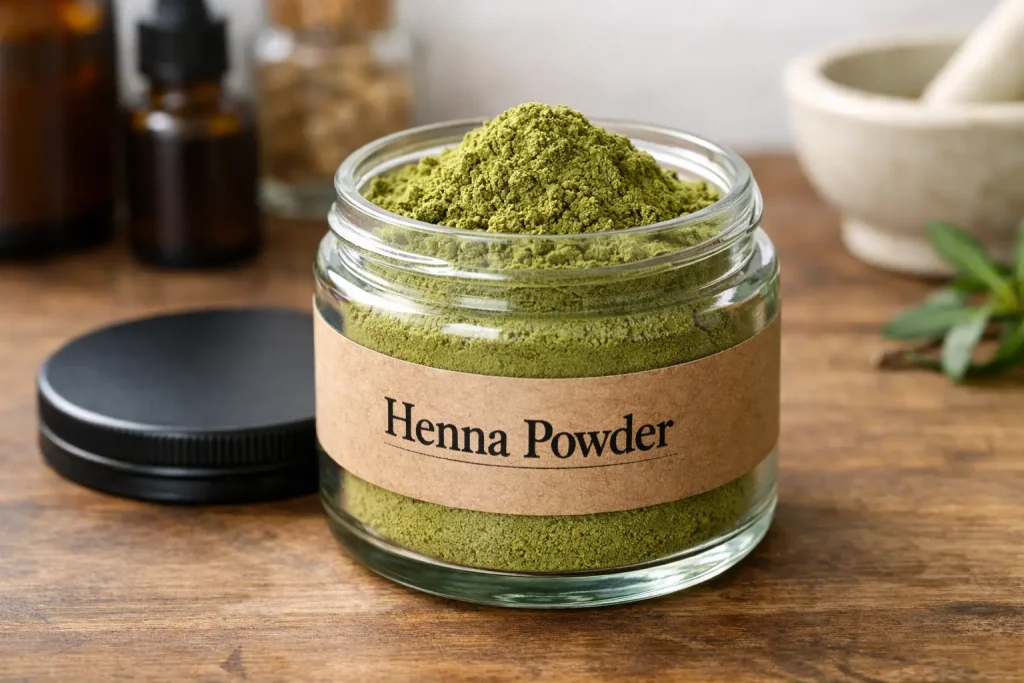
Try starting with organic henna powder as a single-ingredient baseline before you add anything else.
Purity matters: how to spot “compound” henna that causes most horror stories
Many “will henna damage hair” stories trace back to products labeled “black henna” or “instant henna.” These can contain added dyes, metallic salts, or other shortcuts that are not henna at all. Metallic salts are notorious for reacting badly with certain chemical processes. Even without dramatic reactions, additives can leave hair feeling rough or coated in the wrong way.
For tea makers, this is familiar: the ingredient list matters more than the marketing name. You want a powder that smells green and plant-like, not perfumed. You want a fine sift and you want consistency lot to lot.
If you plan to deepen shades, do it the traditional way with plants, not with “instant” additives. The classic pairing is henna first, then indigo as a second step or combined carefully.
For deeper tones, consider pairing indigo powder with a measured process rather than chasing “black henna” claims.
The hydration and acidity sweet spot (why “too acidic” feels like damage)
Henna paste is often mixed with something acidic because mild acidity can help release dye. The problem is that people push acidity too far (strong lemon juice, vinegar, or leaving a very acidic paste for a long time). Excess acidity can leave the cuticle feeling tight and the strand feeling squeaky or brittle, especially on already dry, porous, or curly hair.
A gentle approach is usually enough. Think “tea with a squeeze,” not “straight citrus.” Many experienced users do well with plain warm water and time, or with a mild acidic addition if needed.
If you want an herbalist-friendly option that still feels beverage-adjacent, a mild infusion can be used as the liquid phase. Keep it simple and predictable. For example, a cooled strong brew of organic tulsi can be used as part of your mixing liquid for a softer aromatic profile and a gentle feel.
Exact ratios you can repeat (grams + teaspoons) for a smooth, siftable paste
If you treat henna like a production batch, weigh it. Ratios matter more than vibes.
Base paste ratio (medium thickness, easy spread):
For short hair: 50 g henna powder + 150 g warm water (about 10 tbsp).
For shoulder length: 100 g henna powder + 300 g warm water (about 20 tbsp).
For long/thick hair: 150 g henna powder + 450 g warm water (about 30 tbsp).
Teaspoon conversion for small tests (patch test size):
10 g henna powder is roughly 4 teaspoons (varies by grind).
Mix 10 g henna with 30 g water (about 2 tablespoons) to start, then adjust by drops until it spreads like yogurt.
Texture target: a glossy paste that slowly ribbons off a spoon, not crumbly, not watery. If it is too thick, you will overwork the hair during application, which feels like “damage” later.
If you want to pair botanicals the way you would in a blend, keep additions low so they do not interrupt paste performance. For a subtle aromatic note, you can replace part of the water with a cooled infusion of organic lemon myrtle (light, clean scent). Keep it mild, not sharp.
Timing, resting, and temperature (the “steep” logic that makes henna predictable)
The question “will henna damage hair” often comes from people who left paste on for an extreme length of time or used high heat. Henna does not need scorching heat. Warm water to mix is fine. The paste then benefits from resting, like letting a botanical infusion bloom.
A practical method:
Mix with warm water (not boiling).
Cover tightly (airtight bowl or wrap).
Rest 2–6 hours at room temperature for dye release.
Apply and keep hair comfortably warm, not hot.
Process time on hair is commonly 2–3 hours for most goals.
Longer is not always better. Over-long processing can dry the hair and make rinse-out harder. If you want darker, build with planned sessions, not one marathon.
For a calm, spa-like ritual, a warm cup of organic fair trade rooibos tea while you wait fits the mood and keeps the “maker mindset” grounded in patience and repeatability.
Indigo pairing done right (so you get depth without brittleness)
If your goal is brown to black tones, the henna + indigo sequence matters. Indigo behaves differently than henna. It tends to work best fresh, and its performance is sensitive to timing and mix conditions.
Two common approaches:
Two-step (most controlled):
Step 1: Apply henna paste, rinse.
Step 2: Apply fresh indigo paste (mixed shortly before use), process 45–90 minutes, rinse.
One-step (faster, less predictable):
Mix henna and indigo together. This can work, but the shade and staying power can vary more.
If you are worried “will henna damage hair,” the two-step method is often gentler because each paste is optimized for its job and rinses more cleanly.
Try a two-step with henna powder first, then indigo powder second for deeper tones with better control.
Troubleshooting (flat flavor, too tart, over-carbonation, sediment, aroma loss)
Tea makers troubleshoot beverages. Hair pastes have similar failure modes. Here is the translation layer:
Flat flavor (dull color payoff): Your paste was under-released or applied too quickly. Rest longer (2–6 hours) and ensure even saturation.
Too tart (overly squeaky, tight feel): Your mix was too acidic. Reduce or skip acids next time and increase hydration.
Over-carbonation (too intense, too fast darkening with indigo): Indigo was too concentrated or processed too long. Shorten indigo time and use fresh mix.
Sediment (gritty rinse-out, rough feel): Powder was too coarse or not sifted. Sift before mixing, and use more water for a smoother paste.
Aroma loss (you expected a “fresh plant” smell but got stale): Old powder or poor storage. Check scent cues, store airtight, and avoid humidity.
If you want a gentle aromatic lift without harsh acidity, consider using a cooled mild infusion of cardamom whole green as part of the mixing liquid. It is subtle, but it can make the process feel cleaner and more pleasant.
Storage + quality: keeping powders potent and paste performance consistent
If you handle botanicals, you already know the enemies: air, humidity, heat, and light. Henna and indigo are the same.
Airtight: store powders in tightly sealed containers.
Humidity control: keep away from bathrooms if possible, or use a desiccant pack.
Cool and dark: pantry conditions beat sunny shelves.
Color cues: henna powder should look greenish, not dull brown. Indigo should look deep green-blue, not greyed out.
Scent cues: both should smell plant-forward, not musty.
Mixed paste storage: henna paste can sometimes be frozen in portions for convenience, but indigo paste is best mixed fresh. If you want repeatable results, treat indigo like a fresh brew, not a stored concentrate.
For a pantry-style workflow, label jars like you would tea lots. Date them. Rotate stock.
Safety section: practical, compliant, and respectful of real skin
Will henna damage hair is often really “will this irritate me.” Skin and scalp are living tissue. Be cautious and simple.
Patch test: always do a small skin patch test 24 hours before full use.
Avoid eye area: keep paste away from eyes and brows unless you are trained and careful.
Use gloves: henna stains skin quickly.
No medical claims: henna is traditionally used for coloring. It is not a treatment for disease. If you have scalp conditions, sensitivities, or are under medical care, talk to a qualified professional before experimenting.
Avoid “black henna”: it may contain additives that raise risk of reactions.
Keep your process gentle: warm, not hot. Mild, not harsh. Measured, not extreme.
How to keep hair soft after henna (the rinse and rehydrate strategy)
A big part of “will henna damage hair” is what happens after you rinse. Henna can feel dry immediately after because the strand is coated and the paste can leave residue.
Rinse-out method:
Rinse with lots of lukewarm water until water runs mostly clear.
Use conditioner as a “slip rinse” to help release remaining paste.
Do not shampoo aggressively right away unless you must.
Let hair rest 24–48 hours before judging final feel and color.
Hydration: a light oil on damp ends can help, but keep it minimal. Think of it like finishing a tea blend: you do not bury aroma under heavy additives. Your goal is softness and manageability, not slickness.
Conclusion: when people say “damage,” what they usually mean
So, will henna damage hair? For most people using pure powder with a measured, hydrated, not-overly-acidic process, henna is more likely to feel strengthening than damaging. The “damage” stories usually come from impurities, extreme acidity, too-thick paste, overlong processing, or rough rinse-out that leaves sediment behind. Treat henna like a botanical production batch: verify purity, weigh your ratios, control time and temperature, and store ingredients like you care about potency. When you do, you get what henna is famous for: warm, luminous color and a smooth, sealed feel that reads as healthy hair.
FAQ
Will henna damage hair if I use it every month?
It can feel dry if you layer too frequently without hydration and clean rinse-out. Many people do better spacing applications 6–10 weeks.
Will henna damage hair on bleached or highlighted hair?
It usually does not “damage” it, but it can grab more strongly on porous hair and shift warmer. Strand test first.
Will henna damage hair if I mix it with lemon juice?
Too much acidity can make hair feel stiff. If you use acid, keep it mild and avoid strong, concentrated mixes.
Can I use indigo the same day as henna?
Yes. Two-step same-day is common. Mix indigo fresh right before use for best results.
How do I avoid gritty residue?
Sift the powder, use enough water for a smooth paste, and rinse with conditioner slip. Sediment is a common cause of rough feel.
What if my color looks too bright at first?
Henna often oxidizes over 24–72 hours, deepening and settling. Wait before reapplying.
Can I add herbs to my henna mix?
Yes, but keep additions small so paste performance stays smooth. Mild infusions are often easier than adding extra powders.
Is henna a medical treatment for scalp issues?
No. It is traditionally used for coloring. If you have scalp concerns, consult a qualified professional.