Henna Powder: How to Prep and Store for Best Color
Henna powder has a quiet kind of honesty. When it’s fresh, sifted, and hydrated with intention, it behaves like a plant should: slowly, predictably, and with a payoff you can feel in the texture of the paste and see in the depth of the stain. This guide is for working with henna powder like a maker, not a gambler. We’ll focus on prep that reduces waste, storage that protects aroma and dye strength, and small production habits that make every batch more consistent. If you also blend with indigo, the same discipline applies, and the payoff is even bigger because timing and moisture control matter more. Think of this as a tidy workflow you can repeat, whether you’re mixing a single bowl or pre-portioning multiple applications for later.
What makes henna “good” (and why it sometimes isn’t)
High-performing henna powder has a clean, plantlike scent (green hay with a soft tea note), a fine feel between your fingers, and a color that leans olive-green rather than dull brown. When henna powder sits too long in heat or humidity, the dye potential drops and the scent flattens. You’ll often see it in the paste: it turns grainy, dries unevenly, and stains weaker even when your timing is correct.
For consistent results, treat quality like a chain. Freshness, particle size, hydration, temperature, and storage all link together. Break one link, and you’ll chase “mystery problems” that are actually just moisture getting into your jar or heat living in your pantry.
If you’re planning to combine with indigo powder, keep that as a separate, dry companion until the exact moment you need it. Indigo behaves differently in water and has a shorter working window once mixed.
Tools and setup that prevent mess and boost consistency
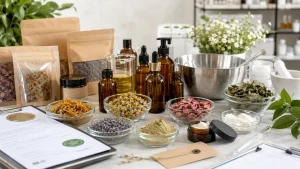
Before you open the bag of henna powder, set the station like you’re about to bake something finicky. You want dryness, clean surfaces, and a workflow that keeps air exposure short.
Useful basics:
A fine mesh sieve (or tea strainer) for sifting lumps
A digital scale (0.1 g resolution is ideal)
A silicone spatula plus a small whisk or spoon
Nitrile gloves and an old towel
Two bowls (one for mixing, one for water or tea)
A roll of plastic wrap or an airtight container for resting paste
This is also where plant add-ins can help your sensory experience if you’re mixing in a space you want to smell nice. A small cup of warm tea beside you can anchor the vibe and keep you patient. Brew a simple infusion and sip while you work. Try organic ceylon tea for a clean, brisk cup that doesn’t compete with that grassy henna aroma.
Sifting and pre-portioning henna powder (fast path to smoother paste)
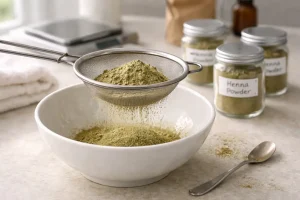
Sifting is boring until you skip it. Then it becomes the only thing you can think about while you’re trying to spread paste that feels like wet sand. Sift henna powder directly into your mixing bowl. If you see fibrous bits, don’t panic, just keep them out of the paste.
Production-minded tip: portion first, then store portions. Weigh out the amount you typically use (for example 50 g, 75 g, or 100 g), and put each portion into a small airtight jar or heavy zip bag. Less opening and closing of the main container means less humidity creep over time.
If you’re doing a two-step color routine with indigo, pre-portion indigo powder separately in matching weights so your workflow stays clean and your ratios don’t drift.
Mixing ratios (grams + teaspoons) and a paste method that’s repeatable
Here’s a reliable baseline for henna powder paste. This makes a smooth, spreadable texture without turning soupy. Adjust water slowly because different batches absorb differently.
 Basic ratio (small batch):
25 g henna powder (about 4 teaspoons)
30 to 40 g warm liquid (about 2 to 2.5 tablespoons), added gradually
Optional: 1 teaspoon sugar (helps paste stay moist and glide, especially in dry climates)
Medium batch:
100 g henna powder (about 16 teaspoons)
120 to 160 g warm liquid (about 1/2 to 2/3 cup), added gradually
Optional: 4 teaspoons sugar
Liquid choices: plain warm water works. If you want a calmer, tea-like aroma and a more pleasant mixing experience, you can use a strained herbal infusion cooled to warm. Keep it simple and low-sediment. Try orange peel powder in a separate tea cup (not in the paste) for a cozy citrus note while you work.
Mixing method:
Sift the henna powder into the bowl.
Add about 70% of your liquid, then stir until you have thick, lumpy dough.
Rest 5 minutes. This lets the particles hydrate.
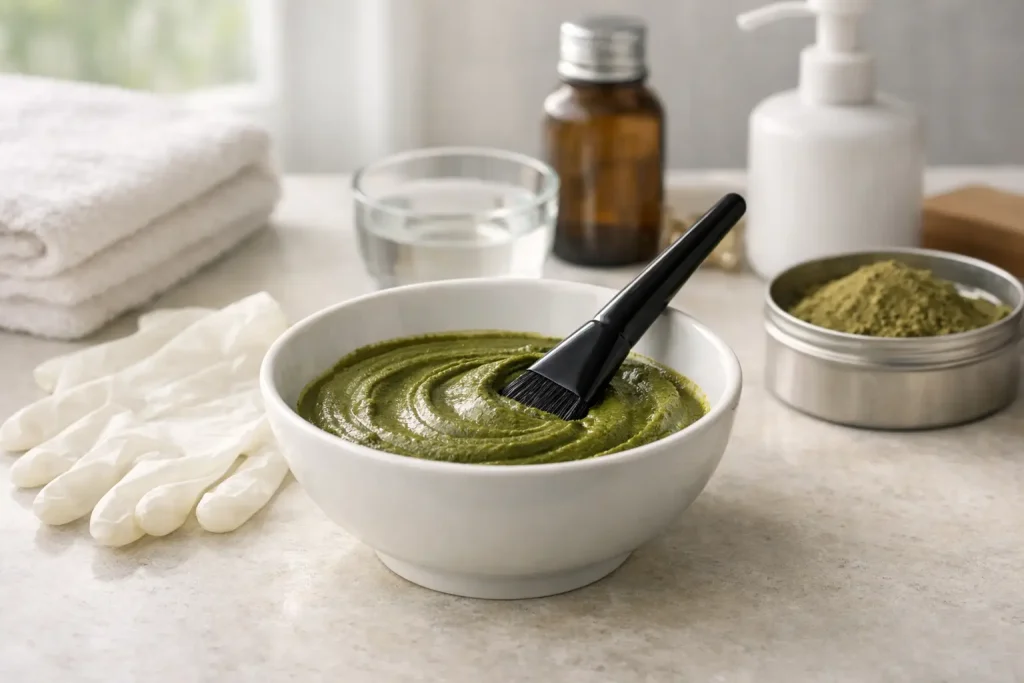
Add the remaining liquid in small increments. Aim for a texture like thick yogurt or soft hummus: it should mound, then slowly relax.
Press the paste against the bowl with a spatula to crush micro-lumps.
Keep air contact low once mixed. Smooth the top, press plastic wrap directly onto the surface, and cover.
This is the core repeatable path: weigh, sift, hydrate in stages, rest, adjust. It’s simple, but it’s how you keep henna powder predictable.
Resting and timing for best dye release
Dye release timing depends on temperature and batch freshness. Warmer rooms speed it up; cooler rooms slow it down. A practical range is 6 to 12 hours at typical room temperature. Some makers go longer, but you’ll learn your sweet spot by checking texture and stain performance over time.
What to look for:
The paste darkens slightly and smells more rounded, less “raw”
The surface may look a little more glossy
A small dab on skin stains more confidently after a short wait
If you’re blending with indigo, remember the roles are different: henna paste can rest; indigo paste is usually mixed closer to use. Keep indigo powder dry until you’re ready to combine.
If you want a gentle ritual while you wait, steep a simple floral tea. Try organic dried rose petals as a light, fragrant cup. It doesn’t change your henna, but it changes your patience.
Combining henna and indigo (workflow, not mythology)
Henna powder and indigo are often paired when you want deeper, cooler tones and more control over the final shade. The key is treating the pair like two separate ingredients with separate clocks.
Practical workflow:
Mix and rest henna paste first (dye release window).
Mix indigo paste later, closer to application.
Combine only what you’ll use within that working session.
A straightforward starting point:
For darker results, many makers start around a 1:1 weight blend (example: 50 g henna paste base from 50 g dry henna powder, combined with 50 g indigo paste made from 50 g dry indigo powder and enough water to make a thick paste).
For warmer tones, reduce indigo portion (example: 2 parts henna to 1 part indigo by weight).
Keep notes. Don’t trust memory. Write the grams and timing on a card and take a photo of the paste texture. That’s how you build repeatability faster than guessing.
Try adding black pepper tbc to your tea blend on the side if you like a warming sip while you work. Keep it out of the paste unless you have a tested, personal reason to include it, because plant powders add sediment and can complicate texture.
Troubleshooting (flat flavor, too tart, over-carbonation, sediment, aroma loss)
This section uses beverage-maker language on purpose because the mindset transfers: control inputs, reduce variables, and fix one thing at a time.
Flat flavor (results look dull or weak):
Your “flavor” here is dye strength. Causes are usually old henna powder, overheated storage, or too much air exposure. Fix by buying smaller amounts more often, sealing tighter, and portioning. Also confirm you gave enough rest time for dye release.
Too tart (paste feels irritating or overly sharp):
If you used acidic liquids or additives, pull back. For most practical workflows, warm water is enough. If you want scent and comfort, keep that in a separate cup of tea, not in the paste. A mellow option: sip organic rooibos red tea while mixing.
Over-carbonation (paste expands or behaves “foamy”):
In paste terms, this is usually trapped air from aggressive mixing or too thin a consistency that looks bubbly. Mix slower, press paste against the bowl, and rest after hydration. Avoid shaking containers.
Sediment (gritty texture, clogs tips, drags on application):
This is classic unsifted powder or added botanicals. Sift henna powder, hydrate in stages, and let the paste rest so particles fully absorb water. If you want an herbal atmosphere, use botanicals for your tea, like elderflower herb, not in the paste.
Aroma loss (paste smells stale, flat, or dusty):
Aroma is a quality cue. Loss usually means oxidation or humidity intrusion. Fix storage: airtight, cool, dark, and minimal opening. Portioning helps more than you think.
Storage + quality (airtight, humidity, color and scent cues)
Henna powder is a dry ingredient that hates humidity. Treat it like a spice you’d be upset to ruin.
For dry storage:
Airtight container, preferably opaque
Cool, dark place away from stove heat
Silica packets can help if you live in humid conditions (keep them away from the powder itself, just in the container area)
Keep a “working jar” and a “bulk jar” so you don’t expose everything every time
Quality cues for dry henna powder:
Color: fresh tends to olive-green; stale leans dull brown
Scent: fresh is green and plantlike; stale smells dusty or flat
Flow: fresh sifts easily; humidity makes it clump
For paste storage:
Short-term: cover the surface directly with plastic wrap and refrigerate
Longer storage: freeze in small portions. Thaw gently in the fridge and re-stir
If you’re pairing, store indigo powder even more carefully. Indigo is especially sensitive to moisture and can become less predictable when old.
If you want to keep your maker space feeling like a calm apothecary while you portion and label, brew a bright cup of organic lemon myrtle. It’s clean, citrusy, and pairs well with the earthy smell of plant powders.
Safety (compliant, practical, no medical claims)
Henna powder is traditionally used as a plant dye. Use it with common-sense care: keep powders out of eyes and lungs, mix in a ventilated area, and wear gloves if you don’t want stained hands. Patch testing is a personal decision and a sensible practice for many people, especially if you’re new to plant dyes.
Avoid making medical claims. Herbalists often talk about plants in terms of tradition and experience, but safety stays grounded: clean tools, fresh ingredients, and careful storage. If you notice irritation, discoloration you didn’t expect, or a strong off smell from your paste, discontinue use and reassess your materials and process.
If you’re making multiple batches, label everything with date, weight, and liquid used. That’s not bureaucracy. That’s how you protect your time and get consistent results from henna powder.
FAQ
How do I know if henna powder is fresh?
Fresh henna powder is usually olive-green, fine, and smells clean and plantlike. Stale powder trends dull brown and smells dusty.
Should I sift henna powder every time?
Yes. Sifting henna powder reduces grit, improves spread, and helps paste hydrate evenly.
What’s the best liquid to mix with henna powder?
Warm water is the most predictable. If you experiment, change only one variable at a time so you can learn what actually helped.
How long should henna powder paste rest before use?
A common practical range is 6 to 12 hours at room temperature, depending on warmth and freshness.
Can I store henna powder in the fridge or freezer?
Yes, if it’s sealed airtight. The goal is to block humidity and temperature swings.
When should I mix indigo if I’m pairing it with henna powder?
Mix indigo closer to use and combine only what you’ll apply that session. Keep indigo powder dry until you need it.
Why does my henna powder paste feel gritty?
Usually unsifted powder or uneven hydration. Sift, hydrate in stages, rest, then adjust with small amounts of liquid.
How can I reduce waste when using henna powder?
Pre-portion henna powder into small airtight containers and only mix what you’ll use. Fewer openings means less humidity exposure and better consistency.