Vanilla Rooibos Loose Leaf Tea Dessert Notes
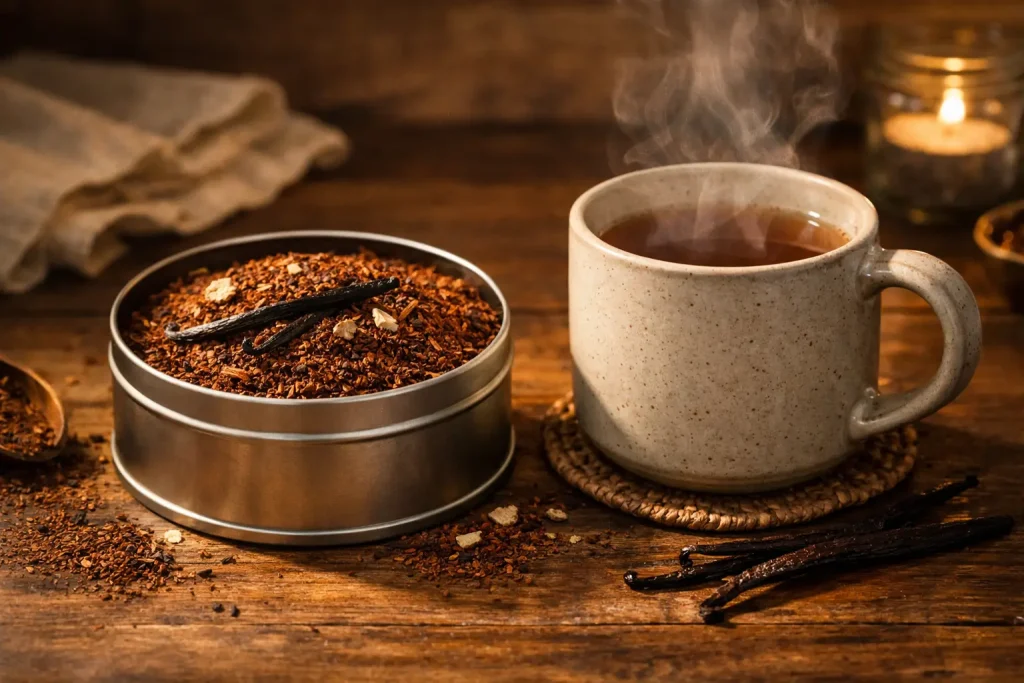
Organic vanilla rooibos loose leaf tea is the kind of cup that feels like dessert without trying too hard. It’s naturally caffeine-free, softly honeyed, and willing to carry a creamy vanilla aroma like warm linen. When brewed with intention, it reads like baked custard, toasted sugar, and a hint of redwood-like sweetness from rooibos itself. When brewed carelessly, it can turn flat, woody, or oddly sour. The good news is that small production-minded choices (leaf-to-water ratio, temperature, steep time, and how you store your aromatics) make a big difference.
This guide is written for home brewers and tea makers who want repeatable results. You’ll get exact ratios in grams and teaspoons, a few blend variations that keep the dessert theme, and practical ways to protect vanilla’s aroma in a loose-leaf workflow. Along the way, you’ll see how Organic Vanilla Rooibos + Organic Rooibos Red Tea can be used together to dial sweetness, body, and “cake crumb” warmth without adding sugar.
What makes rooibos taste like dessert (and how vanilla amplifies it)
Rooibos has a naturally rounded sweetness that shows up as caramel, hay, and gentle wood spice. It’s not a true tea plant, so it doesn’t bring the tannic snap that can make black tea feel brisk. Instead, it offers a wider, softer palate. That wide palate is exactly why organic vanilla rooibos loose leaf tea feels dessert-forward: vanilla aroma sits comfortably on rooibos’ warm base rather than fighting bitterness.
For tea makers, think in layers. Rooibos gives structure and a lingering “baked” warmth. Vanilla gives top-note perfume and that creamy association our brains read as pudding, frosting, and custard. If you want more backbone, blend in Organic Rooibos Red Tea to deepen the base and keep the vanilla from floating away.
Try making a sturdier dessert base by adding Organic Rooibos Red Tea to your blend for a deeper, rounder rooibos body.
Choosing your leaf ratio: light, dessert, or “after-dinner” strength
The easiest way to control dessert notes is leaf weight per water volume. Vanilla reads strongest when the cup has enough rooibos concentration to hold the aroma, but not so much that the brew turns woody.
Here are three practical strength targets you can scale up for a tin, a café batch, or sample flights:
Light and aromatic (delicate vanilla, lighter body)
Use 2.0 g per 240 ml (8 oz). This is a gentle cup that feels cozy without heaviness.
Dessert cup (balanced sweetness and vanilla, fuller mouthfeel)
Use 2.5–3.0 g per 240 ml (8 oz). This is where organic vanilla rooibos loose leaf tea starts tasting like a warm pastry.
After-dinner strength (rich, syrupy aroma, more rooibos depth)
Use 3.5 g per 240 ml (8 oz). Great over ice with a splash of milk or for latte-style builds.
If you’re blending, you can keep total grams the same and shift the ratio inside the blend. A classic production-minded starting point is 70% Organic Vanilla Rooibos and 30% Organic Rooibos Red Tea for extra body without losing softness.
For a plush “bakery” middle note, try adding Ceylon Cinnamon Sticks in small amounts to reinforce vanilla without turning the cup spicy.
Exact brewing ratios in grams and teaspoons (repeatable every time)
This section is built for repeatability. Use a scale when you can, and use teaspoons when you need speed.
Standard dessert brew (single mug)
Water: 240 ml (8 oz)
Leaf: 2.8 g organic vanilla rooibos loose leaf tea (about 2 heaping teaspoons)
Temperature: 96–100°C (205–212°F)
Steep time: 6–8 minutes
Result: full dessert aroma, smooth finish
Lighter brew (for multiple cups or tasting)
Water: 240 ml (8 oz)
Leaf: 2.0 g (about 1½ teaspoons)
Temperature: 95–99°C (203–210°F)
Steep time: 5–6 minutes
Result: more vanilla perfume, less base sweetness
Batch brew (1 liter, tea maker friendly)
Water: 1,000 ml
Leaf: 11–12 g total (about 8–9 teaspoons)
Temperature: 98–100°C (208–212°F)
Steep time: 7 minutes, then strain
Result: consistent body, easy to chill for iced tea
If you’re building a two-rooibos base, use:
8 g Organic Vanilla Rooibos + 4 g Organic Rooibos Red Tea per liter, steep 7 minutes at near-boil. This keeps the cup dessert-forward but gives it a “browned butter” depth.
For a silky mouthfeel that reads like custard, add Marshmallow Root in tiny amounts to your blend and steep on the longer end.
Water temperature, steep time, and why “near boil” works here
Rooibos is forgiving at higher temperatures. Unlike green tea, it won’t punish you with sharp bitterness. Near-boil water extracts the round sweetness and the cozy wood-and-honey base that makes vanilla pop.
Practical rules that work in a tea-making workflow:
Use freshly boiled water that rests 30–60 seconds if your kettle runs aggressively hot.
Steep longer rather than hotter if you want more body.
Cover the brewer during steeping. Vanilla aroma is volatile. Keeping it under a lid reduces “top-note escape.”
A simple technique for maximum aroma is the “warm the vessel” method: rinse your teapot or mug with hot water, dump, then add leaf. This keeps the first minute of steeping warm and aromatic rather than losing heat into cold ceramic.
To nudge dessert notes toward “spiced cookie,” try adding Green Cardamom Pods and lightly cracking them before steeping.
Building dessert notes with a simple pairing blend (tea maker mindset)
Organic vanilla rooibos loose leaf tea plays well with ingredients that feel like bakery pantry staples. The goal is not to overpower vanilla, but to build a rounded dessert impression: warm spice, gentle sweetness, and soft aroma.
Dessert pantry blend (per 100 g finished blend)
70 g Organic Vanilla Rooibos
30 g Organic Rooibos Red Tea
2–4 g crushed cinnamon stick (optional, keep it subtle)
0.5–1 g cracked cardamom pod (optional, floral lift)
Mix gently to avoid dusting off vanilla aroma. If you’re packaging, consider blending in small batches and closing tins promptly. Vanilla top notes fade faster than rooibos base notes.
To add a golden “baked apple” warmth without citrus, try a small pinch of Ginger Root for gentle heat and depth.
Iced tea and dessert-style lattes without losing aroma
Iced rooibos can go dull if brewed weak and chilled. For a dessert-style iced version, brew stronger and chill quickly.
Flash-chill method (best aroma retention)
Brew 500 ml water with 7 g organic vanilla rooibos loose leaf tea (about 5 teaspoons) for 7 minutes near-boil. Strain over 250–300 g ice. Top with cold water to taste. This locks in the vanilla nose.
Latte-style (caffeine-free dessert cup)
Brew a concentrate: 120 ml water with 4 g organic vanilla rooibos loose leaf tea (about 1 tablespoon) for 8 minutes. Strain, then add 120–180 ml steamed milk or warmed oat milk. Keep sweetener optional, because a strong concentrate already reads “dessert.”
For a deeper caramel impression in lattes, include Cacao Nibs in the dry blend (small amount) so the finish hints at chocolate without turning the cup bitter.
Straining, particle control, and keeping the cup clean
Rooibos is naturally fine and can shed small particles. If you want a clean cup (especially for iced tea, bottles, or a latte concentrate), strain twice.
Practical setup:
First pass: standard basket infuser or roomy filter.
Second pass: fine mesh or paper filter only if you mind sediment.
For production-minded consistency, keep your scoop consistent or weigh portions into small jars for batching. Vanilla aroma clings to surfaces. If you’re using the same tin scoop for strongly aromatic spices, wash and dry it fully before returning to vanilla rooibos blends.
For a gentle floral lift that still reads dessert-like, try a tiny amount of Chamomile Flowers (keep it low so it doesn’t dominate).
Troubleshooting: flat flavor, too tart, over-carbonation, sediment, aroma loss
Flat flavor
Most often it’s under-dosed leaf or too short a steep. Increase leaf by 0.5 g per cup or extend steep to 8–9 minutes. Also check water quality. Very soft water can feel thin; very hard water can mute aroma.
Too tart
Rooibos shouldn’t be tart on its own. Tartness usually comes from scorching water on a very concentrated brew that extracts woody edges, or from pairing ingredients that skew bright. Reduce concentration slightly and keep steep time under 9 minutes. If you added spices, reduce them. A small amount of marshmallow root can soften edges.
Over-carbonation
If you’re using rooibos in a sparkling beverage workflow (like a naturally bubbly soda style), over-carbonation usually means too much fermentable sugar or too long at warm temperature. Chill earlier and reduce sugar. Also keep bottles rated for carbonation and burp carefully during testing.
Sediment
Rooibos is particulate. Use a larger-cut rooibos where possible and strain twice. Avoid crushing the leaf in the infuser. For bottled drinks, settle in the fridge and decant off the top.
Aroma loss
Vanilla aroma fades with heat exposure, oxygen, and time. Keep the vessel covered while steeping, and store the tea airtight. For packaged blends, minimize headspace and keep tins closed between fills.
For a rounder aroma that survives chilling, reinforce the base with Organic Rooibos Red Tea so the vanilla has more structure to ride on.
Storage + Quality: protecting vanilla, managing humidity, reading freshness cues
Organic vanilla rooibos loose leaf tea stays best when protected from air, light, heat, and humidity. Vanilla is your fragile top note, so storage is about aroma retention more than anything else.
Airtight matters
Use a tight-sealing tin or jar. If you’re portioning for daily use, keep a small working jar and a larger “backstock” container to reduce repeated oxygen exposure.
Humidity management
Rooibos can pick up moisture and become dull. Store away from kettles, dishwashers, and sunny windows. If your climate is humid, consider smaller containers you open less often.
Quality cues (simple sensory checks)
Color: rooibos should look red-brown and warm, not grayish.
Scent: you should smell vanilla immediately when you open the container. If it’s faint, brew strength may need to go up, but it also suggests the blend is aging.
Cup aroma: the steam should carry vanilla in the first minute. If it doesn’t, the tea may be old or stored loosely.
If you’re building a pantry-style blend, keep spices in whole form as long as possible and crack them just before blending. Whole cinnamon sticks and cardamom pods hold aroma longer than powders.
For a deeper, fresher base in older tins, blend in a small portion of Organic Rooibos Red Tea to revive body and sweetness.
Safety: practical, compliant herbal use without medical claims
Organic vanilla rooibos loose leaf tea is generally enjoyed as a caffeine-free beverage, and herbalists often use rooibos as a gentle daily infusion. That said, it’s still smart to keep a few commonsense safety habits.
Avoid medical claims
This is a food and beverage, not a treatment. Use language like “traditionally used” and “may support” only in a general wellness sense, not for diseases or specific outcomes.
Know your personal sensitivities
If you’re sensitive to botanicals or spices, start with a lighter brew and fewer additions. If you’re pregnant, nursing, or managing a medical condition, it’s reasonable to check with a qualified clinician before making concentrated herbal beverages a daily habit.
Food safety for batches
If you batch brew, cool quickly and refrigerate. Treat it like a perishable beverage once brewed. Use clean tools and containers, especially for bottled iced tea.
For gentle flavor additions, keep doses modest. A little Ginger Root or Ceylon Cinnamon Sticks goes a long way, and you can always add more next batch.
FAQ
What does organic vanilla rooibos loose leaf tea taste like?
Organic vanilla rooibos loose leaf tea tastes warm and dessert-like, with soft caramel notes and a creamy vanilla aroma.
How long should I steep organic vanilla rooibos loose leaf tea?
Steep organic vanilla rooibos loose leaf tea for 6–8 minutes near boiling for a full dessert-style cup.
Can I drink organic vanilla rooibos loose leaf tea at night?
Yes. Organic vanilla rooibos loose leaf tea is naturally caffeine-free, so many people enjoy it in the evening.
What ratio is best for a stronger dessert cup?
Use 3.0–3.5 g per 240 ml (8 oz) and steep 7–8 minutes. This makes organic vanilla rooibos loose leaf tea feel richer and more “after-dinner.”
How do I make it iced without losing vanilla aroma?
Brew stronger, then flash-chill over ice. A concentrated brew helps organic vanilla rooibos loose leaf tea keep its vanilla nose when cold.
Why does my cup taste flat?
Usually the dose is too low or the steep is too short. Increase grams slightly or steep longer, and store organic vanilla rooibos loose leaf tea airtight to protect aroma.
Does organic vanilla rooibos loose leaf tea have tannins?
Rooibos is lower in tannic bite than true black tea, so organic vanilla rooibos loose leaf tea is typically smooth and gentle.
How should I store it for best freshness?
Keep it airtight, cool, and dry. Vanilla is volatile, so organic vanilla rooibos loose leaf tea benefits from minimal air exposure and low humidity.
Brew it with structure
Organic vanilla rooibos loose leaf tea earns its dessert reputation when you brew it with structure: enough leaf to build a warm base, near-boil water to extract sweetness, and a covered steep to keep vanilla from escaping. Use a scale for repeatability, aim for 2.5–3.0 g per cup for the classic dessert profile, and lean on Organic Rooibos Red Tea when you want deeper body without adding caffeine or bitterness. Store it airtight, watch aroma cues, and keep your additions subtle so vanilla stays the star. With those habits, organic vanilla rooibos loose leaf tea becomes a reliable “cozy dessert” ritual you can brew, batch, bottle, and enjoy year-round.