Wholesale Dried Flowers for Candles, Soap, and Crafts
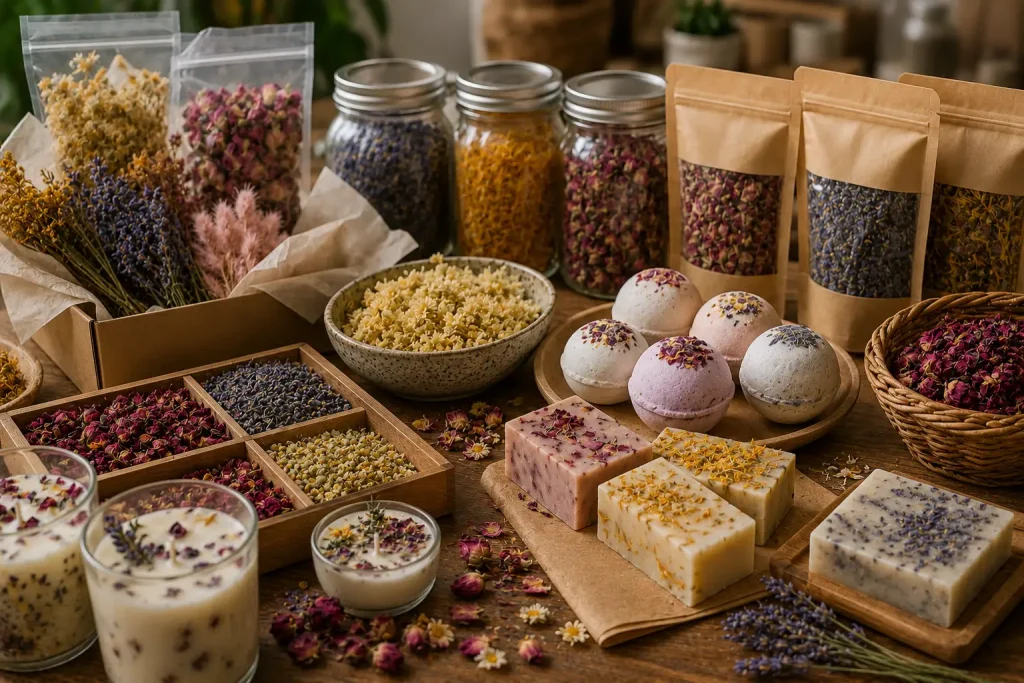
If you make candles, soaps, bath bombs, or handcrafted goods, sourcing wholesale dried flowers for crafts is one of the smartest moves you can make for your business. Buying in bulk cuts your per-unit cost, keeps your production line moving without constant reorders, and gives you consistent color and quality across every batch. But not all dried botanicals are created equal. A flower that photographs beautifully in a product listing may arrive brittle, faded, or off-scent if the supplier cuts corners on drying and storage.
Whether you sell at farmers markets, on Etsy, or through a boutique retail channel, understanding what to look for before you commit to a bulk order will protect your margins and your brand reputation. This guide covers the most popular varieties for craft applications, what quality signals matter, how to evaluate a supplier, and practical tips for working with dried botanicals at volume.
Why Crafters and Makers Are Going Wholesale
The handmade product market has grown steadily over the past several years, and botanical-infused products have been at the center of that growth. Customers want to see real flowers embedded in their soy candles. They want rose petals on top of artisan soap bars. They want chamomile in their bath soaks. This demand has pushed independent makers to look beyond local craft stores, where stock is inconsistent and markups are high.
Buying wholesale dried flowers for crafts changes the economics entirely. A small retail bag of lavender might cost eight to twelve dollars for a few ounces. The same weight purchased through a wholesale botanical supplier can come in at a fraction of that price when you order by the pound or kilogram. For a maker producing two hundred soap bars a month, that difference adds up to real money over a year.
Beyond cost, wholesale sourcing gives you supply reliability. Running out of cornflowers mid-production is frustrating and can delay orders. A dedicated botanical supplier with consistent stock means you can plan batches confidently.
Most Popular Dried Flowers for Candle Making
Candle makers have specific requirements that differ from other craft applications. Dried botanicals placed inside or on top of candles must be safe to use near flame, which means dry moisture content is critical. Flowers with high residual moisture can cause mold or interfere with wax adhesion.
Lavender buds are among the most requested botanicals for candles. Their compact form embeds cleanly in wax, and their natural color holds well in cool-pour soy and coconut wax formulas. Organic lavender super grade offers tight, uniform buds with strong color retention.
Cornflower petals are a candle maker’s favorite for decorative embeds. Their vivid blue holds better than most flowers under heat, and they press flat against glass containers cleanly. Cornflower blue petals are widely used for their visual impact in clear-jar candles.
Calendula petals bring warm orange and yellow tones that complement amber or vanilla-scented candles. Their flat, petal-forward structure is easy to work with at the surface layer of container candles. Browse organic calendula flowers whole for bulk availability.
One important note: always test any botanical in your specific wax and wick combination before committing to a large production run. Some flowers darken when exposed to fragrance oils.
Best Dried Botanicals for Soap Making
Cold-process and melt-and-pour soap makers use dried flowers for both decoration and mild exfoliation. The challenge is that many flowers turn brown when exposed to lye in cold-process soap. This is a common issue with lavender buds and chamomile, which can discolor to greenish-brown after saponification.
For embedded botanicals that hold color in cold-process soap, rose buds and petals are a reliable choice for top decoration. Organic rose buds and petals placed on the surface just before the gel phase sets will retain their appearance better than fully submerged petals.
Calendula petals are one of the few botanicals that actually hold color well within cold-process soap. Many soap makers specifically seek them out for this reason, in addition to their long tradition of use in skin-supporting formulas.
Chamomile flowers work exceptionally well in melt-and-pour soap, where the lower alkalinity preserves their delicate color. Chamomile flowers whole give a clean, apothecary aesthetic to finished bars.
For melt-and-pour applications, nearly any dried flower will behave well, making this method more forgiving for botanical experimentation.
Dried Flowers for Bath Products and Body Care
Bath salts, bath bombs, body scrubs, and loose tea soaks are a natural fit for wholesale dried flowers for crafts. These applications are less demanding in terms of heat and chemical exposure, giving makers more flexibility with variety selection.
Rose petals and buds are the classic choice for bath soaks. They soften in warm water and release their gentle fragrance, creating a luxury experience that photographs well for product marketing.
Hibiscus cut and sifted brings a striking deep red-pink color to bath salts and soaks. Its natural pigment bleeds into water, turning a bath visually dramatic. Hibiscus cut and sifted is particularly effective in fizzing bath products where color bloom is part of the experience.
Lavender in bath products needs no introduction. It is the most universally recognized scent in bath and body care, and its small buds integrate well into both coarse and fine salt blends.
What Buyers Should Know Before Placing a Bulk Order
When you source wholesale dried flowers for crafts, the following factors determine whether you get a product that performs or one that disappoints.
Moisture content: Properly dried botanicals should feel crisp, not pliable. High moisture content leads to clumping in storage, mold growth, and inconsistent performance in wax or soap. Ask suppliers about their drying process and target moisture levels.
Color vibrancy: Fresh color is a sign of proper drying temperature and storage conditions. Flowers dried too hot fade quickly. Look for suppliers who use air-drying or low-temperature methods and store product away from UV light.
Stem and debris content: Lower-grade bulk flower lots often contain significant stem material, leaves, and debris that increases the apparent volume without adding usable petal material. Know whether you are buying whole flower heads, petals only, or a mixed cut.
Organic certification: For product lines marketed as natural or clean, sourcing certified organic botanicals matters. It also removes the concern about pesticide residue on flowers that will contact skin or be used in ingestible products like bath soaks where skin absorption is possible.
Minimum order quantities: Some wholesale suppliers require large minimums that do not suit small-batch makers. Look for suppliers who offer tiered pricing with accessible entry-level quantities alongside bulk pricing for larger orders.
Storing Bulk Dried Flowers to Protect Your Investment
Buying in volume only makes sense if you can store your botanicals properly between production runs. Dried flowers are sensitive to humidity, light, heat, and pests.
Store bulk dried flowers in sealed containers, preferably airtight. Glass jars or food-grade sealed bags work well for smaller quantities. For larger volumes, food-safe sealed bins kept in a cool, dark space are ideal. Avoid storing near windows or in spaces that experience temperature swings, such as garages or sheds.
Label everything with the purchase date and expected use-by window. Most properly dried botanicals will maintain quality for 12 to 18 months under good storage conditions. Lavender and chamomile tend to retain fragrance longer than more delicate floral varieties.
Keep different varieties in separate containers to prevent scent crossover, especially if you store lavender alongside more subtly scented flowers like chamomile or rose.
Evaluating Supplier Reliability
Not every wholesale botanical supplier operates the same way. Some buy opportunistically from auction lots and sell inconsistent product. Others maintain direct relationships with farms and can speak to growing and harvesting practices.
When vetting a supplier, look for transparency about sourcing origin, clear labeling of grades and cuts, and a consistent track record of stock availability. Suppliers who offer certificates of analysis, organic certifications, or detailed product specifications are generally more reliable than those who do not.
Sample orders are a smart investment. Order small before committing to a large quantity. Evaluate color, fragrance, moisture feel, and debris content on the sample before scaling up. A good supplier will have no problem with this process.
Hatton Naturals offers a wide selection of certified organic dried botanicals suitable for craft applications. Browse the full selection at the shop or contact the team for bulk inquiries.
Pairing Botanicals for Visual and Functional Balance
Experienced makers rarely work with a single botanical. Blending creates visual depth and allows you to balance cost, color, and texture across a product line.
A popular combination for bath soaks is rose petals, lavender buds, and calendula petals. The rose adds luxury, the lavender adds fragrance and familiarity, and the calendula adds color contrast. Together they create a product that reads as premium without using expensive ingredients throughout.
For candle embeds, cornflower petals paired with lavender buds create a blue-purple palette that photographs exceptionally well on social media. For warm-toned candles, calendula and rose work together with amber or sandalwood fragrance notes.
Experimenting with blends also lets you differentiate your product line seasonally without changing your core supplier relationships.
Safety Information for Crafters Using Dried Botanicals
Dried flowers are natural materials, but that does not mean they are without consideration in a craft context.
When using any botanical on or near the skin, be aware of potential sensitivities. Chamomile, for example, belongs to the Asteraceae family, and people with ragweed allergies may react to it. This matters if you are making products for sensitive-skin customers.
Botanicals in candles present a fire safety issue if not handled correctly. Flowers embedded too deeply or placed too close to a wick can catch flame rather than simply glowing warmly. Always test candle designs thoroughly and include appropriate safety labels on finished products.
For soap makers, understand how each botanical will react with your specific process before including it in products sold to customers. What works in melt-and-pour may discolor dramatically in cold process.
Source only from suppliers who can confirm that their products are food-grade or cosmetic-grade if you are using them in products applied to skin or used in baths.
Frequently Asked Questions
What is the minimum order quantity for wholesale dried flowers for crafts?
It varies by supplier. Hatton Naturals offers multiple quantity tiers, making it accessible for smaller makers who do not yet need full kilogram or multi-pound orders. Contact the team directly to discuss quantities and pricing.
Which dried flowers hold their color best in candles?
Cornflower blue petals and calendula petals are known for strong color retention in wax. Lavender holds reasonably well in low-pour-temperature waxes. Avoid flowers with naturally delicate pigments if color longevity is a priority.
Do organic dried flowers perform better in soap than conventional ones?
Organic flowers behave the same chemically in soap. The benefit of organic is the assurance of no pesticide residue, which matters for skin-contact products and for brands that market themselves as clean or natural.
Can I use the same botanical supplier for both craft and tea applications?
Yes, if the supplier carries food-grade botanicals. Hatton Naturals products are food-grade quality, meaning the same rose buds used in a bath soak can also be used in a herbal tea blend.
How do I prevent dried flowers from clumping in bulk storage?
Keep moisture away from your storage area. Use airtight containers and consider adding food-safe silica gel desiccant packets for very humid climates. Avoid storing near stoves, dishwashers, or other heat and steam sources.
Are there dried flowers that work in both cold-process and melt-and-pour soap?
Calendula petals are the standout choice here. They hold color in cold process better than most botanicals and also perform well in melt-and-pour. Rose petals work best as surface decoration in cold process but behave well in melt-and-pour throughout.
What cut of hibiscus is best for bath products?
Cut and sifted hibiscus works well in bath salts and loose soak blends. The smaller cut disperses more evenly through salt blends and releases its pigment more readily in warm water compared to whole calyxes.
How far in advance should I order bulk dried flowers before a production run?
Order at least two to three weeks ahead to allow time for shipping, receiving, inspection, and any adjustments if a product does not meet expectations. For holiday production peaks, four to six weeks of lead time is safer.
Conclusion
Sourcing wholesale dried flowers for crafts is a straightforward way to improve your margins, stabilize your supply chain, and elevate the quality of your finished products. Start by identifying the two or three botanicals your product line uses most, then build a supplier relationship around consistent quality and fair bulk pricing. Hatton Naturals is ready to support your production needs at any scale.