Organic Aloe Vera Powder Bulk Guide
Buying aloe vera in powder form can seem straightforward until the first large shipment arrives and the practical questions begin. How fine is the powder. Does it disperse smoothly. Is it neutral enough for the formulation. Does it clump in humidity. Is the supplier consistent from lot to lot. Those questions matter because aloe powder is often used in products where texture, cleanliness, and clarity carry as much weight as the ingredient name itself. That is why a serious organic aloe vera powder bulk search should focus on performance and handling, not just label appeal.
For businesses and formulators, aloe vera powder often plays a supporting role, but it is a strategic one. It can sit inside dry masks, botanical beauty products, wellness blends, personal care formulations, and other plant-based systems where softness, versatility, and clean ingredient storytelling matter. A reliable organic aloe vera powder bulk source should help you protect both function and credibility. The powder has to behave properly in your process, hold up in storage, and remain commercially useful from the first batch to the next reorder. This guide explains what to look for, how to evaluate quality, how to use the ingredient intelligently, and how to think about sourcing in a way that reduces waste and surprises.
What Organic Aloe Vera Powder Bulk Really Means
The phrase organic aloe vera powder bulk should mean more than a large bag with a clean label. In commercial terms, it should refer to powder that is handled consistently, packaged well, and suitable for repeat use in real formulations. That includes texture, appearance, dispersibility, storage stability, and how easily the powder works into your systems without unnecessary correction.
Aloe powder is often chosen because it sounds gentle and broadly useful, and that reputation is part of its value. But for businesses, the real issue is whether the product performs in the category you are building. A powder that clumps easily, absorbs ambient moisture too quickly, or behaves inconsistently from lot to lot can create hidden costs in labor and product inconsistency.
That is why the organic aloe vera powder bulk decision should begin with application clarity. Are you using it in dry powders, masks, botanical care, or broader plant-based product development. Once that is clear, the evaluation becomes more practical.
For businesses building clean botanical formulations, aloe vera powder is often one of the most flexible foundational ingredients to test first.
Texture, Color, and Aroma: The First Quality Signals
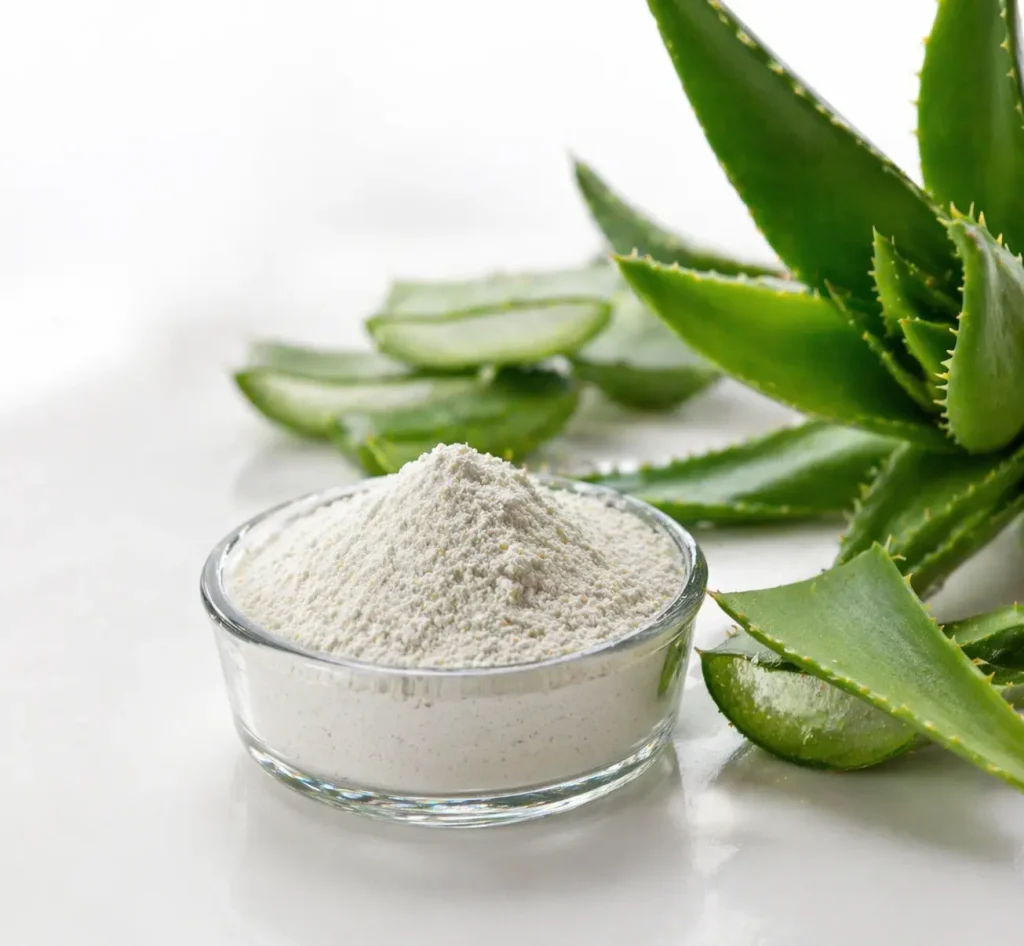
Aloe vera powder is often subtle in its appearance, which means buyers need to pay attention to details. Good powder should look clean, fine, and reasonably uniform. Depending on processing and specification, the color may range from off-white to pale cream or a very soft beige. What you do not want is obvious discoloration, visible contamination, or a powder that looks uneven in a way that suggests poor handling.
Aroma is usually mild. Aloe powder is not supposed to smell loud or perfumed. A clean, faintly botanical scent is normal. A stale, sour, or oddly dusty odor is not. Texture matters just as much. The powder should feel fine and dry, not damp, sticky, or gritty unless that is specifically normal for the specification you requested.
This is where an organic aloe vera powder bulk comparison can become surprisingly clear. When you place samples side by side, the better lot often reveals itself in the simplest ways. It looks cleaner, handles more evenly, and behaves more predictably the moment you start working with it.
If you are testing broader dry botanical systems, rose clay is a useful comparison point because both ingredients reveal moisture issues quickly.
How Businesses Commonly Use Aloe Vera Powder
One reason aloe powder is so widely sourced is that it adapts well across categories. In personal care, it is often used in dry masks, botanical blends, cleansing systems, and gentle powder-based products. In some wellness or lifestyle categories, it may appear in broader plant-based formulations where simplicity and plant identity matter. It is also useful in private label development because it pairs naturally with other soft botanical ingredients.
For commercial teams, the strength of aloe powder is often not dramatic sensory impact but versatility. It blends well, supports clean positioning, and can fit into many product stories without overwhelming the system. That makes it attractive for brands that want a botanical ingredient with broad formulation value.
The key is to keep expectations realistic. Aloe powder is usually not the loudest ingredient in the room. It supports the texture, feel, or identity of a formula more than it dominates it. Businesses that understand that usually use it better.
For gentle botanical blends and mask systems, chamomile powder can complement aloe by adding a softer floral-herbal identity.
Testing Organic Aloe Vera Powder Bulk Before Committing
A serious buyer should never commit to large volume without running simple tests. Start with dispersibility. Does the powder hydrate smoothly in your intended medium. Does it clump and float stubbornly. Or does it create a clean texture or require excessive force to mix. These are not minor issues. They directly affect labor and production flow.
A useful test ratio for dry formulation work is:
- 5 grams aloe vera powder
- 20 to 25 grams liquid or hydrating medium, depending on the target texture
- About 2 teaspoons powder to 4 to 5 teaspoons liquid by volume
- Mix gradually and observe hydration, lumping, and smoothness
For dry blend work, test 1 to 2 grams per 100 grams of base formula first, then scale only after observing texture and dispersion. Keep records. The same powder can behave differently across water-based systems, dry systems, and richer cosmetic bases.
This is where the organic aloe vera powder bulk choice becomes operational instead of promotional. A powder that saves mixing time and produces a cleaner finish will usually justify a better purchase price.
For dry beauty or botanical care testing, kaolin clay is another smart benchmark because texture and dispersion differences show up quickly.
Supplier Questions That Help You Avoid Problems
Ask suppliers what matters in real use, not just what looks good in a sell sheet. What is the powder form like. How is it packed. What kind of moisture protection is used. How should it be stored after opening. Is the particle size consistent. Does the supplier understand how the powder behaves in formulation.
You should also ask about lot consistency. A beautiful sample is not enough if the next shipment arrives different in texture or handling. Good supplier relationships are built on repeatability, not first impressions. Commercial buyers need suppliers who understand that consistency has economic value.
This is why the organic aloe vera powder bulk conversation should include both product quality and supplier maturity. The right partner answers clearly, knows how buyers use the product, and understands how packaging and storage affect the powder once it leaves their facility.
If your line also includes earthier dry botanicals, neem leaf powder is useful for comparing supplier consistency across different plant powders.
Price, Yield, and the Hidden Cost of Poor Powder
The cheapest aloe powder is not always the best value. In fact, lower-cost powder often becomes more expensive when it clumps, absorbs moisture too quickly, or performs unevenly across production runs. What looks like a savings on the quote sheet can become wasted labor, lost product, slower batching, or more customer dissatisfaction later.
A smart organic aloe vera powder bulk comparison includes more than cost per kilogram. It should include how much powder you actually need to achieve the desired formulation effect, how stable it remains in storage, and how much extra handling it creates for your team. If a cleaner, finer, more stable powder costs more but works better every day, it is often the better commercial choice.
This is especially true for businesses with premium positioning. Customers may not always know why a product feels smoother or looks more refined, but they notice the difference. Good raw material quality protects the finished experience.
For brands experimenting with herbal powder systems, hibiscus flower powder can help highlight how different powders affect texture, color, and blending behavior.
Troubleshooting
Flat performance usually means the powder is old, the inclusion rate is too low, or the formula expects more from aloe than aloe is meant to do on its own.
Too tart is generally not an aloe issue by itself, but it can appear in systems where acidic botanical powders or fruit ingredients dominate the formula.
Over-carbonation is not typical in aloe powder use, but it can become relevant if the powder is used in broader beverage or ferment-style systems where the overall matrix is unstable.
Sediment or graininess usually points to poor dispersion, insufficient mixing, or a powder texture that is not suitable for the intended application.
Aroma loss is less dramatic with aloe than with highly aromatic herbs, but stale storage can still leave the powder feeling lifeless or dusty.
For texture comparisons in dry botanical systems, rhassoul clay is helpful when you want to see how powders differ in hydration and smoothness.
Storage + Quality
Aloe vera powder should be stored with strong humidity control. Fine powders absorb moisture quickly, and once clumping starts, the ingredient becomes harder to use consistently. Keep the powder tightly sealed, away from heat, light, and repeated exposure to air. Use smaller working containers and keep master stock closed whenever possible.
Quality checks should be simple and repeatable. Look for clumping, color drift, odd odor, and changes in flow. If the powder no longer pours or scoops cleanly, storage conditions may already be hurting performance. Commercial teams should also label both arrival and opening dates so older stock does not quietly remain in use too long.
The organic aloe vera powder bulk decision is only partly about buying the right powder. It is also about preserving that powder once it reaches your facility. A strong storage system protects quality far more effectively than many buyers realize.
For softer powder-based formulations and storage comparisons, colloidal oatmeal can be useful in adjacent product testing where smoothness and moisture control matter.
Safety
Aloe powder should be sourced and described with practical, compliant language. Keep ingredient identity clear, use it in categories where it is appropriate, and avoid exaggerated claims. It can be described in terms of botanical identity, formulation value, and traditional use, but finished products should not rely on unsupported medical language.
Commercial safety also includes formulation discipline. Teams should know what type of powder they are using, how it behaves in the intended system, and how it should be stored. If the ingredient is going into customer-facing products, internal consistency and labeling clarity matter as much as the raw material itself.
The best organic aloe vera powder bulk purchase is not the one with the nicest catalog image. It is the one that arrives clean, works smoothly, stores well, and continues to perform when your team scales production. When a supplier can provide that reliably, aloe becomes what it should be in business: a versatile, dependable botanical ingredient that quietly strengthens the whole line.
FAQ
What does organic aloe vera powder bulk mean?
It refers to purchasing aloe vera powder in commercial quantities for formulation, manufacturing, private label, or resale use.
How can I tell if aloe vera powder is good quality?
Look for clean color, fine texture, mild fresh aroma, smooth dispersion, and strong storage behavior.
Why does aloe powder clump?
Usually because of humidity exposure, poor storage, or a powder that is highly moisture-sensitive.
How should I test aloe vera powder before buying in bulk?
Run small hydration and dispersion tests in your actual formulation base and compare side by side with other samples.
Is aloe powder strongly scented?
Usually no. It tends to have a mild, subtle botanical scent rather than a strong aroma.
How should bulk aloe powder be stored?
Keep it airtight, dry, away from heat and light, and use smaller working containers for daily handling.
Why is the cheapest aloe powder not always the best buy?
Because weaker or harder-to-handle powder can create more labor, waste, and inconsistency in production.
Why is organic aloe vera powder bulk sourcing important?
Because powder quality, storage stability, and supplier consistency directly affect formulation performance and workflow.