Bulk Herbs Wholesale Buying Guide
Buying herbs at scale looks simple from a distance. You choose a supplier, request a quote, compare landed cost, and move on. In practice, that approach fails quickly because herbs are not uniform industrial inputs. They are agricultural materials with differences in cut, color, aroma, moisture, season, storage history, and handling quality. That is why a serious bulk herbs wholesale strategy has to go beyond price and catalog size. Businesses that formulate teas, supplements, spa products, botanical beauty goods, functional foods, candles, apothecary blends, or private label collections need herbs that perform consistently, not just herbs that arrive.
A good bulk herbs wholesale relationship protects margins by reducing rework, waste, and uncertainty. If the herb is too dusty, too old, too weak in aroma, or too inconsistent from lot to lot, production becomes slower and finished goods become harder to standardize. The strongest buyers understand that sourcing is part sensory craft and part systems discipline. They know how to evaluate herbs with the nose, eyes, and hands, but they also know how to ask useful commercial questions about packaging, logistics, storage, and repeatability. This guide is designed for businesses and formulators who want to source herbs intelligently and build supplier relationships that support long-term growth rather than constant correction work.
Why Bulk Herbs Need a Different Buying Mindset
Buying herbs in commercial volumes requires a different mindset than shopping for a few consumer pouches. Small inconsistencies become large problems when scaled. A tea company may notice it first in aroma loss. A skincare formulator may notice it in color drift or texture. A private label business may notice it in customer complaints about appearance or scent. In every case, the root problem is usually the same. The buyer treated herbs as interchangeable when they were not.
This is where bulk herbs wholesale becomes a serious operational category. Businesses need to think in terms of usable quality, not just inventory count. The herb has to suit the application, fit the process, and remain stable enough in storage to protect the finished product. That means the smartest buyers develop a sourcing framework before they commit to volume.
For brands building broad botanical lines, bulk herb collection is a useful starting point for evaluating assortment depth and cross-category sourcing potential.
Start with Form, Cut, and Intended Use
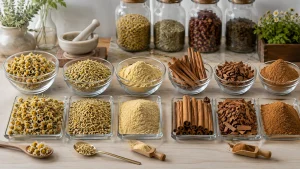
One of the first questions in herb sourcing is not which herb you want, but what form you need. Whole leaf, cut and sifted, root chunks, powder, granules, petals, and fine powder all behave differently in production. A tea blend needs a different cut than a capsule formula. A bath soak needs different visual and practical properties than a serum or infused oil.
This matters because bulk herbs wholesale decisions often go wrong at the form level. Buyers ask for the right plant and receive the wrong cut for the job. The result is extra labor, poor extraction, customer confusion, or visual mismatch. Formulators should define how the herb will be used before requesting samples. Is it going into a tea sachet. A loose tea. A powder blend. A cosmetic base. A garnish-style retail presentation. The cut should serve that use directly.
If your line includes infusion work or aromatic food and beverage formulas, chamomile flowers are a good example of a botanical where whole form and cut size change the end product dramatically.
Color, Aroma, and Texture: Your Fastest Quality Clues
Before paperwork, there is the herb itself. Commercial buyers should learn to make quick, disciplined sensory evaluations. Color tells you about freshness, handling, and oxidation. Aroma tells you whether volatile character is still present. Texture tells you about cut quality, moisture, dust level, and how the material will behave in blending or application.
Good herbs usually look alive. Green herbs should not appear tired or brown-gray without reason. Flowers should hold some vibrancy. Roots should look clean and properly dried. Powders should not feel damp or oddly compacted unless the product naturally behaves that way. Smell is just as important. Fresh herbs usually announce themselves clearly. Weak aroma often signals age, poor storage, or underwhelming raw material.
This is where bulk herbs wholesale becomes practical rather than theoretical. You are not buying a romantic botanical idea. You are buying color, scent, handling, and performance. Buyers who trust their senses early often avoid bigger problems later.
For buyers testing leaf freshness and aromatic lift, peppermint leaf is one of the clearest herbs to compare across suppliers because quality differences show quickly.
Supplier Questions That Actually Matter
Many businesses waste time asking broad questions and miss the ones that reveal real supplier strength. Instead of only asking for a quote, ask what the supplier can tell you about handling, storage, cut consistency, and packaging. Ask whether they can provide the herb in multiple forms. Ask how they manage freshness and whether they can explain normal variation from lot to lot.
You should also ask application-specific questions. Does this cut work well in tea bags. Is the powder fine enough for a smooth facial mask. Does the root chunk extract properly in decoction work. Does the flower hold appearance in retail blends. A good supplier answers in terms of actual use, not just abstract quality language.
In a strong bulk herbs wholesale relationship, communication is clear and calm. The supplier does not need to oversell. They understand what business buyers care about and can respond with details that help production teams make decisions confidently.
For formulating across tea, wellness, and herbal beauty categories, lavender flowers are a useful test herb because both aroma retention and visual quality matter immediately.
Testing Herbs in Small Batches Before Committing
Even when samples look promising, real buying decisions should be made through application testing. The most reliable method is side-by-side comparison under controlled conditions. Use equal weights, equal steep times, equal hydration conditions, or equal formulation percentages. Then compare sensory outcome, handling ease, and stability.
Useful test points include:
- Tea infusion trial: 2 to 3 grams per 8 ounces water
- Powder blend trial: 1 to 2 grams per 100 grams base formula
- Infused oil trial: 5 to 10 grams herb per 100 grams carrier oil
- Visual retail blend test: compare color and dust level after mixing and transfer
These tests reveal how the herb behaves in the real world. Does it cloud too heavily. Does it lose color quickly. Does it smell strong enough to carry the formula. Does it break apart unattractively in packaging. This is where bulk herbs wholesale decisions become grounded in performance rather than assumptions.
For root and infusion benchmarking, ginger root c/s is helpful because extraction strength, aroma, and cut consistency are easy to observe.
Price Per Pound Is Not the Whole Story
A common sourcing mistake is comparing only price per pound or kilogram. That number matters, but it is not the whole cost. Herbs that require extra sifting, extra filtering, more aggressive dosing, or faster turnover because of poor stability may cost more in labor and loss than a better-quality lot at a higher purchase price. Commercial buying should focus on usable yield and process fit.
An herb that costs more but delivers stronger aroma, cleaner blending, lower dust, and fewer customer complaints is often the better value. This is especially true for brands trying to protect a premium image. A weak herb drags the whole product down, not just one line item on the invoice.
The best bulk herbs wholesale comparison includes landed cost, expected usable yield, handling time, packaging suitability, and how consistently the herb performs in your actual formulas. That is the commercial lens that keeps small savings from becoming larger hidden costs.
For fragrance-forward floral products or tea lines, rose buds and petals can be a revealing test case because visual quality and scent strength affect perceived value immediately.
Troubleshooting
Flat flavor or aroma usually means the herb is old, underpowered, or poorly stored. In some cases the cut is too coarse for the intended application and extraction is incomplete.
Too tart is usually a formula issue rather than a sourcing issue, but it can happen when acidic herbs dominate a blend without enough balancing ingredients.
Over-carbonation becomes relevant only when herbs are used in fermented beverages, sodas, or secondary bottle processes. The herb is not always the cause, but weak sourcing can still affect flavor stability in those systems.
Sediment is often tied to cut quality, powder fineness, or excessive breakage in handling. Some products tolerate it better than others. Tea programs usually need cleaner material than bath or soak products.
Aroma loss usually points to repeated exposure to air, humidity, heat, or weak supplier packaging. Once a volatile herb loses its top notes, the whole formula may feel dull.
For buyers who need to compare particle consistency and extraction behavior, hibiscus flowers can be a useful benchmark because cut quality and storage show up clearly in both color and brew performance.
Storage + Quality
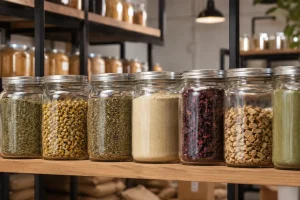
Even excellent herbs decline if stored casually. Once they arrive, your internal handling becomes part of product quality. Keep herbs sealed, away from heat, strong odors, and direct light. Use smaller working containers for daily production and leave master stock closed as much as possible. Label arrival and opening dates clearly.
Different herbs demand different attention. Flowers bruise and fade easily. Leaves lose aroma. Roots hold longer but still weaken over time. Powders are especially sensitive to humidity and repeated opening. A disciplined storage system can extend usable life significantly and reduce waste across the board.
For teams managing many SKUs, simple visual and aromatic checks help catch problems early. Look for color drift, clumping, dust buildup, scent loss, and unusual texture changes. A strong bulk herbs wholesale program always includes strong internal quality habits after delivery.
For earthy root-style or functional product lines, dandelion root c/s is useful for comparing how well roots hold aroma and structure over time in storage.
Safety
Commercial herb sourcing should be practical and transparent. Buy material that is clearly identified, appropriately packaged, and suitable for the product category in which you plan to use it. Keep language compliant in your finished goods. Herbs can be described in terms of flavor, aroma, tradition, experience, and formulation use without making unsupported medical claims.
Internal safety also includes process clarity. Teams should know which herbs are food-oriented, which are cosmetic-facing, and which require special handling in formulation or labeling. Keep lot records, especially if you are building private label or repeat product lines. A clear paper trail supports both quality and confidence.
The best bulk herbs wholesale strategy is not built on the biggest catalog or the lowest quote. It is built on fit. The right herb in the right cut, stored the right way, supplied by people who understand commercial use, creates smoother production and stronger finished goods. That is what business buyers and formulators are really paying for when they take sourcing seriously.
FAQ
What does bulk herbs wholesale mean?
It refers to sourcing herbs in commercial quantities for manufacturing, formulation, resale, private label, or business use.
Why is herb cut important when buying in bulk?
Because cut affects extraction, appearance, handling, filtering, and how the herb behaves in your final product.
How do I compare herb suppliers fairly?
Compare sensory quality, cut consistency, packaging, usable yield, and actual application performance, not just price.
Why do some herbs arrive weaker than expected?
Age, poor storage, weak packaging, seasonal variation, or lower-quality raw material can all reduce strength.
How should bulk herbs be stored?
Keep them sealed, dry, away from light and odors, and work from smaller daily-use containers.
Are powders harder to manage than whole herbs?
Often yes. Powders are more sensitive to humidity, clumping, and repeated air exposure.
What is the best way to test a new herb supplier?
Run side-by-side application tests using equal weights, methods, and conditions before committing to volume.
Why is bulk herbs wholesale sourcing so important for formulators?
Because raw material consistency directly affects product quality, workflow, and the customer experience.