Licorice Root Tea: Sweet and Soothing
Licorice root tea stands apart from nearly every other herbal infusion because it is naturally, intensely sweet — without any added sugar or sweetener needed. The root of Glycyrrhiza glabra, the licorice plant, contains a compound called glycyrrhizin, which is estimated to be 30 to 50 times sweeter than table sugar. As a result, licorice root tea has a bold, distinctive sweetness that is immediately recognizable, paired with a warm, slightly anise-like, earthy depth.
Furthermore, licorice is one of the most frequently used roots in the world’s traditional medicine systems. It appears prominently in Ayurvedic, Chinese, and Middle Eastern herbal traditions, where it has been valued for thousands of years as a soothing, harmonizing herb. In fact, licorice root is one of the top three most commonly used herbs in Traditional Chinese Medicine.
What Does Licorice Root Tea Taste Like?
The flavor is sweet, earthy, and distinctly anise-like — though it is important to note that licorice and anise are entirely different plants. The sweetness in licorice is rich and slightly syrupy, with a warm, woody undertone and a pleasant lingering finish. Some people also detect a light bitterness beneath the sweetness, especially in stronger brews.
Licorice root tea is not subtle. It has a bold, characteristic flavor that either appeals immediately or takes some getting used to. Blending it with other herbs is a popular way to use its sweetening quality while softening its intensity.
Brewing Licorice Root Tea Step by Step
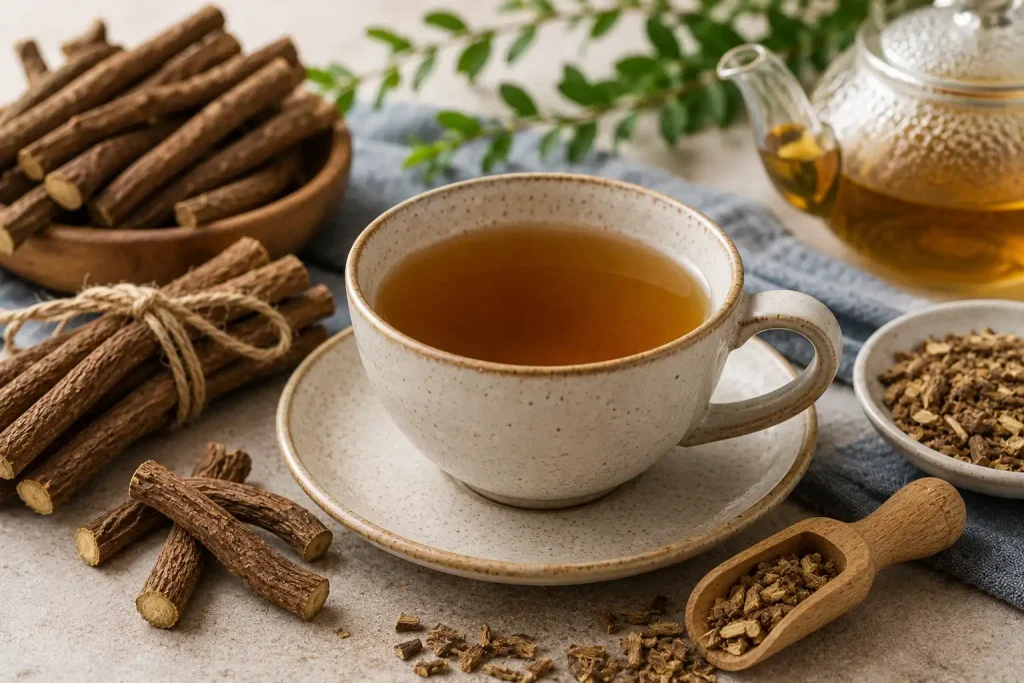
Licorice root is hard and dense, requiring a proper simmering method rather than a simple infusion for best results. A short infusion will work but will produce a weaker cup than simmering.
- Measure the root. Use 1 teaspoon of cut and sifted licorice root per 8 oz of water. Given licorice’s intensity, start conservatively and increase if desired. A little goes a long way.
- Simmer gently. Combine licorice root with cold water in a small saucepan. Bring to a gentle simmer over medium heat, then reduce to low and simmer for 10–15 minutes. This method extracts the glycyrrhizin fully and delivers the most satisfying, sweet cup.
- Alternatively, steep as tea. If you prefer not to simmer, pour fully boiling water over the root and steep for 10–15 minutes in a covered cup. The result will be a lighter cup than the simmered version.
- Strain and serve. Pour through a fine-mesh strainer. Taste before adding any sweetener — licorice is already very sweet and almost never needs additional sugar. A squeeze of lemon or a splash of fresh ginger juice can add a pleasant brightness.
Licorice Root Tea Blends: Best Flavor Pairings
Licorice root’s natural sweetness makes it one of the best natural sweetening agents in herbal tea blends. You can add a small amount to any herbal blend to boost sweetness without adding sugar:
- Licorice and peppermint: A classic combination. Peppermint leaf adds a clean, cool contrast to licorice’s warm sweetness. This pairing is popular in traditional European herbal traditions and is commonly found in commercially blended herbal teas.
- Licorice and fennel: Two naturally sweet, anise-flavored herbs that share a family resemblance in flavor. Fennel seeds add a fresher, lighter anise note alongside licorice’s deep, rooty sweetness. Together, they create a traditional digestive tea blend widely used in Italian and Indian herbalism.
- Licorice and cinnamon: A warming, dessert-like combination with a deep, sweet complexity.
- Licorice and ginger: Balances licorice’s sweetness with ginger’s warming spice. Popular in Ayurvedic tea blends.
- Licorice and chamomile: A gentle blend where licorice sweetens the chamomile naturally, making sugar entirely unnecessary.
Licorice Root in Traditional Herbalism
In traditional herbalism, licorice root has been one of the most versatile and widely used herbs across multiple cultural traditions. Herbalists have traditionally recommended it as a soothing herb for the respiratory system, digestive tract, and adrenal health. In Traditional Chinese Medicine, licorice root is considered a harmonizing herb that is added to many formulas to moderate the actions of other, more potent herbs and to improve their taste.
Additionally, in Ayurvedic tradition, licorice root is known as yashtimadhu — meaning “sweet stick” — and is traditionally used to support the throat and respiratory system. In folk herbalism, it has traditionally been used as a soother for stomach discomfort and as a gentle tonic.
These are traditional uses and do not represent medical claims.
Licorice Root vs. Licorice Candy
Many people confuse licorice root tea with the flavor of commercial licorice candy. It is worth clarifying that most “licorice” candy — including the black candy found in stores — is typically flavored with anise oil or a synthetic imitation, not actual licorice root extract. True licorice root tea has a warmer, earthier, rounder sweetness than the sharp, candy-like flavor of most licorice confections. Consequently, people who dislike licorice candy are sometimes pleasantly surprised by how much they enjoy genuine licorice root tea.
Buying and Storing Dried Licorice Root
When purchasing dried licorice root, look for clean, well-cut pieces with a distinct sweet aroma. The flavor should be immediately evident when you smell the package. Pale, odorless, or dusty-looking root has likely lost much of its potency. Choose certified organic whenever possible.
Store licorice root in an airtight glass container away from heat, light, and humidity. Under good storage conditions, dried licorice root can remain potent for 18–24 months. Its density and low moisture content make it one of the more shelf-stable dried herbs.
Safety and Usage Notes
Licorice root contains glycyrrhizin, which can cause serious adverse effects when consumed in large amounts over extended periods. High intake has been associated with elevated blood pressure, sodium retention, and reduced potassium levels. Therefore, licorice root tea should be consumed in moderation — 1–2 cups per day for occasional or short-term use. Individuals with hypertension, heart conditions, kidney disease, or those on certain medications should avoid regular licorice root consumption or consult a healthcare provider before use. Deglycyrrhizinated licorice (DGL) supplements are available for those who need to avoid glycyrrhizin. This content is educational only and does not constitute medical advice.
Frequently Asked Questions
Is licorice root tea safe during pregnancy?
Licorice root is generally not recommended during pregnancy. Some research suggests that glycyrrhizin may affect fetal development, and traditional herbal references commonly list it as a herb to avoid during pregnancy. If you are pregnant, consult your healthcare provider before consuming licorice root tea.
Does licorice root tea raise blood pressure?
In large amounts consumed regularly, licorice root has been documented to raise blood pressure due to glycyrrhizin’s effect on the adrenal hormones. Occasional, moderate consumption of one cup at a time is generally considered low risk for healthy adults. However, anyone with diagnosed hypertension should consult their doctor before regular use.
How does licorice root differ from star anise in tea?
Both licorice root and star anise share a similar anise-like aroma and flavor profile, but they are unrelated plants. Star anise (Illicium verum) has a sharper, more intensely anise-forward flavor. Licorice root has a deeper, sweeter, more rounded flavor with more earthy complexity. Star anise also lacks the glycyrrhizin content responsible for licorice root’s unique sweetness.
Can licorice root sweeten other herbal teas?
Yes — this is one of licorice root’s most practical applications. Adding just 1/2 teaspoon of cut licorice root to a pot of any herbal tea during brewing will add natural sweetness without any added sugar. It works particularly well in blends containing bitter herbs or strongly flavored herbs that benefit from a sweetening agent.
Explore our organic licorice root and peppermint leaf to start crafting your own naturally sweet, soothing licorice root tea blends.