
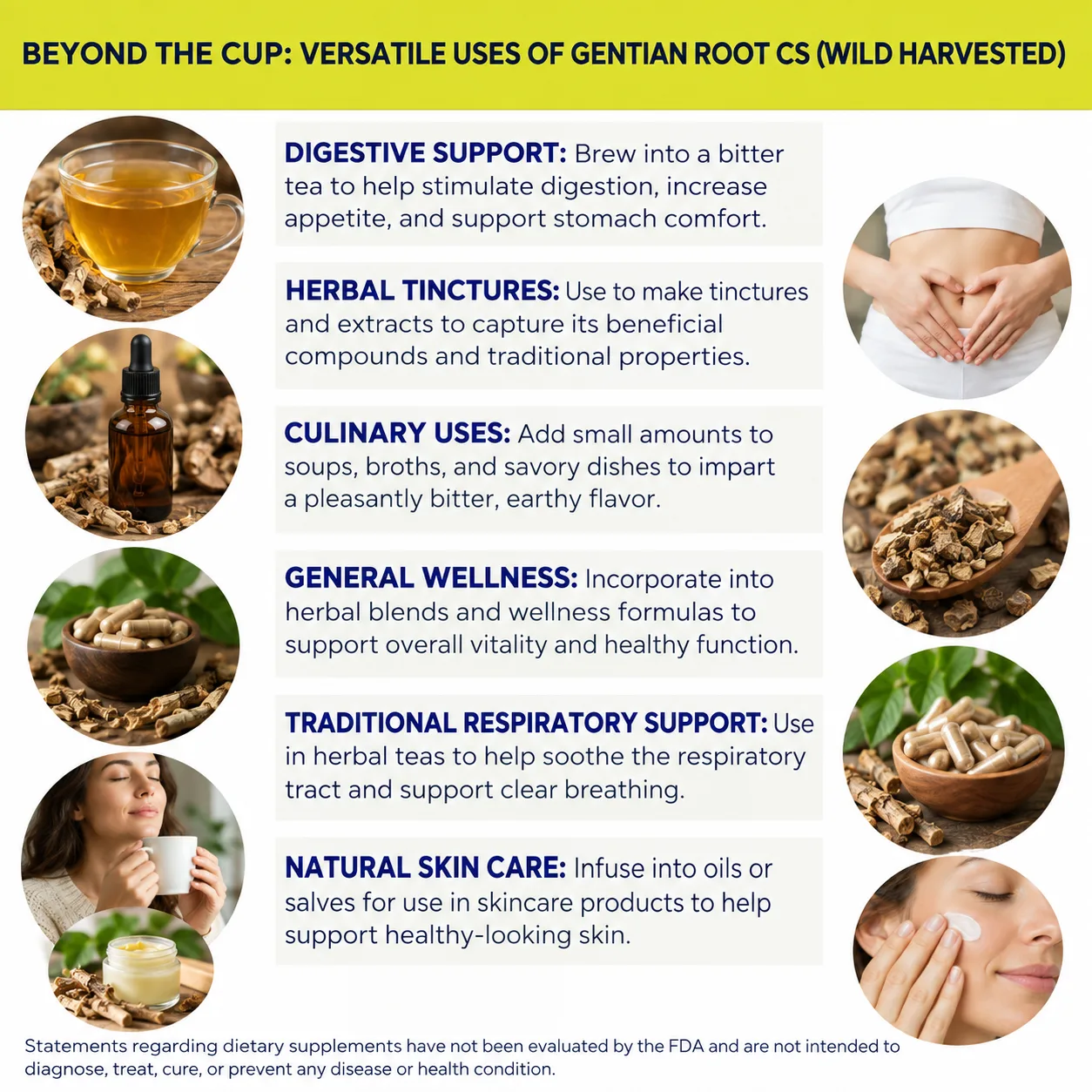


Gentian Root CS (Wild harvested)
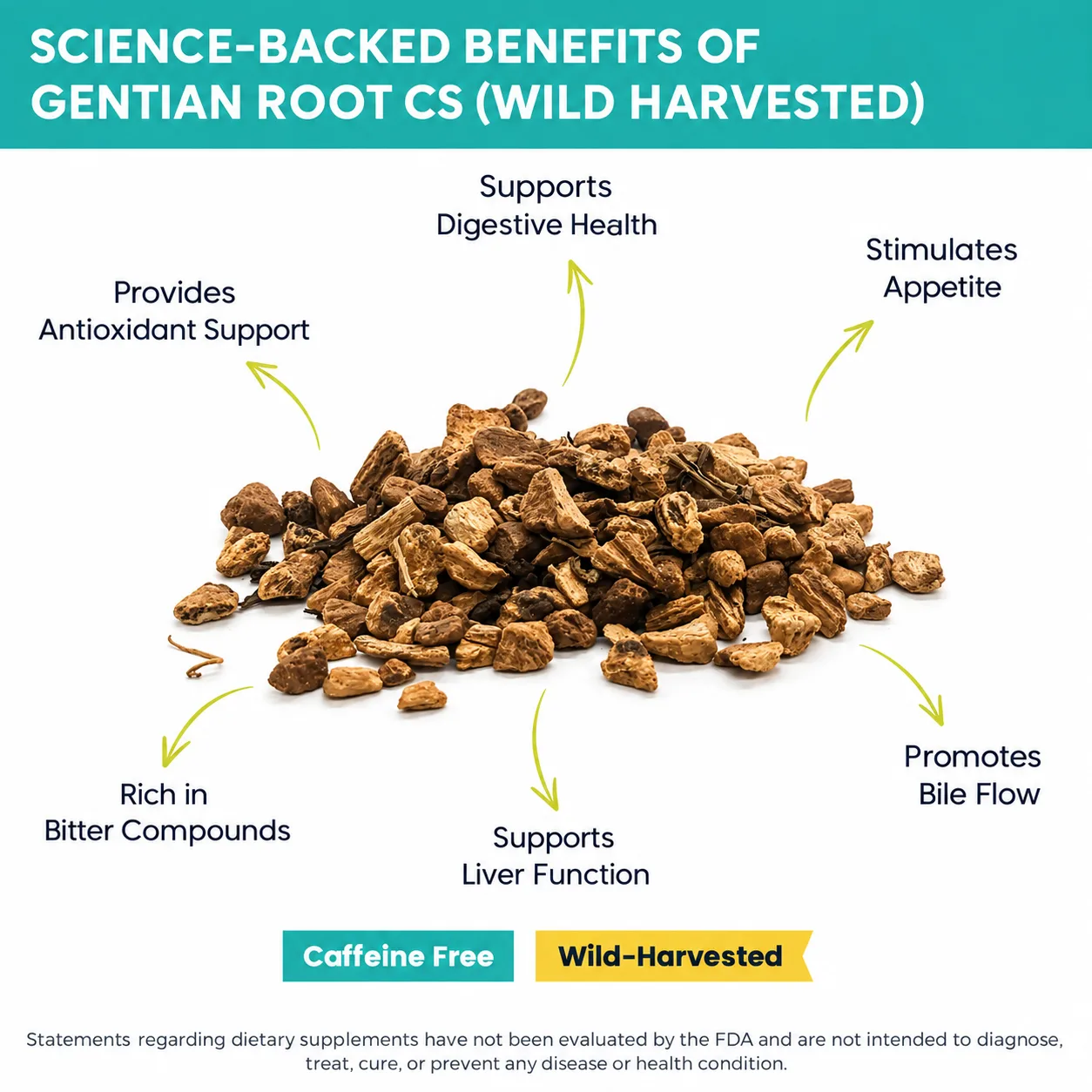
Gentian Root CS (Wild Harvested) (Gentiana lutea) reigns as the king of bitter herbs. This mountain herb grows naturally across central and southern Europe. For centuries, Europeans have valued gentian root as a distinctive botanical ingredient in traditional herbal preparations and bitter blends. The herb takes its name from King Gentius of Illyria (modern-day Albania), who reportedly discovered the plant around 180 BC.
Flavor and Aroma
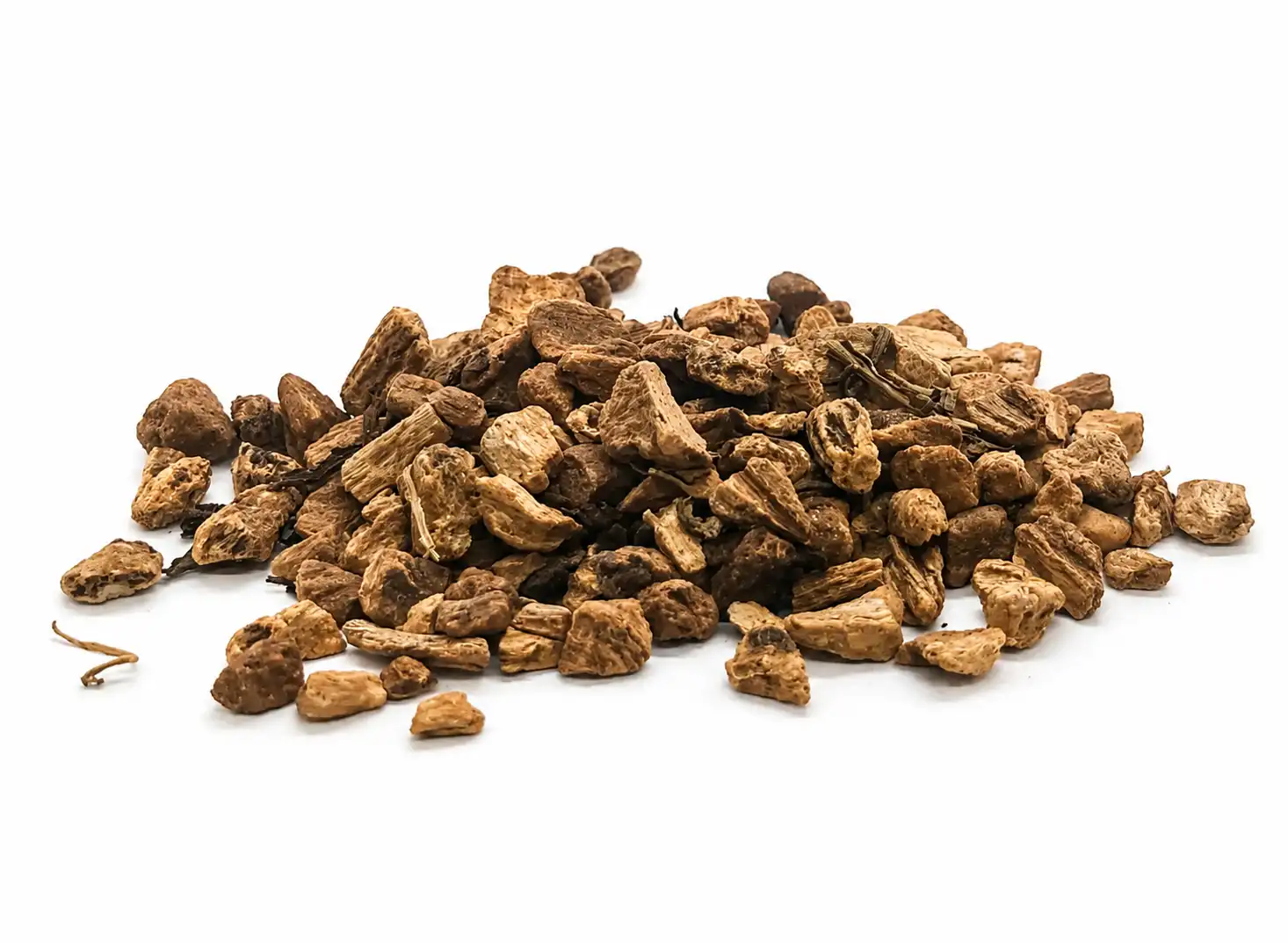
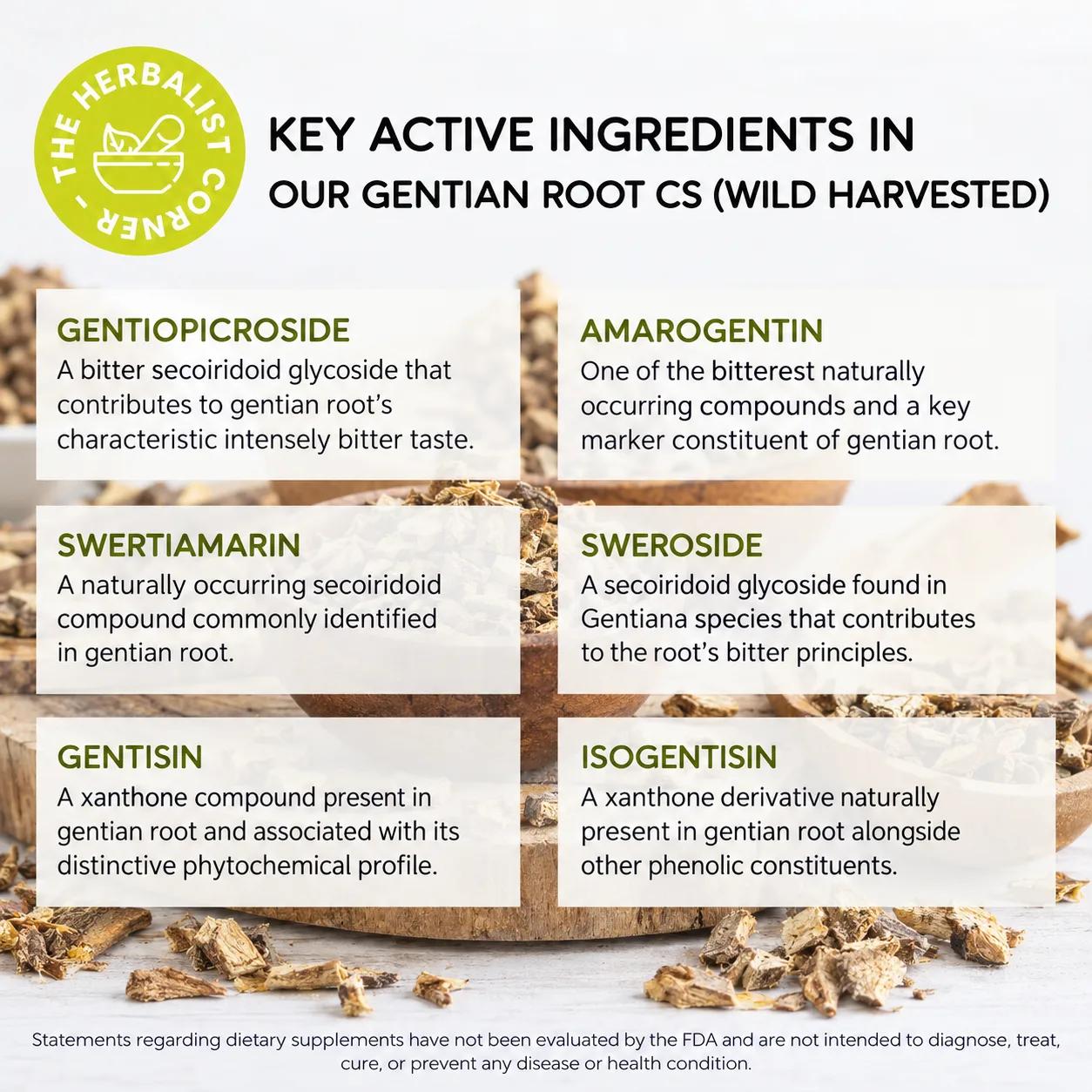
Gentian root is famous for its extraordinarily intense bitterness. For many, it is one of the most bitter natural botanicals. The dried root pieces have a light brown to golden color with an earthy, slightly sweet aroma that contrasts sharply with the powerful bitterness of the taste. Despite its intense flavor, herbalists prize gentian precisely for its distinctive bitter character.
Traditional Uses
Gentian root has played an important role in European botanical traditions for over 2,000 years. Throughout history, people have incorporated the root into traditional herbal preparations and botanical blends. Its remarkably bitter profile has made it a distinctive ingredient among European herbs. Today, herbalists and botanical enthusiasts continue to value gentian for its unique flavor, long history, and place in traditional European herbal practices.
How to Use Gentian Root
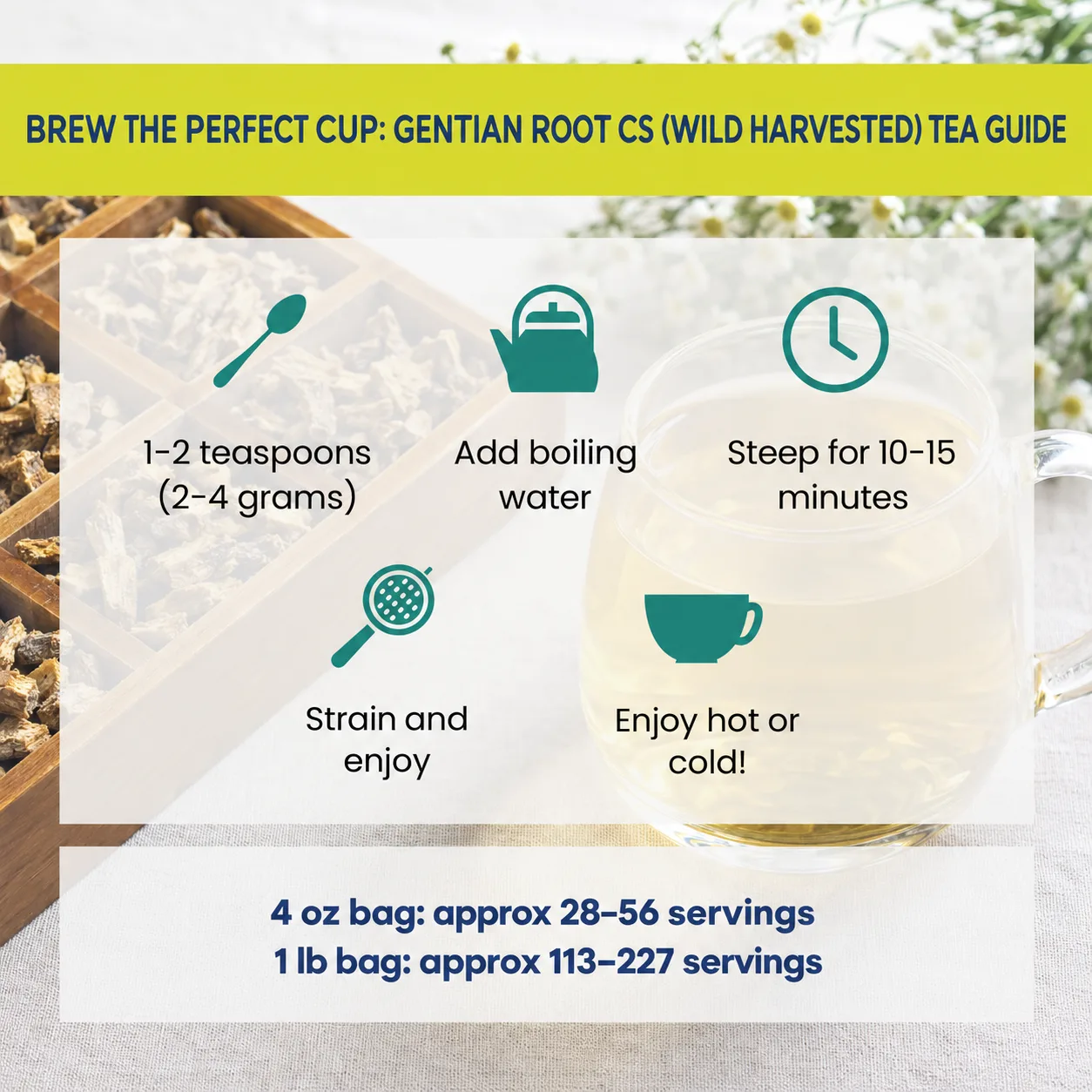
Due to its extreme bitterness, gentian is typically used in very small amounts:
- Brew a small amount (half teaspoon) in 8 ounces of hot water for 10 to 15 minutes
- Add small amounts to homemade botanical blends
- Combine with other complementary bitter botanicals
- Blend with complementary herbs like Angelica Root for balanced herbal formulations
Sourcing and Quality
Hatton Naturals sources its wild-harvested gentian root from Albania’s pristine mountain landscapes. Harvesters ethically gather the root before carefully cutting and sifting it for consistent quality. Store in an airtight container in a cool, dry place.
COUNTRY OF ORIGIN: Albania
Legal Disclaimer
Statements regarding dietary supplements have not been evaluated by the FDA and are not intended to diagnose, treat, cure, or prevent any disease or health condition.



Reviews
There are no reviews yet.