Strawberry Leaves Turning Brown: Causes & Fixes
Strawberry leaves turning brown is one of those problems that looks straightforward until you start examining it closely. The browning pattern, where it starts on the leaf, how fast it spreads, whether it appears on new growth or old, whether it affects the whole bed or isolated plants tells you almost everything you need to know about the cause. Misreading the pattern leads to the wrong response, and the wrong response either wastes time or makes the problem worse.
This article works through the most common causes of strawberry leaves turning brown in order of frequency and visual clarity, so you can diagnose what you are actually looking at rather than guessing. It also covers when the browning is benign and when it signals something that needs immediate action. At the end, you will find notes on harvesting and using healthy leaves for dried strawberry leaf tea, because a browning plant is also a reminder to pay attention to the leaves that are still worth saving.
Reading the Pattern Before You Diagnose
Before attributing strawberry leaves turning brown to any specific cause, spend two minutes observing the pattern across the whole plant and across the bed. Ask four questions:
Where on the leaf does the browning start? Tip and margin browning points toward water or salt stress. Circular or angular spots in the center of the leaf point toward fungal or bacterial disease. Full-leaf yellowing followed by browning suggests systemic issues like root rot or nutrient deficiency.
How fast is it spreading? Overnight change suggests acute stress, heat damage, or frost. Gradual spread over one to two weeks is typical of fungal disease. Very slow progression over a month or more is common with nutrient issues or natural senescence.
Which leaves are affected? If only the oldest, lowest leaves are browning while new growth looks healthy, that is often normal. If new growth is browning at the tips, that is a different signal entirely.
Is the browning isolated to one plant or spreading across the bed? Scattered individual plants suggest root-level issues or environmental stress. A spreading wave across a section of bed is more consistent with infectious disease or irrigation problems.
These four questions narrow the field considerably before you ever look up a disease name.
Leaf Scorch: The Most Common Cause of Strawberry Leaves Turning Brown
Leaf scorch caused by the fungus Diplocarpon earlianum is the single most common reason gardeners find strawberry leaves turning brown. It is present in virtually every strawberry-growing region and becomes visually obvious in warm, humid conditions.
The characteristic presentation is small, irregular, purplish-red spots that develop on the upper leaf surface. As the spots enlarge, the centers turn brown and eventually tan or gray. In heavy infections, spots merge and the leaf takes on a scorched appearance, hence the name. The lower leaf surface often shows a corresponding lighter discoloration.
Leaf scorch spreads primarily through water splash. Overhead irrigation and rain spread the spores from infected leaves to healthy ones. This is why the disease tends to move across a bed in the direction of prevailing wind or irrigation spray.
Management starts with removing and disposing of heavily infected leaves. Do not compost them. Improve airflow by thinning overcrowded beds and avoiding overhead watering in favor of drip or furrow irrigation. Copper-based fungicides applied at the first sign of infection can slow spread significantly. Resistant varieties exist and are worth selecting if leaf scorch is a recurring problem in your growing environment.
Angular Leaf Spot: Bacterial Browning with a Distinct Shape
Angular leaf spot, caused by the bacterium Xanthomonas fragariae, produces a very specific pattern that distinguishes it from fungal diseases. The spots are sharply angular and bounded by the leaf veins, giving them a geometric rather than circular appearance. Early-stage spots appear water-soaked and dark. As they age, they turn brown and papery, sometimes with a yellowish halo at the margin.
In humid morning conditions, bacterial ooze may be visible on the underside of the leaf. This is a reliable diagnostic detail: fungal diseases do not produce this kind of visible bacterial slime.
Angular leaf spot is favored by cool, wet conditions, which makes it a spring and early fall disease in most climates. It spreads through water splash and through any mechanical movement across the bed, including foot traffic and tool use on wet foliage.
There are no effective curative treatments once infection is established. Remove and destroy affected leaves, avoid working in the bed when foliage is wet, and improve drainage. Copper-based bactericides applied preventively during high-risk periods can reduce infection pressure. This is one disease where sanitation and bed management matter more than any spray program.
Strawberry Leaves Turning Brown from Environmental Stress
Not all strawberry leaves turning brown indicate disease. Environmental causes are frequent and often misdiagnosed as fungal problems, leading to unnecessary chemical applications.
Heat and sun scorch: Leaves exposed to intense afternoon sun, particularly during heat waves above 90°F (32°C), develop dry, papery browning at the margins and tips. The browning is uniform across exposed leaf surface rather than appearing as spots. No spreading pattern occurs and no other plants in the bed show similar symptoms in shaded positions. Shade cloth during extreme heat events prevents this.
Drought stress: Insufficient soil moisture produces browning that starts at the leaf tips and moves inward along the margins. The whole plant may look wilted before browning appears. Recovery is fast once irrigation is restored, though already-browned tissue does not green up.
Fertilizer or salt burn: Excessive fertilizer, particularly high-nitrogen or high-potassium applications, causes tip and margin burn that resembles drought stress but occurs even when soil moisture is adequate. Flush the soil with deep watering if salt buildup from fertilizer or irrigation water is suspected.
Late frost damage: A late spring frost after the plant has leafed out produces water-soaked, darkening tissue that turns brown within 24 to 48 hours. Frost damage typically affects the youngest, most exposed new growth first. The pattern is often irregular across the bed depending on micro-topography and air drainage.
Distinguishing environmental browning from disease browning is usually straightforward: environmental causes produce uniform, margin-based browning without spots, and the timing correlates with a specific weather or management event.
Root Rot and Its Effect on Leaf Color
Phytophthora root rot and Pythium root rot both cause systemic symptoms that show up in the leaves as general decline rather than the leaf-specific spotting of fungal diseases. Strawberry leaves turning brown in the context of root rot usually follows a sequence: outer leaves yellow, then brown and collapse, while the plant as a whole looks stunted and dull even when soil moisture seems adequate.
Digging up an affected plant reveals dark, water-soaked roots with little or no white root tip activity. Healthy strawberry roots have bright white growing tips. Rotted roots are brown, soft, and often have a faint sour smell.
Root rot is heavily favored by waterlogged soil, which is why it appears most in low-lying areas of beds, in clay-heavy soils with poor drainage, and following extended wet periods. Raised beds and well-amended soil with good drainage are the primary preventive measures. There are no effective curative treatments once root rot is advanced. Remove affected plants and do not replant strawberries in the same spot for at least two seasons.
Strawberry Leaves Turning Brown from Nutrient Deficiency
Several nutrient deficiencies produce browning as a symptom, though each has a characteristic pattern.
Potassium deficiency causes marginal scorch on older leaves first. The leaf edges turn yellow, then tan, then brown, while the center of the leaf remains green for some time. This pattern, called marginal chlorosis followed by scorch, is fairly specific to potassium.
Calcium deficiency affects younger leaves and growing tips, producing distorted, cupped leaves with brown margins on the newest growth. Unlike most other deficiency symptoms, calcium deficiency appears on new tissue because calcium is immobile in the plant and cannot be redirected from older leaves.
Magnesium deficiency produces interveinal yellowing on older leaves that can progress to browning in severe cases. The veins stay green while the tissue between them yellows and eventually browns.
Soil testing before the season is the only reliable way to know whether deficiency is a realistic possibility. Guessing at nutrient additions without a test often creates secondary imbalances. A balanced organic fertilizer applied at the correct rate addresses most routine deficiency risks in established beds.
Natural Senescence: When Browning Is Not a Problem
Older, lower leaves on strawberry plants naturally senesce and brown as the season progresses. The plant redirects resources from aging leaves toward new growth, fruit production, and runner development. This is normal and does not require intervention beyond removing the dead leaf tissue to reduce disease habitat.
Senescence browning starts on the outermost, lowest leaves and moves inward slowly over weeks. New growth at the crown remains healthy and green. No spots, no angular patterns, no spreading across the bed.
In late summer and early fall, browning accelerates as the plant prepares for dormancy. The whole leaf mass may decline significantly in cold climates before the plant goes fully dormant. This is the correct moment to clear the bed of dead tissue, which otherwise harbors fungal spores and pest overwintering sites over winter.
Understanding senescence matters for the herbalist as much as for the gardener. Senescing leaves are not worth harvesting for dried tea. By the time the leaf is visibly browning at the margins, tannin content has dropped and the flavor profile flattens. Harvest for drying well before any browning appears.
Harvesting Healthy Leaves Despite a Browning Plant
A bed showing some strawberry leaves turning brown is not necessarily a lost cause for leaf harvest. If the browning is isolated to older or damaged leaves and the mid-canopy growth is still healthy and green, a selective harvest is entirely viable.
Take leaves from mid-canopy position: not the newest, smallest leaves at the crown, and not the oldest, lowest leaves showing senescence or disease. Mid-canopy leaves are fully developed, rich in tannins, and have not yet begun the decline that produces off flavors in the dried herb.
Inspect each leaf before cutting. Any brown spotting, discoloration, rust pustules, or unusual texture means leave it. You want clean, fully green, undamaged leaf tissue for drying.
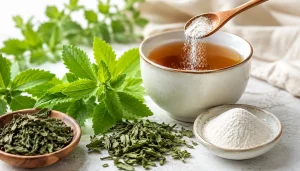
Dry harvested strawberry leaf C/S on a screen at 95 to 110°F (35 to 43°C) for 12 to 24 hours until the leaf snaps cleanly. Store in airtight glass away from heat and light.
For a grounding, mineral-rich daily infusion, blend your dried strawberry leaf with nettle leaf C/S at a 1:1 ratio by weight. Use 2 g of each per 8 oz / 240 ml of water at 200°F / 93°C, steep 5 to 7 minutes. Nettle adds iron-forward body and green depth that makes the blend feel more substantial than strawberry leaf alone.
Exact Ratios: Strawberry and Nettle Tea Blend
Single cup (8 oz / 240 ml):
- Strawberry leaf C/S: 2 g (approximately 1 teaspoon loosely packed)
- Nettle leaf C/S: 2 g (approximately 1 teaspoon)
- Water: 200°F / 93°C
- Steep time: 6 to 7 minutes
Four-cup batch:
- Strawberry leaf C/S: 8 g (approximately 4 teaspoons)
- Nettle leaf C/S: 8 g (approximately 4 teaspoons)
- Water: 32 oz / 950 ml at 200°F / 93°C
- Steep time: 6 minutes, then strain fully
For additional complexity, add lemon balm leaf C/S at 1 g per cup for citrus lift, or peppermint leaf at 0.5 g per cup for a cooling finish. Both complement the earthiness of the strawberry-nettle base without masking it.
A touch of chamomile flowers at 1 g per cup softens the blend considerably and adds a mild floral sweetness that pairs well with the astringent base.
Elderflower at 0.5 g per cup introduces a honey-like delicacy to what would otherwise be a robustly earthy cup.
Storage and Quality for Dried Strawberry Leaf
Dried strawberry leaf has a milder volatile profile than strongly aromatic herbs and is more susceptible to quality loss from heat, light, and moisture. Store in sealed glass jars with minimal headspace, in a dark, cool location below 65°F / 18°C.
Avoid storage near the stove or in direct light. Do not refrigerate as daily temperature cycling introduces condensation. Label all jars with purchase or harvest date.
Quality checks: properly stored dried strawberry leaf stays pale to medium green. Yellow indicates light degradation. Brown indicates heat damage. A musty or hay-like smell means moisture exposure and the batch should be discarded.
Usable shelf life: 12 to 18 months under proper conditions. After that, tannin content drops and the infusion becomes thin and flavorless regardless of brewing technique.
Safety Notes
Dried strawberry leaf has a long history of traditional use without documented serious adverse effects at normal serving quantities. Individuals with Rosaceae family allergies should approach strawberry leaf preparations with appropriate caution, as cross-reactivity is possible.
Tannin-containing herbs may reduce absorption of non-heme iron when consumed with meals. Drinking strawberry leaves tea between meals rather than with food is standard guidance when iron status is a concern.
Strawberry leaves tea and nettle leaf infusions are traditionally used as daily wellness preparations and are not intended to diagnose, treat, or cure any medical condition. Pregnant or nursing individuals and anyone on prescription medications should consult a qualified healthcare provider before regular use.
When harvesting from a bed that has been treated with any fungicide or pesticide, observe the re-entry and pre-harvest intervals on the product label before collecting leaves for consumption.
Frequently Asked Questions
Q: Are strawberry leaves turning brown always a sign of disease? A: No. Environmental stress, natural senescence, nutrient deficiency, and frost damage all produce browning without any infectious cause. Pattern, location on the leaf, and timing relative to weather events are the key diagnostic factors.
Q: Can I still use leaves from a plant with some browning for tea? A: Yes, selectively. Harvest only undamaged, fully green mid-canopy leaves. Avoid any leaf with spots, discoloration, or unusual texture. Browning from disease should not be harvested for consumption.
Q: Does leaf scorch spread to other plants in the bed? A: Yes. Diplocarpon earlianum spreads through water splash. Overhead irrigation and rain accelerate spread across a bed. Switch to drip irrigation and remove heavily infected leaves promptly.
Q: How do I tell leaf scorch from angular leaf spot? A: Leaf scorch produces irregular, roughly circular purplish-red spots. Angular leaf spot produces geometrically angular spots bounded by leaf veins, often with a water-soaked appearance early in development. Bacterial ooze on the underside in humid conditions confirms angular leaf spot.
Q: Will strawberry leaves turning brown from drought recover? A: Already-browned tissue does not recover. But if the cause is drought and irrigation is restored promptly, new growth emerges healthy and the plant recovers well. Remove the damaged leaves once new growth is established.
Q: Is it worth treating leaf scorch with fungicides in a home garden? A: Copper-based fungicides applied at the first sign of infection slow spread effectively. In a heavily infected bed late in the season, the cost-benefit shifts toward sanitation and variety selection for the following year rather than late-season sprays.
Q: Can strawberry leaves turning brown affect the flavor of dried leaf tea? A: Yes. Any leaf with visible browning, spots, or discoloration will produce off flavors in the dried herb. Select only fully healthy leaves for drying and tea use.