Cacao Nibs Benefits: Traditional Use + Best Ways to Eat
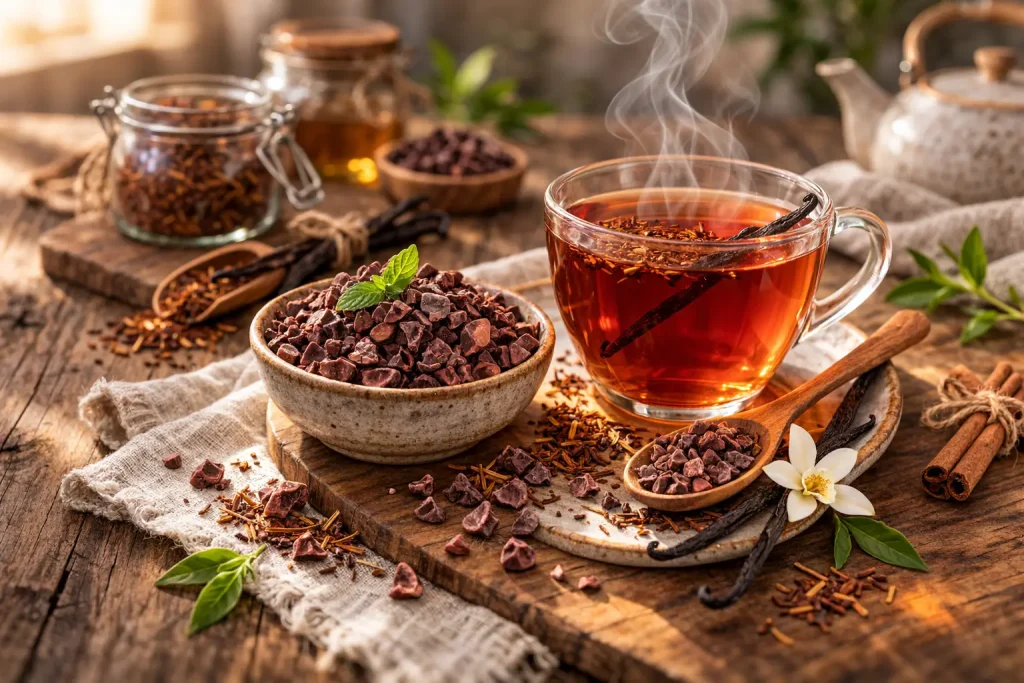
The phrase cacao nibs benefits gets tossed around like confetti, but the real value is in the details: how they taste, how they behave in hot water, what they contribute to a blend, and how to use them so the flavor actually shows up in the cup. Cacao nibs are simply crushed, fermented, and roasted cacao beans (before any sugar, milk, or heavy processing). They’re bitter-edged, toasty, and aromatic, with a satisfying crunch that tea makers and herbalists love because nibs can act like both ingredient and garnish.
In the apothecary pantry, cacao has a long cultural history as a cherished food and ceremonial beverage base. In modern herbal kitchens, nibs are used for their deep roast notes, their “grown-up chocolate” aroma, and their ability to make a blend feel premium without turning it into candy. Below you’ll find traditional context, practical ways to eat them, and production-minded brewing ratios that help you get consistent results in tea blends and everyday snacks.
Cacao nibs benefits in the herbal pantry (what they bring, practically)
When people ask about cacao nibs benefits, herbalists often answer in sensory terms first: warmth, comfort, richness, and a roasted backbone that can make a blend taste finished. Nibs deliver a cocoa-like aroma without added sugar, and they pair beautifully with vanilla-forward botanicals and naturally sweet “red” teas.
From a tea maker’s perspective, cacao nibs offer three practical advantages. First, they add aroma lift. Open a jar and you get that dry, brownie-like scent that reads as indulgent. Second, they bring gentle bitterness and roast, which can balance sweet herbs or soften sharp edges in spice blends. Third, they provide texture. In loose leaf blends, nibs add visual appeal and weight, which helps a blend look abundant in the pouch.
Cacao nibs also contain naturally occurring compounds found in cacao. Herbalists keep the language grounded: cacao has a reputation for being mood-brightening in traditional contexts, and people may feel supported by its comforting ritual. But the most reliable “benefit” you can control is flavor: nibs make your cup taste intentionally crafted.
Try pairing nibs with Organic Vanilla Rooibos Loose Leaf Tea for a creamy, dessert-like profile without added sweetness.
Traditional use: cacao as food, beverage, and ritual (without the hype)
Long before cacao was molded into candy bars, it was prepared as a beverage. Different cultures prepared cacao in different ways, often with spices, aromatic seeds, and careful whisking or stirring for froth. Herbalists talk about traditional use as a form of kitchen wisdom: cacao was valued as a special food, shared in community, and prepared with attention.
Today, nibs are an approachable entry point because they’re simple and close to the original ingredient. They’re also flexible. You can steep them, grind them, simmer them gently, or simply eat them as-is. The best approach depends on your goal. If you want aroma and roast in a tea blend, steeping works. If you want body and a richer chocolate impression, a short simmer or a fine grind performs better. And if you want crunchy satisfaction in snacks, you keep them whole and pair them with softer textures (nuts, dried fruit, yogurt, oatmeal).
The cacao nibs benefits many people notice are less about “a single compound doing a single thing” and more about the ritual: a warm drink, a rich scent, and a moment that feels nourishing.
Try a cozy evening mug: Organic Vanilla Rooibos Loose Leaf Tea with a measured pinch of nibs for a smooth, vanilla-chocolate aroma.
Best ways to eat cacao nibs (snacks, breakfast, and simple desserts)
If you want cacao nibs benefits in the most straightforward way, eat them. Think of nibs like a bitter chocolate sprinkle with a roasted crunch. The trick is dose and pairing.
In yogurt or skyr: add 1 to 2 teaspoons of nibs per serving. Pair with honey, banana, or dates to soften the bitterness. In oatmeal: stir in 1 teaspoon at the end so they stay crunchy. On fruit: nibs on sliced pear or strawberries make a simple, grown-up dessert.
For trail mix: nibs shine with toasted nuts and chewy fruit. Aim for balance. A good ratio is 1 part nibs to 4 parts nuts and fruit combined. They’re intense, so a little goes far.
In baking: fold nibs into cookie dough, granola, or energy bites. They hold their texture better than chocolate chips because there’s no added cocoa butter melting into the dough. If you’re making a “pantry premium” granola, nibs are the ingredient that makes people pause and say, “What is that amazing roasted note?”
For a tea-adjacent treat, sip Organic Vanilla Rooibos Loose Leaf Tea alongside a bowl of fruit topped with nibs. It reads like dessert, but it’s still pantry-simple.
How cacao nibs behave in tea (steeping vs simmering, flavor extraction)
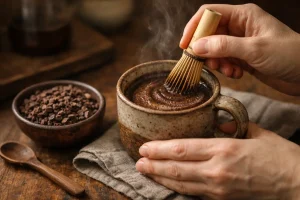 Here’s the reality tea makers learn quickly: cacao nibs are not a quick-release herb. They’re dense, oily, and roast-forward. A short steep gives aroma and a light cocoa edge. A longer, hotter extraction gives more depth, but can also pull more bitterness.
Steeping method: best for blends, especially with rooibos. Use freshly boiled water, cover the vessel, and steep 8 to 12 minutes. You’ll get a perfumed cup with a dry cocoa finish.
Gentle simmer method: best when you want fuller chocolate character. Simmer nibs in water for 10 to 15 minutes, then strain and combine with your tea or rooibos. This brings more body and a deeper roasted impression.
Grinding: if you lightly crush nibs (mortar and pestle or a quick pulse), you increase extraction. The cup becomes more cocoa-forward faster, but you also increase fines and sediment.
This is where cacao nibs benefits become practical: nibs let you tune a blend from “hint of chocolate” to “deep cocoa comfort” just by adjusting extraction style.
Try this flavor bridge: brew Organic Vanilla Rooibos Loose Leaf Tea and steep nibs alongside it for a layered vanilla-cocoa aroma.
Measured ratios for consistent cups (grams + teaspoons)
For tea makers, consistency beats guesswork. Use these as baseline ratios, then adjust by nib roast level and personal taste. These ratios are for a 12 oz mug (about 355 ml).
Steep-only method (aroma-forward):
Cacao nibs: 6 g (about 2 teaspoons)
Rooibos or herbal base: 3 g (about 2 teaspoons of most cut-and-sifted rooibos)
Water: 355 ml, just off boil
Steep: 10 minutes, covered
Simmer-plus-steep method (deeper cocoa):
Cacao nibs: 10 g (about 1 tablespoon plus 1 teaspoon)
Water for simmer: 250 ml
Simmer: 12 minutes, very gentle
Add additional hot water to reach 355 ml total, then steep your base tea 6 to 8 minutes
Cold-steep (smooth, low bitterness):
Cacao nibs: 8 g (about 1 tablespoon)
Base tea: 3 g
Water: 355 ml
Time: 12 to 16 hours in the fridge, strain well
Use these ratios to keep the cacao nibs benefits tasting intentional rather than muddy. If the cup is too bitter, reduce nibs by 2 g or shorten steep time by 2 minutes.
Make the profile creamy and rounded by starting with Organic Vanilla Rooibos Loose Leaf Tea as your base.
Blend-building: cacao nibs + vanilla rooibos and supporting botanicals
A cacao-nib blend needs a “softener” and a “bridge.” Vanilla rooibos is both: it’s naturally sweet, low-tannin, and cozy. The vanilla note smooths the roast edge, while rooibos brings a red, honeyed body that holds up to cacao.
For a pantry-premium blend, think in layers:
Base: rooibos or honeybush-style sweetness
Roast: cacao nibs
Creamy aroma: vanilla
Optional spice warmth: cinnamon or cardamom
Optional bright lift: a gentle citrus note (avoid sharp powders, keep it subtle)
A production-minded tip: keep nibs as a distinct visual component. Customers recognize them instantly and associate them with chocolate. Use a cut size that matches the rooibos particle size so the blend doesn’t segregate in shipping.
Recommended supporting ingredients from a tea-friendly pantry:
Cinnamon Chips for warmth and bakery aroma
Cardamom Pods for elegant, floral spice lift
Ginger Root for gentle heat and a clean finish
Chamomile Flowers for soft, honeyed roundness
Spearmint Leaves for a cool top note that makes chocolate feel lighter
Dandelion Root for roasted depth that complements cacao
Keep it simple in the cup: start with Organic Vanilla Rooibos Loose Leaf Tea, then layer one supporting botanical at a time.
Production tips for tea makers (cut size, sifting, and minimizing sediment)
If you’re blending for sale or even just batching at home, nibs can create two common issues: fines (sediment) and blend separation.
Cut size: nibs vary. If your nibs are very fine, they’ll sink and create sludge in the last sip. If they’re very large, extraction is slow and inconsistent. The sweet spot is small, even fragments. If needed, sift gently to remove excessive dust.
Mixing order: blend the base tea and lighter botanicals first, then fold in nibs last. This reduces nib breakage and keeps the visuals crisp.
Packaging: nibs can carry aromatic oils that fade if exposed to air. Use barrier bags and seal quickly. If you store in jars, fill them generously to reduce headspace.
Brewing guidance: include a “cover while steeping” note in your own process. Aroma is part of the cacao nibs benefits experience, and uncovered steeping lets it escape.
For a dependable base that holds cocoa well, keep Organic Vanilla Rooibos Loose Leaf Tea as your backbone ingredient.
Troubleshooting: flat flavor, too tart, over-carbonation, sediment, aroma loss
Flat flavor: increase nibs by 2 g per mug or switch to the simmer-plus-steep method. Also check steep time and make sure the vessel is covered. Flatness is often aroma loss.
Too tart: cacao nibs themselves aren’t tart, so tartness usually comes from other ingredients or an overly sharp base. Soften with vanilla-forward rooibos, chamomile, or a touch of cinnamon. Reduce any acidic components in the blend.
Over-carbonation: if you’re using nibs in fermented beverages, too much residual sugar or too warm a second ferment can create excess pressure. Keep nib additions modest, burp bottles regularly, and ferment cooler.
Sediment: crush nibs less, sift out dust, and use a finer strainer. Sediment increases when nibs are ground or when the batch has lots of fines from shipping.
Aroma loss: store nibs airtight, away from heat and light. Also, don’t keep a blending jar open while you’re working. Cacao aromatics are quick to evaporate.
When the goal is a smooth, reliable cup, start with Organic Vanilla Rooibos Loose Leaf Tea and treat nibs as a measured accent rather than a bulk ingredient.
Storage + quality: keeping nibs fresh (airtight, humidity, color and scent cues)
Cacao nibs are shelf-stable, but they’re not immortal. Treat them like coffee or toasted nuts: air, heat, and humidity flatten the aroma over time.
Airtight: store nibs in an airtight jar or sealed pouch. If you buy in bulk, decant into smaller containers so you’re not repeatedly opening the whole supply.
Humidity: keep nibs dry. Humidity can dull aroma and invite off-notes. Avoid storing above kettles, dishwashers, or near steam.
Light and heat: store in a cool, dark cabinet. Heat speeds aroma loss and can make nibs smell tired and dusty.
Quality cues: fresh nibs smell like roasted cocoa and brownie edges. Stale nibs smell faint, papery, or vaguely waxy. Color should be even and rich; extreme dullness can signal age. Taste a single nib: it should snap and crunch. If it chews soft, moisture has gotten in.
Handled well, cacao nibs benefits stay vibrant: aroma, roast, and that premium pantry feel.
Safety (compliant, practical, no medical claims)
Cacao nibs are a food ingredient. Use them in reasonable amounts and listen to your body. Cacao naturally contains stimulant-like compounds, so some people prefer smaller servings, especially late in the day. If you’re sensitive to caffeine-like effects, start with 1 teaspoon per mug and see how you feel.
Avoid making medical promises. Herbalists often use cacao in comforting, traditional beverage rituals, and some people may feel supported by that warmth and pleasure. But this is not medical advice, and cacao nibs are not intended to diagnose, treat, cure, or prevent any disease.
If you are pregnant, nursing, have a medical condition, or take medications, it’s sensible to check with a qualified professional about your diet choices. Keep the focus on foodcraft: flavor, aroma, and mindful enjoyment.
Conclusion: making cacao nibs benefits show up in real life
The most dependable cacao nibs benefits are the ones you can taste and repeat: a roasted cocoa aroma, a bitter-sweet edge that makes blends feel grown-up, and a crunchy texture that turns snacks into something special. Use steeping for perfume, simmering for depth, and measured ratios for consistency. Store nibs airtight and dry so that first-opened brownie scent stays alive.
For an easy, reliable pairing, build around Organic Vanilla Rooibos Loose Leaf Tea. It’s the smooth, naturally sweet foundation that lets cacao nibs shine without turning harsh. Keep your process simple, your measurements steady, and your pantry stocked like an herbal kitchen that respects both tradition and craft.
FAQ
What are cacao nibs benefits in everyday use?
Cacao nibs benefits show up as deep cocoa aroma, roasted flavor, and crunchy texture in tea blends, yogurt, oatmeal, and snacks.
Do cacao nibs melt like chocolate chips?
Not the same way. Nibs hold texture because they’re crushed bean pieces, not a sugar-and-cocoa-butter confection.
How much cacao nibs should I add to a mug of tea?
Start with 6 g (about 2 teaspoons) per 12 oz mug, then adjust to taste.
Can I steep cacao nibs with rooibos?
Yes. They pair especially well with Organic Vanilla Rooibos Loose Leaf Tea for a smooth vanilla-cocoa profile.
Why is my cacao nib tea bitter?
Too many nibs, too long a steep, or very dark roast nibs. Reduce by 2 g or shorten steep time.
How do I reduce sediment from cacao nibs?
Use less crushing, sift out dust, and strain through a finer mesh.
How do I store cacao nibs for best quality?
Keep them airtight, cool, and dry. Fresh nibs smell strongly like roasted cocoa, not papery or faint.
Are cacao nibs safe for everyone?
They’re a food, but they contain naturally occurring stimulant-like compounds. Start small if you’re sensitive, and avoid medical claims.