Calendula Infused Oil: How to Make It With Dried Flowers
Calendula infused oil is a gentle, golden oil made by steeping dried calendula flowers in a carrier oil until the petals release their color and aroma. Folk herbalists have traditionally used calendula this way for generations, mostly as a base for salves, lotions, and massage blends. Making a batch at home is simple and inexpensive. However, a few details make the difference between a clear, long-lasting oil and a cloudy one that spoils early. In this guide, you will learn why dried flowers work best, how to pick a carrier oil, the right ratio of flowers to oil, three infusion methods, common mistakes, and how to store the finished oil so it lasts.
A Brief History of Calendula in Home Remedies
Calendula officinalis, often called pot marigold, has a long history in European and Mediterranean kitchen gardens. Folk herbalists traditionally grew it near vegetable beds and dried the petals for winter use. Old household manuals describe calendula oil as a staple of the home medicine cabinet, usually alongside chamomile and lavender. Because the flower grows easily and dries well, it became one of the most common plants used for homemade infused oils across many cultures. Today, the same basic method survives almost unchanged, even though most people now use a stovetop or a slow cooker instead of a sunny windowsill.
Why Dried Calendula Flowers Work Best for Infused Oil
Fresh calendula flowers still hold water inside their petals. When that water meets oil, it creates the perfect environment for mold and bacteria, even in a sealed jar. As a result, an infusion made with fresh flowers can spoil within days. Dried flowers remove that risk because most of the moisture is already gone before the petals ever touch the oil. Organic Calendula Flowers Whole keep their full flower head, while Organic Calendula Petals Whole are just the loose petals. Petals infuse a little faster because they have more surface area, so either form works well for this project. Before you begin, spread the dried flowers on a plate for a few minutes and check for any lingering dampness, because even dried herbs can pick up moisture from a humid kitchen.
Choosing a Carrier Oil for Calendula Infused Oil
The carrier oil you choose affects the shelf life, feel, and final use of your finished oil. Olive oil is a classic choice because it is stable and widely available. Sunflower oil absorbs quickly and feels lighter on skin. Sweet almond oil has a silky texture that many people prefer for massage oil. Jojoba is technically a liquid wax, so it resists rancidity longer than most plant oils. The table below compares these four common options so you can match the oil to your project.
| Carrier Oil | Typical Shelf Life | Feel on Skin | Best Use |
|---|---|---|---|
| Olive oil | 1 to 2 years | Rich, slightly heavy | Salve base, soap |
| Sunflower oil | About 1 year | Light, fast absorbing | Lotion, daily moisturizer |
| Sweet almond oil | About 1 year | Smooth, silky | Massage oil |
| Jojoba oil | 2 years or more | Light, non greasy | Facial oil, lip balm |
The Right Ratio for Calendula Infused Oil
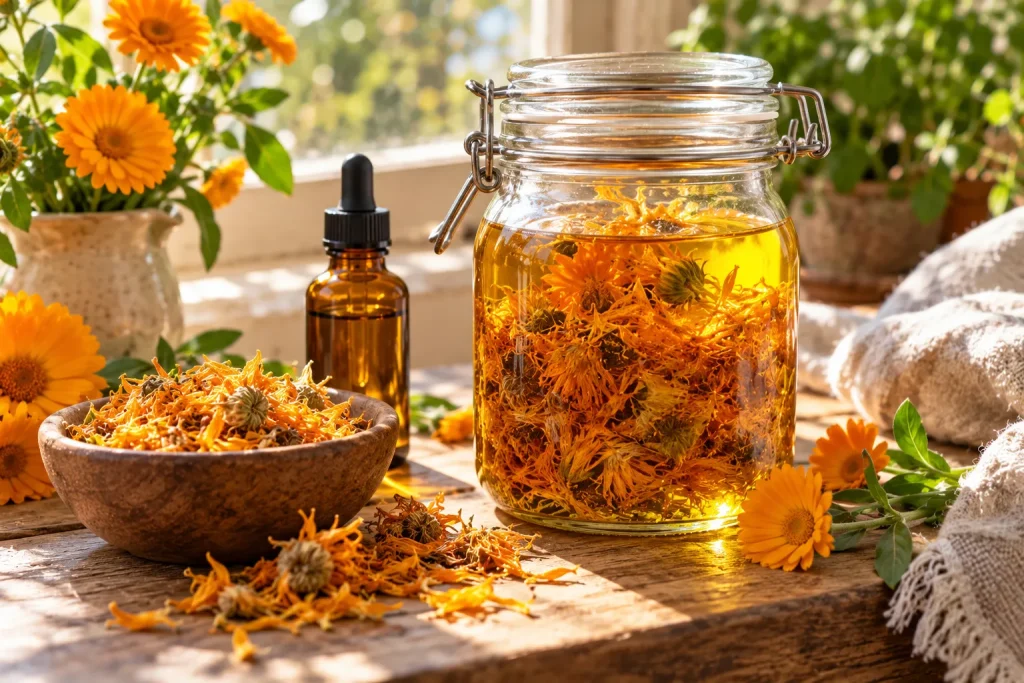
A reliable starting ratio for this infusion is about one part dried flowers to three or four parts oil by volume. For example, fill a clean pint jar roughly one third full of dried calendula, then pour oil over the flowers until they are fully covered by at least half an inch. For a smaller half pint jar, use about one quarter cup of dried flowers and enough oil to cover them, which usually comes out to around three quarters of a cup. Full coverage matters because any petal left exposed to air can mold. If the flowers float, press them down gently with a clean spoon, then top off with more oil. Once covered, the flowers will slowly release their color into the oil over the following days or weeks, depending on the method you use.
How to Infuse Calendula Oil at Home
There are three common ways to infuse calendula oil at home. The slow cold method takes the longest but preserves the most delicate compounds. The warm double boiler method is faster and works well when you need oil within a day. The slow cooker method sits between the two. Follow the steps below for the classic cold infusion method, then read the notes for the faster alternatives.
- Fill a clean, dry glass jar about one third full with dried calendula flowers or petals.
- Pour your chosen carrier oil over the flowers until they are covered by at least half an inch of oil.
- Stir gently with a clean utensil to release any trapped air bubbles.
- Cap the jar tightly and label it with the date and the oil you used.
- Place the jar on a sunny windowsill or in a warm spot, and shake it once a day.
- Let the jar infuse for four to six weeks, checking occasionally for any sign of mold.
- Strain the oil through cheesecloth or a fine mesh strainer into a clean bottle.
- Squeeze the cloth gently to release the last of the oil, then discard the spent flowers.
For the warm double boiler method, combine the flowers and oil in a heatproof jar, then set the jar in a pot of water over low heat for two to four hours, keeping the oil between 100°F and 120°F, which is about 38°C to 49°C. Never let it boil, because high heat can damage the oil and the calendula’s color compounds. For the slow cooker method, use the lowest “warm” setting with the lid slightly ajar for four to six hours, stirring occasionally. Both faster methods still need straining when finished. The table below compares the three methods side by side.
| Method | Time Needed | Temperature | Best For |
|---|---|---|---|
| Cold infusion | 4 to 6 weeks | Room temperature | Most delicate, best color |
| Double boiler | 2 to 4 hours | 100°F to 120°F | Need oil the same day |
| Slow cooker | 4 to 6 hours | Low “warm” setting | Hands off, steady heat |
Straining, Vitamin E, and Mistakes to Avoid
Straining is a step many people rush, but it matters for a clean finished product. Pour the oil through a few layers of cheesecloth set inside a funnel, then let gravity do the work instead of squeezing too hard, which can push plant particles through. Once strained, some makers add a small amount of vitamin E oil, usually about one quarter teaspoon per cup of finished oil, as a natural antioxidant that helps slow rancidity. Label the bottle with the oil type and the date it was strained. A few mistakes come up again and again when people infuse calendula oil at home.
- Leaving flowers exposed above the oil line, which invites mold.
- Using jars or lids that are not fully dry before adding the oil.
- Overheating during the warm double boiler method, which can scorch the oil.
- Skipping the straining step or storing the oil with plant matter still inside.
- Forgetting to label the jar, so you lose track of the infusion date.
Ways to Use Your Finished Calendula Oil
Once strained, this calendula oil becomes a versatile base for several DIY projects. It works as the oil base for a salve, so if you want a finished recipe, see our calendula salve recipe for the full method with beeswax. You can also use it as a standalone massage oil, pour a small amount into melt and pour soap, work a few drops into dry cuticles, or blend it into a simple lip balm with beeswax and a touch of vanilla. For a gentler blend, combine your calendula oil with a second infusion made from Organic Lavender Flower (Extra) Whole or Organic Chamomile Flowers Whole. Organic Rose Petals also pair nicely in a mixed flower oil, adding a soft floral note to the finished blend. Instead of infusing separately, some makers simply add a spoonful of dried lavender or chamomile to the same jar as the calendula, so the two flowers infuse together from the start.
How to Choose and Store Calendula Flowers and Oil
Good dried calendula should look bright orange or yellow, feel slightly papery, and smell faintly sweet and herbal. Avoid flowers that look dusty brown or smell musty, because that usually signals age or poor storage. Keep dried calendula in an airtight container, away from light and heat, so it stays potent for your next batch. Once your oil is finished and strained, store it in a dark glass bottle in a cool cabinet, away from direct sunlight. Stored this way, most calendula oils stay usable for six months to a year, though jojoba based batches can last longer. Always do a small patch test on your inner arm before using a new batch on your face, and if you have a known ragweed allergy, be cautious, since calendula belongs to the same plant family.
Frequently Asked Questions
What is calendula infused oil used for?
This infused oil is traditionally used as a base for salves, lotions, lip balms, and massage oils. It is a cosmetic ingredient, prized for its gentle floral aroma, not a treatment for any condition.
Can I use fresh calendula flowers instead of dried?
Fresh flowers carry water that can cause mold in oil. For a safer, longer lasting infusion, dried flowers are the better choice at home, especially for beginners.
How long does the finished oil last?
Most batches stay fresh for six months to a year when stored in a dark, cool place. Jojoba based oil tends to last the longest, while sunflower oil fades fastest.
Is this infused oil safe for all skin types?
Most people tolerate it well. However, anyone with a ragweed or daisy family allergy should patch test first and ask a doctor if unsure about using it.
Do I need to refrigerate the finished oil?
Refrigeration is not required if the oil is fully strained and stored in a dark, cool spot. A cabinet away from heat and sunlight works fine for most kitchens.
Start Your Own Calendula Infused Oil Today
Making this infused oil at home takes patience, but the process itself is easy, and the result is a versatile oil for salves, lotions, and more. Begin with quality dried flowers, choose an oil that fits your skin and your project, and give the infusion the time it needs. Not sure which dried flower suits your next project? Take our quick quiz: find the best herb for your skin care routine.