Whole Nutmeg: How to Grate, Use and Store It
Whole nutmeg holds its flavor far longer than the pre-ground version sitting in most spice racks, because the volatile oils inside the seed stay sealed until you grate it. Once nutmeg is ground, those oils begin to fade within months. As a result, a whole seed grated fresh delivers a brighter, warmer flavor than a jar that has been open for a year. Many home cooks keep a small jar of whole seeds next to the stove instead of a tin of pre-ground powder, simply because the aroma difference is so noticeable once you compare the two side by side. In this guide, you will learn how to grate nutmeg at home, how much to use in common dishes, the difference between nutmeg and mace, a short history of the spice, a simple bechamel recipe, and how to buy and store nutmeg so it keeps for years.
Why Whole Nutmeg Beats Pre-Ground Nutmeg
Nutmeg’s flavor comes from volatile aromatic oils trapped inside the seed. When a seed is ground ahead of time, those oils start evaporating immediately, so the spice loses depth well before most cooks notice. A whole seed, however, protects those oils until the moment you grate it. Because of this, chefs and home cooks who grate their own nutmeg often use less of it to get the same impact. Organic Nutmeg Whole lets you grate exactly what a recipe calls for, right before it goes into the pot. The table below shows how a whole seed compares with the pre-ground spice.
| Form | Shelf Life | Flavor Strength | Convenience |
|---|---|---|---|
| Whole seed | Several years | Strong, fresh | Needs a grater |
| Pre-ground nutmeg | About 6 to 12 months | Fades quickly | Ready to use |
How to Grate Nutmeg at Home
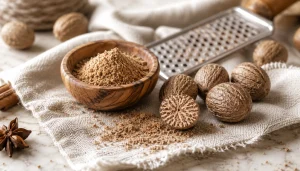
A microplane style grater is the easiest tool for a hard seed, since its fine teeth turn it into a soft, fluffy powder in seconds. A dedicated nutmeg grater, often a small box with a storage compartment, works just as well and keeps the seed from rolling away. If neither tool is on hand, a few firm strokes against the fine side of a box grater also does the job. Hold the seed with dry fingers, then grate only what you need for that dish, because exposed nutmeg powder begins losing aroma almost right away.
If the seed feels stubborn, warm it briefly between your palms first, since gentle warmth can make the oils a little easier to release. Keep a small dish nearby to catch the grated spice, and rinse the grater right after use, because dried nutmeg residue can harden in the fine teeth and become difficult to clean later. Many dedicated nutmeg graters include a small storage compartment built into the base, which is a convenient way to keep one or two spare seeds within reach for the next time you cook.
How Much Nutmeg to Use
One whole seed yields about two to three teaspoons of grated nutmeg, depending on its size and how finely you grate it. Most recipes call for a small pinch, so a single seed can season several dishes over time. The table below shows typical amounts for common recipes.
| Dish | Amount of Grated Nutmeg |
|---|---|
| Eggnog (1 quart) | 1/4 to 1/2 teaspoon, plus more for garnish |
| Bechamel sauce (2 cups milk) | 1/8 teaspoon |
| Creamed spinach (1 pound) | 1/4 teaspoon |
| Pumpkin pie (one 9 inch pie) | 1/2 teaspoon |
| Chai spice blend (per pot) | 1/4 teaspoon |
| Mashed potatoes (2 pounds) | 1/8 teaspoon |
Nutmeg vs Mace: Same Fruit, Different Spice
Nutmeg and mace actually come from the same fruit. The nutmeg tree produces a fruit that splits open to reveal a hard brown seed, which is the nutmeg, wrapped in a bright red, lacy covering called the aril. Once dried, that aril becomes mace. Mace has a flavor similar to nutmeg, but it is slightly more delicate and a touch peppery. Because they come from the same fruit, bakers often swap one for the other in small amounts, though the aroma is not identical. Mace also tends to color a batter less than nutmeg, so pastry chefs sometimes prefer it in pale doughs where dark flecks would stand out.
A Short History of Nutmeg and the Spice Trade
For centuries, nutmeg grew almost exclusively on a small group of islands called the Banda Islands, part of what is now Indonesia. European traders fought over control of this tiny archipelago because nutmeg was extraordinarily valuable at the time, worth more by weight than gold in some markets. Dutch, Portuguese, and British traders all competed for access, and the rivalry grew so intense that the Dutch East India Company once traded an entire island, Run, to England in exchange for a small piece of land that later became New York.
Nutmeg mania of that era also encouraged brutal control over supply, since whoever held the islands controlled the world’s supply. Today, nutmeg trees also grow in Grenada and other tropical regions, so the spice is far more accessible than it once was, even though the Banda Islands remain its historic home. Grenada now even features a nutmeg on its national flag, a small nod to how deeply the spice shaped the island’s history and economy over the following centuries.
Step by Step: Classic Bechamel with Fresh Nutmeg
A classic bechamel sauce shows off fresh grated nutmeg better than almost any other dish, because the warm milk carries its aroma so well.
- Melt two tablespoons of butter in a saucepan over medium heat.
- Whisk in two tablespoons of flour, then cook for one minute, stirring constantly.
- Slowly pour in two cups of warm milk, whisking the whole time to avoid lumps.
- Simmer gently for five minutes, stirring often, until the sauce thickens.
- Season with salt, white pepper, and about 1/8 teaspoon of freshly grated nutmeg.
- Taste, then adjust the nutmeg in small amounts, since its flavor builds quickly.
- Remove from heat and use right away over vegetables, pasta, or gratins.
For a quick variation, whisk a pinch of grated nutmeg and a little Organic Cardamom (GREEN) Whole, cracked first, into warm milk for a simple spiced drink instead of a sauce. For a holiday eggnog instead, whisk eggs, sugar, milk, and cream over low heat until just thickened, then finish with grated nutmeg and a splash of vanilla, stirring constantly so the eggs never scramble.
A Few More Ways to Use Nutmeg in the Kitchen
Beyond sauces and desserts, a freshly grated seed earns a place in both sweet and savory cooking. A light grating wakes up mashed potatoes, creamed spinach, and winter squash soups. In baking, it pairs naturally with Organic Cinnamon (True Ceylon) Powder and Organic Cloves Powder in spice cookies, banana bread, and fruit pies. A pinch also rounds out homemade chai, where it sits alongside black tea, ginger, and cardamom.
Because its flavor is so concentrated, nutmeg works best as a background note, added early so it has time to blend, rather than sprinkled on at the very end. It also shows up in savory dishes outside the kitchens most people expect, including some Middle Eastern meat spice blends and Caribbean jerk seasoning, where a small amount rounds out the heat from chiles and allspice. Instead of reaching for a second spice, cooks in these traditions often rely on just a touch of this warm, sweet spice to tie the whole blend together.
How to Choose and Store Whole Nutmeg
A good seed should feel heavy for its size and slightly oily when you scratch the surface with a fingernail. Avoid seeds with visible holes, since insects sometimes damage stored seeds. Because the whole form can sell out from time to time, Organic Nutmeg TBC, which are broken pieces of the same seed, makes a reliable in-stock option that you can run through a small spice grinder. Store the seeds in an airtight jar, away from light and heat, and they will keep their flavor for several years, far longer than ground nutmeg.
On food safety, nutmeg is safe in the small amounts used in cooking, but large amounts are not safe and can cause unpleasant reactions, so always stick to teaspoon level measurements, never tablespoons. Keep whole seeds away from young children, since a dried seed can look like a hard nut or candy. A few more buying signs are worth checking before you commit to a batch.
- Choose seeds that feel dense and heavy, not light or hollow sounding when tapped.
- Look for a smooth, slightly glossy surface rather than a dry, chalky one.
- Smell the seed if possible. A strong, warm aroma usually means fresher oil content.
- Buy only what you will use within a couple of years, even though a whole seed keeps a long time.
Frequently Asked Questions
What is the difference between whole nutmeg and ground nutmeg?
A whole seed keeps its aromatic oils sealed inside, so it stays flavorful for years. Ground nutmeg loses that aroma within months of grinding, because the oils evaporate once exposed to air.
How much of a whole seed equals one teaspoon ground?
Grating about a third of a whole seed usually gives close to one teaspoon of ground nutmeg, though exact yield varies by seed size and grater.
Is mace the same as nutmeg?
Mace and nutmeg come from the same fruit, but mace is the dried outer covering, while nutmeg is the seed inside. Their flavors are similar but not identical.
How long does a whole seed stay fresh?
Stored in an airtight container away from heat and light, a whole seed can stay flavorful for several years, unlike pre-ground nutmeg, which fades within months.
Can I use too much nutmeg?
Yes. Nutmeg is safe in small culinary amounts, but large amounts are not safe, so always measure in teaspoons rather than tablespoons or more.
Grind Your Own Whole Nutmeg Today
Once you grate your own seed, pre-ground jars are hard to go back to, because the flavor difference is so clear. Keep a seed on hand, pair it with warm baking spices for the season, and you will always have a well rounded spice cabinet ready to go. For more ideas on pairing nutmeg with other spices, see our guide to nutmeg powder in cooking. Not sure which nutmeg form fits your kitchen? Take our quick quiz: find your nutmeg match.