Hops Tea: How to Brew This Bitter, Floral Herb
Hops tea surprises many people. Most of us know hops as the ingredient that gives beer its bitterness and aroma. However, the dried cones also make a calming, floral herbal tea. This guide explains what hops are, how to brew a balanced cup and which herbs to blend with them.
In addition, you will find ratios, steep times, a full evening blend recipe and storage tips. We also cover common brewing mistakes and important precautions. As a result, you can enjoy this bitter, floral herb with confidence.
What Are Hops?
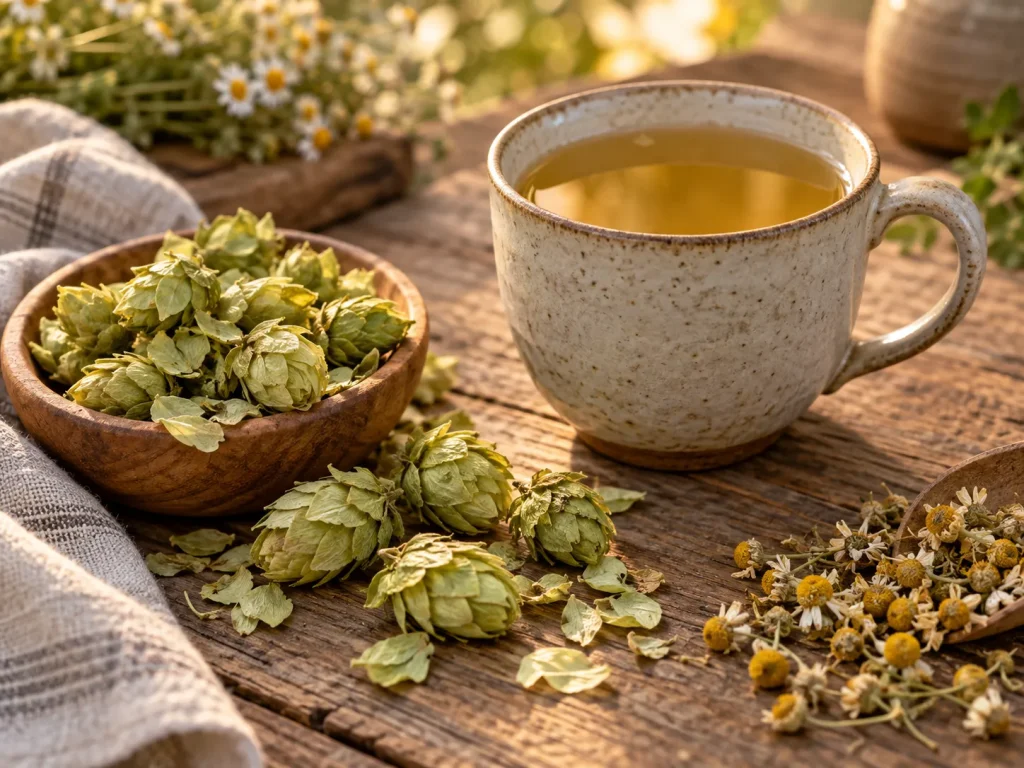
Hops are the cone-shaped flowers of Humulus lupulus, a climbing vine related to hemp. The cones are papery and green. Inside, they hold a yellow powder called lupulin. That powder contains the resins and oils that give hops their bitter taste and piney, citrus aroma.
Brewers began adding hops to beer in medieval Europe. Before that, and alongside it, herbalists used the cones in teas and herbal pillows. Our wild harvested hops are dried whole cones that work well for tea and blending.
Hop Varieties and Aroma
Hundreds of hop varieties exist, and each has its own aroma. For example, European varieties such as Hallertau and Saaz smell floral, spicy and gentle. American varieties such as Cascade lean toward grapefruit and pine. Wild hops, in contrast, vary from plant to plant and often taste earthy and herbal.
For tea, softer floral hops usually make the most pleasant cup. Strong citrus types work too, but they turn bitter quickly. So if you are new to hops tea, start with a gentle, wild harvested cone. Later, you can experiment with stronger types once you know how much bitterness you enjoy in your cup.
A Short History of Hops
The hop vine grows wild across Europe, western Asia and North America. Monks in medieval Germany cultivated it in monastery gardens. In fact, the abbess Hildegard of Bingen wrote about hops in the twelfth century. She noted their bitterness and their ability to keep drinks from spoiling.
Later, English farmers planted large hop gardens in Kent. Harvest season brought whole families from London to pick the cones. Meanwhile, Native American groups used wild hops in their own herbal traditions. So the plant has a long history in both the brewhouse and the kitchen cupboard.
How Hops Are Traditionally Used
Traditionally, hops have been part of evening and relaxation blends. Hop pickers in Europe were said to feel drowsy during harvest. That observation helped shape the herb’s reputation. As a result, people often stuffed small pillows with dried hops and kept them by the bed.
Today, many herbal sleep blends still include a small amount of hops. If you want to build your own, our guide on how to create a sleep tea blend walks you through it. These are traditional uses, not medical advice.
How to Make a Traditional Hop Pillow
A hop pillow is a small cloth pouch filled with dried cones. Folk tradition placed it near the head at night for its aroma. To make one, sew or tie a cotton pouch about 6 by 8 inches. Then fill it loosely with 1 cup of hops and 1/4 cup of lavender. Finally, close it and refresh the filling every few months, since the scent fades.
How to Brew Hops Tea Step by Step
- Use 1 teaspoon of dried hop cones per 8 ounce cup. Start small, since hops are strong.
- Heat water to just below boiling, about 200°F.
- Pour the water over the cones and cover the cup.
- Steep for 3 to 5 minutes. A longer steep makes the tea much more bitter.
- Strain and sweeten with honey if you like.
Whole cones are bulky, so a teaspoon looks small. Even so, it is plenty for one cup. If you crush the cones first, use a little less, because crushed hops release bitterness faster.
Strength Guide
| Hop cones per cup | Steep time | Flavor |
|---|---|---|
| 1/2 teaspoon | 3 minutes | Light, floral, gently bitter |
| 1 teaspoon | 3 to 4 minutes | Balanced, piney, citrusy |
| 1 teaspoon | 5 minutes | Bold and clearly bitter |
| 1 1/2 teaspoons | 5 minutes or more | Very bitter, for hop lovers only |
How to Balance the Bitterness
Plain hops tea tastes bitter, piney and floral. Some people enjoy that, especially fans of hoppy beer. Most, however, prefer a blend. Fortunately, softer herbs balance hops very well.
- Organic chamomile flowers add apple-like sweetness.
- Organic lemon balm brings a gentle lemon note.
- Organic lavender flowers deepen the floral aroma.
- Passion flower is a classic partner in evening blends.
A good starting ratio is 1 part hops to 3 parts of your softer herbs. Then adjust to taste.
Sweeteners help too. Honey rounds out the bitterness, while a strip of orange peel adds brightness. Also, a pinch of cinnamon gives the cup a warm finish on cold nights.
Recipe: Evening Hops and Chamomile Blend
This recipe makes about 12 cups of loose blend. It stores well in a jar.
- Measure 2 tablespoons of hop cones and crumble them lightly.
- Add 3 tablespoons of chamomile flowers.
- Add 2 tablespoons of lemon balm.
- Add 1 teaspoon of lavender flowers, since lavender is strong.
- Mix gently in a bowl, then transfer to an airtight jar.
- To brew, steep 1 heaping teaspoon per cup in 200°F water for 4 minutes, covered.
The finished cup tastes floral, lightly citrusy and only gently bitter. Many people enjoy it about an hour before bed.
Common Brewing Mistakes
- Steeping too long: After 5 minutes, the bitterness climbs quickly.
- Using too much: Hops are light, so people tend to overfill the spoon.
- Leaving the cup uncovered: The aromatic oils escape with the steam.
- Using stale hops: Old cones smell cheesy and give a flat, harsh cup.
- Mixing with too many strong herbs: Hops plus valerian plus lavender can taste medicinal. Instead, keep the blend simple.
Hops Tea vs Beer
Hops tea contains no alcohol and no grain. It also has a much lighter body than beer. Even so, beer lovers often notice familiar aromas, such as pine, citrus or grass. If you home brew, you can taste a cup of hops tea to preview the aroma of a new batch.
Hop water is another popular option. It is simply sparkling water flavored with hops, and it has become a trendy alcohol free drink. To make it at home, steep 1 teaspoon of hops in 1 cup of 170°F water for 5 minutes. Then strain, cool and mix with 3 cups of chilled sparkling water. In addition, a slice of lime or a few mint leaves adds freshness. The result tastes crisp, aromatic and only lightly bitter.
Cooking With Hops
Hops are not only for tea and beer. In fact, young hop shoots are a spring delicacy in Belgium and northern Italy. Cooks steam them like asparagus or add them to omelets and risotto. Dried cones also have kitchen uses. For example, a small pinch infused in honey or simple syrup gives a floral, bitter edge to cocktails and desserts. Some bakers even steep hops in the water for sourdough or rye bread, since the bitterness pairs well with dark grains.
How to Choose and Store Hops for Tea
Fresh hop cones look green to yellow green. They feel papery and slightly springy. In addition, they smell piney, floral or citrusy when you squeeze one. Brown cones or a cheesy smell mean the hops have aged.
Hops lose aroma faster than most dried herbs. For this reason, store them in an airtight container in a cool, dark place. Many brewers keep them in the freezer, sealed tightly, to slow that loss. Under these conditions, hops keep good aroma for six months to a year.
To freeze hops properly, first divide them into small portions. Then press the air out of each bag before sealing it. As a result, you only open what you need, and the rest stays fresh. Finally, let a frozen portion sit for a minute before brewing so the cones loosen.
Precautions
Hops are generally used in small amounts. Avoid hops tea if you are pregnant or nursing. Because of its traditional calming use, do not combine it with sedative medications or alcohol without medical advice. Also, avoid driving after drinking a strong cup until you know how it affects you. Finally, keep hops away from dogs, since they are toxic to them.
If you have a hormone sensitive condition or take regular medication, ask your healthcare provider before drinking hops tea often.
Frequently Asked Questions About Hops Tea
What does hops tea taste like?
It tastes bitter, floral and slightly piney, with hints of citrus. The longer it steeps, the more bitter it becomes.
Does hops tea contain caffeine?
No. Hops are naturally caffeine free, so the tea suits the evening.
How should I store dried hops?
Store hops in an airtight container in a cool, dark place. Some people keep them in the freezer, since their aroma fades faster than most herbs. Our dried herbs shelf life guide has more tips.
Can I use beer brewing hops pellets for tea?
You can, but pellets are concentrated and very bitter. Use only a pinch, and strain through a fine filter.
Can I drink hops tea cold?
Yes. Brew a cup, let it cool and pour it over ice with lemon. Cold hops tea tastes crisp and refreshing.
Can I grow my own hops for tea?
Yes. Hops grow as fast climbing vines in temperate gardens. Harvest the cones when they feel papery and smell strong, then dry them well before storage.
Try a Cup Tonight
Hops tea is bitter, floral and surprisingly pleasant once you balance it. Start with a short steep and a soft partner like chamomile. Then adjust the ratio to match your taste.
Not sure which herb fits your evening cup? Take our quick bedtime tea quiz. When you are ready, explore our wild harvested hops and build your own blend.