Papaya Leaf Tea: Traditional Tropical Remedy Worth Exploring
Papaya leaf tea is rapidly gaining attention in the Western wellness world, but its roots stretch back centuries in tropical regions where the papaya tree (Carica papaya) grows abundantly. From the Caribbean to Southeast Asia, from Central America to the Pacific Islands, traditional healers have long turned to the papaya leaf tea as a versatile botanical remedy. Now, as modern interest in traditional plant medicines continues to grow, papaya leaf tea is finally getting the widespread recognition it deserves.
What makes papaya leaf particularly fascinating is the remarkable range of traditional uses attributed to it. While many herbal teas are known primarily for one or two applications, papaya leaf has been traditionally used across multiple areas of wellness, from digestive support to immune system nourishment. In this guide, we will take a deep dive into the history, traditional uses, brewing methods, and practical tips for incorporating papaya leaf tea into your daily routine.
The Papaya Tree: A Tropical Powerhouse
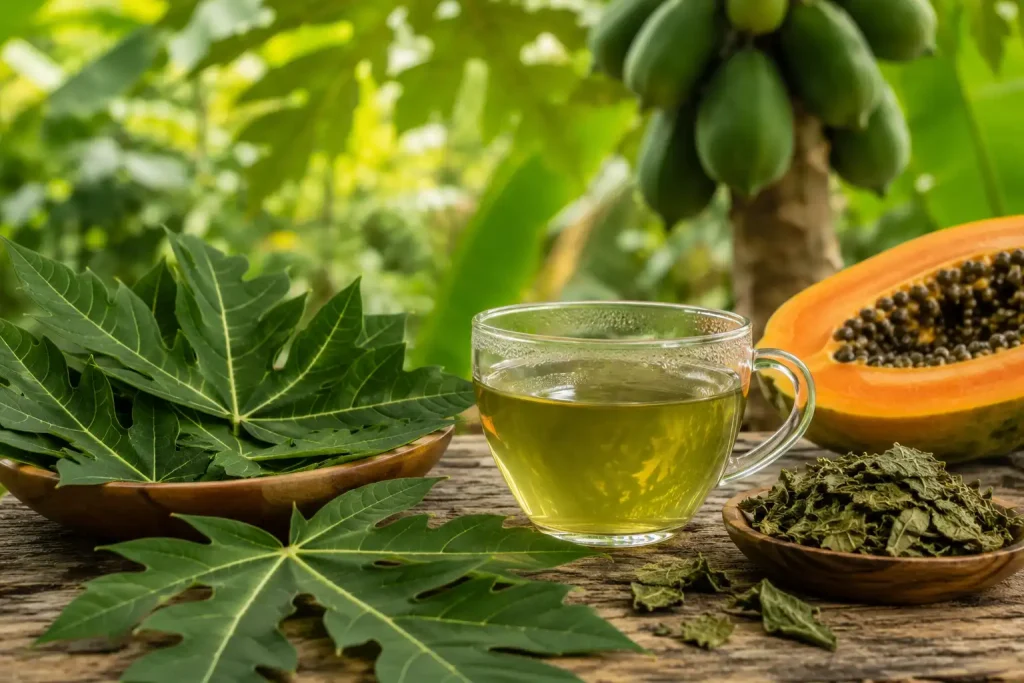
Before exploring the tea itself, it helps to understand the plant it comes from. The papaya tree is native to tropical regions of the Americas, and it has been cultivated for thousands of years by indigenous peoples throughout Central America, Mexico, and the Caribbean. Spanish and Portuguese explorers eventually spread the papaya to tropical regions across Africa, Asia, and the Pacific, where it quickly became a staple food and medicinal plant.
While most people know the papaya fruit for its sweet, orange flesh, traditional healers recognized that the leaves of the tree held their own remarkable value. In many tropical cultures, papaya leaves were used just as frequently as the fruit, if not more so, for various wellness purposes. The leaves contain a unique set of naturally occurring compounds, including papain and other plant enzymes, that contribute to the leaf’s traditional reputation.
Today, wild-harvested papaya leaf is available in dried, cut-and-sifted form, making it easy to brew as a tea even if you live far from the tropics.
Traditional Uses of Papaya Leaf Tea Around the World
One of the most compelling aspects of papaya leaf tea is the consistency of its traditional uses across vastly different cultures. Despite developing independently and without contact with one another, herbalists in the Caribbean, Southeast Asia, Central America, and the Pacific Islands arrived at remarkably similar applications for this botanical.
Digestive support. Perhaps the most widely recognized traditional use of papaya leaf tea is for digestive comfort. The papaya plant is rich in naturally occurring enzymes, including papain and chymopapain, which have been traditionally valued for their role in supporting the breakdown of proteins. Herbalists across multiple traditions have recommended papaya leaf tea after heavy meals or during periods of digestive sluggishness. Consequently, this remains one of the most popular reasons people reach for papaya leaf tea today.
Immune system nourishment. In many tropical folk medicine traditions, papaya leaf tea has been traditionally used to support the body’s natural immune defenses. Herbalists in Southeast Asia and the Caribbean have long prepared papaya leaf infusions during times of seasonal illness. While the exact mechanisms are a matter of ongoing scientific inquiry, the traditional practice remains deeply embedded in these cultures.
General wellness tonic. Beyond specific applications, papaya leaf tea has served as a general wellness tonic in many traditional systems. In parts of the Philippines and Malaysia, for example, papaya leaf preparations are consumed regularly as a daily health-supporting beverage. Similarly, Caribbean herbalists have traditionally recommended papaya leaf tea as part of seasonal cleansing routines.
What Does Papaya Leaf Tea Taste Like?
Let us be honest: papaya leaf tea has a bold, assertive flavor that may take some getting used to. Unlike the sweet, tropical taste of the fruit, the leaves produce a distinctly bitter, vegetal brew. Some drinkers compare it to a very strong green tea, while others detect earthy, slightly grassy notes.
The bitterness of papaya leaf tea is actually considered a feature rather than a flaw in traditional herbalism. Many herbalists believe that bitter flavors play an important role in stimulating digestive function. However, if you find the taste too intense, there are several effective strategies for making it more palatable.
Adding raw honey after brewing is the simplest approach. The natural sweetness of honey pairs surprisingly well with the earthy bitterness of the papaya leaf. Alternatively, blending papaya leaf with naturally sweet herbs can create a more balanced flavor. Ceylon cinnamon adds warmth and sweetness, while lemon myrtle contributes a bright citrus note that cuts through the bitterness effectively.
How to Brew Papaya Leaf Tea
Brewing papaya leaf tea properly will help you achieve the best balance of flavor and traditional potency. Here is a straightforward method that works well for most people.
Standard brewing method:
- Measure 1 to 2 teaspoons of dried papaya leaf per 8-ounce cup.
- Bring fresh water to a full boil (212 degrees Fahrenheit).
- Pour the boiling water over the papaya leaf in a cup or teapot.
- Cover and steep for 5 to 10 minutes. Shorter steeping times will produce a milder, less bitter tea, while longer steeping times yield a stronger brew.
- Strain and add honey, lemon, or other flavor enhancers if desired.
Simmered decoction method: For a stronger preparation, some herbalists recommend gently simmering the papaya leaves in water for 10 to 15 minutes rather than simply steeping them. This method extracts more of the leaf’s active compounds and produces a more potent (and more bitter) brew. If you choose this method, start with just 1 teaspoon of dried leaf per cup and adjust from there.
Tip for beginners: If you are trying papaya leaf tea for the first time, start with a shorter steep (5 minutes) and a lower dose (1 teaspoon). You can gradually increase both as your palate adjusts to the flavor. Many people find that after a week or two, they actually come to appreciate the unique bitter taste.
Papaya Leaf Tea Blends and Flavor Combinations
Creating custom blends is an excellent way to enjoy the traditional benefits of papaya leaf while crafting a flavor profile that suits your personal preferences. Here are three blend ideas that herbalists and tea enthusiasts frequently recommend.
Tropical Digestive Blend
- 2 parts papaya leaf
- 1 part ginger
- 1 part lemon myrtle
- 1/2 part Ceylon cinnamon
This blend transforms papaya leaf tea into an enjoyable after-meal beverage. The ginger adds warming digestive support, while lemon myrtle brightens the flavor considerably. Meanwhile, the cinnamon contributes a naturally sweet warmth that helps tame the bitterness of the papaya leaf.
Tropical Leaf Wellness Blend
- 1 part papaya leaf
- 1 part soursop leaf
- 1 part mulberry leaf
This trio of tropical leaves creates a blend rooted in Caribbean and Southeast Asian herbal traditions. Soursop leaf (also known as graviola) and mulberry leaf both have their own rich histories of traditional use. Together with papaya leaf, they form a comprehensive tropical wellness tea. The mulberry leaf adds a mild, slightly sweet flavor that balances the stronger taste of the papaya and soursop leaves.
Simple Spiced Papaya Leaf Tea
- 2 parts papaya leaf
- 1 part ginger
- 1/2 part cinnamon
- Raw honey to taste after brewing
This is the simplest and most approachable blend for beginners. The ginger and cinnamon do a wonderful job of softening the bitterness, and a touch of honey rounds everything out. As a result, even people who initially dislike the taste of straight papaya leaf tea tend to enjoy this combination.
Papaya Leaf Tea vs. Other Tropical Botanical Teas
The growing interest in tropical herbal teas means you have several options to explore. Understanding how papaya leaf compares to other popular tropical botanicals can help you decide which teas to add to your collection.
Papaya leaf vs. soursop leaf. Soursop leaf (graviola) shares a similar geographic range and some overlapping traditional uses with papaya leaf. However, soursop leaf has its own distinct flavor profile, which is slightly milder and less bitter than papaya leaf. In traditional Caribbean herbalism, soursop leaf is often used for relaxation and sleep support, while papaya leaf is more closely associated with digestive wellness. Many tea drinkers enjoy both, often alternating between them or combining them in blends.
Papaya leaf vs. mulberry leaf. Mulberry leaf has a long history in East Asian herbalism, where it has been traditionally used to support healthy blood sugar levels already within the normal range. The flavor is considerably milder and more pleasant than papaya leaf, with a slightly sweet, hay-like quality. While the traditional uses differ somewhat, both leaves complement each other well in blends.
Papaya leaf vs. ginger. Ginger is perhaps the most universally known digestive herb, and it overlaps with papaya leaf in that area. However, ginger works through warming, stimulating action, while papaya leaf’s traditional digestive reputation is more closely tied to its enzyme content. Using both together, as in the blend recipes above, combines these complementary approaches.
Tips for Buying and Storing Papaya Leaf
When shopping for dried papaya leaf, quality matters. Look for leaves that have been properly dried and retain their green color. Leaves that appear brown or yellowish may have been improperly processed or stored for too long. Additionally, wild-harvested papaya leaf is often preferred by herbalists because wild plants are believed to develop a more robust phytochemical profile than cultivated specimens.
Store your dried papaya leaves in an airtight container in a cool, dark place. A glass jar with a secure lid works well. Under proper storage conditions, dried papaya leaf will maintain its quality for approximately one year. Avoid exposing the leaves to direct sunlight, excessive heat, or humidity, as these conditions will degrade the quality over time.
At Hatton Naturals, we offer wild-harvested papaya leaf in convenient cut-and-sifted form. You can browse our full selection of tropical botanicals in our shop.
Safety Considerations and Precautions
While papaya leaf tea has a long history of traditional use in tropical regions, it is not appropriate for everyone. Pregnant women should avoid papaya leaf tea, as papain and related compounds have been traditionally cautioned against during pregnancy. Individuals who are allergic to papaya fruit should also avoid the leaf tea, as cross-reactivity is possible. People taking blood-thinning medications or medications for blood sugar management should consult their healthcare provider before consuming papaya leaf tea, as it may interact with these medications. Additionally, papaya leaf may affect platelet levels, so anyone with a bleeding disorder or scheduled surgery should seek medical advice first. This article is for informational purposes only and is not intended to diagnose, treat, cure, or prevent any disease. Always consult a qualified healthcare professional before adding new herbal products to your routine.
Frequently Asked Questions
What is papaya leaf tea good for?
Papaya leaf tea has been traditionally used to support digestive health, nourish the immune system, and promote general wellness. Herbalists in tropical regions have relied on it for centuries as a versatile botanical remedy. However, it is important to note that these are traditional uses and not verified medical claims.
How do I make papaya leaf tea taste better?
The natural bitterness of papaya leaf tea can be softened by adding raw honey, fresh lemon juice, or cinnamon after brewing. Blending papaya leaf with complementary herbs like ginger, lemon myrtle, or Ceylon cinnamon is another effective strategy. Starting with a shorter steep time (5 minutes) also produces a milder, less bitter cup.
How many cups of papaya leaf tea can I drink per day?
Most herbalists suggest 1 to 2 cups per day as a reasonable amount for most adults. Because papaya leaf is a potent botanical, moderation is advisable, especially when you are first incorporating it into your routine. Start with one cup daily and observe how your body responds.
Can I drink papaya leaf tea while pregnant?
No. Traditional herbalists and modern health authorities generally advise pregnant women to avoid papaya leaf tea. The papain and related compounds in papaya leaves have been traditionally cautioned against during pregnancy. If you are pregnant, nursing, or planning to become pregnant, consult your healthcare provider before consuming papaya leaf tea.
Is papaya leaf tea the same as papaya fruit?
No. While both come from the same plant (Carica papaya), the leaf and the fruit have different compositions and traditional uses. The leaf contains higher concentrations of certain compounds, including papain and other plant enzymes, and has a distinctly bitter flavor compared to the sweet fruit. The traditional wellness applications also differ significantly.
Can I drink papaya leaf tea cold?
Yes. You can brew papaya leaf tea hot and then chill it in the refrigerator for an iced version. Some people find that chilling the tea actually makes the bitterness more tolerable. Adding a squeeze of fresh lemon or lime and a drizzle of honey to iced papaya leaf tea creates a refreshing tropical wellness beverage.
Where does papaya leaf come from?
The papaya tree is native to tropical regions of Central America and Mexico. Today, it grows abundantly throughout the tropics worldwide, including the Caribbean, Southeast Asia, Africa, and the Pacific Islands. Our wild-harvested papaya leaf is sourced from plants growing in their natural tropical environment.
Can I combine papaya leaf tea with other herbal teas?
Absolutely. Papaya leaf blends well with ginger, cinnamon, lemon myrtle, soursop leaf, and mulberry leaf. Creating custom blends is an excellent way to moderate the strong flavor while combining complementary traditional wellness properties. Experiment with the recipes in this guide or create your own unique combinations.