Sage Tea Benefits: An Aromatic Brew
Sage tea benefits have been recognized by herbalists and home brewers for centuries. This savory, aromatic brew is made from the dried leaves of Salvia officinalis, a Mediterranean herb with a long history of culinary and folk use. Furthermore, sage is one of those herbs that transitions seamlessly from the spice rack to the teacup.
In folk herbalism, sage leaf tea holds a respected place. Traditionally, it was recommended for soothing the throat and as a warming drink during cooler months. Additionally, its bold, slightly peppery flavor makes it a standout among herbal teas.
What Is Sage Tea?
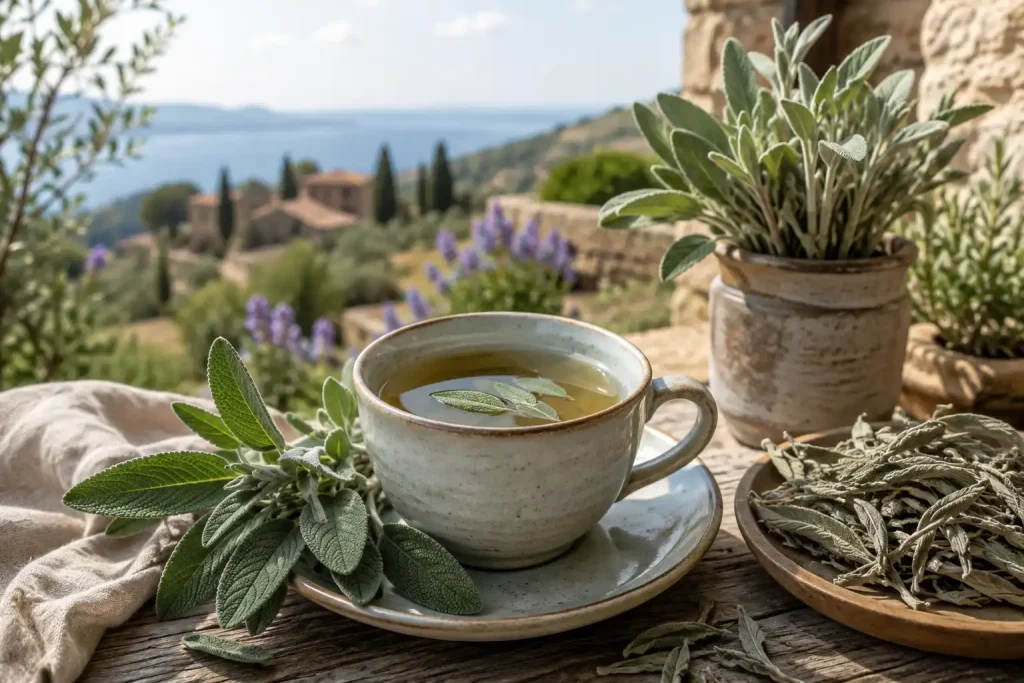
Sage tea is an herbal infusion brewed from the dried leaves of Salvia officinalis. Unlike green or black tea, it contains no caffeine. As a result, it is a popular choice for those who want a flavorful cup at any time of day.
The herb originates from the Mediterranean basin, where it has been cultivated for thousands of years. Moreover, sage has been a fixture in European folk medicine traditions dating back to ancient Rome and Greece. The name Salvia itself comes from the Latin word meaning “to save,” reflecting how highly ancient cultures valued this plant.
How Sage Tea Benefits Traditional Herbalism
In folk herbalism, sage has been traditionally used for a wide range of purposes. Herbalists have long valued the herb as a warming, aromatic plant with astringent properties. Consequently, it was often prepared as a tea to support overall well-being during the winter months.
Traditionally recommended uses include:
- Soothing the throat after speaking or singing
- Supporting digestion after a heavy meal
- Warming the body on cold days
- As a general tonic in folk traditions across Europe and the Middle East
In other words, sage has been seen as a versatile herb rather than one with a single narrow purpose. Moreover, it remains a staple in many herbal apothecaries today.
Flavor Profile and Aroma
Sage tea has a bold, savory flavor with earthy and slightly peppery notes. Some people also detect a faint camphor-like quality, which comes from the volatile oils in the leaves. In fact, these aromatic compounds are responsible for much of the herb’s traditional reputation.
When brewed correctly, the tea should be warm and full-bodied. It pairs well with honey, lemon, or a slice of fresh ginger. Additionally, you can blend sage with organic thyme leaves for a savory, Mediterranean-inspired cup.
How to Brew Sage Tea to enjoy their benefits
Brewing sage tea is straightforward. Follow these steps for a consistent, flavorful cup:
- Heat fresh water to just below boiling, around 200°F (93°C).
- Add one to two teaspoons of dried sage leaves to a teapot or infuser.
- Pour the hot water over the leaves.
- Steep for five to seven minutes, depending on your preferred strength.
- Strain and serve. Add honey or lemon to taste.
For a stronger brew, use a covered vessel to trap the volatile oils. Similarly, letting the leaves steep longer will intensify the flavor, though be aware that over-steeping can bring out more bitterness.
You can use sage leaf whole for a more rustic infusion, or opt for sage leaf cut and sifted for easier straining and a faster steep.
Whole Leaf vs. Cut and Sifted Sage
Both forms of sage work well for tea. However, there are some practical differences worth knowing. Whole sage leaves release their oils more slowly, making them suitable for longer steeps. On the other hand, cut and sifted sage has more surface area, which speeds up extraction and gives you a stronger cup in less time.
For tea bags or small infusers, cut and sifted is generally the more practical choice. Meanwhile, whole leaves work beautifully in a French press or open teapot where there is room for the leaves to expand.
Sage Tea Blends to Try
Sage blends exceptionally well with other savory and aromatic herbs. Some popular combinations include:
- Sage and thyme: A classic Mediterranean pairing with a robust, herby flavor
- Sage and lemon: Bright and refreshing, with the citrus cutting through the earthiness
- Sage and honey: A traditional sore-throat remedy in folk herbalism
- Sage and ginger: Warming and spicy, excellent in cooler weather
Furthermore, sage can be combined with thyme for a savory blend that feels right at home alongside a meal.
Buying and Storing Sage for Tea
Quality matters when selecting dried sage for tea and take advantage of its benefits. Look for leaves that are gray-green in color, with a strong aromatic scent. Additionally, organic sage is preferable for tea use, as you want leaves free from pesticide residues.
Store dried sage in an airtight container away from direct light and heat. Properly stored, dried sage retains its potency for up to two years. In fact, many herbalists recommend storing all dried herbs in dark glass jars to preserve their volatile oils.
Safety and Precautions
Sage tea is generally considered safe for most adults when consumed in moderate amounts. However, sage contains a compound called thujone, which can be problematic in very large quantities over extended periods. Therefore, it is best enjoyed as an occasional tea rather than consumed in large amounts daily. Pregnant and breastfeeding individuals should consult a healthcare provider before drinking sage tea regularly. Additionally, people taking medications for diabetes or blood pressure should speak with their doctor, as sage has traditionally been noted to influence these areas in folk herbalism. This content is for educational purposes only and does not constitute medical advice.
Frequently Asked Questions
How much sage should I use per cup of tea?
One to two teaspoons of dried sage per eight ounces of water is a standard measure. You can adjust based on how strong you prefer the flavor. Start with one teaspoon if you are new to sage tea.
Can I use fresh sage leaves instead of dried?
Yes, fresh sage leaves work for tea. Use about five to six fresh leaves per cup, as fresh leaves have a milder flavor than dried. Consequently, you may want to steep them slightly longer.
Does sage tea contain caffeine?
No. Sage tea is a caffeine-free herbal infusion. As a result, it is a suitable choice at any time of day, including the evening.
What does sage tea taste like?
Sage tea has a savory, earthy, and slightly peppery taste with aromatic herbal notes. It is bolder and more savory than most floral herbal teas. Some people compare it to a liquid version of the herb’s culinary flavor.
Ready to brew your own cup? Explore sage leaf cut and sifted and other premium dried herbs at the Hatton Naturals shop.