Acacia Tea Brewing Guide
Acacia tea is one of those quiet herbal ingredients that tends to make people pause the first time they meet it. It is not as familiar as chamomile or peppermint, and it does not announce itself with a loud aroma when the jar is opened. Instead, it leans subtle. The appeal is in the softness of the brew, the lightness of the cup, and the way it invites a gentler brewing style than many stronger herbs. That softness is exactly why it deserves care. Brewed too hard, it can feel dull or woody. Brewed with patience, it becomes a clean, calming infusion that feels simple in the best possible way.
Because acacia materials can vary by cut and source, the brewer’s job is to let the herb speak before piling on other ingredients. Water temperature, steep time, and blend partners matter more here than they do with louder herbs. This guide is built around that idea. It focuses on how to understand the ingredient, how to shape the cup without forcing it, and how to build a balanced daily tea that keeps acacia at the center. If you enjoy gentle herbal infusions with a light hand and a clean finish, this is a very rewarding place to begin.
What acacia tea is and why it needs a gentle hand
The name acacia tea can cover a few different preparations depending on the source material, which is why paying attention to the actual product matters. Some cuts are based on woodier pieces, some on softer botanical material, and some are blended specifically for infusion use. That variation affects not just flavor, but brewing style. A lighter floral-herbal cut wants shorter contact and more delicacy. A denser, woodier cut may need a little more time, but still benefits from restraint.
The biggest mistake is treating it like a bold black tea or a highly aromatic flower. Acacia usually rewards a quieter method. Its character often sits in pale herbal notes, mild earthiness, and a faintly honeyed softness when the cup is made well. Push it too far and you can lose that elegance quickly.
For a gentle base cup, begin with acacia tea. If you want a softer and more familiar floral arc around it, build the blend with chamomile tea whole flowers.
Flavor notes and what to expect in the cup
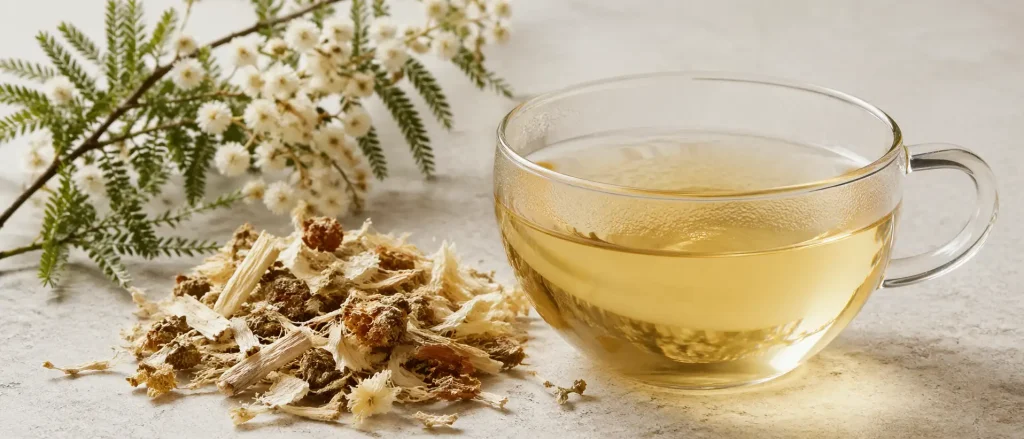
A well-brewed cup often feels pale, calm, and lightly botanical. The aroma is usually soft rather than dramatic. Depending on the cut, you may notice subtle woody notes, a mild floral nuance, or a faint hay-like sweetness. The finish is generally clean, with much less intensity than herbs like mint, tulsi, or ginger.
That softness is not a flaw. It is the point. Acacia works best when the drinker is looking for a tea that does not crowd the senses. It is more about shape and tone than force. In a clear cup, the color often looks light gold to pale straw, which suits its overall personality.
This is also why blend partners should be chosen carefully. Strong acidic, smoky, or very perfumed ingredients can flatten the acacia rather than support it. A little lift or softness is enough. For a refreshing accent that still leaves space for the base herb, try a small amount of peppermint leaf. For a more rounded floral softness, organic calendula flowers can add warmth without turning the tea heavy.
How to brew acacia tea gently
Acacia tea benefits from a patient, low-pressure brewing style. Start with water just off the boil rather than aggressively boiling over the herb. A covered cup or pot helps preserve the more delicate top notes.
Standard mug:
- 2 grams acacia tea per 240 ml water
- About 2 teaspoons, depending on cut density
- Water temperature: 90 to 95°C
- Steep time: 4 to 6 minutes
Softer first test:
- 1.5 grams per 240 ml water
- About 1 1/2 teaspoons
- Steep 4 minutes
Small pot:
- 5 to 6 grams per 750 ml water
- About 5 teaspoons
- Steep 5 minutes, covered
If the cut is more woody or chunky, start at the longer end of the range, but avoid trying to force body out of the cup by steeping endlessly. With acacia tea, better results usually come from a slight increase in herb rather than an overly long extraction.
A good first practice is to brew the same lot two or three times at small variations. That helps you locate its sweet spot without guessing. Small changes matter more here than they do with louder herbs.
Best blend ideas for a softer daily cup
Acacia is often best as the center of a quiet blend rather than a solo performance every time. The right supporting herbs make it easier to appreciate what it already does well.
Acacia and chamomile
This is the easiest place to start.
Use:
- 2 grams acacia
- 1 gram chamomile
- 240 ml water
- 92 to 95°C
- Steep 5 minutes
This gives a mellow, friendly cup with floral softness and a more familiar shape.
Acacia and peppermint
Use:
- 2 grams acacia
- 0.5 gram peppermint
- 240 ml water
- 92°C
- Steep 4 to 5 minutes
This feels brighter and cleaner, especially as an afternoon tea.
Acacia and licorice
Use:
- 2 grams acacia
- 0.5 gram licorice
- 240 ml water
- 92 to 95°C
- Steep 5 minutes
A little licorice root c/s adds sweetness and body, which can be useful if the acacia is very light.
Acacia and ginger
Use:
- 2 grams acacia
- 0.25 to 0.5 gram ginger
- 240 ml water
- 95°C
- Steep 5 minutes
Keep the ginger modest. A little ginger root c/s can warm the cup beautifully, but too much will erase the acacia completely.
Acacia tea often becomes easier to understand in these balanced blends because the companions help frame its gentler personality without taking over.
Hot, iced, and concentrated brewing options
Most people will prefer this herb hot, where its softness feels most natural, but there are other workable formats. For iced tea, make the brew slightly stronger than usual so the flavor does not disappear over ice.
Iced service:
- 4.5 grams herb total per 480 ml water
- About 4 teaspoons
- Steep 5 minutes
- Chill and pour over ice
Small concentrate:
- 8 grams herb total per 500 ml water
- About 7 teaspoons
- Steep 6 minutes
- Dilute later with hot water
This works especially well when serving tea across a busy morning or in a retail tasting setting. Because the herb is gentle, concentrate brewing should still stay controlled. Do not chase strength so hard that the finish turns dull.
For a softer floral top note in a warm cup, a very small amount of lavender flowers can be elegant. Keep it minimal. For a quiet warm spice edge, a pinch of cinnamon chips can support the brew without making it feel like a spice tea.
Troubleshooting
Gentle herbs show mistakes quickly because there is less noise in the cup to hide them.
Flat flavor
This usually comes from stale material, too little herb, or water that was not hot enough. Increase the dose slightly and check freshness before extending steep time too far.
Too tart
Acacia itself is not usually tart. If the cup comes out sharp, a companion ingredient is probably doing it. Reduce fruit or bright leaf additions and try the herb closer to plain.
Over-carbonation
This only becomes relevant if you are experimenting with sparkling or lightly fermented herbal drinks. In those cases, keep trials small and cold-store early.
Sediment
Finer cuts can leave sediment in the cup. A finer strainer or paper filter usually solves this without changing the recipe much.
Aroma loss
Aroma loss points to old stock or poor storage. Acacia tea should smell light but present, not dusty or dead.
Storage + Quality
Delicate herbs do not forgive careless storage, and acacia is no exception. Keep it airtight, dry, and away from direct light. Avoid storing it near very strong spices or scented botanicals unless everything is tightly sealed, because subtle herbs can absorb surrounding aromas surprisingly easily.
Visual cues matter. A clean lot should look dry, tidy, and botanically alive for its type. It should not appear damp, gray, or tired. Scent is equally important. Even though acacia tea is not loud aromatically, it should still give off a gentle herbal presence when opened.
For working tea shelves, date each jar or pouch when opened. Re-test older lots before using them in featured blends. A quiet herb depends more on freshness than many people realize because there is less intensity to hide age-related dullness.
Safety
With any less-familiar herb, careful sourcing matters. Use only properly identified material intended for tea use. Because the word acacia can refer to different botanical materials depending on the source, make sure you know exactly what you are brewing and that it is offered specifically for infusion.
Keep your language grounded as well. This is a tea to describe through flavor, tradition, and experience. You can say herbalists often enjoy gentle herbs like this in mild daily blends. You can speak about softness, balance, and the pleasure of a careful brew. Avoid exaggerated medical claims. A restrained herb deserves restrained language.
Clean tools, dry storage, accurate labeling, and clear batch habits all matter, especially if you are blending for other people or for sale.
Why this tea is worth learning
The appeal of acacia is not intensity. It is grace. It asks the brewer to slow down, simplify, and pay more attention to nuance. That is part of what makes it rewarding. Some herbs impress quickly and then become predictable. Acacia tea tends to do the opposite. It seems modest at first, then becomes more interesting as you learn how to support it properly.
Once you understand its lighter style, it earns a place in the tea shelf very naturally. It can be brewed plain for a quieter moment, softened with chamomile, brightened with peppermint, or warmed with the smallest touch of ginger. That flexibility makes it more useful than it first appears. For people who appreciate gentle daily infusions, it is a very good herb to know.
FAQ
What is acacia tea made from?
It depends on the product source and cut, which is why checking the exact tea material matters before brewing.
What does acacia tea taste like?
It is usually light, mildly botanical, softly woody or floral, and much more delicate than stronger herbal teas.
How much acacia tea should I use per cup?
A good starting point is 2 grams per 240 ml water, or about 2 teaspoons depending on cut size.
Is acacia tea better on its own or in a blend?
It can work either way, but many people enjoy it more in a gentle blend with chamomile or a small amount of mint.
Why does my cup taste weak?
You may need a slightly higher herb ratio, fresher material, or hotter water within the gentle brewing range.
Can I drink acacia tea iced?
Yes. Brew it a little stronger than usual, then chill and serve over ice.
What herbs pair well with acacia?
Chamomile, peppermint, licorice root, tiny amounts of ginger, and very small touches of lavender can all work well.