Ginkgo Biloba: What Is It Good For in Traditional Herbal Practice
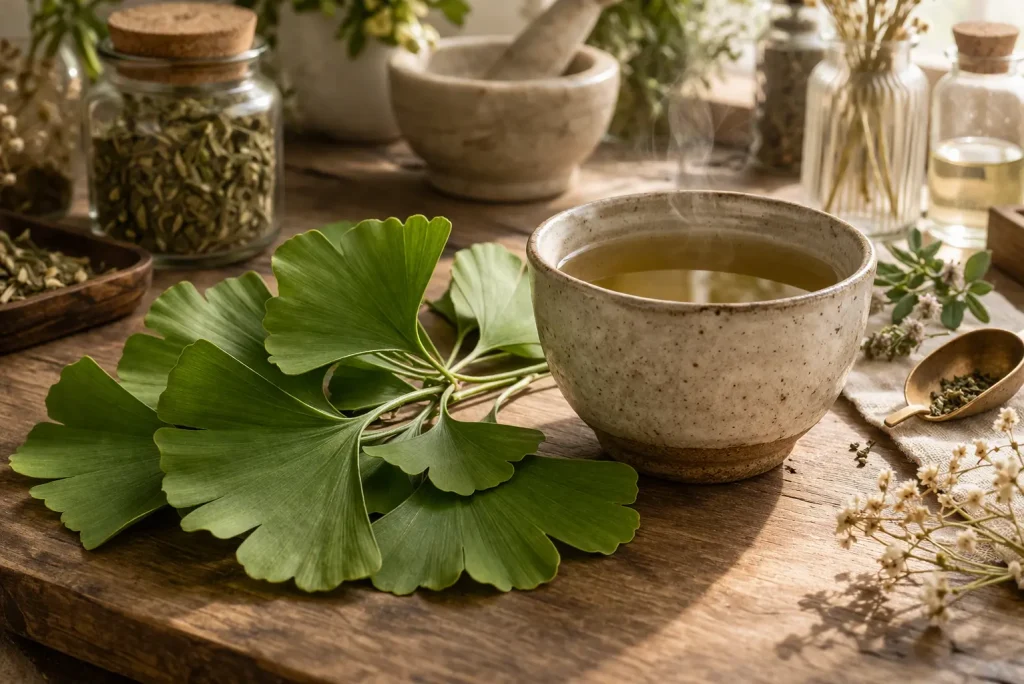
When people ask ginkgo biloba what is it good for, they are usually looking for a simple answer, but this old tree carries a long and layered herbal history. In traditional herbal practice, ginkgo biloba leaf has often been used in thoughtful, measured formulas rather than as a flashy standalone cup. Herbalists tend to value it for the way it fits into reflective, long-view plant traditions, especially when building leaf-forward blends for calm daily use. For tea makers, ginkgo is also interesting because it brings structure, light bitterness, and a dry green character that can be shaped into something balanced and elegant when paired well.
Unlike sweeter flowers or softer mints, ginkgo asks for a more careful hand. It benefits from good water control, modest ratios, and supporting herbs that round out its edges without burying its identity. That makes it a rewarding ingredient for tea artisans, apothecary-style blenders, and anyone trying to build a blend with a botanical profile that feels rooted, intentional, and distinctive. Below, we will look at ginkgo biloba what is it good for in a traditional herbal sense, how herbalists commonly approach it, how to brew it well, and how to keep quality high from shelf to cup.
Ginkgo biloba what is it good for in traditional herbal practice
If you ask an herbalist ginkgo biloba what is it good for, the answer usually begins with tradition, not hype. Ginkgo comes from one of the oldest surviving tree lineages on earth, and its leaf has been respected in herbal traditions for its distinctive place in long-standing botanical practice. Herbalists often use it as part of composed blends rather than as a sweet, comforting single-herb tea.
In practical plant work, ginkgo is often approached as a supporting leaf with character. Its flavor is mildly astringent, slightly bitter, and green in a dry, woody way. That means it can help give a blend more backbone when lighter herbs feel too soft or when floral notes need grounding. For tea makers, this is often where ginkgo biloba what is it good for becomes most useful: it contributes shape, restraint, and a more serious herbal profile.
It also carries a kind of old-world apothecary appeal. A blend built with ginkgo can feel more intentional and less sugary or trend-driven. For specialty tea shops and herbal beverage makers, that matters. It gives the final cup a point of view.
Try adding Ginkgo Biloba Leaf C/S as the botanical backbone for a leaf-forward herbal infusion.
Why herbalists rarely use ginkgo alone
One of the most practical answers to ginkgo biloba what is it good for is this: it is often better in company. On its own, ginkgo can taste a little thin, dry, or blunt. In a thoughtful formula, though, it becomes much more graceful.
Herbalists often pair it with herbs that soften the finish, brighten the aroma, or give the cup more roundness. Gotu kola is one of the most natural companions because it shares a green, plant-driven character while bringing a smoother, earthier softness. Peppermint can lift the aroma. Chamomile can mellow the blend. Ginger can warm the middle of the cup. Lemongrass can bring a clean top note without pushing the formula into dessert territory.
This is where tea makers can move from theory to craft. A good ginkgo blend is rarely about making ginkgo disappear. It is about framing it well.
Try combining Organic Gotu Kola with ginkgo for a greener, more rounded herbal profile.
Try a touch of Organic Peppermint Leaf C/S when you want to brighten the finish without overwhelming the leaf character.
Flavor profile and how to build around it
To understand ginkgo biloba what is it good for, it helps to taste it the way a blender would. Ginkgo leaf usually gives a cup that feels dry, mildly bitter, herbaceous, and somewhat woody. It is not lush and it is not naturally fruity. It does not offer the easy charm of chamomile or peppermint. That is exactly why it can be useful.
Think of ginkgo as structure. It adds tension to a blend. If your formula is too soft, too sweet-smelling, or too diffuse, ginkgo can tighten it. A small amount can make a blend feel more botanical and less perfumed.
Good companions for ginkgo include:
- gotu kola for earthy-green continuity
- chamomile for softness
- peppermint for lift
- ginger for warmth
- lemongrass for brightness
- cinnamon chips for gentle depth
- holy basil for a slightly spicy, aromatic body
A practical starting point for a balanced daily-style blend is:
- 40% ginkgo
- 25% gotu kola
- 15% peppermint
- 10% chamomile
- 10% ginger
That blend gives you structure, aroma, and a softer landing on the palate.
Try layering in Chamomile Flowers when the blend needs a softer, rounder cup.
Try a small amount of Ginger Root C/S to add warmth and movement through the middle of the infusion.
Brewing ratios with grams and teaspoons
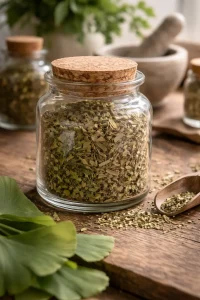 When people ask ginkgo biloba what is it good for, they often also need the practical next step: how do you brew it so it actually tastes good?
For a single 12 oz to 14 oz cup:
- 2 to 3 grams total loose herb
- about 2 to 2 1/2 teaspoons total, depending on cut size
A balanced ginkgo blend for one cup can be:
- 1 teaspoon ginkgo biloba leaf
- 1/2 teaspoon gotu kola
- 1/2 teaspoon peppermint
- 1/4 teaspoon chamomile
By weight, that is roughly:
- 1.2 grams ginkgo
- 0.6 grams gotu kola
- 0.4 grams peppermint
- 0.3 grams chamomile
For a larger 1 liter batch:
- 8 to 10 grams total herb
- about 3 1/2 to 4 1/2 teaspoons ginkgo-led blend
Water temperature:
- 200°F to 205°F
- about 93°C to 96°C
Steeping time:
- 6 to 8 minutes for a balanced cup
- 10 minutes for a stronger, more botanical extraction
If the blend includes more chamomile or peppermint, keep the steep slightly shorter. If it leans more into ginkgo and gotu kola, you can let it go a bit longer.
Try using Lemongrass C/S in very small amounts if you want a brighter top note in a hot or iced version.
How tea makers can use ginkgo in modern blends
For professional or semi-professional beverage makers, ginkgo biloba what is it good for becomes less about folklore and more about formulation. Ginkgo can help create blends that feel premium, botanical, and grown-up. It works especially well in:
- dry daily herbal tea blends
- iced tea concentrates
- apothecary-inspired loose-leaf jars
- sparkling herbal infusions
- tea service menus that want something more grounded than floral blends
For iced tea, ginkgo benefits from balance and dilution. Brew the base slightly stronger, then chill and pour over plenty of ice. A hint of cinnamon or lemongrass can make the profile feel more complete without turning it sweet.
For sparkling service, you can prepare a strong herbal infusion, chill it, then top with plain sparkling water just before serving. That is important because carbonation can exaggerate bitterness. In this context, the question ginkgo biloba what is it good for has a very practical answer: it gives sparkling herbal drinks a dry botanical spine.
Try adding Cinnamon Chips in a very restrained amount for deeper body in iced or sparkling herbal blends.
Try Holy Basil C/S for an aromatic herbal layer that complements ginkgo’s serious, leafy character.
Troubleshooting
Even a good formula can miss the mark. Here is how to adjust common issues.
Flat flavor
The blend may need a brighter top note. Add a small amount of peppermint or lemongrass. You can also reduce the steeping time slightly if the cup tastes dull rather than lively.
Too tart
This usually comes from an overly bright supporting herb or from adding acidic ingredients outside the dry blend. Ginkgo itself is not tart. Reduce citrusy or sharp companion herbs and keep the base more leaf-centered.
Over-carbonation
This only applies if you are using the infusion in a sparkling or lightly fermented beverage. Carbonation can sharpen bitterness and make the blend taste more aggressive. Chill fully before adding bubbles, and keep the herbal base softer and less concentrated.
Sediment
Cut-and-sifted herbs naturally throw some fine particles. Use a finer infuser, tea filter, or let the infusion settle briefly before pouring. Sediment is common in leaf-heavy blends.
Aroma loss
If the aroma feels weak, the herbs may be old, exposed to humidity, or blended too far in advance. Refresh the formula with more peppermint, chamomile, or holy basil, and check storage conditions.
Storage + Quality
Good storage answers half the question behind ginkgo biloba what is it good for, because poor storage can make even a well-chosen herb disappointing. Keep ginkgo and all companion herbs in airtight containers away from heat, light, and humidity. Thin leaves lose character fast when left in paper bags, open jars, or warm storerooms.
What to watch for:
- color should still look lively, not faded brown-gray
- scent should be clean and botanical, not dusty or flat
- texture should feel dry and crisp, not soft or damp
- blends should not smell stale, sweetly musty, or cellar-like
For small-batch tea makers, blending only what you need for a short production window often gives better results than premixing large volumes too early. Ginkgo keeps better than delicate flowers, but it still benefits from careful inventory rotation.
Use airtight packaging and label with a packed-on date if you are selling or gifting blends. Small operational habits protect flavor.
Safety
When discussing ginkgo biloba what is it good for, it is important to stay clear and responsible. Ginkgo has a long history in traditional herbal practice, but that does not mean every person or every use is appropriate. This article is about traditional use, beverage formulation, and tea craft. It is not medical advice.
Use compliant wording in product content and customer education. Say things like:
- traditionally used in herbal practice
- herbalists often use
- may support a balanced botanical routine
Avoid disease claims or language that suggests treatment, prevention, or cure. Anyone with health questions, medication concerns, pregnancy considerations, or individual sensitivities should speak with a qualified healthcare professional before using herbal products regularly.
For tea makers, this kind of clarity builds trust. A careful tone is not restrictive. It is professional.
Conclusion
So, ginkgo biloba what is it good for in traditional herbal practice? It is good for bringing a distinctive, structured botanical note into thoughtful herbal blends. Herbalists often value it not as a crowd-pleasing solo cup, but as a disciplined leaf that gives depth, dryness, and old-world plant character to a formula. For beverage makers, that makes it especially useful in apothecary-style teas, balanced iced infusions, and modern botanical blends that aim for elegance rather than sweetness.
The best results come from moderation, smart pairing, and careful brewing. Pair it with gotu kola for continuity, peppermint for lift, chamomile for softness, or ginger for warmth. Store it well, brew it with intention, and let the leaf do what it does best: add shape and seriousness to the cup. That is one of the clearest and most practical answers to ginkgo biloba what is it good for.
FAQ
What is ginkgo biloba what is it good for in herbal tea?
In herbal tea, ginkgo biloba what is it good for usually comes down to flavor structure and traditional plant use. It helps create a more botanical, grounded, leaf-forward blend.
Does ginkgo biloba taste good on its own?
Usually it is better in a blend. On its own, it can taste dry, slightly bitter, and a bit plain.
What herbs pair well with ginkgo biloba?
Gotu kola, peppermint, chamomile, ginger, lemongrass, cinnamon chips, and holy basil all pair well depending on the style you want.
How much ginkgo should I use per cup?
A practical starting point is about 1 teaspoon ginkgo within a 2 to 2 1/2 teaspoon total blend for a 12 oz to 14 oz cup.
Is ginkgo better hot or iced?
Both can work. Hot brewing highlights the leaf character, while iced service can feel cleaner and more refreshing with the right supporting herbs.
Why does my ginkgo blend taste too bitter?
The steep may be too long, the water too hot for too long, or the blend may need softer companion herbs like chamomile or peppermint.
Can I use ginkgo in sparkling herbal drinks?
Yes, but keep the infusion balanced. Too much concentration plus carbonation can make bitterness stand out.
How should I store ginkgo leaf?
Keep it airtight, dry, and away from heat, light, and humidity. Watch for fading color and aroma loss as quality cues.