Olive Leaves Tea Side Effects: What to Know First
Olive leaves tea side effects are worth understanding before you make this earthy, gently bitter infusion part of your routine. Olive leaf has a long place in traditional herbal practice, especially in Mediterranean herbal culture, where leaves were valued for their clean aroma, dry green character, and steady bitterness. For modern tea drinkers and small-batch beverage makers, olive leaf can be a rewarding herb to work with, but it is not one to brew carelessly. Strength, steep time, serving size, and pairings all shape the final cup. A balanced infusion can feel crisp, leafy, and pleasantly structured. An overdone one can turn sharp, drying, or simply too intense for some palates.
Herbalists often think of olive leaf as a plant that benefits from restraint and good blending. It is rarely at its best when pushed too hard. That matters for both flavor and comfort. In this guide, you will find practical brewing ratios, sensory cues, quality tips, and a straightforward discussion of olive leaves tea side effects in a way that stays useful for home brewers, tea blenders, and anyone building thoughtful herbal recipes. You will also see where gentle companions can soften the profile and make the cup more enjoyable.
What olive leaf tea tastes like and why that matters
Olive leaf tea is usually dry, green, woody, and lightly astringent. Depending on the cut, age of the leaf, and brewing method, it can lean grassy, savory, or faintly mineral. That flavor profile is part of why olive leaf is often blended instead of served alone. Unlike a soft floral tisane, it has structure. Unlike a strongly roasted botanical, it does not hide mistakes. Every extra gram and every extra minute shows up in the cup.
This is one reason olive leaves tea side effects are often tied to preparation as much as the herb itself. When the brew is too concentrated, some people notice a rougher finish, a drying mouthfeel, or an unsettled stomach. A milder cup usually tastes cleaner and is easier to enjoy. Beverage makers who work with bitter herbs already know this principle well: balance is not just about taste. It can also shape how the body receives the tea.
For a brighter profile, many blenders like a citrus edge. A small amount of lemon peel c/s can lift the cup without overpowering the leaf. For a greener and more rounded infusion, olive leaf c/s works well as the base in simple Mediterranean-style tea blends.
Olive leaves tea side effects: the most common things people notice
Most discussions of olive leaves tea side effects come down to a few practical issues. The first is digestive discomfort. Bitter, tannic, or overly strong herbal infusions can feel heavy or irritating when taken on an empty stomach, especially in large servings. The second is flavor fatigue. Olive leaf has a clean but persistent bitterness that not everyone enjoys daily. The third is simple overbrewing, which can create a tea that feels harsher than intended.
Some people also notice that a strong cup feels too drying. That sensation is often less about the herb being “bad” and more about extraction. When leaf material sits too long in hot water, the cup becomes more aggressive. In production-minded herbal work, this is why test batches matter. A tea that tastes medicinal, hard, or flat is often just over-extracted.
Another point worth noting is that olive leaf is sometimes approached as if more is always better. In classic herbal craft, that is rarely true. Plants with a firm bitter backbone tend to reward moderation. If you are new to it, start with a smaller serving and a lighter steep. That alone solves many first-time complaints associated with olive leaves tea side effects.
To soften the cup naturally, try a little licorice root c/s for sweetness and body. If you prefer a fresher, more meadow-like finish, lemon balm leaf can make olive leaf feel more approachable.
Best brewing ratios for a smoother cup
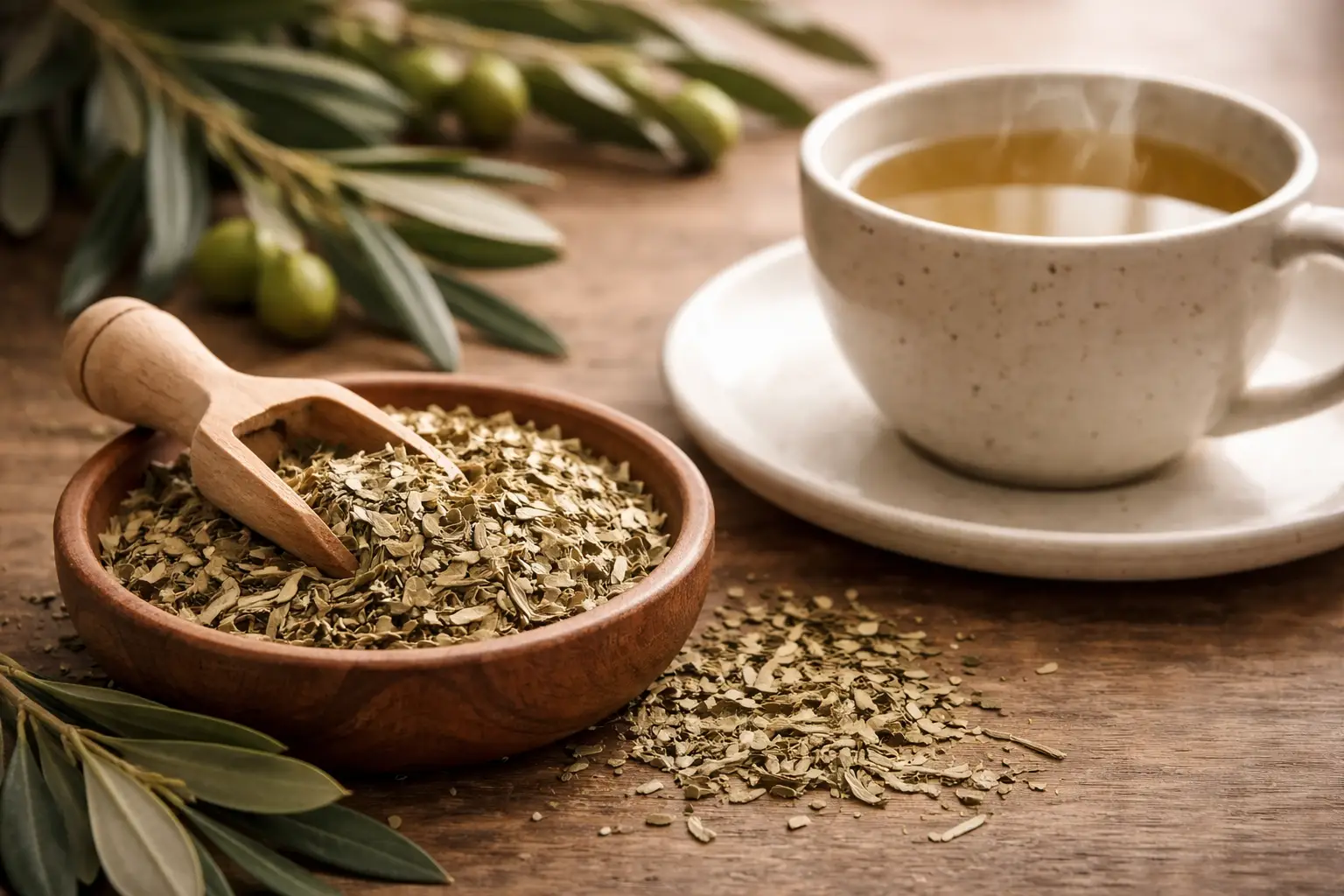 A practical starting point for olive leaf tea is 3 to 4 grams of olive leaf c/s per 250 milliliters of water. That is about 1.5 to 2 teaspoons, depending on cut size and density. For a lighter daily-style infusion, stay closer to 3 grams. For a stronger, more structured cup, use 4 grams but shorten the steep.
A balanced beginner ratio looks like this:
3 grams Olive Leaf C/S (about 1 1/2 teaspoons)
0.5 to 1 gram Lemon Peel C/S (about 1/4 to 1/2 teaspoon)
250 ml water at 90 to 95°C
Steep 6 to 8 minutes, covered
For a larger teapot batch:
12 grams Olive Leaf C/S (about 6 teaspoons)
2 grams Lemon Peel C/S (about 1 to 1 1/2 teaspoons)
1 liter water at 90 to 95°C
Steep 7 minutes, then strain fully
These ratios help reduce the chance that olive leaves tea side effects will show up as bitterness, harshness, or a cup that feels too strong to finish. Covering the vessel helps preserve aroma, while full straining keeps the extraction from running on in the pot.
If you want a softer middle note, chamomile flowers can round the edges without making the blend overly floral. For a slightly warmer, kitchen-herbal character, ginger root c/s adds gentle depth in small amounts.
When to drink it and how much to start with
The simplest way to avoid olive leaves tea side effects is to treat olive leaf like a structured herb rather than a casual filler tea. Start with a modest serving. For many people, one cup made with the lighter ratio is enough to evaluate flavor and comfort. It is also sensible to drink it after food rather than on an empty stomach, especially if you tend to be sensitive to bitter or astringent beverages.
For new drinkers, smaller portions are often more revealing than large mugs. A 150 to 200 milliliter serving lets you judge whether the herb suits you without overcommitting. If the cup feels pleasant, you can always make another infusion on a different day and compare. Good herbal practice is often slow and observational.
This matters because olive leaves tea side effects are not always dramatic. Sometimes the signal is simply that the tea feels too drying, too concentrated, or not personally agreeable. Those are still useful observations. A plant does not need to be extreme to be the wrong fit at a certain strength.
For a calmer evening-style blend, a touch of oatstraw c/s can make the cup feel gentler and more rounded. If you want to keep the profile green and aromatic, spearmint leaf can add freshness without burying the olive note.
How tea makers can blend olive leaf without losing its character
Olive leaf can disappear in loud blends, so the trick is not to cover it completely. Think in terms of support, not disguise. A good olive leaf blend usually keeps the leaf as the frame while allowing one or two softer botanicals to shape the edges. Citrus peels brighten. Mild flowers soften. Sweet roots fill the middle. Gentle mints lift the finish.
A reliable small-batch blending framework is:
Bright and clean
70% Olive Leaf C/S
20% Lemon Peel C/S
10% Lemon Balm Leaf
Soft and rounded
65% Olive Leaf C/S
20% Chamomile Flowers
15% Licorice Root C/S
Fresh and green
75% Olive Leaf C/S
15% Spearmint Leaf
10% Oatstraw C/S
This is where olive leaves tea side effects become a formulation issue as much as a tea issue. A blend with too much peel can feel sharp. Too much root can make it heavy. Too much leaf can make it uninviting. The best olive leaf tea blends keep the bitterness clean, not punishing.
If you are building a tea line or testing recipes for repeat use, olive leaf c/s deserves bench trials with more than one steep time. A blend that tastes perfect at six minutes may feel too rough at ten.
Troubleshooting
Flat flavor usually means the leaf is old, the water was too cool, or the blend needs a brighter companion. Add a little lemon peel c/s or refresh your stock with greener, more aromatic leaf material.
Too tart is less common with olive leaf alone and usually comes from an unbalanced blend. Reduce peel content, shorten steep time, and check whether another botanical is creating a sour impression.
Over-carbonation is not relevant to plain tea, but it matters if you are using olive leaf in a sparkling herbal soda base or a fermented beverage experiment. In those cases, do not let bitterness tempt you into excess sugar to compensate. Keep formulas controlled and bottle only when fermentation is stable.
Sediment is often a cut-size issue. Fine particles from c/s material can slip through strainers and keep infusing in the cup. Use a finer filter or decant carefully after steeping.
Aroma loss usually points to poor storage, stale ingredients, or leaving the teapot uncovered. Olive leaf is subtle. Protecting volatile aroma matters more than many people expect.
When olive leaves tea side effects seem to be mainly about taste, troubleshooting the process often fixes the experience.
Storage + Quality
Store olive leaf in an airtight container away from humidity, heat, and direct light. A cool pantry shelf is better than a sunny counter. Even a good herb can lose its charm quickly if it sits in a warm kitchen absorbing moisture and ambient odors.
Look for leaf material that still has a clean green-olive tone rather than a tired brown cast. The scent should be dry, leafy, and slightly savory, not dusty or dull. Good olive leaf c/s should pour cleanly, with a natural plant look rather than a powdery, exhausted appearance. If the aroma has faded, the tea often tastes flat and harsher at the same time because freshness is gone but bitterness remains.
These quality checks matter because people sometimes blame olive leaves tea side effects on the herb when the real problem is poor storage or old material. Fresh herbs usually brew with more clarity and less muddiness.
For tea makers working in batches, keep opening and closing to a minimum. Smaller refill containers preserve quality better than repeatedly exposing one large bag.
Safety
Olive leaf tea belongs in the category of traditional herbal beverages, not miracle drinks. It is best approached with common sense. Keep the language simple: herbalists often use olive leaf in teas, but that does not mean every person should drink it in every amount.
Olive leaves tea side effects may include digestive discomfort, a strong bitter response, or a tea that simply feels too drying for your palate. People who are pregnant, nursing, taking medications, or managing a health condition should use extra caution and ask a qualified healthcare professional before making regular use of concentrated herbal teas. That is especially true when a tea is consumed often rather than occasionally.
No medical claims are needed to respect the herb. Good safety practice starts with moderate brewing, reasonable serving size, and attention to personal response. In traditional herbal craft, listening to the body is part of the method.
Conclusion
Olive leaves tea side effects are easiest to avoid when you brew with restraint, choose fresh material, and let the herb work in balance rather than excess. Olive leaf can make a beautiful, grounded cup with a clean Mediterranean feel, but it asks for thoughtful handling. Start light, steep carefully, and use supporting botanicals when needed. For most tea makers, the best approach is not chasing strength. It is finding the point where olive leaf tastes clear, settled, and pleasantly structured. When you understand olive leaves tea side effects in practical terms, you can enjoy the herb with more confidence and make blends that are both flavorful and easier to drink.
FAQ
What are the most common olive leaves tea side effects?
The most common olive leaves tea side effects people notice are bitterness, digestive discomfort from overly strong tea, and a drying mouthfeel.
Can I drink olive leaf tea on an empty stomach?
Some people can, but many prefer it after food. Bitter herbal teas often feel smoother when taken with or after a meal.
How much olive leaf should I use per cup?
A solid starting point is 3 grams, or about 1 1/2 teaspoons, per 250 milliliters of water.
Why does my olive leaf tea taste harsh?
Usually because it was brewed too strong, steeped too long, or made with older leaf material.
What blends well with olive leaf tea?
Lemon peel, lemon balm, chamomile, spearmint, licorice root, ginger root, and oatstraw all pair well depending on the style you want.
Is olive leaf tea naturally sweet?
No. It is usually more earthy, leafy, and bitter than sweet.
How should I store olive leaf c/s?
Keep it airtight, dry, and away from heat and light so the aroma and color stay intact.
Is olive leaf tea the kind of herb you should drink daily?
That depends on the person, the strength, and the serving size. Start modestly and pay attention to how the tea feels for you.