Marshmallow Root Tea Recipe for a Smooth Herbal Cup
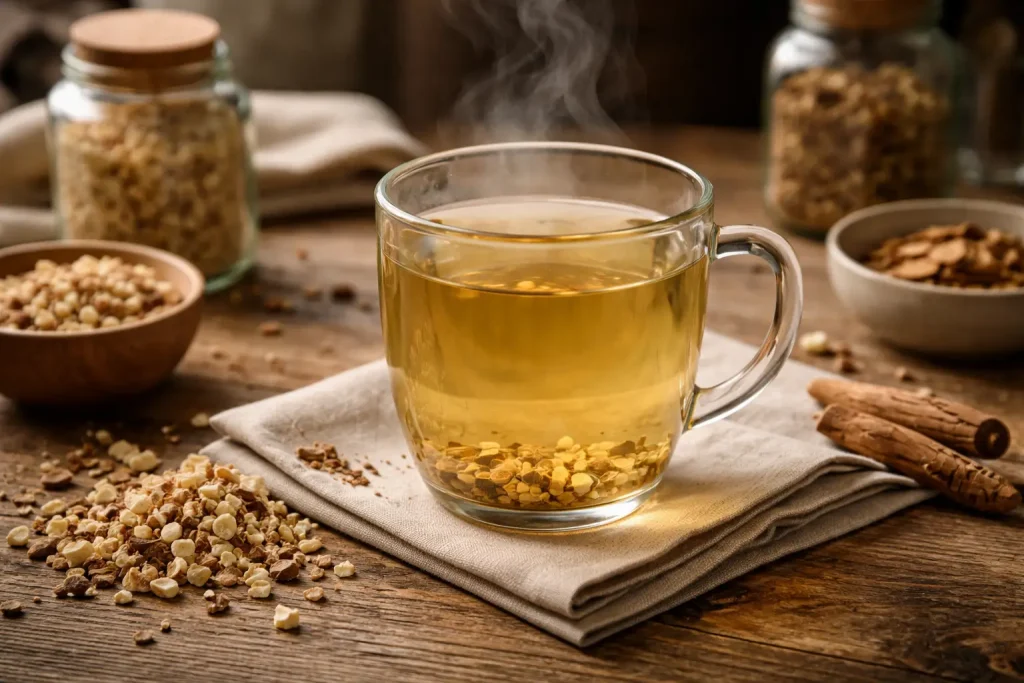
A good marshmallow root tea recipe begins with patience, gentle handling, and an appreciation for texture as much as flavor. Unlike sharper roots that push themselves forward in the cup, marshmallow root offers a softer character. It brews pale, silky, and quiet, with a round mouthfeel that herbalists and tea makers have valued for generations. When paired with licorice root, the infusion gains a deeper sweetness and a fuller body without becoming heavy. This makes it especially useful for anyone who enjoys mellow herbal cups, soothing evening blends, or simple base formulas that can be dressed up with flowers, spices, and leaves.
For practical tea making, marshmallow root is also an interesting ingredient because it behaves differently from many kitchen herbs. It can be steeped warm, but it also responds beautifully to longer, cooler extractions that draw out its signature smoothness. That makes it a strong candidate for slow-brewed home tea, café-style herbal service, and small-batch blending work. This guide walks through a reliable marshmallow root tea recipe with exact ratios, brewing methods, flavor adjustments, and production-minded details that help the final cup stay balanced, aromatic, and clean.
Why marshmallow root works so well in tea
Marshmallow root has a light earthiness, a faint sweetness, and a tender body that feels almost velvety in water. Herbalists often value it not for loud flavor, but for what it contributes to structure. In a blend, it can soften rough edges, round out astringent notes, and give the impression of a more complete cup. That is one reason it pairs so naturally with licorice root, which adds sweetness and depth without requiring sugar.
In practical blending, marshmallow root works best when you let its subtle qualities lead. Very aggressive spices or strongly sour ingredients can bury it. Gentle companions tend to perform better. Try adding licorice root c/s when you want a naturally sweet backbone and more body in the cup.
For a more floral version, a small amount of chamomile flowers can make the infusion feel softer and more golden without taking over. If you want a slightly sunny finish for visual appeal and delicate aroma, a pinch of calendula petals fits naturally into this style of blend.
Core ingredients and exact ratios
The simplest version of this tea only needs two ingredients and clean water. That said, the ratio matters because marshmallow root is mild and licorice root can easily dominate if overused.
Basic single-mug formula
Use this ratio for one generous mug, about 12 ounces to 14 ounces of finished tea:
6 grams marshmallow root c/s (about 3 teaspoons)
2 grams licorice root c/s (about 1 teaspoon)
350 ml hot water (about 1 1/2 cups)
This gives you a balanced starting point. The marshmallow root remains the heart of the cup, while licorice root supports it.
Small-batch teapot formula
For a teapot yielding about 1 liter:
18 grams marshmallow root c/s (about 9 teaspoons or 3 tablespoons)
6 grams licorice root c/s (about 3 teaspoons)
1 liter water
This marshmallow root tea recipe scales well because the ingredients are forgiving, but small adjustments still matter. If you want the cup less sweet, reduce licorice root by 25 percent. If you want more body, increase marshmallow root by 2 to 3 grams per liter rather than pushing the licorice.
For added warmth in cooler weather, a light touch of cinnamon chips can give the blend a round bakery-like edge. If you want a brighter finish without losing the root-forward profile, try a little ginger root c/s in very small amounts.
How to make a warm marshmallow root tea recipe
The warm infusion method is the easiest daily approach. It brings comfort and aroma quickly, and it suits people who want an herbal cup without planning hours ahead.
Measure your marshmallow root and licorice root into a teapot, infuser, or heat-safe jar.
Heat water to about 90 C to 95 C. Full boiling water can work, but slightly below boiling often gives a smoother result.
Pour the water over the herbs.
Cover immediately to protect the aromatic elements.
Steep for 12 to 15 minutes.
Strain well and serve.
Covering the vessel matters more than many people realize. Even in a mild root tea, aroma escapes fast. A lid keeps the cup from tasting hollow. This is especially useful when you are preparing tea for customers or guests and want consistency from batch to batch.
If you prefer a slightly richer profile, let it go to 18 minutes. Beyond that, the licorice may start to lead too strongly. A practical marshmallow root tea recipe should taste calm and rounded, not overly sweet or muddy.
For an earthy meadow-style variation, a pinch of mullein leaf can lighten the body and lift the aroma. Used gently, it keeps the blend herbal and airy rather than dense.
Cold infusion for a silkier texture
Many herbalists favor cool or room-temperature extraction for marshmallow root because it highlights the plant’s smooth, almost cushiony quality. This method requires more time, but the result is elegant and refined.
Cold infusion method
8 grams marshmallow root c/s (about 4 teaspoons)
2 grams licorice root c/s (about 1 teaspoon)
500 ml cool filtered water
Combine the herbs and water in a glass jar. Cover and let sit for 4 to 8 hours in the refrigerator, or overnight for a fuller texture. Shake gently once or twice during the infusion. Strain through a fine mesh filter or cloth.
This version of a marshmallow root tea recipe is paler in color but often more pleasing in mouthfeel. It can be served cool, or warmed gently without boiling. Tea makers working on small bottled herbal lines or café concentrates may prefer this method because it produces a clean, stable flavor base that can later be paired with gentle spices or floral accents.
To add a soft golden note, try a little calendula petals in the final hour of infusion rather than the full steep. That keeps the color bright and the aroma light.
Flavor building for tea makers and blenders
A quiet tea does not have to be a boring tea. In fact, marshmallow root is valuable because it gives you room to build. Its mild profile makes it useful for layered blends where texture matters as much as top notes.
Think in terms of structure:
Marshmallow root gives body and softness
Licorice root gives sweetness and depth
Flowers add lift
Spices add shape
Leaves add freshness
A practical way to work is to keep marshmallow root at 60 percent to 75 percent of the formula, then build around it with restraint. If the blend turns too floral, you lose the root character. If it turns too spicy, you lose the creamy calmness that makes the cup distinctive.
Try adding ginger root c/s when you want a gently warming finish for colder service menus. Use chamomile flowers when you want a tender, honeyed floral note that suits evening tea. A small amount of cinnamon chips can make the profile feel more familiar to customers who enjoy comforting pantry flavors.
This is where a production-minded marshmallow root tea recipe becomes useful. Once the base ratio is set, you can create seasonal or signature versions without rebuilding the whole formula from scratch.
Serving ideas and batch preparation
 This tea can be served several ways depending on the setting. At home, it shines as a simple mug infusion. In a tea business or apothecary-style service, it works well as a house blend, a calm evening option, or a soft botanical base for custom menus.
For hot tea service
Prepare a liter at a time and hold it warm, not boiling. Overheating dulls the softer notes and can make the licorice seem flat rather than naturally sweet.
For iced tea
Brew the warm method at 1.5 times strength, then pour over ice. This prevents the finished drink from tasting washed out. If desired, add a very small amount of ginger root c/s for lift.
For concentrate
Use 30 grams marshmallow root c/s and 8 grams licorice root c/s per liter. Steep covered for 20 minutes, strain well, and refrigerate. Dilute to taste before serving. This can be useful for tea bars, recipe testing, or quick service workflows.
A marshmallow root tea recipe also adapts nicely to blended service with floral garnish. A few visible chamomile flowers or calendula petals in the dry mix can improve shelf appeal while still keeping the cup grounded in roots.
Troubleshooting your brew
Even a simple herbal tea can go slightly off if the method is careless. These are the most common issues and the easiest ways to correct them.
Flat flavor
Usually this means too much water, stale herbs, or a steep that was too short. Increase marshmallow root slightly, cover the vessel during steeping, and check the freshness of your ingredients.
Too tart
This is uncommon in a pure marshmallow and licorice blend, but it can happen if you added bright supporting herbs. Reduce those additions and return to the base formula. This marshmallow root tea recipe is meant to be smooth, not sharp.
Over-carbonation
If you repurpose the tea as a base for a sparkling herbal soda or fermented beverage, too much sugar or active ferment can cause excess fizz. Chill fully before opening, use stronger bottles, and keep your secondary fermentation shorter. For most people, this tea is best enjoyed still.
Sediment
Fine particles from cut roots can settle in the cup. Use a finer strainer, let the tea rest for a minute after steeping, or filter through cloth for clearer service.
Aroma loss
This often comes from steeping uncovered or storing herbs poorly. Always cover the infusion and keep dried ingredients away from light, moisture, and kitchen heat.
Storage + Quality
Good herbs make better tea. Because this blend relies on subtle texture and quiet sweetness, ingredient quality matters a great deal. Marshmallow root should look pale beige to light tan, with a mild earthy scent. Licorice root should smell sweet, woody, and fresh rather than dusty.
Store both ingredients in airtight containers away from humidity, direct sun, and strong kitchen odors. Amber glass, lined tins, or sealed kraft pouches work well. In humid environments, open containers only briefly and reseal them right away.
Watch for quality cues:
Color fading toward dull gray can signal age
Weak scent often means flavor loss
Clumping suggests moisture exposure
Excess powder at the bottom of the bag can lead to cloudy brews
If you are building a house blend, mix only what you can use within a reasonable time so the aromatic details stay lively. A well-kept marshmallow root tea recipe depends as much on storage as on steeping.
For a prettier dry blend that still suits practical use, a small amount of calendula petals can help visual presentation without overwhelming the cup. For a softer aromatic finish, chamomile flowers remain one of the easiest pairing options.
Safety
This article is for culinary and traditional herbal use. It is not medical advice, and this tea is not intended to diagnose, treat, cure, or prevent any disease. Herbalists often use marshmallow root and licorice root in traditional preparations, but individual tolerance, preferences, and routines vary.
If you are choosing herbs for regular use, keep portions moderate and source from reputable suppliers. For commercial serving, label ingredients clearly and avoid making disease or treatment claims in menus, product descriptions, or packaging. When developing blends for others, simple sensory language is usually best: smooth, mellow, earthy, floral, lightly sweet.
That approach keeps your marshmallow root tea recipe both appealing and compliant.
Conclusion: keeping the cup simple and beautiful
The best marshmallow root tea recipe is not the most crowded one. It is the one that lets the plant speak in its own gentle way. With the right ratio of marshmallow root and licorice root, careful steeping, and a little restraint in your pairings, you get a tea that feels soft, calm, and complete. It is easy to make at home, but it also has real value for tea makers who care about texture, balance, and batch consistency.
Start with the basic formula, taste carefully, and then adjust with a light hand. A pinch of flower, a touch of spice, or a cooler extraction can open new directions without losing the character that makes this marshmallow root tea recipe worth returning to.
FAQ
What is the best marshmallow root tea recipe for beginners?
A simple beginner version is 6 grams marshmallow root c/s and 2 grams licorice root c/s in 350 ml hot water, steeped covered for 12 to 15 minutes.
Can I make marshmallow root tea without licorice root?
Yes. The tea will be milder and less naturally sweet, but it still works well on its own.
Is marshmallow root better hot or cold infused?
Both methods work. Warm infusion gives more aroma, while cold infusion often gives a silkier texture.
How strong should marshmallow root tea taste?
It should taste mild, earthy, lightly sweet, and smooth. It is a subtle tea, not a bold one.
How long should I steep marshmallow root tea?
For the warm method, 12 to 15 minutes is a strong starting point. For cold infusion, 4 to 8 hours works well.
Why is my tea cloudy?
Cloudiness usually comes from fine root particles or extra powder in the cut herb. Use a finer filter for a clearer cup.
Can I blend marshmallow root with flowers and spices?
Yes. Chamomile, calendula, cinnamon, and ginger all pair nicely when used lightly.
How many exact ingredients do I need for a basic marshmallow root tea recipe?
Only two dried herbs are needed for the basic version: marshmallow root c/s and licorice root c/s.