Mace Spice: What It Is and How to Cook With It
Mace spice is one of the most overlooked jars in the spice cabinet. Many home cooks have heard the name, yet few know where it comes from. In fact, mace grows on the same tree as nutmeg. This guide explains what mace is, how it tastes, and how to use it well.
What Is Mace Spice?
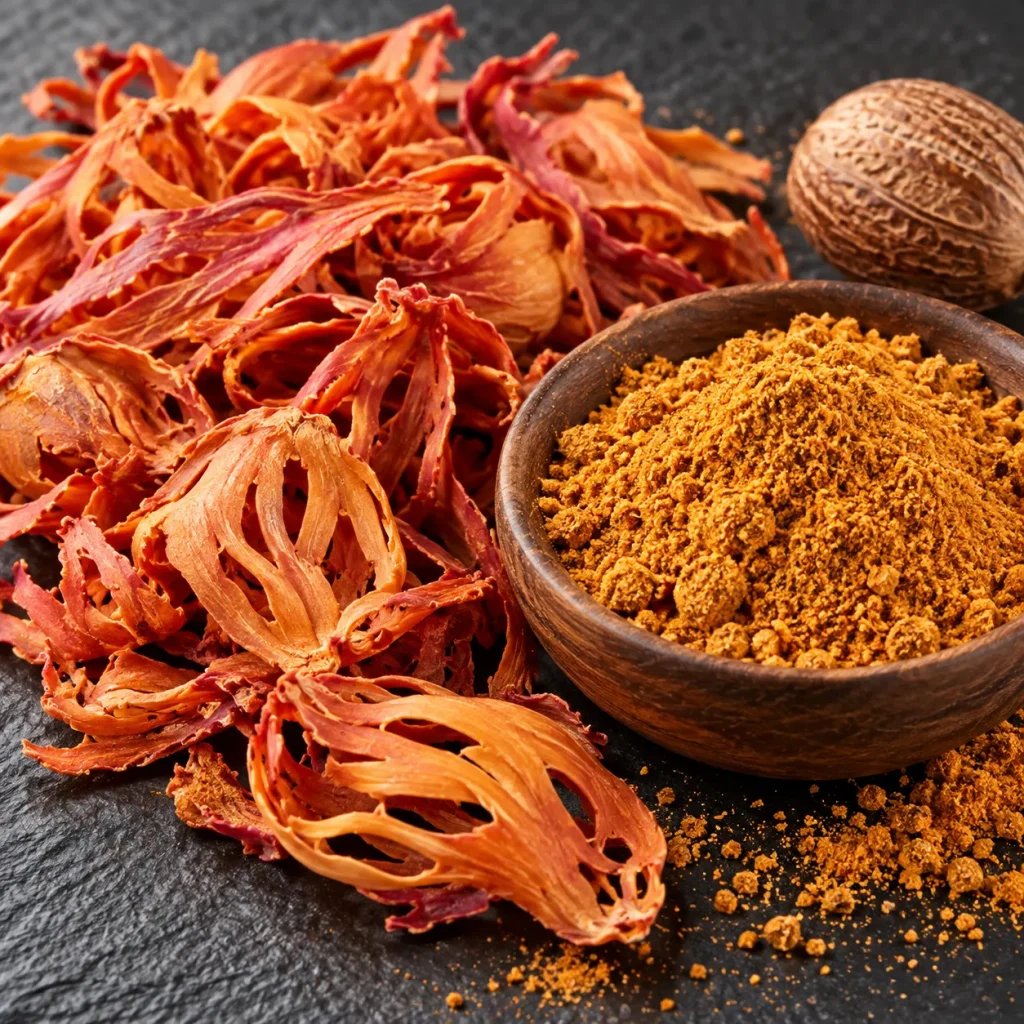
Mace comes from the nutmeg tree, Myristica fragrans. The tree produces a fruit that looks a little like an apricot. Inside that fruit sits a hard seed, which is the nutmeg. Wrapped around the seed is a bright red, lacy coating called the aril. That coating is mace.
Workers peel the aril off by hand and then dry it in the sun. As it dries, the color shifts from crimson to a warm orange or tan. The dried pieces are called blades. You can buy them whole or ground into a fine powder.
How Does Mace Spice Taste?
Mace tastes similar to nutmeg, but it is softer and more delicate. Many cooks describe it as warm and slightly sweet. It also has light notes of pepper, citrus, and pine. Because of this, it works well in dishes where nutmeg might feel too heavy.
The aroma is bright and fragrant. For that reason, a small pinch goes a long way. Start with less than you think you need, then taste and adjust.
Mace vs Nutmeg: What Is the Difference?
Both spices come from the same fruit. Even so, they are not identical. Here is a quick comparison:
- Source: nutmeg is the seed, while mace is the lacy coating around it.
- Flavor: nutmeg is sweet and bold, whereas mace is lighter and more peppery.
- Color: ground mace is orange, so it adds a warm tint to pale sauces.
- Price: each fruit yields far less mace than nutmeg, so mace usually costs more.
You can swap one for the other in most recipes. However, use about a third less nutmeg when it replaces mace. If you want to learn more about the seed itself, read our guide to nutmeg powder in cooking.
How to Use Mace Spice in the Kitchen
Mace spice shines in both sweet and savory cooking. Here are some classic ways to use it:
- Baking: add a pinch to pound cake, donuts, sugar cookies, or pumpkin pie.
- Cream sauces: stir it into béchamel, cheese sauce, or creamy soups.
- Meat dishes: season sausages, meatballs, and slow-cooked stews.
- Pickling: drop a whole blade into brines for pickles and chutneys.
- Warm drinks: simmer a blade with cinnamon and cloves in mulled cider.
Mace also appears in many spice blends. For example, cooks in Europe use it in pâté and potted shrimp. Meanwhile, Indian and Middle Eastern kitchens add it to garam masala and rice dishes.
Whole Mace Blades vs Ground Mace
Each form has its own job. Whole blades keep their aroma longer. They are ideal for broths, brines, and drinks, where you can remove them before serving. Try our organic whole mace for these slow recipes.
Ground mace, on the other hand, blends evenly into batters and sauces. It is the easier choice for baking. Our organic mace powder is ready to measure and use.
Simple Mace Spice Recipe: Spiced Warm Milk
This easy drink shows off the gentle flavor of mace. Follow these steps:
- Pour 2 cups of milk or plant milk into a small pot.
- Add 1 whole mace blade, 1 cinnamon stick, and 2 whole cloves.
- Warm the milk over low heat for 8 to 10 minutes. Do not let it boil.
- Stir in honey or maple syrup to taste.
- Strain out the spices and serve warm.
For the cinnamon, we suggest organic Ceylon cinnamon sticks. Also, organic whole cloves add a deeper warmth.
How to Store Mace
Like most spices, mace loses aroma over time. Keep it in an airtight jar, away from heat and light. Whole blades stay fresh for about two to three years. Ground mace, by contrast, is best within one year. For more tips, see our guide on dried herbs shelf life.
Mace Spice FAQ
Is mace the same as nutmeg?
No. Both come from the same fruit, but nutmeg is the seed and mace is the red coating around it. Mace tastes lighter and a little more peppery.
Can I substitute nutmeg for mace?
Yes. Nutmeg is the closest swap. Use about two thirds of the amount of mace the recipe asks for, since nutmeg has a stronger flavor. You can find organic nutmeg powder in our shop.
What does mace spice go well with?
Mace pairs well with cinnamon, cloves, ginger, cardamom, and black pepper. It also works nicely with cream, butter, pork, chicken, and baked fruit.
Final Thoughts
Mace spice deserves a place next to nutmeg and cinnamon. It adds a soft, warm flavor to cakes, sauces, and drinks. Start with a pinch, explore a few recipes, and you may soon reach for it every week.