Fenugreek Testosterone Supplement: What Brands Know
Fenugreek testosterone supplement products occupy a significant shelf in the sports nutrition market. Trigonella foenum-graecum, commonly known as fenugreek, is a leguminous plant that has been used for centuries in cooking and traditional medicine. Today, it is one of the most popular botanical ingredients in testosterone support formulations.
Why Fenugreek Testosterone Supplement Products Dominate
Fenugreek has become a go-to ingredient for testosterone support supplements for several reasons. It has a substantial body of published research, it is cost-effective to source, and consumers recognize the name. These three factors make it attractive to supplement brands entering or expanding in the men’s health category.
The active compounds of interest are furostanolic saponins, particularly a group called fenuside. Standardized fenugreek extracts used in supplements are typically standardized to saponin content, with common specifications ranging from 20% to 50% saponins.
Available Forms for Supplement Manufacturing
Fenugreek is available to manufacturers in multiple forms:
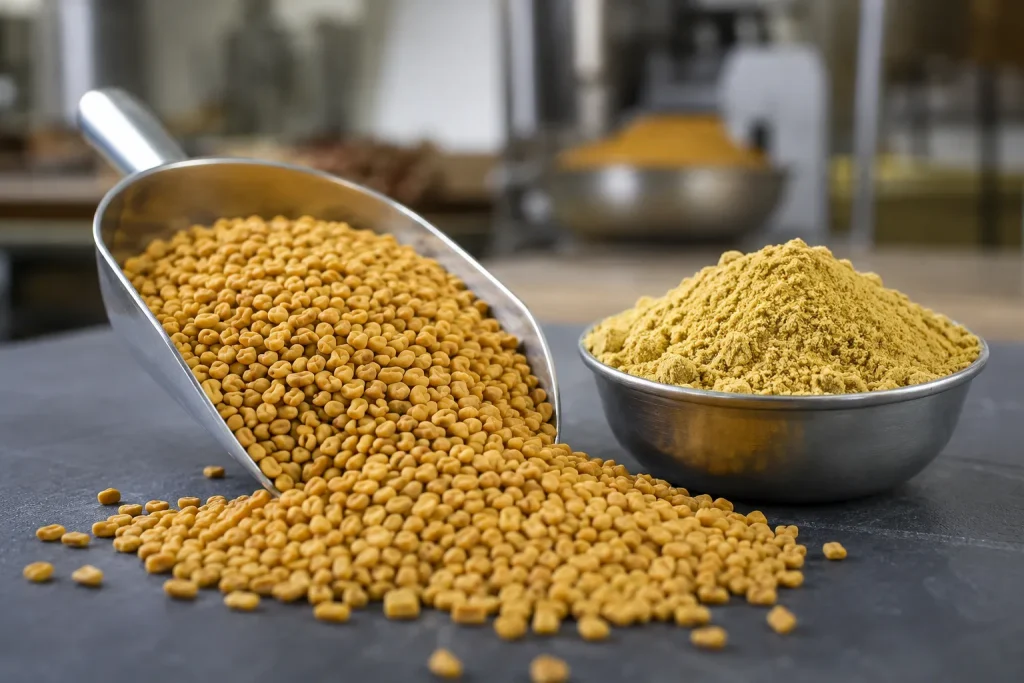
- Whole seeds: Used primarily in food products and teas. Not ideal for supplement capsules due to the large serving size needed.
- Seed powder: Ground whole seeds providing the full spectrum of compounds. Organic fenugreek powder works well in powder-based formulations.
- Standardized extract: Concentrated to specific saponin levels. This is the preferred form for testosterone support products because it delivers active compounds at effective concentrations in a manageable serving size.
- Branded extracts: Testofen and other branded fenugreek extracts carry proprietary research and require licensing agreements.
Organic fenugreek seeds serve as raw material for extraction or can be used directly in whole-food supplement formats.
Fenugreek Testosterone Supplement Stacking Strategies
Fenugreek rarely appears as a standalone ingredient in testosterone support products. Instead, it typically joins a multi-ingredient formula. Common co-ingredients include:
- D-aspartic acid
- Zinc and magnesium (ZMA formulas)
- Ashwagandha root extract
- Tongkat ali (Eurycoma longifolia)
- Vitamin D3
- Boron
In particular, the combination of fenugreek with ashwagandha is particularly popular, as both ingredients have independent bodies of research related to men’s health and athletic performance. This pairing appears in many top-selling testosterone support products.
Regulatory Considerations
Testosterone support supplements face heightened regulatory scrutiny. The FDA monitors claims made about products in this category, and brands must be careful to stay within the boundaries of structure/function claims rather than making drug claims.
Acceptable structure/function claims might reference “supporting healthy testosterone levels already within the normal range” or “promoting male vitality.” Claims suggesting that a product treats low testosterone or increases testosterone beyond normal levels cross into drug claim territory and invite regulatory action.
Moreover, third-party testing and certification through organizations like NSF International or Informed Sport add credibility and help differentiate products in a crowded market. Athletes subject to drug testing prefer products with these certifications.
Sourcing and Market Dynamics
India is the world’s largest producer of fenugreek, accounting for the majority of global supply. Rajasthan, Gujarat, and Madhya Pradesh are the primary growing regions. Pricing for fenugreek seed remains relatively stable compared to other botanical ingredients, making it a cost-effective formulation component.
Organic fenugreek commands a moderate premium over conventional. As a result, for brands positioning in the premium segment of the testosterone support market, organic certification strengthens the clean-label narrative. For price-competitive products, conventional fenugreek offers significant cost savings without compromising on active compound content.
What dosage of fenugreek is used in testosterone support products?
Published research on fenugreek and testosterone has used daily dosages ranging from 500 mg to 600 mg of standardized extract. Whole seed powder formulations typically use higher amounts (1,000 mg to 2,500 mg daily) to compensate for lower saponin concentration. Supplement brands generally follow these research-backed dosage ranges when formulating their products.
Does fenugreek have any taste or odor issues in supplements?
Yes, fenugreek has a distinctive maple syrup-like aroma and slightly bitter taste. In capsule or tablet form, this is generally not an issue. However, powder-based products require flavor masking strategies. The odor can also transfer to packaging materials, so manufacturers should use appropriate barrier packaging to prevent cross-contamination with other products in the line.
Can fenugreek be marketed to both men and women?
While testosterone support marketing targets men, fenugreek has a broader application profile. It appears in women’s health products, digestive support formulas, and blood sugar support supplements. Brands looking to maximize their fenugreek sourcing investment can develop multiple product SKUs targeting different demographics. Take our adaptogen quiz to explore complementary ingredients for your product line. Brands can also develop multiple product SKUs targeting different demographics, each with appropriate positioning and claims.