Tulsi Tea Benefits: The Sacred Herb Brewed
Tulsi tea benefits have been celebrated in Ayurvedic medicine for thousands of years, making this herb one of the most revered botanicals in Indian culture. Also known as holy basil, tulsi has a rich, complex flavor profile that ranges from clove-like and peppery to floral and slightly sweet, depending on the variety. Today, herbalists, tea drinkers, and wellness enthusiasts around the world reach for tulsi as a daily ritual.
This guide covers the different tulsi varieties, how to brew them properly, what the tea tastes like, and how to incorporate it into your daily routine.
What Is Tulsi?
Tulsi, or Ocimum tenuiflorum, is a flowering plant in the basil family native to the Indian subcontinent. It has been a central plant in Hinduism for centuries, grown in courtyards and temples as a sacred herb. The name “tulsi” means “the incomparable one” in Sanskrit, a testament to the deep reverence this plant commands.
There are several distinct varieties of tulsi, each with its own flavor profile and growing characteristics. The three most commonly used in herbal tea are Krishna, Vana, and Rama. Each variety offers a slightly different taste experience, which is why many tea drinkers enjoy blending them.
The plant produces small leaves and delicate purple or white flowers. Both the leaves and the flowers are used in tea preparation. The herb grows as an annual in temperate climates and as a perennial in tropical regions.
Tulsi Tea Benefits and Traditional Uses
The tulsi tea benefits recognized in Ayurvedic tradition are extensive. Practitioners have historically used the herb as an adaptogen — a botanical believed to help the body respond to stress more effectively. This traditional classification places tulsi alongside herbs like ashwagandha and rhodiola in the category of tonics used to support resilience and balance.
In folk traditions across India, tulsi tea has been prepared to support respiratory comfort during seasonal changes. The herb’s aromatic essential oils give it a warming, clearing quality that makes it a popular choice in autumn and winter blends. Many traditional households keep dried tulsi on hand year-round for this reason.
Tulsi is also valued for its use in digestive support blends. A cup of tulsi tea after meals is a common practice in parts of India, where the herb is believed to ease occasional digestive discomfort. Whether sipped plain or combined with ginger and cardamom, the herb adds both flavor and tradition to the after-dinner routine.
It is worth noting that while tulsi has a long history of traditional use, the current scientific research is still developing. Always consult a qualified healthcare provider for personalized guidance.
Tulsi Varieties: Krishna, Vana, and Rama
Understanding the different varieties helps you choose the right tulsi for your palate. Krishna tulsi is the most pungent of the three. It has a distinctly clove-like, almost spicy character with deep purple-tinged leaves. The flavor is bold and assertive, making it an excellent base for strong single-herb teas or spiced blends.
Vana tulsi, sometimes called forest tulsi or wild tulsi, has a lighter, more floral profile. Its flavor leans toward lemon and green herb notes, making it the most approachable variety for new tulsi drinkers. Vana tulsi blends beautifully with hibiscus, rose petals, and citrus peel.
Rama tulsi falls between the two. It is milder than Krishna but more complex than Vana, with a balanced, slightly minty sweetness. Many commercial “holy basil” teas use Rama tulsi as the primary variety because of its broad appeal.
You can explore single-variety teas with Tulsi Krishna cut and sifted and Tulsi Vana cut and sifted from Hatton Naturals, both available in bulk.
How to Brew Tulsi Tea
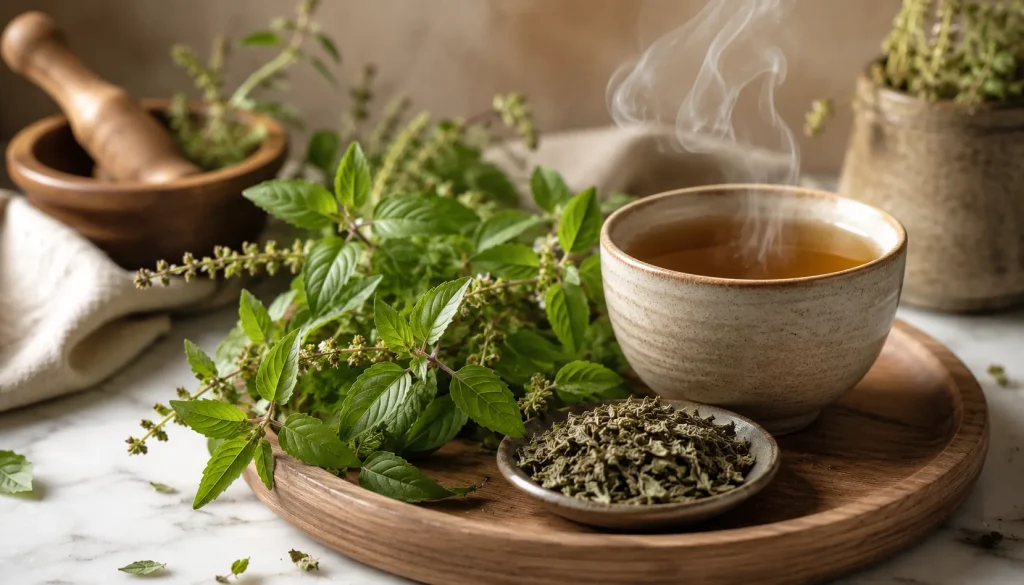
Brewing tulsi tea is simple. Use one to two teaspoons of dried tulsi leaves per eight ounces of hot water. Heat the water to about 200°F — just below a rolling boil. Pour the water over the leaves and steep for five to seven minutes.
Longer steeping brings out more of the clove and pepper notes, especially with Krishna tulsi. Shorter steeping preserves the lighter, more floral top notes. Experiment to find your preferred balance.
Strain the leaves and enjoy the tea plain or with a touch of honey. Tulsi pairs naturally with ginger, cardamom, cinnamon, and black pepper. These warming spices complement the herb’s aromatic oils and create a chai-like blend.
For enjoying the benefits of iced tulsi tea, brew a double-strength concentrate — two tablespoons per cup — then pour over ice. Add a squeeze of lemon and a drizzle of honey for a refreshing summer drink. Tulsi holds up well to cold temperatures and remains flavorful even when diluted.
Tulsi Powder: A Different Way to Use the Herb
Beyond loose-leaf tea, tulsi is also available as a powder. Tulsi Krishna powder can be stirred directly into warm water, smoothies, or yogurt without steeping or straining. This format is convenient when you want a quick preparation or plan to add tulsi to food recipes.
Use about half a teaspoon of powder per serving as a starting point. The flavor of the powder is concentrated, so a small amount goes a long way. It dissolves easily in warm liquids and blends smoothly into green smoothies, where its peppery basil notes complement spinach, cucumber, and citrus.
Tulsi powder also works well in spice rubs for grilled vegetables or meats, where it contributes a subtle herbal depth similar to Thai basil. This culinary use highlights how versatile the herb can be outside the teacup.
Blending Tulsi with Other Herbs
Tulsi blends exceptionally well with a wide range of other herbs. Its clove and pepper notes anchor spiced chai blends, where it pairs with ginger, black pepper, cardamom, and cinnamon. The combination creates a complex, warming cup that feels both familiar and unique.
For a calming evening blend, combine tulsi with chamomile and lavender. The floral notes of Vana tulsi work particularly well in this context. Add a touch of lemon verbena for brightness if desired.
A classic detox blend might include tulsi alongside peppermint and ginger. The three herbs together create a clean, refreshing cup with multiple layers of flavor. This combination is particularly popular in spring and summer when lighter, more invigorating teas are preferred.
Buying and Storing Tulsi
Quality matters when purchasing dried tulsi. Look for organically grown herb with a vibrant green color and a strong, clove-like aroma. The leaves should be intact — not overly dusty or powdery, which can indicate older stock. Bulk buying is economical for regular tea drinkers, provided you store it properly.
Store dried tulsi in an airtight container away from heat, light, and moisture. A glass jar in a pantry or cupboard works perfectly. Under good conditions, dried tulsi retains its flavor for up to two years. Check periodically for any loss of aroma, which signals that the herb has begun to oxidize.
Note: Tulsi has a long history of traditional use in Ayurvedic practice. This post is intended for educational purposes only and does not constitute medical advice. Consult a healthcare provider for guidance tailored to your individual health needs.
Frequently Asked Questions About Tulsi Tea Benefits
What does tulsi tea taste like?
Tulsi tea has a complex, layered flavor. Krishna tulsi is bold and clove-like with peppery warmth. Vana tulsi is lighter and more floral, with hints of lemon and green herb. Rama tulsi falls in between with a mild, slightly minty sweetness. All three varieties share an aromatic quality that sets them apart from other herbal teas.
Can you drink tulsi tea every day?
Many people incorporate tulsi tea into their daily routine without issue. One to two cups per day is a typical amount for regular tea drinkers. If you are pregnant, nursing, or taking medications, check with your healthcare provider before adding any new herbal tea to your daily habit.
What is the difference between tulsi and regular basil?
Tulsi and culinary basil both belong to the Ocimum genus, but they are different species. Tulsi has a more complex, clove-like flavor with peppery and sometimes citrus notes. Culinary basil is milder and sweeter. Tulsi is used primarily as a medicinal herb in Ayurvedic tradition, while culinary basil is used mainly as a cooking spice.
Is tulsi tea caffeine-free?
Yes, tulsi tea is naturally caffeine-free. It makes an excellent choice for evening relaxation or for anyone who avoids caffeine. You can drink it at any time of day without concerns about sleep disruption.
Ready to explore the world of tulsi? Shop Tulsi Krishna, Tulsi Vana, and Tulsi powder at Hatton Naturals — bulk-sourced, organically grown, and ready to ship.