Cacao Ceremony Recipe: Prepare Raw Cacao
Cacao ceremony recipe guides have grown in popularity as interest in intentional drinking rituals expands beyond traditional tea and coffee culture. A cacao ceremony recipe rooted in Mesoamerican tradition uses minimally processed raw cacao — not commercial cocoa powder — to prepare a rich, complex, bittersweet drink. The result is a deeply flavored cup unlike anything you would find in a standard hot chocolate recipe.
The ancient Maya and Aztec civilizations developed ceremonial cacao traditions and regarded cacao as a sacred plant. Today, people around the world continue to share these traditions and incorporate cacao ceremony recipes into meditation practices, morning rituals, or social gatherings as a mindful alternative to caffeine-heavy drinks.
Understanding Ceremonial Cacao vs. Regular Cocoa
Not all cacao products are suitable for a cacao ceremony recipe. Commercial cocoa powder undergoes Dutch processing and high-heat treatment that removes many of the naturally occurring compounds in the raw bean. In contrast, ceremonial-grade cacao refers to minimally processed, whole-bean-derived products that preserve the full-fat, full-compound profile of the original cacao.
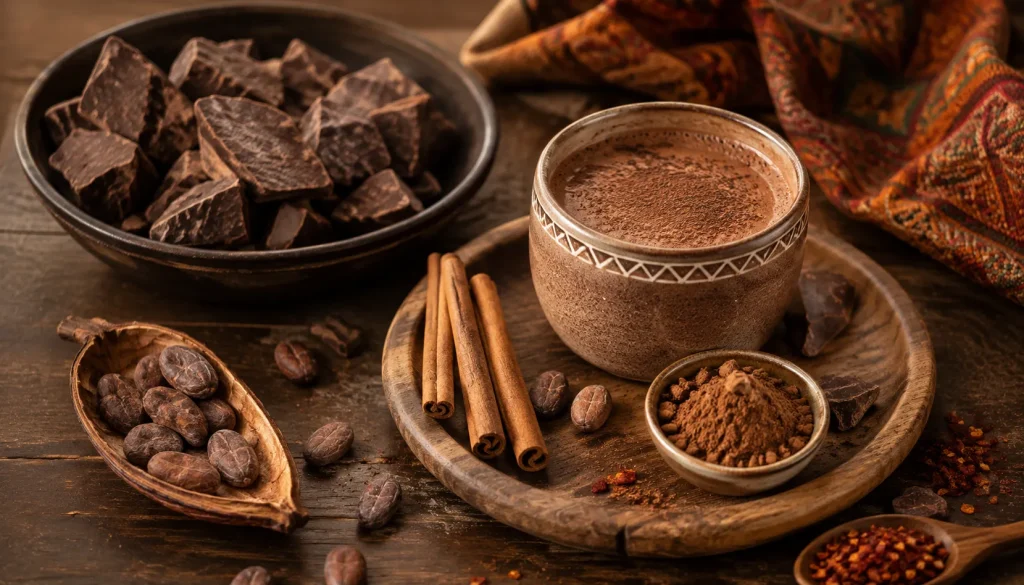
Three cacao products are typically used in ceremonial and culinary contexts: cacao beans, cacao nibs, and cacao powder. Each offers a different experience and preparation method. Cacao nibs are broken pieces of cacao beans that producers ferment, dry, and lightly roast. Producers make raw cacao powder by cold-pressing cacao beans to remove most of the fat (cacao butter) and then grinding the remaining solids into a fine powder. Both work well in a cacao ceremony recipe.
The Core Cacao Ceremony Recipe
This foundational recipe uses raw cacao powder. It serves one person and takes about ten minutes to prepare.
Measure one to two tablespoons of raw cacao powder into a mug or heat-safe cup. Add a pinch of ground cinnamon and a very small pinch of cayenne pepper — both are traditional cacao ceremony additions. Optionally, add a pinch of sea salt to balance and deepen the chocolate notes.
Heat one cup of water or milk to approximately 150-160°F. Do not boil — high heat can make raw cacao bitter and degrade some of its naturally occurring compounds. Pour a small amount of the hot liquid over the cacao powder and whisk vigorously to form a smooth paste. This prevents lumping when you add the rest of the liquid.
Add the remaining liquid and whisk until fully incorporated and slightly frothy. Sweeten lightly if desired — coconut sugar, raw honey, or a small piece of piloncillo are traditional choices. The drink should retain its inherent bitterness rather than being sweetened to full sweetness like hot chocolate.
Using Cacao Nibs in a Ceremony Blend
Cacao nibs offer a different texture-based approach to a cacao ceremony recipe. They can be blended directly into warm liquid using a high-speed blender. Add two tablespoons of cacao nibs with one cup of warm water, a pinch of cinnamon, and optional sweetener. Blend on high for 30-45 seconds until smooth and creamy.
The blending method emulsifies the natural cacao butter in the nibs, creating a drink with a richer, more velvety mouthfeel than powder alone. Moreover, blending introduces air and creates a light foam on the surface, which was historically valued in Mesoamerican cacao preparation. Ancient vessels found at archaeological sites show evidence of this high-pour aeration technique.
The Ceremonial Intention
A cacao ceremony recipe is as much about the process as the product. Traditional ceremonies involve preparing the cacao with attention and intention, setting aside time for reflection, and drinking slowly rather than casually. Many facilitators begin a ceremony with a brief moment of silence, an expression of gratitude, or a stated intention for the session.
In modern wellness contexts, the cacao ceremony has been adapted for home use as a mindfulness practice. You do not need a formal group setting to benefit from slowing down and drinking something prepared with care. A simple morning ritual of preparing and drinking ceremonial cacao in silence is one way to incorporate this practice into a daily routine.
Flavor Additions and Variations
Traditional Mesoamerican cacao drinks were often flavored with chili, vanilla, annatto, and various flowers. Contemporary cacao ceremony recipes draw from this tradition while incorporating modern flavoring preferences.
Popular additions include: ground cinnamon for warmth; cayenne or ancho chili for heat; vanilla extract for sweetness; cardamom for floral complexity; orange zest for brightness; and adaptogenic powders like ashwagandha or maca for those who want to create a more comprehensive morning botanical drink.
Coconut milk, oat milk, or almond milk can replace water as the liquid base for a creamier, more indulgent version. Furthermore, a tablespoon of coconut oil or cacao butter blended directly into the drink adds a silky richness and amplifies the natural fat-soluble compounds present in raw cacao.
Safety Disclaimer
Raw cacao and cacao products are foods with long culinary histories. Cacao contains theobromine and small amounts of caffeine, which are mild stimulants. As a result, people who are sensitive to caffeine or stimulants should start with a smaller serving — one teaspoon of cacao powder rather than two tablespoons — to assess their tolerance. Cacao is not recommended in large quantities for pregnant women, as theobromine can cross the placenta. This post is for culinary and informational purposes only and does not constitute medical advice.
Frequently Asked Questions
What is the difference between raw cacao powder and regular cocoa powder?
Cold-pressing raw cacao beans produces raw cacao powder while preserving more of the naturally occurring plant compounds. Manufacturers typically roast regular cocoa powder at higher temperatures and may process it with alkali (Dutch processing), which reduces acidity but also lowers some naturally present compounds. For a cacao ceremony recipe, raw cacao powder is the preferred choice.
How much cacao should I use per cup?
Ceremonial use typically involves 1-2 tablespoons of raw cacao powder per cup for a moderate serving. Experienced cacao ceremony facilitators may use up to 40-50g of cacao paste per person for a full ceremonial dose. Begin with a smaller amount if you are new to concentrated cacao beverages.
Can I use cacao nibs in place of cacao powder?
Yes, cacao nibs can be blended directly into warm water or milk to produce a rustic, textured ceremonial cacao drink. Blending at high speed for 30-45 seconds creates a smooth, emulsified beverage. Nibs provide a slightly different flavor profile — nuttier and more complex — compared to the cleaner bitterness of cacao powder.
What temperature should the water be for a cacao ceremony?
Keep the water or milk between 150-165°F. This is hot enough to dissolve the cacao and develop the flavor, but below the boiling point that can make cacao bitter and harsh. A cooking thermometer is helpful for precision, particularly when working with high-quality raw cacao.
Discover our full range of organic botanicals and superfoods to explore all the ingredients you need for an authentic cacao ceremony recipe at home.