Amla Powder Benefits: Ayurvedic Superfood
Amla powder benefits have been recognized in Ayurvedic medicine for thousands of years, making this Indian gooseberry powder one of the most revered botanicals in traditional South Asian wellness practice. Derived from the small, tart fruit of the Phyllanthus emblica tree, amla is a cornerstone ingredient in classical Ayurvedic formulations. Understanding amla powder benefits helps explain why this ancient superfood has found such a prominent place in modern wellness routines worldwide.
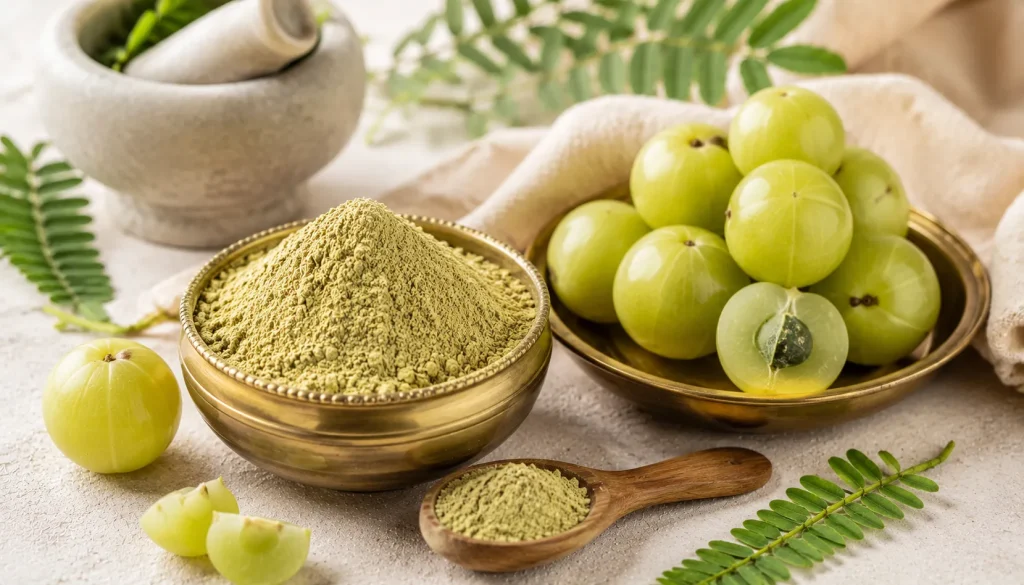
Amla, also known as amalaki or Indian gooseberry, is a small green fruit native to India and Southeast Asia. Dried and ground into a fine powder, it becomes a versatile ingredient used in tonics, hair treatments, skincare masks, and everyday beverages.
Traditional Amla Powder Benefits in Ayurveda
In the Ayurvedic tradition, amla is considered a tridoshic herb. It is said to balance all three doshas (Vata, Pitta, and Kapha). Herbalists value amla as one of the most important rasayana, or rejuvenating herbs, in the classical pharmacopeia. It is a primary ingredient in Triphala, the famous three-fruit Ayurvedic blend, alongside bibhitaki and haritaki.
Traditional texts describe amla as deeply nourishing for the tissues, particularly for hair, skin, and digestion. Furthermore, amla is one of the key herbs in Chyawanprash, the traditional Ayurvedic jam that has been used across India for generations as a daily wellness supplement.
Amla Powder for Hair Care
One of the most widely discussed amla powder benefits is its use in hair care. In traditional Indian beauty practices, amla powder has been applied directly to the scalp and hair as a conditioning treatment for centuries. Herbalists value amla for its high tannin content and its historical association with hair strength and shine.
To use amla powder as a hair mask, mix two to three tablespoons of organic amla powder with enough warm water or coconut oil to form a smooth paste. Apply to the scalp and hair, leave for 20-30 minutes, then rinse thoroughly. Besides that, any people combine amla powder with brahmi powder for a combined hair treatment, as both herbs are traditionally used together in Indian hair care.
Amla Powder for Skin
Beyond hair care, amla powder benefits also extend to topical skincare applications. For instance, traditional Ayurvedic beauty practitioners have long included amla in face masks and scrubs. Additionally, the powder has a mildly astringent quality, which has made it a popular ingredient in traditional complexion treatments.
You can make a simple amla face mask by mixing amla powder with plain yogurt and a small amount of turmeric. Apply for 10-15 minutes, then rinse with cool water. The astringency of amla combined with the lactic acid in yogurt has been used in folk beauty traditions across South Asia for generations.
Amla in Ayurvedic Wellness Blends
Amla powder is a foundational ingredient in several classical Ayurvedic formulations. Understanding these traditional blends contextualizes the amla powder benefits that Ayurvedic practitioners have described for centuries.
Triphala combines amla, bibhitaki, and haritaki in equal parts. It is one of the most widely used Ayurvedic preparations globally and has been studied extensively in modern academic research. Traditionally used as a daily digestive tonic, Triphala exemplifies how amla functions within a broader botanical system.
For those interested in a broader Ayurvedic adaptogen practice, ashwagandha powder is often paired with amla in traditional formulations. Additionally, moringa powder complements amla well as a modern superfood blend, providing a range of plant nutrients from two of the most revered botanicals in traditional medicine systems.
How to Use Amla Powder Daily
Incorporating amla powder into your daily routine is straightforward. The most common method is adding half a teaspoon to one teaspoon of amla powder to a glass of warm water or juice. The taste is distinctly sour and astringent. Some people find it easier to take blended into a smoothie or mixed with a small amount of honey to offset the tartness.
Alternatively, you can add amla powder to morning smoothies alongside other botanical powders. A blend of amla, moringa, and ashwagandha in warm almond milk with a teaspoon of honey is a popular modern Ayurvedic morning drink. The earthiness of moringa, the nuttiness of ashwagandha, and the tartness of amla create a complex but pleasant flavor when sweetened.
Storing Amla Powder
Store amla powder in an airtight container away from heat, light, and moisture. Properly stored, it maintains its quality for up to twelve months. Because amla is naturally high in tannins that can absorb odors, keep it in a separate sealed container rather than in an open spice rack. Refrigeration extends shelf life further in hot, humid climates.
Safety Disclaimer
Amla has served as both a food and a traditional wellness herb in Ayurvedic practice for thousands of years. People generally tolerate the fruit and its powdered form well when consumed in culinary and traditional amounts. However, amla is not a substitute for medical treatment, and this post does not constitute medical advice. Those taking blood thinners or other medications should consult a healthcare professional before using amla powder regularly in concentrated amounts. Pregnant and breastfeeding women should use amla in standard food amounts only and consult a qualified practitioner before using it therapeutically.
Frequently Asked Questions
What are the main amla powder benefits for hair?
In traditional Indian hair care, amla powder has been used for generations as a scalp treatment and hair conditioning agent. In particular, herbalists value it for its astringent and conditioning properties, as well as its longstanding association with hair strength in Ayurvedic literature. Additionally, it is traditionally combined with brahmi powder for a more comprehensive hair treatment.
How does amla powder taste?
Amla has a distinctly sour, astringent, and also a slightly bitter flavor. Fresh amla fruit is sometimes described as having five of the six tastes recognized in Ayurveda, with sourness being the most dominant. The powder retains this character, which is why many people mix it with honey or blend it into smoothies.
Can I mix amla powder with other botanical powders?
Yes. Amla blends well with many other traditional powders. Classic Ayurvedic pairings include brahmi, ashwagandha, shatavari, and moringa. In modern superfood blends, amla pairs well with spirulina, baobab, and acai for a broad-spectrum botanical drink.
How long does it take to see results from using amla powder?
Traditional Ayurvedic practice emphasizes consistency over time. Most traditional texts recommend using herbs like amla for a minimum of 30-90 days before expecting to notice changes. Hair and skin applications may show results more quickly with topical use. Typically within two to four weeks of regular application.
Explore our full range of Ayurvedic botanical powders to build your own traditional wellness blend alongside our organic amla.