Moringa Powder Benefits and Uses for Daily Green Drinks
A good green drink should feel like a small ritual, not a chore. The best ones taste alive: bright, clean, a little grassy, with enough citrus or floral lift to make you want the next sip. When people talk about moringa powder benefits, herbalists often point to its traditional place as a nutrient-dense leaf and a steady “green base” that plays well with citrusy aromatics. In practice, moringa is a gentle workhorse: it can be blended into smoothies, whisked into chilled teas, or layered into kombucha second fermentation (2F) in a way that’s repeatable for home brewers and small-batch makers.
In this guide, we’ll keep it sensory and practical. You’ll get exact ratios (grams and teaspoons), temperature notes, a few reliable “daily driver” recipes, and a strict kombucha 2F method with dosing ranges per 16 oz (473 ml) bottle. We’ll also pair moringa with a favorite aromatic: lemon myrtle, which adds a clean, lemony top note that makes greens taste like something you’d serve guests. Along the way, you’ll see simple product callouts you can use to build a consistent pantry for green drinks and kombucha.
What moringa tastes like and how to make it loveable
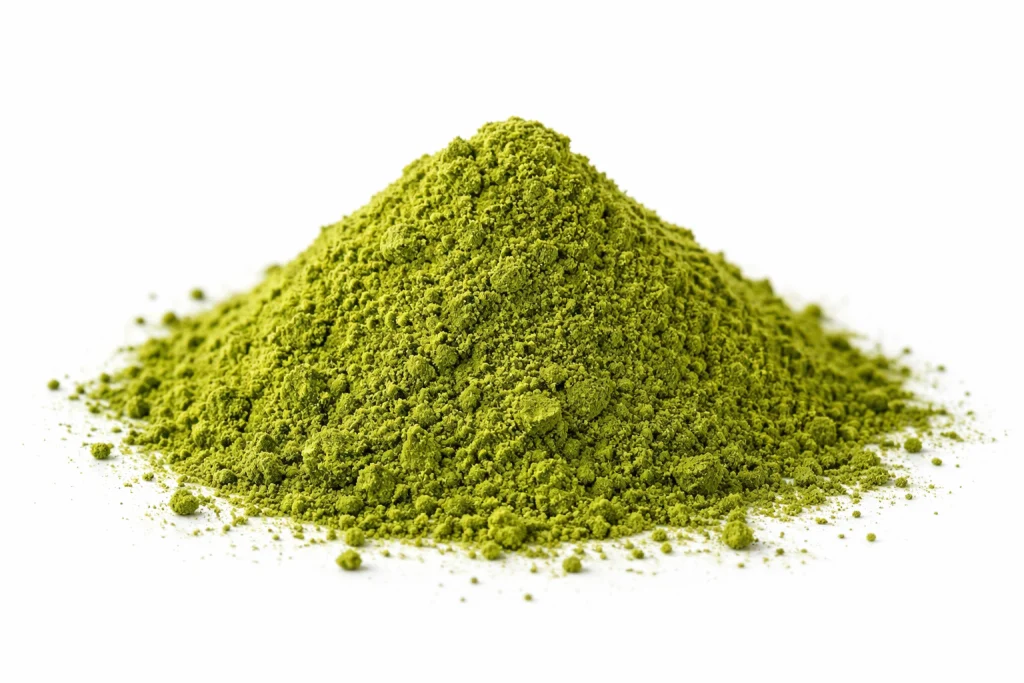
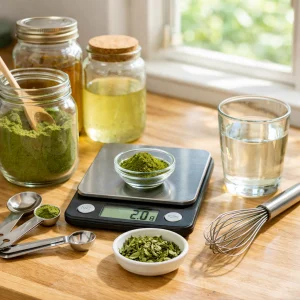 Moringa powder tastes like a clean leaf: grassy, slightly earthy, with a faint green-tea vibe and a mild dryness on the finish. If you dump it into water and hope for the best, it can read “pondy” or chalky. If you treat it like an herb and give it structure, it becomes elegant.
Three tricks make moringa taste better fast:
Acid first, greens second. A squeeze of citrus or a lemon-forward aromatic makes the green note pop instead of slump. Lemon myrtle is perfect for this. Try adding organic lemon myrtle as a bright top note for moringa drinks.
Whisk, don’t stir. Moringa clumps. A small frother, matcha whisk, or even a tight-lidded jar shake turns it silky.
Use a “bridge” flavor. Ginger, mint, and hibiscus bridge greens into something craveable. Try adding hibiscus flowers when you want tartness that makes moringa feel juicy.
If you’re here for moringa powder benefits, consider this your flavor training: once moringa tastes good, it’s easy to use daily.
Moringa powder benefits in everyday herbal routines
Herbalists tend to speak about moringa like they speak about nettle or alfalfa: a leafy ally that’s traditionally used as a nourishing plant. The practical “benefit” for daily life is simple: it’s an easy way to keep a consistent green habit without hauling out a salad bowl.
In traditional herbal practice, moringa is often used as:
A daily green base in small amounts (steady, not intense).
A supportive leaf paired with aromatics (citrus, mint) to improve palatability.
A blend component in powdered green mixes, where it adds color, body, and a mild leafy backbone.
For beverage makers, the most useful angle on moringa powder benefits is operational: it’s shelf-stable, easy to measure, and consistent across batches when you weigh it. That consistency matters if you’re making daily green drinks or dialing in kombucha 2F flavor the same way every time.
Your baseline: daily green drink ratios (grams + teaspoons)
This is the section you’ll come back to when you want “just tell me the numbers.”
Baseline moringa mix (8–12 oz / 240–355 ml):
Moringa powder: 2 g (about 1 teaspoon, leveled)
Cool water or coconut water: 8–12 oz (240–355 ml)
Acid: 1–2 teaspoons lemon juice (or a lemon-forward infusion)
Optional sweetener: 1–2 teaspoons honey or simple syrup, to taste
For a stronger green:
Moringa powder: 3–4 g (about 1½ to 2 teaspoons)
For beginners (lighter, smoother):
Moringa powder: 1 g (about ½ teaspoon)
Lemon myrtle “lift” (as an infusion):
Lemon myrtle: 1.5 g (about 1 teaspoon)
Hot water: 8 oz (240 ml)
Steep: 6–8 minutes, covered
Cool to room temp before mixing with moringa
Use 2–4 oz (60–120 ml) of this infusion as part of your liquid base. Try adding organic lemon myrtle when you want the green drink to taste sunny instead of swampy.
Production-minded tip: weigh moringa in grams, not teaspoons, once you find your sweet spot. moringa powder benefits are easier to enjoy when the texture stays consistent day to day.
Daily green drink recipes that don’t taste “healthy”
These are designed like beverage formulas: base, lift, body, finish. Keep the ratios, then swap ingredients like a pro.
 1) Moringa + Lemon Myrtle “Green Lemonade” (bright, clean)
 1) Moringa + Lemon Myrtle “Green Lemonade” (bright, clean)
Cool water: 10 oz (300 ml)
Moringa powder: 2 g (1 tsp)
Lemon myrtle infusion: 3 oz (90 ml)
Lemon juice: 2 tsp
Honey: 1–2 tsp
Pinch of salt (tiny, optional)
Whisk moringa with a splash of the infusion first, then add the rest. The salt trick makes the lemon note feel rounder, not sourer. Try adding organic lemon myrtle to build a citrus aroma that carries the whole drink.
2) Minty Green Cooler (refreshing, summer-friendly)
Cool water: 10 oz (300 ml)
Moringa: 2 g (1 tsp)
Mint tea (cooled): 3–4 oz (90–120 ml)
Lime juice: 1–2 tsp
Optional: 1 tsp sugar or syrup
Make a strong mint tea, cool it, then blend with moringa. Try adding peppermint leaf for a crisp finish that makes greens feel lighter.
3) Hibiscus-Green Spritz (tart, ruby-leaning)
Hibiscus tea (cooled): 6 oz (180 ml)
Water: 4 oz (120 ml)
Moringa: 1–2 g (½–1 tsp)
Lemon juice: 1 tsp
Simple syrup: 1–2 tsp (optional)
Hibiscus can dominate, so start with less moringa. This one is a great “gateway” if you’re still deciding whether you like the leafy note. Try adding hibiscus flowers for a tart backbone that makes moringa feel fruitier.
The smoothie method: texture control without a blender disaster
Smoothies are where moringa can feel luxurious, but only if you manage bitterness and mouthfeel. Think of moringa like cocoa powder: it needs a carrier.
Smoothie base rules:
Use fat + fruit to soften the leaf note (banana, mango, avocado, yogurt).
Add moringa after liquids begin moving, so it doesn’t stick to the blender walls.
Keep moringa modest. In smoothies, 2–3 g is usually plenty.
Moringa “Creamy Green” Smoothie (12–16 oz / 355–473 ml):
Milk or oat milk: 10 oz (300 ml)
Banana: 1 medium
Moringa powder: 2–3 g (1–1½ tsp)
Lemon myrtle infusion (cold): 2 oz (60 ml)
Ice: 1 cup
Optional: pinch cinnamon, 1 tsp honey
Blend smooth. Let it sit 60 seconds, then blend again briefly to reduce micro-clumps.
If you’re thinking about moringa powder benefits as a daily habit, smoothies are the “I forgot to eat” solution that still feels nourishing.
Kombucha 2F with moringa: strict, repeatable method
Moringa in 2F is about control. The powder can create sediment, and the green aroma can fade if you treat it like a throw-in. Here are two options, with Option A recommended for consistency.
Before you start: the baseline kombucha conditions
Use finished 1F kombucha that tastes pleasantly tart, not harsh.
Ideal bottling temperature: room temp kombucha, 68–78°F (20–26°C).
Use 16 oz (473 ml) bottles with consistent headspace (about 1–1.5 inches).
Option A (recommended): Tea concentrate dosing
This method gives you repeatable flavor without dumping powder into every bottle. You’ll make a small moringa-lemon myrtle concentrate, strain if you want, then dose.
Concentrate formula (makes enough for ~6 bottles):
Lemon myrtle: 6 g (about 4 tsp)
Hot water: 12 oz (355 ml) at ~190°F (88°C)
Steep covered: 7 minutes
Strain (recommended)
While it’s still warm (not hot), whisk in:
Moringa powder: 6–9 g total (about 3–4½ tsp)
Cool completely. You’ll have a green, aromatic concentrate.
Dosing per 16 oz (473 ml) bottle:
Concentrate: 1 to 2 tablespoons (15–30 ml)
Optional sugar for carbonation support: ½ to 1 teaspoon (2–4 g)
Start at 15 ml if you want subtle green. Go to 30 ml for a bolder profile. This is the most repeatable way to explore moringa powder benefits in kombucha without sacrificing clarity and consistency.
Bottling steps (repeatable):
Add concentrate to each bottle (weigh or measure).
Add optional sugar if your 1F is very dry.
Top with 1F kombucha, leaving 1–1.5 inches headspace.
Cap tight.
2F at 72–78°F (22–26°C) for 24–72 hours.
Chill fully before opening.
Consistency tips:
Weigh the concentrate batch and write it down.
Use batch notes: 1F tartness, dosing ml, 2F temp, 2F hours.
Taste one “tester” bottle at 24 hours, then decide whether to extend.
Try adding moringa powder and organic lemon myrtle together for a clean, lemony green profile that reads fresh instead of muddy.
Option B (optional): Direct botanicals in bottle
This is simpler but less predictable. It also increases sediment.
Per 16 oz (473 ml) bottle:
Moringa powder: 0.5–1 g (about ¼–½ tsp)
Lemon myrtle: 0.3–0.6 g (about ¼–½ tsp)
Optional sugar: ½ tsp (2 g)
Add botanicals first, then kombucha. Cap, 2F, and chill. Expect sediment. If you like a clearer pour, Option A wins.
Troubleshooting (flavor + fizz + sediment)
Even good batches have moods. Here’s how to debug without drama.
Flat flavor (tastes watered down):
Increase concentrate dose by 5–10 ml per bottle next time.
Make the lemon myrtle infusion stronger, not longer. Longer steeps can taste dull.
Add a tiny acid lift at serving (a squeeze of lemon) rather than overloading 2F.
Too tart:
Shorten 1F next batch or bottle earlier.
Add ½ tsp sugar in 2F to round edges and support carbonation.
Pair with floral or fruity notes like hibiscus. Try adding hibiscus flowers to soften the perception of sharpness.
Over-carbonation:
Reduce sugar additions (or skip them).
Shorten 2F time, especially in warm rooms.
Chill longer before opening, and open over a bowl.
Sediment (green layer at bottom):
Normal with moringa. Use Option A and strain the lemon myrtle before whisking in moringa for finer texture.
Pour gently and leave the last sip behind.
If sediment bothers you, lower moringa dose and rely on aroma from lemon myrtle.
Aroma loss (green smells “flat”):
Cover infusions while steeping.
Use fresh, airtight-stored aromatics.
Add lemon myrtle as a concentrate, not as a long-boiled tea.
These fixes keep moringa powder benefits enjoyable in the glass, not theoretical on a label.
Storage + quality: keeping moringa bright and lemon myrtle lively
Powders and aromatic leaves are humidity magnets. Treat them like you treat good tea: protect them from air, light, and moisture.
Moringa powder quality cues:
Color: vibrant green (not brown-olive).
Scent: fresh-cut leaf, not stale hay.
Texture: fine, not clumpy.
Lemon myrtle quality cues:
Scent: immediate lemon-citrus hit when you open the container.
Leaves: intact enough to still look like leaf, not dust.
Storage rules:
Airtight container, tight lid, minimal headspace.
Cool, dry pantry. Avoid above-stove storage.
Use a clean, dry scoop. No wet teaspoons.
If you’re making daily green drinks, pre-portioning can help:
Make 7 small packets or jars with 2 g moringa each for the week.
Keep lemon myrtle separate so its aroma stays potent.
Try adding moringa powder to your daily pantry lineup and keep it airtight so the flavor stays clean and the color stays lively.
Safety notes (compliant, practical, no medical claims)
Moringa is a food-style herb used traditionally in many cultures, and many people enjoy it as part of a daily routine. Still, every body is different.
Common-sense guidance:
Start small (½ tsp) and see how you feel.
If you’re pregnant, nursing, have a medical condition, or take medications, check with a qualified healthcare professional before making moringa a daily habit.
Keep your language grounded: moringa is traditionally used as a nourishing leaf and may support general wellness as part of a balanced diet. It’s not a treatment for disease.
For kombucha makers:
Keep sanitation tight. Clean bottles and tools matter more than any ingredient.
If a batch smells off (rotten, cheesy, or solvent-like), don’t force it. Discard and reset.
Enjoying moringa powder benefits should feel steady and supportive, not extreme.
Conclusion: making moringa a daily habit that actually sticks
The simplest way to experience moringa powder benefits is to make them practical: a baseline ratio you can repeat, a flavor partner that makes greens taste bright, and a small system you can maintain. Moringa plus lemon myrtle gives you that “green lemonade” effect, where the leaf note feels fresh instead of heavy. Start with 2 grams in a daily drink. Log what you like. Then, if you’re a kombucha maker, move into the concentrate-dosing 2F method so your bottles taste consistent week after week.
Keep it sensory. Keep it measured. Let the routine be calm. A good green drink is less about chasing perfection and more about showing up to the counter, whisking something alive into water, and taking a sip that feels like daylight.
FAQ
1) What are moringa powder benefits for daily green drinks?
In traditional herbal routines, moringa powder benefits are often described as supporting a nourishing, consistent “green habit” because it’s a shelf-stable leaf powder that’s easy to measure and use daily.
2) How much moringa should I use in a green drink?
A common starting point is 1 g (½ tsp) and a solid daily baseline is 2 g (1 tsp) in 8–12 oz liquid. If you like it stronger, go up to 3–4 g.
3) Does moringa need hot water?
Not necessarily. Many people prefer it cold or room temperature to keep the flavor fresh. If using hot water, let it cool a bit and whisk well to avoid clumps.
4) What pairs best with moringa for taste?
Lemon-forward and minty notes pair beautifully. Lemon myrtle, lemon juice, peppermint, ginger, and hibiscus all help moringa taste brighter and smoother.
5) Can I add moringa to kombucha 2F?
Yes. For consistency, use a tea concentrate dosing method (Option A) so you control flavor and reduce sediment. Direct powder in the bottle works but is less predictable.
6) How much moringa concentrate should I dose per 16 oz bottle?
Start with 15 ml (1 tbsp) per 16 oz (473 ml) bottle, then adjust up to 30 ml if you want a bolder green profile.
7) Why is there sediment in my moringa kombucha?
Moringa naturally settles. Use the concentrate method, strain your aromatic tea, and pour gently. Sediment is normal and mostly a texture preference issue.
8) How do I store moringa powder so it stays fresh?
Keep it airtight, cool, and dry. Look for vibrant green color and a fresh leafy aroma. Humidity and air exposure flatten flavor fast.