Loose Leaf Tea Storage: Keep Herbs Fresh
Loose leaf tea storage is one of the most overlooked aspects of building a quality herbal tea collection. You can purchase the finest wild-harvested botanicals and organic herbs in the world, but poor storage will degrade them within weeks. Understanding how to store loose leaf teas and dried herbs properly ensures that every cup you brew delivers the flavor and aroma the herb was intended to provide.
Why Proper Loose Leaf Tea Storage Matters
Dried herbs and teas are far more vulnerable to degradation than most people assume. Four primary enemies destroy herb quality: light, heat, moisture, and oxygen. Each of these factors breaks down the volatile aromatic compounds and essential oils that give herbs their characteristic flavor, aroma, and potency.
Light causes photochemical degradation of chlorophyll and aromatic compounds, turning green herbs yellow and stripping flavor rapidly. Heat accelerates oxidation and drives off volatile oils. Moisture promotes mold growth and can ruin an entire batch of herbs within days. Oxygen causes oxidative rancidity over time. Therefore, the goal of good loose leaf tea storage is to minimize exposure to all four of these factors simultaneously.
The Best Containers for Loose Leaf Tea Storage
The container you use is the single most important loose leaf tea storage decision you will make. Not all containers are equal, and the wrong choice can undermine even the best storage environment.
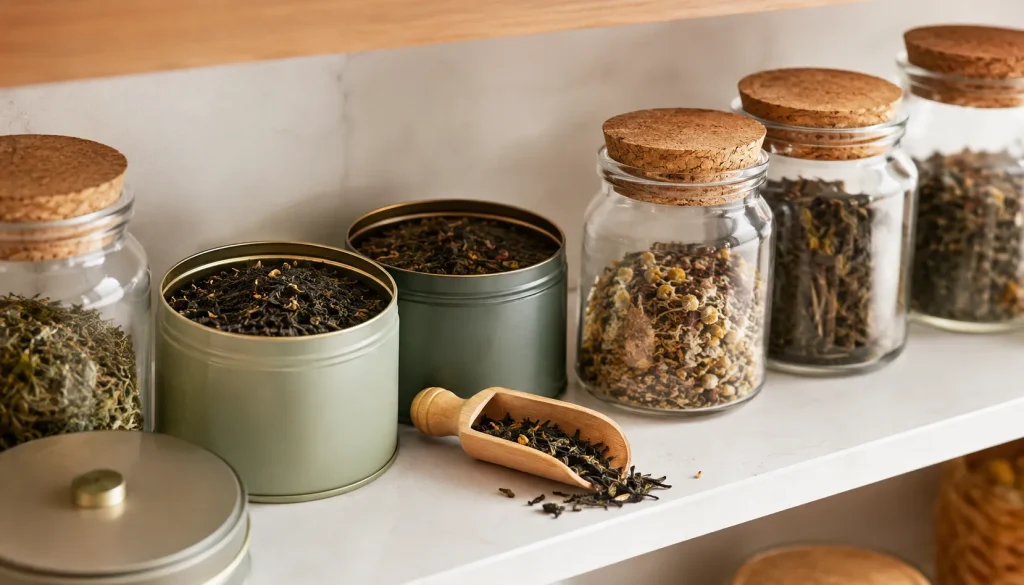
Airtight tins are the gold standard for most dried herbs and teas. Metal tins block light completely, provide a reliable seal against oxygen, and do not absorb or impart odors. Furthermore, they are durable, stackable, and available in sizes suited to small personal quantities or bulk storage.
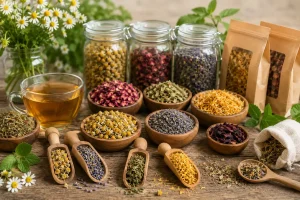
Dark glass jars with tight-fitting lids are an excellent alternative. The dark glass prevents light degradation while allowing you to see the contents at a glance. However, clear glass should be avoided unless you store the jar inside a cabinet or drawer — exposure to ambient light will degrade the herbs over time.
Avoid plastic bags and containers for long-term loose leaf tea storage. Plastic is not truly airtight over time, and many plastics can off-gas compounds that affect the aroma of sensitive herbs. Additionally, static electricity in plastic bags can cause fine herb particles to adhere to the bag surface, making it difficult to retrieve the full quantity.
Vacuum-sealed bags are useful for bulk storage of herbs you plan to keep for three months or more. Removing the air dramatically slows oxidation. Similarly, Mylar bags with oxygen absorbers can extend shelf life significantly for large quantities.
Temperature and Location
Temperature stability matters as much as the container you choose. Store loose leaf teas and dried herbs at consistent room temperature — ideally between 60°F and 75°F. Avoid storing herbs near the stove, oven, dishwasher, or any heat-generating appliance. Moreover, avoid locations that experience significant temperature swings throughout the day, such as windowsills or shelves near exterior walls in climates with cold winters.
A dedicated cabinet away from the stove is ideal for most home herb collections. Alternatively, a pantry with consistent cool temperatures works well. Refrigeration is generally not recommended for dried herbs because the temperature cycling as you open and close the refrigerator introduces condensation — and moisture is one of the greatest threats to herb quality.
Freezing is appropriate for long-term bulk storage if done correctly. Divide the herbs into individual use-size portions, seal them in airtight containers, and freeze. When you retrieve a portion, allow it to come to room temperature before opening to prevent condensation from forming on the herbs. As a result, you preserve quality without the moisture risks of refrigeration.
Labeling and Organization
One of the most practical aspects of good loose leaf tea storage is systematic labeling. Always label your containers with the herb name, date of purchase or harvest, and source. Without this information, it becomes impossible to rotate stock properly or identify which herbs need to be used before they age past their prime.
Use a first-in, first-out rotation system: when you add new stock, move older containers to the front. Consequently, you naturally use older herbs before they lose quality. This simple habit prevents waste and ensures you always have the freshest possible herbs available for brewing.
Additionally, keeping an inventory list — even a simple handwritten one — helps you track what you have on hand and what needs replenishing. Many herbal tea enthusiasts find that an organized storage system encourages them to brew more consistently, because they always know exactly what is available.
Storing Specific Herb Types
Different herb types have somewhat different storage needs. Delicate florals like chamomile flowers are among the most sensitive to light and heat. They should be stored in opaque containers and used within twelve months of purchase for the best flavor.
Root herbs and bark (such as cinnamon, valerian, or ginger) are generally more durable than florals. Their dense cell structure protects aromatic compounds more effectively. Therefore, they often remain flavorful for eighteen to twenty-four months under good storage conditions.
Leaf herbs — the largest category of loose leaf teas — fall somewhere in between. Well-stored leaf herbs like peppermint, lemon balm, and nettle typically remain at peak quality for twelve to eighteen months. Powdered herbs, however, degrade more rapidly than whole or cut herbs because the grinding process dramatically increases surface area exposure to oxygen. Store powders in the smallest practical container to minimize air space inside.
Signs That Herbs Have Lost Quality
Knowing how to recognize degraded herbs is just as important as knowing how to store them properly. The clearest sign of quality loss is aroma: fresh herbs should have a noticeable, characteristic smell when the container is opened. A flat, dusty, or completely neutral smell means the aromatic compounds have largely dissipated.
Visual signs include color fading (green herbs turning yellow or brown), dustiness, and the presence of any moisture clumping. Any sign of mold — visible fungal growth, musty odor, or unusual discoloration — means the entire batch should be discarded. Similarly, an unexpected off-smell, whether rancid, sour, or chemical, indicates the herbs have degraded beyond use.
Safety and Precautions
Properly stored dried herbs are generally safe to use throughout their shelf life. However, any herbs showing signs of mold, insect infestation, or unusual odor should be discarded immediately. Do not attempt to remove moldy sections and use the rest — mycotoxins can spread throughout a batch even when mold is not visibly present in all areas. Purchase herbs from reputable suppliers with good quality control practices, and inspect shipments upon receipt. This content is informational only and does not constitute medical advice.
Frequently Asked Questions
What is the best container for loose leaf tea storage?
Airtight metal tins and dark glass jars with tight-fitting lids are the best options for most home herb collections. Both block light and minimize oxygen exposure. Avoid clear glass containers unless stored in a completely dark cabinet, and avoid plastic bags for long-term storage.
Should I refrigerate my loose leaf teas?
Generally, no. Refrigeration introduces moisture risks due to temperature cycling and condensation. A cool, dark cabinet at consistent room temperature is better for most dried herbs and teas. Freezing in airtight, portioned containers is appropriate for long-term bulk storage when done correctly.
How long do loose leaf teas stay fresh?
This varies by herb type. Delicate florals like chamomile are best used within twelve months. Leaf herbs typically last twelve to eighteen months. Root and bark herbs can remain at peak quality for up to two years under ideal storage conditions. Powdered herbs degrade fastest and are best used within six to twelve months.
Can I store different herbs in the same container?
It is best to store each herb separately to preserve individual aromas and prevent flavor cross-contamination. Strongly scented herbs like peppermint or lavender can transfer their aroma to neighboring herbs stored in the same container. Keep your collection organized with clearly labeled individual containers for each herb.
Good loose leaf tea storage is a small investment of effort that pays back in every cup you brew. Visit our shop to stock up on fresh, quality botanicals and put your new storage knowledge to work immediately.