Neem Powder for Acne: Traditional Remedy and How to Use It
If you are looking for a plant-based approach to managing blemish-prone skin, neem powder for acne is one of the most well-documented options in traditional herbal practice. Neem, derived from Azadirachta indica, is native to the Indian subcontinent and has been used for thousands of years in Ayurvedic medicine for skin health, oral care, and general well-being. The leaf powder, made from finely ground dried neem leaves, carries the same bitter, pungent profile as the whole leaf and is traditionally used for oily, congested, and blemish-prone skin. In this guide, you will find everything you need to know about how to use neem powder for acne: what the tradition says, how to prepare it at home, which complementary herbs work best with it, and how to do it safely. Let’s get started.
The Traditional Case for Neem in Skincare
Neem has been described in ancient Ayurvedic texts as a “sarva roga nivarini,” loosely translated as a remedy for all ailments. While modern research is still catching up with thousands of years of traditional use, practitioners have long turned to neem for its purported ability to purify and clarify skin. Neem leaf contains a rich array of compounds including nimbin, nimbidin, nimbidol, and quercetin, which are studied for their properties in laboratory settings.
In traditional formulations, neem was applied topically as a paste made from fresh leaves or leaf powder to areas affected by pimples, blackheads, and excess oil. The bitter taste and pungent odor of neem are considered signs of its potency in Ayurvedic philosophy, where it is classified as a cooling herb that may help balance excess heat and oil in the body. Using neem powder for acne follows this same logic: applying a cooling, clarifying herb directly to congested or inflamed skin.
Why Neem Powder Is a Convenient Modern Alternative
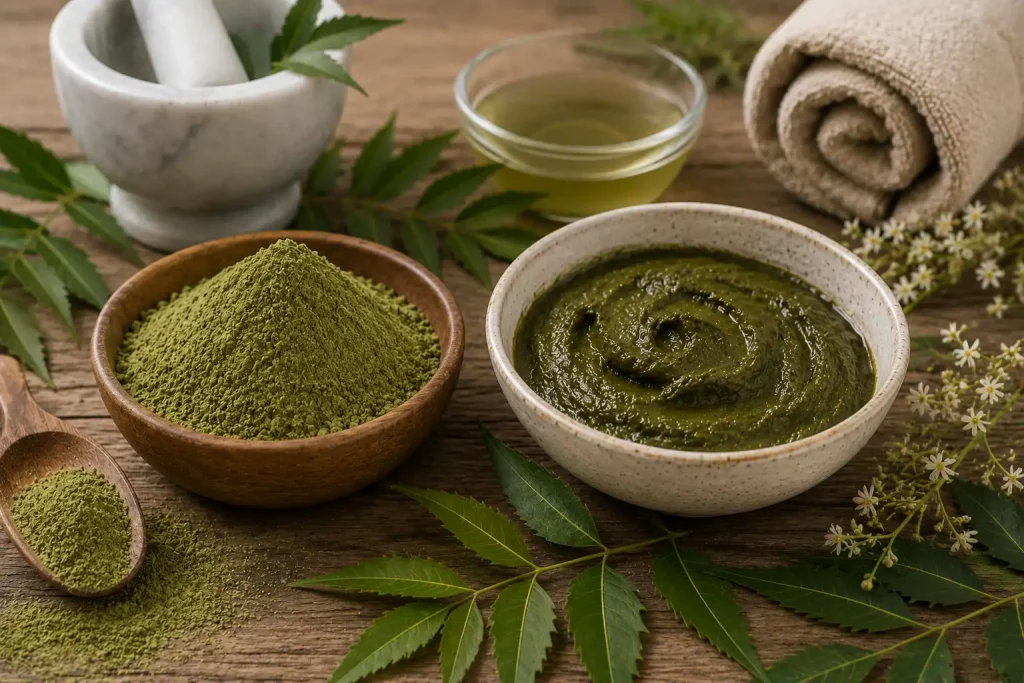
Fresh neem leaves can be hard to find outside of South and Southeast Asia. Neem leaf powder solves this problem by concentrating the herb into a shelf-stable, easy-to-use form that can be mixed into pastes, added to cleansers, or blended with other botanicals. Hatton Naturals Neem Leaf Powder is finely milled from organically grown leaves, making it an easy starting point for any of the methods below.
What You Will Need
To begin using neem powder for acne, gather the following:
- Neem Leaf Powder
- Turmeric Powder (optional but highly complementary)
- Manjistha Powder (optional, for skin-tone support)
- A liquid base: raw honey, plain yogurt, rose water, or aloe vera gel
- A small ceramic or glass mixing bowl
- A clean spoon or spatula
- A gentle facial cleanser for post-mask cleansing
Method 1: Basic Neem Paste for Spot Treatment
This is the most direct way to use neem powder for acne. It is best applied as a targeted spot treatment rather than an all-over mask, especially for beginners.
- Measure out half a teaspoon of neem powder into a small bowl.
- Add just enough rose water to form a thick, spreadable paste. Start with one teaspoon and add more as needed.
- Using a clean cotton swab or the tip of a clean finger, apply the paste directly to individual blemishes or oily zones like the T-zone.
- Leave on for 10 to 15 minutes. Do not leave on longer than 20 minutes, especially on your first attempt.
- Rinse thoroughly with lukewarm water and follow with a light, non-comedogenic moisturizer.
Repeat up to three times per week, monitoring your skin’s response after each use.
Method 2: Neem and Turmeric Face Mask
Turmeric is perhaps neem’s most famous companion in Ayurvedic skincare. Combining the two creates a mask traditionally used for oily and blemish-prone complexions.
- In a bowl, combine one teaspoon neem powder and half a teaspoon turmeric powder.
- Add two teaspoons plain yogurt (or rose water for a vegan option). Mix until smooth.
- Apply an even layer to a cleansed face, avoiding the eye area and lips.
- Leave on for 15 minutes. Expect a gentle tingling or mild cooling sensation, which is normal.
- Rinse well with lukewarm water. Pat dry gently and apply your regular moisturizer.
Note: Turmeric can temporarily stain fair skin a pale yellow. This fades within an hour. Using a gentle cleanser as a second rinse step helps remove any residual tint.
Method 3: Neem, Turmeric, and Manjistha Brightening Mask
For those dealing with both blemishes and uneven skin tone left by past breakouts, adding manjistha to the blend addresses both concerns at once. Manjistha is traditionally used for hyperpigmentation and post-blemish marks, making it a natural pairing with neem.
- Combine one teaspoon neem powder, half a teaspoon turmeric powder, and one teaspoon manjistha powder in a bowl.
- Add two teaspoons honey and enough rose water to achieve a smooth paste (roughly one to two teaspoons).
- Apply to a clean face, focusing on areas with active blemishes or visible marks.
- Leave on for 15 to 20 minutes.
- Rinse with lukewarm water, then cool water for a final rinse.
- Apply a soothing moisturizer or aloe vera gel.
This combination is best used once or twice a week.
Method 4: Neem Powder in Your Daily Cleanser
If you prefer a gentler daily approach rather than periodic masks, you can add a pinch of neem powder to your regular facial cleanser. Use approximately a quarter teaspoon mixed into your normal amount of cleanser in the palm of your hand. Apply as you would any cleanser, massage gently for 60 seconds, and rinse thoroughly. This allows for very low-level, consistent topical contact without the intensity of a full mask.
Troubleshooting
Strong odor: Neem has a distinctive, pungent smell that some people find off-putting. Adding a few drops of rose water or including honey in the mix can soften the scent slightly.
Skin feels too dry after use: Reduce the amount of neem powder or switch to honey as your liquid base instead of rose water. Always follow up with a moisturizer.
No visible improvement after two weeks: Herbal preparations work gradually. Consistency is key. Ensure you are also following a complete skincare routine with gentle cleansing, hydration, and sun protection.
Paste is too thick: Add rose water one teaspoon at a time until you reach a workable consistency.
Paste is too thin: Add a small pinch of neem powder and stir well. Let the mixture sit for two minutes before applying.
Storage and Quality
Store neem powder in a tightly sealed glass jar in a cool, dark, dry location. Avoid keeping it near the stove or in humid bathrooms, as moisture will degrade the powder. A well-stored jar of Hatton Naturals Neem Leaf Powder retains its potency for up to two years. Always use a dry measuring spoon when scooping from the jar. Pre-mixed paste should be used immediately. Do not store leftover paste, as it can grow bacteria quickly, especially when mixed with dairy or honey.
Safety
Before using neem powder for acne for the first time, perform a patch test. Apply a small amount of the mixed paste to the inside of your wrist or behind your ear and wait 24 hours. If you experience redness, significant itching, or swelling, stop use immediately. Do not apply to open wounds, actively inflamed cystic acne lesions, or broken skin. Avoid contact with eyes. Neem should not be used internally in large amounts without the guidance of a qualified practitioner. If you are pregnant, breastfeeding, or on prescription skincare medications such as tretinoin or benzoyl peroxide, consult a healthcare provider before adding neem to your routine, as it may interact or increase skin sensitivity.
Frequently Asked Questions
How long does it take for neem powder to show results on acne?
Traditional use and anecdotal reports suggest that consistent application over two to four weeks is needed before noticeable improvement appears. Results vary depending on skin type, the severity of acne, and overall skincare habits.
Can I use neem powder every day?
Daily use as a full mask is not recommended for most skin types, as it may cause dryness or irritation. Using it two to three times per week, or as a diluted addition to your cleanser, is a more balanced approach.
Does neem powder work for cystic acne?
Cystic acne is a medical condition that should be treated under a dermatologist’s supervision. Neem is traditionally used for surface-level blemishes and oiliness and is not a substitute for professional treatment of severe acne.
Can I use neem powder on sensitive skin?
Yes, but with caution. Start with a very small amount, dilute well with a soothing base like aloe vera or rose water, and always patch test first. Reduce frequency if irritation occurs.
Is neem safe to use alongside prescription acne treatments?
You should consult your dermatologist before combining neem powder with any prescription topical treatment. Some active ingredients like retinoids and exfoliating acids may increase skin sensitivity, making additional treatments more irritating.
Does neem smell strong? Can I mask it?
Yes, neem has a distinctly earthy, slightly pungent odor. Mixing it with honey or rose water softens the smell. Adding a few drops of lavender essential oil is another traditional approach, though always ensure any added oil is skin-safe and diluted.
Where can I find high-quality neem powder?
Look for finely milled, organically sourced neem leaf powder from a reputable supplier. Hatton Naturals Neem Leaf Powder is a trusted option, and you can pair it with their Turmeric Powder and Manjistha Powder for the recipes above.
Conclusion
Using neem powder for acne is a simple, affordable, and time-tested approach rooted in thousands of years of Ayurvedic tradition. With the right recipe, consistent application, and realistic expectations, it can be a meaningful addition to a natural skincare routine. Patch test first, start gently, and let the herb do its work.