Arrowroot Powder in Skincare: Natural Mattifier and Deodorant Base
When most people think of arrowroot powder, they picture a kitchen thickener used in gravies and puddings. But arrowroot powder skincare uses are just as impressive, and this fine white starch has earned a loyal following in the natural beauty community for good reason. Derived from the tropical plant Maranta arundinacea, arrowroot starch is ultra-fine, talc-free, and virtually odorless, making it an exceptionally versatile ingredient in DIY and clean-beauty formulations. It absorbs excess oil, softens the skin, reduces friction, and acts as a gentle setting powder, all without the synthetic additives found in many commercial products.
This guide walks you through the most practical arrowroot powder skincare uses, from mattifying serums to deodorant bases, so you can start incorporating this underrated botanical into your daily routine.
What Is Arrowroot Powder?
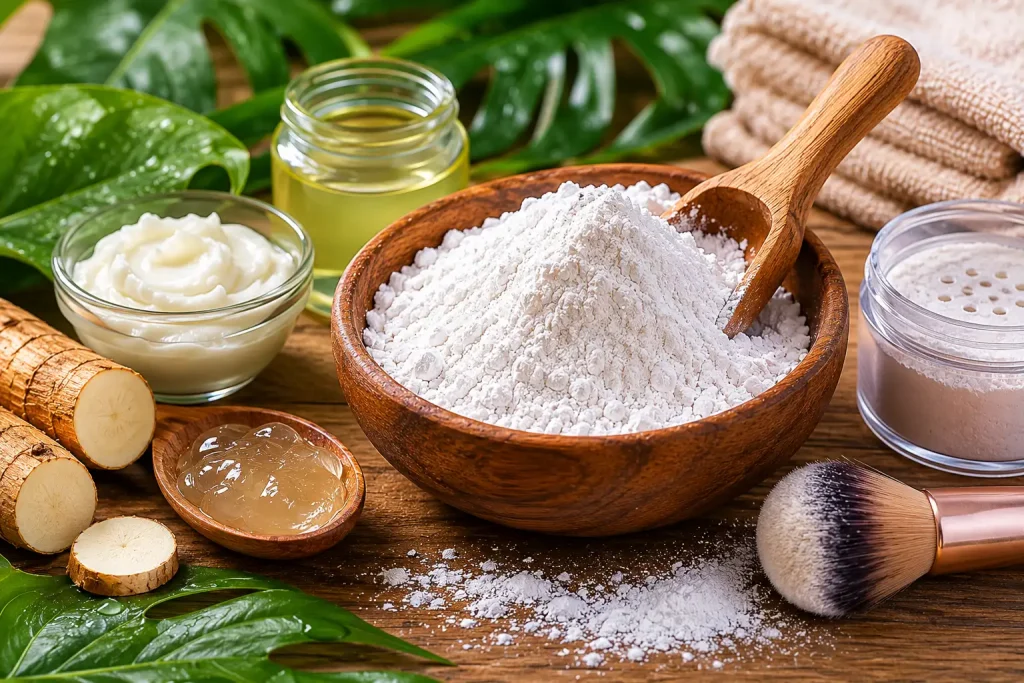
Arrowroot powder is a fine white starch extracted from the rhizomes of Maranta arundinacea, a plant native to tropical regions of the Americas. The rhizomes are washed, peeled, and dried before being ground into the silky, talc-like powder sold for culinary and cosmetic use. Unlike cornstarch, which is derived from corn, arrowroot is naturally gluten-free and less processed, and it has a neutral pH that makes it gentle on skin.
In skincare, arrowroot powder functions primarily as a physical absorbent. Its fine particle structure creates a large surface area that pulls moisture and oil away from the skin, leaving a smooth, dry finish. It does not treat the skin pharmacologically in the way that active herbal extracts do; instead, it works mechanically, which makes it suitable for nearly every skin type and unlikely to cause irritation.
Arrowroot Powder as a Natural Mattifier
One of the most popular arrowroot powder skincare uses is as a natural mattifier. If you struggle with a shiny T-zone or midday oil breakthrough, a light dusting of arrowroot powder can extend the matte finish of your makeup or replace primer entirely for a minimal look.
To use it as a loose setting powder, pour a small amount into the cap of the jar or a small saucer. Pick up the powder with a fluffy brush, tap off the excess, and sweep lightly over oily areas. The starch absorbs surface oil and reduces shine without adding a heavy, cakey texture. Because it is white and very fine, it blends invisibly on most skin tones, though those with very deep skin tones may notice a slight ashy finish if too much is applied. The solution is to apply sparingly.
You can also blend arrowroot with a small amount of cocoa powder or cinnamon-colored spice powders to create a tinted setting powder that better matches your skin tone. Start with a ratio of 10 parts arrowroot to one part cocoa and adjust from there.
Arrowroot Powder as a Dry Shampoo Base
Commercial dry shampoos often contain butane, alcohol, and synthetic fragrances. Arrowroot powder offers the same oil-absorbing function with none of those additives. Simply apply a small amount to your roots using a makeup brush or your fingertips, work it through with your fingers, and then brush out any visible residue.
For darker hair, blend arrowroot with cocoa powder in a ratio that matches your hair color to avoid a white cast at the roots. Store your custom blend in a small jar or a repurposed spice shaker for easy application. A few drops of essential oil such as lavender or peppermint can be incorporated to add a light, pleasant scent to the blend.
Arrowroot Powder as a Deodorant Base
The natural deodorant market has exploded in recent years, and arrowroot powder is a core ingredient in many homemade and commercial formulas. It absorbs underarm moisture, reduces friction between skin and clothing, and helps carry other active ingredients like baking soda or magnesium hydroxide.
A simple DIY natural deodorant formula looks like this:
- Three tablespoons arrowroot powder
- Three tablespoons refined coconut oil (solid at room temperature)
- One tablespoon baking soda (reduce or omit if your skin is sensitive to baking soda)
- 10 to 15 drops of an essential oil of your choice, such as tea tree or lavender
Mix the arrowroot powder and baking soda together. Melt the coconut oil if necessary, let it cool slightly, then stir in the powders. Add your essential oil and pour the mixture into a small jar or a repurposed deodorant stick mold. Allow it to firm up at room temperature or in the refrigerator before use. Apply a small amount with your fingertips.
Hatton Naturals Organic Arrowroot Powder is an ideal base for this formula, as it is finely milled and free from additives.
Arrowroot Powder in Body Powder and Baby Powder Formulas
Talc has faced safety scrutiny in recent decades, leading many parents and health-conscious consumers to seek alternatives for body powder use. Arrowroot powder is one of the most widely recommended substitutes. It absorbs moisture in skin folds, reduces friction in areas like the thighs or underarms, and leaves skin feeling soft and smooth.
You can use arrowroot powder on its own as a body powder, or combine it with dried lavender flower powder, calendula powder, or a few drops of chamomile essential oil for a soothing, naturally scented blend. For a simple baby-safe powder, plain arrowroot without any added essential oils is the gentlest option, though you should always consult your pediatrician before using any powder product near infants.
Arrowroot Powder in DIY Skincare Formulations
Beyond stand-alone uses, arrowroot powder skincare uses extend into DIY formulation as a texture modifier and thickener. A small addition of arrowroot can transform a greasy facial oil into a silkier, more absorbent serum. Add half a teaspoon to a 30 ml bottle of facial oil, shake well, and apply. The starch particles help the oil blend into skin more smoothly and leave less of a greasy residue.
Arrowroot is also used in DIY face masks as a thickening agent, allowing liquid-heavy masks to hold together without synthetic gums or gelling agents. Add it to clay-based masks to lighten the texture, or use it in powder-based peel-off masks as a binder.
How to Incorporate Arrowroot Powder Into Your Existing Routine
You do not need to overhaul your entire skincare routine to benefit from arrowroot. Here are a few low-effort ways to start:
- Replace your commercial setting powder with a light dusting of arrowroot over oily zones.
- Add a pinch to your liquid foundation or tinted moisturizer for a mattifying effect.
- Use it as a dry shampoo in a pinch between washes.
- Apply it to the inner thighs or underarms before workouts to reduce friction and chafing.
- Mix it into a face mask recipe to thicken the consistency.
Each of these uses requires only a small amount of powder, so a single bag of Hatton Naturals Organic Arrowroot Powder will last a long time. Browse the full range of organic botanicals at the Hatton Naturals shop to find complementary ingredients for your DIY projects.
Storage and Quality
Arrowroot powder should be stored in an airtight container in a cool, dry place away from direct sunlight. Moisture is its biggest enemy, as it will cause the starch to clump and eventually spoil. A glass jar with a tight-fitting lid or a sealed resealable bag works well. Properly stored, arrowroot powder retains its quality for up to two years. If your powder develops an off smell, changes color, or clumps significantly, it is time to replace it. Always use a dry spoon when measuring to prevent introducing moisture into the container.
Safety
Arrowroot powder is considered one of the gentlest cosmetic ingredients available and is suitable for all skin types, including sensitive skin. It is non-comedogenic, meaning it does not clog pores, and it carries a very low risk of allergic reaction. However, as with any new ingredient, a patch test is a wise precaution. Apply a small amount to the inside of your wrist and observe for 24 hours before using it on your face or other sensitive areas. Avoid inhaling the powder directly, as fine starch particles can irritate the respiratory tract. Keep it away from the eyes. It is not intended for internal use in cosmetic formulas.
Frequently Asked Questions
Is arrowroot powder the same as cornstarch for skincare?
They are similar but not identical. Both are fine starches used as oil absorbers, but arrowroot is generally considered gentler, less processed, and less likely to irritate sensitive or reactive skin. It also has a silkier texture than cornstarch.
Can arrowroot powder clog pores?
Arrowroot is generally considered non-comedogenic, meaning it is unlikely to clog pores. Its particles sit on the surface of the skin and absorb oil rather than penetrating into follicles.
Can I use arrowroot powder on oily skin?
Yes. Arrowroot powder is particularly well-suited to oily skin because of its oil-absorbing properties. It can help control shine and reduce the greasy feeling that some people experience throughout the day.
Is arrowroot powder safe to use near the eye area?
While arrowroot is a gentle ingredient, direct contact with the eyes should be avoided. When used as a setting powder, apply it lightly and carefully around the eye area, keeping the brush away from the lash line.
Can I use arrowroot powder as a full replacement for commercial deodorant?
Arrowroot absorbs moisture but does not neutralize odor-causing bacteria on its own. In a DIY deodorant, it works best when combined with ingredients like baking soda, magnesium hydroxide, or antimicrobial essential oils. Results will vary from person to person.
Does arrowroot powder leave a white cast on dark skin?
Used sparingly, arrowroot blends in without a visible white cast on most skin tones. Those with deeper complexions can mix a small amount of cocoa powder into the arrowroot to warm up the tone and avoid any chalkiness.
Conclusion
The range of arrowroot powder skincare uses makes it one of the most practical botanicals to keep on hand, whether you are building a DIY beauty cabinet or simply looking for a clean swap for conventional products. From mattifying to deodorant bases to dry shampoo, this gentle starch delivers quietly and consistently. Give it a try and see what it can do for your routine.