Turmeric for Athletes: Recovery and Performance
Turmeric for athletes is no longer a niche concept. As a result, this golden root, long valued in traditional cooking and Ayurvedic practices, has become a staple ingredient in the sports supplement industry. Its active compound, curcumin, drives most of the research interest in athletic contexts.
Why Turmeric for Athletes Appears in Sports Nutrition
The interest in turmeric for athletes centers on curcumin, which makes up roughly 2% to 5% of raw turmeric root by weight. Standardized turmeric extracts used in supplements typically contain 95% curcuminoids, offering a much higher concentration than culinary-grade turmeric powder.
For brands developing recovery-focused products, turmeric provides a recognizable, consumer-friendly ingredient. Unlike obscure botanical extracts that require extensive consumer education, turmeric benefits from widespread familiarity. Most consumers already associate it with positive attributes, which simplifies marketing.
Forms Available for Supplement Manufacturing
Supplement manufacturers can source turmeric in several forms, each suited to different product types:
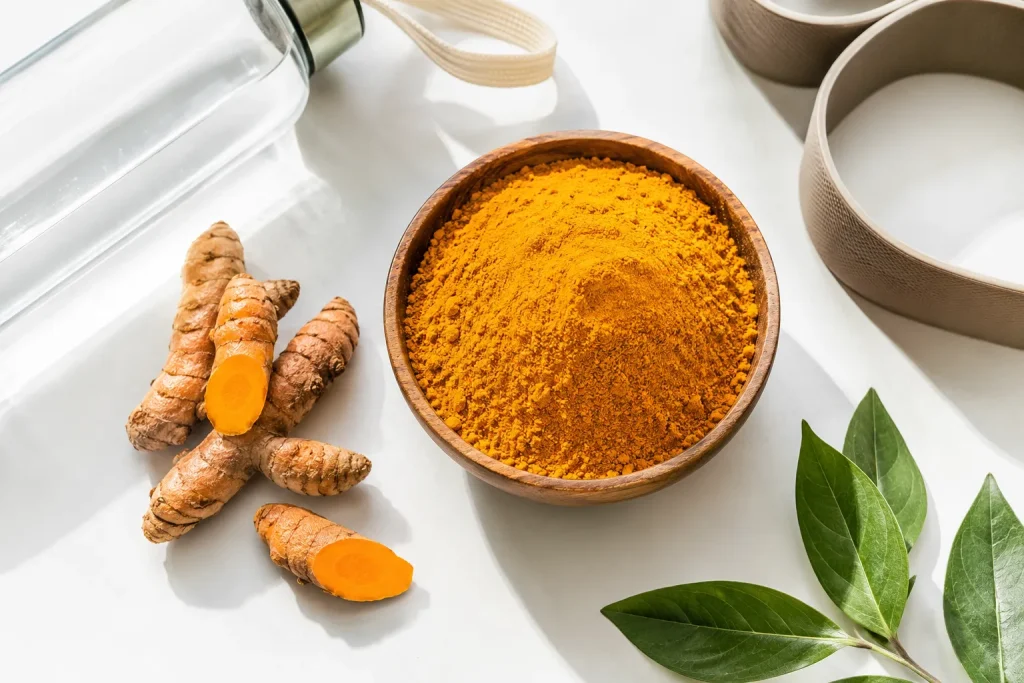
- Turmeric powder: Ground from dried rhizomes, this form works well in protein blends, golden milk mixes, and meal replacement products. Organic turmeric powder provides a whole-food ingredient option.
- Turmeric cut and sifted: Dried pieces of the rhizome, primarily used for teas and infusions. Turmeric C/S is popular for functional beverage brands.
- Curcumin extract: Standardized to 95% curcuminoids, this concentrated form delivers the highest potency per serving in capsules and tablets.
Bioavailability: The Key Challenge
One of the most discussed topics in turmeric supplementation is bioavailability. Curcumin on its own has limited absorption in the body. The supplement industry has developed several approaches to address this challenge.
For instance, black pepper extract (piperine) is the most common bioavailability enhancer paired with turmeric supplements. Other approaches include liposomal delivery systems, phytosome technology, and nano-emulsification. Each method has its own cost implications and patent considerations that manufacturers must evaluate.
For brands targeting the athletic market, the bioavailability strategy chosen can be a key differentiator. Products that clearly communicate their absorption approach tend to perform better with the research-savvy fitness consumer.
Positioning Turmeric for Athletes in Product Lines
Turmeric appears across multiple product categories in sports nutrition. Recovery drinks and post-workout formulas are the most common applications. It also shows up in joint support products, daily wellness capsules marketed to active consumers, and functional food products like protein bars and golden milk powders.
Furthermore, the ingredient pairs naturally with other recovery-oriented botanicals. Ginger root, another well-known rhizome, frequently appears alongside turmeric in formulations. Bromelain (from pineapple) and boswellia are other common co-ingredients in joint and recovery products.
Sourcing and Quality Considerations
India produces the vast majority of the world’s turmeric supply. When sourcing for supplement manufacturing, key quality parameters include curcumin content, heavy metal testing (especially lead), pesticide residue analysis, and microbial testing.
Organic certification is increasingly important in this space. The clean-label movement among fitness consumers means that USDA Organic and Non-GMO Project Verified certifications can command premium pricing. Brands should request certificates of analysis and verify supplier certifications independently.
What concentration of curcumin do athletic supplements typically contain?
Most athletic recovery supplements use turmeric extracts standardized to 95% curcuminoids, with typical serving sizes providing 500 mg to 1,000 mg of curcumin per dose. The exact concentration depends on the product format and the bioavailability system used. Raw turmeric powder products contain lower curcumin levels but offer the full spectrum of turmeric compounds.
Does turmeric stain supplement manufacturing equipment?
Yes, turmeric acts as a potent natural dye and will stain mixing equipment, tableting machines, and packaging materials. Manufacturers should plan production schedules accordingly, running turmeric-containing products in dedicated batches. Stainless steel equipment is easier to clean than plastic components. This is a practical consideration that new brands sometimes overlook.
Is synthetic curcumin used in supplements?
Synthetic curcumin does exist, and researchers sometimes use it in laboratory settings. However, the dietary supplement market overwhelmingly uses naturally derived curcumin from turmeric root. Consumers in the athletic and fitness space strongly prefer natural-source ingredients, so synthetic versions carry a marketing disadvantage despite sometimes lower costs. Find the right botanical for your fitness product with our botanical ingredient quiz.