White Pepper vs Black Pepper: Flavor, Heat and When to Use Each
The white pepper vs black pepper question comes up in almost every serious kitchen. Both come from the same vine, yet they taste, smell and behave very differently in food. Once you understand why, you can choose the right one with confidence. In this guide, we cover how each pepper is made, how they compare in flavor and heat, which cuisines rely on them, how to substitute one for the other, and how to buy and store them. We also share two simple recipes so you can taste the difference yourself.
One Plant, Two Peppers: Where Both Come From
Black and white peppercorns both grow on Piper nigrum, a flowering vine native to the Malabar Coast of southern India. The vine produces long, dangling spikes of small berries. Growers harvest these berries at different stages, and then they process them in different ways. As a result, one plant gives us two distinct spices.
Pepper has traveled the world for thousands of years. Ancient traders carried it from India to Egypt, Greece and Rome. In medieval Europe, it was so valuable that people sometimes paid rent with it. Today, India, Vietnam, Indonesia, Brazil and Sri Lanka grow most of the world’s supply. Each region produces peppercorns with slightly different character, so origin matters as well.
How Black Pepper Is Made
Black pepper starts with berries picked while they are still green and unripe. First, workers separate the berries from the spikes. Then, many producers blanch them briefly in hot water. This step cleans the berries and starts the browning process. Next, the berries dry in the sun for several days, or sometimes in mechanical dryers.
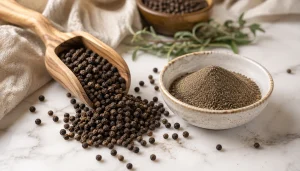
During drying, the outer skin shrinks and darkens. Enzymes in the skin react with oxygen, so the berry turns black and wrinkled. That dark outer layer holds much of the aroma. Because of this, black pepper smells bold, woody and slightly citrusy. Our organic whole black peppercorns show this classic wrinkled look and deep color.
How White Pepper Is Made
White pepper starts with berries left on the vine much longer. Growers wait until the berries ripen and turn red or orange. Then they pack the ripe berries in sacks and soak them in water for one to two weeks. This soaking process is called retting.
Retting softens the outer skin so it can be rubbed or washed away. After that, only the pale inner seed remains. Finally, workers dry these seeds in the sun until they turn creamy white or light gray. Since the skin is gone, white pepper loses most of the bright, piney aroma found in black pepper. Instead, it keeps a clean, sharp heat and an earthy, sometimes slightly fermented note.
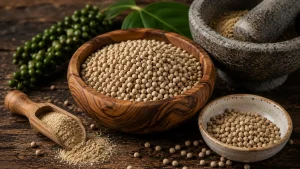
That fermented note comes from the soaking step. Some people describe it as musty or barnyard-like. However, good white pepper should smell clean and pleasant. If yours smells strongly of mildew, it was likely processed or stored poorly. Our organic whole white peppercorns are a good way to taste the real thing.
White Pepper vs Black Pepper: Flavor, Heat and Aroma
Both peppers get their bite from piperine, a natural compound found mainly in the seed. Because both keep the seed, both feel hot on the tongue. The difference lies mostly in aroma and how the heat arrives.
- Black pepper: bold, woody, piney and a little floral. The heat builds steadily and lingers. In addition, its aroma fades faster after grinding, so freshness matters a lot.
- White pepper: sharp, earthy and less complex. The heat hits quickly at the front of the mouth. Also, it can taste slightly funky, which works well in rich soups and stir fries.
Many cooks find white pepper hotter at first bite, yet black pepper more flavorful overall. So the right choice depends on whether you want aroma or a clean, quiet heat.
Quick Comparison Table
| Feature | Black Pepper | White Pepper |
|---|---|---|
| Berry stage | Unripe, green | Fully ripe, red |
| Processing | Blanched and sun dried with skin | Soaked (retted), skin removed, dried |
| Color | Dark brown to black | Cream to light gray |
| Aroma | Woody, piney, citrusy | Earthy, mild, slightly fermented |
| Heat | Builds and lingers | Quick and sharp |
| Classic uses | Steak, rubs, salads, pasta | Cream sauces, soups, stir fries |
| Visual effect | Visible dark specks | Blends into pale dishes |
Cuisines That Rely on Each Pepper
Black pepper dominates Western cooking. For example, it seasons steaks, roasted vegetables, cacio e pepe and nearly every salad dressing. It also plays a big role in Indian cuisine, where it appears in garam masala, rasam and many curries.
White pepper, on the other hand, is a star in Chinese, Thai and Vietnamese kitchens. Hot and sour soup gets its signature heat from white pepper. Likewise, many Cantonese stir fries, congee and dumpling fillings use it. In Thailand, cooks pound it with garlic and cilantro root into a classic paste.
In French cooking, white pepper has a practical role. Chefs use it in white sauces such as béchamel, in mashed potatoes and in cream soups. The reason is simple: it seasons the dish without leaving dark specks. Scandinavian cooks also use it in fish dishes and meatballs for the same reason.
Substitution Ratios and When to Use Which
You can swap one pepper for the other in a pinch. However, keep a few guidelines in mind so the dish stays balanced.
- Black for white: use about three quarters of the amount. For example, if a recipe calls for 1 teaspoon of white pepper, start with 3/4 teaspoon of finely ground black pepper. Expect visible specks and more aroma.
- White for black: use about the same amount, or slightly less if your white pepper is very sharp. Then taste and adjust, because you will lose some of the woody aroma.
- Ground versus whole: about 1 teaspoon of whole peppercorns yields roughly 1 1/4 teaspoons of ground pepper.
So when should you choose each one? Reach for black pepper when you want aroma to stand out, as in a steak crust, a salad or a simple pasta. Choose white pepper for pale dishes, delicate fish, creamy soups and Asian stir fries. If you are still unsure which pepper suits your style, try our quiz Which Pepper Variety Fits Your Cooking? for a quick suggestion.
Grinding Tips for Best Flavor
Whole peppercorns hold their flavor far longer than ground pepper. The aromatic oils sit inside the berry, and they start to fade once you crack it open. Therefore, grinding right before cooking makes a clear difference.
- Use a dedicated pepper mill with an adjustable burr. Fine settings suit sauces, while coarse settings suit rubs.
- Toast black peppercorns in a dry pan for 1 to 2 minutes before grinding. This deepens the aroma. However, skip toasting for white pepper, since it can turn bitter.
- For large batches, use a spice grinder and pulse in short bursts so the pepper does not heat up.
- Keep separate mills for black and white pepper so the flavors stay clean.
Of course, pre-ground pepper still has its place. For baking, spice blends and large batches, our organic black pepper powder saves time and gives an even texture. Meanwhile, organic tea bag cut black pepper works well for coarse rubs, brines and infusions.
Two Recipes to Taste the black white pepper vs black pepper
Creamy Potato Soup with White Pepper
This soup shows off white pepper’s quiet heat in a pale dish. It serves four.
- First, melt 2 tablespoons of butter in a pot over medium heat.
- Add 1 diced onion and 2 sliced leeks. Cook for 8 minutes until soft but not brown.
- Then add 1 1/2 pounds of peeled, cubed potatoes and 4 cups of vegetable or chicken stock.
- Simmer for 20 minutes, until the potatoes are tender.
- Next, blend the soup until smooth and stir in 1/2 cup of cream.
- Season with 1 teaspoon of salt and 1/2 teaspoon of freshly ground white pepper.
- Finally, taste and add more pepper in small pinches. Serve with chopped chives.
Cracked Black Pepper Steak Rub
This rub lets black pepper’s aroma take center stage. It makes enough for two large steaks.
- Coarsely crack 2 tablespoons of whole black peppercorns in a mortar or mill.
- Mix with 2 teaspoons of coarse salt, 1 teaspoon of garlic powder and 1/2 teaspoon of brown sugar.
- Pat the steaks dry, then press the rub firmly onto both sides.
- Let them rest for 30 minutes at room temperature.
- Sear in a very hot cast iron pan for 3 to 4 minutes per side.
- Rest for 5 minutes before slicing so the juices settle.
How to Choose and Store Peppercorns
Good peppercorns look uniform in size and color. Black peppercorns should be dark and evenly wrinkled, with few pale or broken pieces. White peppercorns should be smooth and creamy, without dark spots. In addition, crush one between your fingers. Fresh pepper releases a strong aroma right away.
Storage is simple. Keep peppercorns in an airtight glass jar, away from heat, light and moisture. A cupboard away from the stove works well. Stored this way, whole peppercorns keep good flavor for two to three years. Ground pepper, by contrast, is best used within six months to a year. White pepper tends to lose its aroma faster once ground, so grind it in small amounts.
Also, avoid storing pepper above the stove or near the dishwasher. Steam and heat speed up flavor loss and can cause clumping.
Frequently Asked Questions About White Pepper vs Black Pepper
Is white pepper hotter than black pepper?
Many people find white pepper sharper at first taste. However, black pepper’s heat lingers longer. Both contain piperine, so the overall heat level is similar.
Why does white pepper sometimes smell funky?
The funky note comes from the soaking step used to remove the skin. A mild earthy aroma is normal. A strong moldy smell, however, usually means poor processing or storage.
Can I use black pepper in hot and sour soup?
Yes, you can. The soup will still taste good, but it will have more woody aroma and visible specks. For the classic flavor, white pepper is the better choice.
Are green and pink peppercorns the same plant?
Green peppercorns come from the same vine, picked unripe and preserved before they darken. Pink peppercorns, however, come from a different plant entirely.
How much pepper should I add to a dish?
A good starting point is 1/4 to 1/2 teaspoon per four servings. Then taste and adjust, since freshness and grind size change the strength.
Now that you know the white pepper vs black pepper differences, keep both in your pantry and choose based on the dish in front of you. Start with whole peppercorns, grind them fresh, and taste how much brighter your cooking becomes. Explore our organic peppercorns today and bring both classics into your kitchen.