Organic Mullein Benefits: Traditional Use, Taste, and Tips
Mullein has a way of slowing the room down. Open the bag and you get that soft, field-dry aroma, like sun-warmed meadow and clean hay. People come to it for the organic mullein benefits that show up in traditional herbal practice: comfort, softness, and a sense of steadiness in a cup. If you make tea at home or you blend for others, mullein is also a craft ingredient, not just a “benefits” bullet point. It needs the right cut, the right steep, and a little respect for filtration. Do that, and it turns into a surprisingly elegant base that carries brighter leaves, citrusy aromatics, and gentle florals without getting bullied.
This guide is written with an herbalist’s hands and a tea maker’s brain. You’ll get clear taste notes, exact ratios in grams and teaspoons, timing, temperature, and practical handling tips so your mullein stays fragrant and your cups stay clean. Along the way, we’ll ground the organic mullein benefits in traditional use language, keep safety compliant, and build a few dependable blends (including a bright pairing with Organic Lemon Myrtle) that work for both daily sipping and small-batch production.
What mullein is, and why herbalists reach for it
Mullein leaf is a classic “softening” herb in traditional Western herbalism. When people talk about organic mullein benefits, they’re often pointing to its long history of being used in gentle, supportive teas and infusions that feel smooth and comforting. Herbalists often use it when they want a cup that feels mild, round, and not too stimulating, especially when a person wants something simple and steady.
From a formulator’s perspective, mullein is a base note. It gives body without heavy bitterness, and it plays well with aromatic leaves and citrusy botanicals. It’s also one of those herbs where cut and handling matter. A fluffy, well-dried leaf with intact color will brew cleaner and taste fresher than a dusty, overly fine cut that turns your cup into snow-globe tea.
If you’re blending, think of mullein as “texture.” It gives lift and volume in a blend, and it can soften sharper edges from tart or resinous ingredients. That’s a practical angle on organic mullein benefits that’s easy to miss: it helps a blend feel gentle on the palate.
Try adding organic mullein leaf as the soft base note for daily sipping blends.
Organic mullein benefits in traditional use language
Let’s keep this compliant and still useful. When you see organic mullein benefits discussed in herbal circles, they’re typically framed as traditional support rather than medical claims. In that tradition, mullein is often used to promote a sense of ease and comfort, and to provide a mellow tea experience that feels soft rather than sharp.
In practical terms, those organic mullein benefits show up as a cup that is:
A soothing-feeling warm beverage ritual (especially when you want “gentle” rather than “strong”).
Mild in taste, making it easy to drink consistently.
A supportive base for other herbs that bring brighter aroma or flavor.
If you’re making tea for customers or friends, you can communicate mullein’s role without promising outcomes: “traditionally used,” “herbalists often use,” “may support a soothing tea ritual,” and “commonly enjoyed for its gentle character.” That language is honest, time-tested, and safe.
Try pairing organic lemon myrtle when you want mullein’s gentle base with a bright, uplifting aroma.
Taste and aroma: what a good cup should feel like
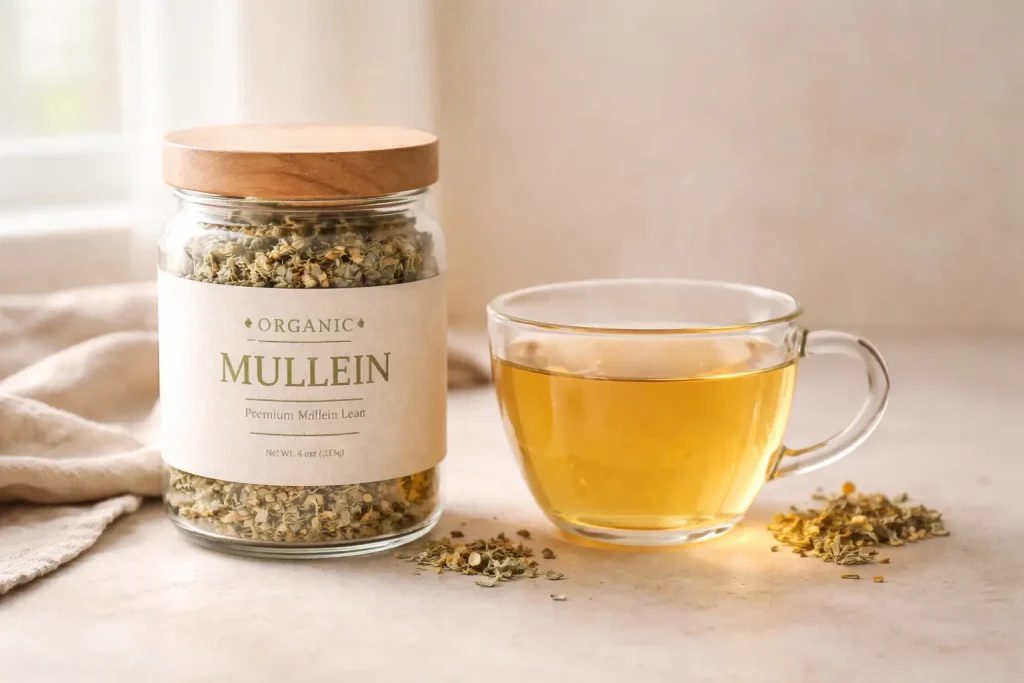
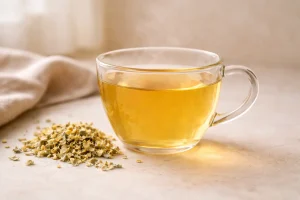 A well-brewed mullein cup is pale golden to light straw. The aroma leans grassy, lightly sweet, and sun-dried. The taste is mild, with a soft vegetal note and a rounded finish. If you’re getting harshness, chalky dryness, or a dull “cardboard” impression, that usually points to one of three things: old stock, too-hot water for too long, or leaf that’s too fine and dusty.
This is where organic mullein benefits meet production reality. A gentle herb is only gentle if you protect its volatile aromatic cues. Over-steeping can flatten it. Bad storage can make it stale. And if you don’t filter well, the cup can feel scratchy, which is the opposite of what mullein is loved for.
For sensory testing, steep a small reference batch the same way every time, then smell the dry leaf, the wet leaf, and the liquor. In a fresh lot, the dry leaf should still have a clean hay note. The wet leaf should smell like warm greens. The liquor should smell faintly sweet, not dusty.
Try blending organic spearmint leaf to lift mullein’s meadow notes with a clean, cooling top aroma.
Brewing ratios you can rely on (grams + teaspoons)
If you want consistency, measure by weight. If you want speed at home, use teaspoons, but know that mullein’s fluffiness makes volume measures variable. Below are dependable starting points for a clean, pleasant cup while keeping organic mullein benefits as the lead experience.
Single-herb mullein tea (1 large mug, about 12 oz / 350 ml)
Option A (weight): 2.0 g mullein leaf per 350 ml water
Option B (volume): about 2 heaping teaspoons mullein leaf per 12 oz water
Water temp: 90 to 95°C (195 to 203°F)
Steep time: 10 to 12 minutes
Filter: fine mesh plus paper or cloth for the cleanest cup
Batch for tea makers (1 liter)
6 g mullein leaf per 1 liter water for a mild daily brew
8 g per 1 liter for a fuller, still gentle brew
Steep 12 minutes at 90 to 95°C (195 to 203°F), then strain immediately
Cold infusion (overnight, cleaner flavor)
8 g mullein leaf per 1 liter cool water
Steep 8 to 12 hours refrigerated
Strain very well, then serve chilled or gently warmed
The trick is filtration. Mullein leaf has fine hairs that can create a “fuzzy” mouthfeel if you drink the tiny particles. That’s not dangerous in normal culinary use, it’s just unpleasant. A paper filter makes a dramatic difference.
Try adding organic ginger root in tiny amounts (0.25 to 0.5 g per mug) if you want warmth without overpowering mullein.
Blend design: mullein + Organic Lemon Myrtle as a bright everyday cup
Organic Lemon Myrtle is pure sunlight in leaf form, sharp-citrus and aromatic. When you pair it with mullein, you get a blend that feels gentle but not sleepy. The mullein gives soft body. The lemon myrtle gives sparkle. This is one of the most practical ways to talk about organic mullein benefits without turning it into a sales pitch: it becomes a cup people actually want to drink because it tastes good.
Blend ratio (by weight)
Mullein leaf: 70%
Organic Lemon Myrtle: 30%
Mug method (12 oz / 350 ml)
2.0 g total blend per mug
That’s 1.4 g mullein + 0.6 g lemon myrtle
If measuring by teaspoons: 2 teaspoons mullein + 1 level teaspoon lemon myrtle (approximate)
Water: 90°C (195°F)
Steep: 8 to 10 minutes
Strain: very well
Production tip: Lemon myrtle’s aromatics are volatile. Keep the blend airtight, away from light, and avoid leaving bags open on the bench. If you’re portioning sachets, pre-weigh quickly and seal right away.
Try adding organic lemon myrtle to brighten mullein blends when you want a clean citrus top note.
Tea maker handling: cut size, dust control, and clean filtration
For anyone making consistent tea blends, mullein is a “process herb.” It teaches discipline. The leaf is light, it can shed fines, and it can compress in packaging. Here’s how to keep quality high while still honoring organic mullein benefits in the finished cup.
Dust management: If a lot is dusty, gently sift through a coarse tea sieve before blending. Don’t pulverize it further. Dust increases sediment and can mute aroma.
Blend order: Mix heavier roots first (if using), then mullein, then delicate aromatic leaves last. This prevents fragile aromatics from being crushed.
Filtration protocol: For retail tasting or content photography, use a fine mesh strainer plus a paper filter. For casual home use, fine mesh is usually enough if the cut is clean.
If you’re doing jar labels or you’re photographing, mullein looks beautiful because it’s soft and textured. But remember that visual fluff can compress in shipping. If you sell by volume, you’ll see inconsistency. If you sell by weight, you’ll sleep better.
Try adding organic chamomile flowers TBC if you want a soft floral note that complements mullein without sharpness.
Troubleshooting: flat flavor, too tart, over-carbonation, sediment, aroma loss
- Flat flavor: This usually means old stock or over-steeping. Shorten steep time by 2 minutes, reduce water temp to 90°C, and make sure the herb is stored airtight. In blends, add a small aromatic lift (like mint) rather than increasing mullein. Organic mullein benefits read best in a cup that tastes fresh, not “strong.”
- Too tart: Mullein itself isn’t tart. Tartness comes from pairing herbs that lean acidic or bright. Reduce the bright component (like lemon myrtle) by 5 to 10% and add a rounding note such as chamomile.
- Over-carbonation: If you’re using mullein in a lightly fermented beverage (like a tea-based sparkler), over-carbonation is usually sugar, temperature, or bottling time, not mullein. Reduce priming sugar, shorten fermentation, and chill earlier.
- Sediment: Classic mullein issue. Use a finer strainer, then filter through paper. Also avoid crushing mullein in the blend.
- Aroma loss: Aromatics dissipate when stored loosely or near heat. Seal immediately after blending and keep away from light. If lemon myrtle is in the blend, aroma loss will be more obvious, so storage standards need to be higher.
Try adding organic peppermint leaf when a mullein blend feels dull and needs a sharper aromatic edge.
Storage + Quality: keep it fragrant, keep it clean
Quality control for mullein is mostly about keeping it dry, intact, and protected from air. For organic mullein benefits to translate into a pleasant cup, the leaf has to keep its clean meadow aroma and its soft color.
Airtight: Use tight-seal jars or high-barrier bags. Reseal immediately after each use.
Humidity: Keep away from steam and dishwashers. If your blending bench is near kettles, relocate your storage.
Light: Store in a dark cabinet or opaque container. Light fades color and can dull aroma.
Color cues: Fresh mullein is greenish to pale green. If it’s brown or grey, it’s likely older or oxidized.
Scent cues: It should smell clean and herbal. If it smells dusty, flat, or musty, don’t use it for premium tea.
Small-batch tip: Date your blends. Aromatics are best when used sooner. Mullein itself is mild, so it won’t “cover” staleness in other ingredients.
Try adding organic calendula flowers as a visual garnish in blends when you want sunny color without heavy flavor.
Safety: practical, compliant guidance for everyday tea
This section matters. Organic mullein benefits are usually discussed in traditional use terms, and that’s the right lane here. This article is not medical advice. Herbalists often use mullein as a gentle culinary herb in tea, but individual needs vary.
Basic safety practices for tea makers:
Use clean, food-safe tools and dry storage containers.
Filter well to reduce the “fuzzy” mouthfeel from fine particles.
If someone is pregnant, nursing, has a medical condition, or takes medications, encourage them to consult a qualified professional before using new herbs routinely.
Avoid claiming that mullein treats or cures anything. Keep language to “traditionally used” and “may support.”
If you’re selling blends, label responsibly and keep claims compliant. Trust is built when the cup tastes honest and the words stay honest too.
Try adding organic nettle leaf when you want a greener, fuller body alongside mullein in a daily herbal blend.
Simple blend ideas that keep mullein as the star
Here are a few reliable directions that keep organic mullein benefits central while making the cup more interesting. Keep ratios simple and repeatable.
Mullein Meadow Blend (soft and green)
Mullein 60%, nettle 25%, spearmint 15%
Steep 10 minutes at 90°C, strain well
Soft Floral Mullein (round and aromatic)
Mullein 65%, chamomile 25%, calendula 10%
Steep 8 to 10 minutes at 90°C
Bright Citrus Mullein (everyday favorite)
Mullein 70%, Organic Lemon Myrtle 30%
Steep 8 to 10 minutes at 90°C, seal the blend airtight
If you’re testing, keep one variable at a time. Change ratio, not everything at once. That’s how you end up with blends you can reproduce.
Try adding organic mullein leaf as the backbone when you want a gentle, mild cup that blends well.
FAQ
What are organic mullein benefits in traditional herbal use terms?
Organic mullein benefits are most often described as traditional support for a gentle, soothing tea ritual, valued for its mild, soft character.
Does mullein have a strong taste?
No. It’s mild and grassy with a soft finish, which is why organic mullein benefits are often paired with brighter aromatics.
Why does mullein tea sometimes feel “fuzzy” in the throat or mouth?
Fine leaf particles can pass through coarse strainers. Filter more finely (mesh plus paper) for a cleaner cup.
What’s the best pairing for a brighter aroma without making it bitter?
Organic Lemon Myrtle is excellent. It adds a clean citrus top note while mullein keeps the base gentle.
How much mullein should I use per cup?
A reliable starting point is 2.0 g per 12 oz (350 ml), or about 2 heaping teaspoons, steeped 10 to 12 minutes and filtered well.
Can I cold-infuse mullein?
Yes. Cold infusion (8 to 12 hours refrigerated) can taste cleaner and reduce harshness while keeping organic mullein benefits in a smooth cup.
How do I know if my mullein is still high quality?
Look for pale green color and a clean, hay-like aroma. Brown, musty, or dusty-smelling leaf is past its prime.
Is mullein safe to drink daily?
For most people using it as a culinary tea, it’s commonly enjoyed, but individual factors matter. Keep use moderate and consult a professional if you have specific health considerations.
Enjoy the benefits of organic mullein
In the end, organic mullein benefits are best understood through a cup that’s made well: gently steeped, carefully filtered, and stored with care. When you treat mullein like a craft ingredient, it rewards you with a soft-bodied brew that makes room for brighter botanicals like Organic Lemon Myrtle, mint, and delicate flowers. Keep your ratios consistent, protect aroma in storage, and let the experience stay simple and honest.